Barkley-Warwick BW-1
Archibald Barkley: Pioneer of American Aviation
American engineer Archibald S. Barkley participated in the construction of the Wright brothers’ first gliders, earning him the title of one of the pioneers of American aviation. Before World War I, he worked for Curtiss, then joined the army and took part in military actions in Europe. After the war, Barkley worked for various companies near Detroit, including Verville, Stout, and Ford.
The Innovative BW-1 Monoplane
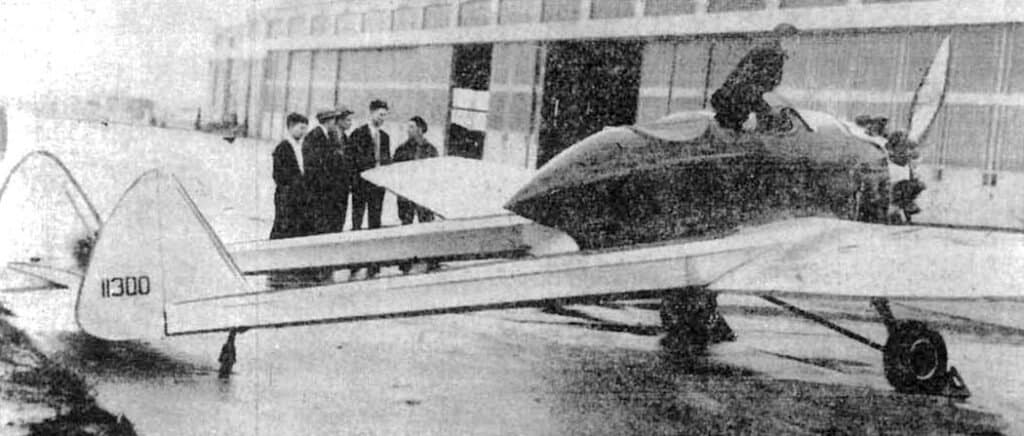
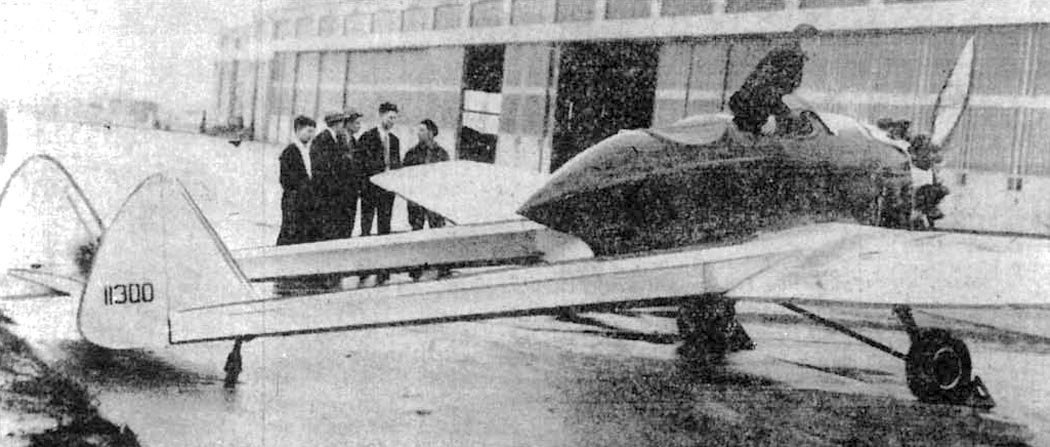
His first self-designed aircraft was the Barkley-Warwick BW-1 (registration number X11300), a small two-seater monoplane featuring a 165 hp Continental A-70 engine with a pulling propeller. The aircraft was built by Barkley & Warwick Aircraft Corp. For reasons unknown, Barkley chose a twin-boom (frame) scheme for this aircraft.
A Revolutionary Wing Design
The BW-1 was equipped with a wing structure personally invented by Barkley. The concept involved creating a lightweight and robust assembly by eschewing traditional ribs and spars in favor of V-shaped profiles, riveted in pairs and running the length of the wing. These X-shaped structures effectively filled the entire volume of the wing, to which mechanization elements and skin were attached. Naturally, the wing’s construction had to be all-metal.
The BW-1’s maiden flight took place in 1931, with Archibald Barkley himself at the controls. It ended in a crash: the aircraft was destroyed, and the pilot was injured, but the wing remained intact.
Technical Specifications
| Modification | BW-1 |
| Wingspan, m | 8.20 |
| Engine type | 1 Piston engine Continental A-70 |
| Power, hp | 1 x 165 |
| Crew, crew members | 2 |
Image and diagram gallery of the Barkley-Warwick BW-1
 BW-1 |
Equipo Editorial de ArchivoAéreo
Grupo de investigadores y entusiastas de la aviación dedicados a documentar y preservar la historia aeronáutica mundial. Todos los artículos son revisados para garantizar precisión histórica.
Fuentes y Rigurosidad
La información presentada en esta ficha técnica ha sido compilada a partir de manuales de vuelo desclasificados, archivos históricos y bibliografía especializada. Aunque nos esforzamos por mantener la máxima precisión, algunos datos de rendimiento pueden variar según la variante específica o las condiciones operativas.