BiCh-7
Pioneering Development and the Original BiCh-7
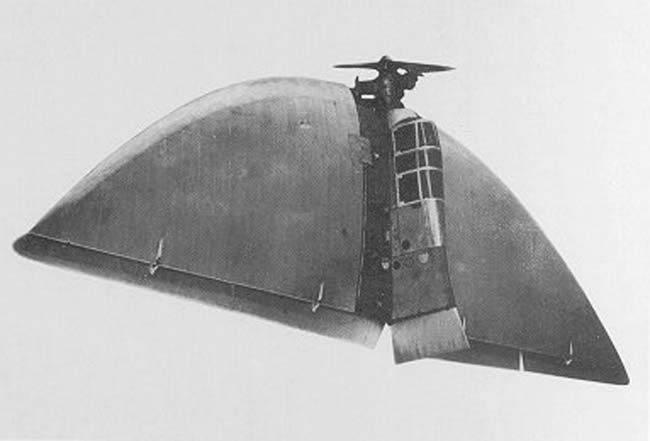
Between 1927 and 1928, B.I. Cheranovsky conducted a series of wind tunnel tests on various models, including the large BiCh-5 parabola aircraft designed for two purely military BMW-VI engines. These tests demonstrated the advantage of using elevators and ailerons (elevons) with an inverted profile, more convex on the underside, in a flying wing. Furthermore, these control surfaces should be suspended beneath the wing’s trailing edge.
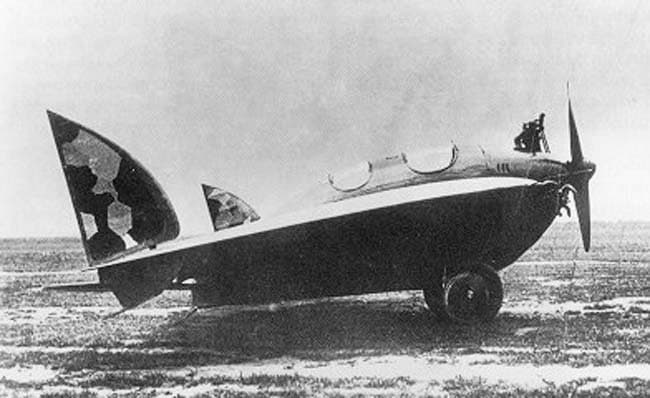
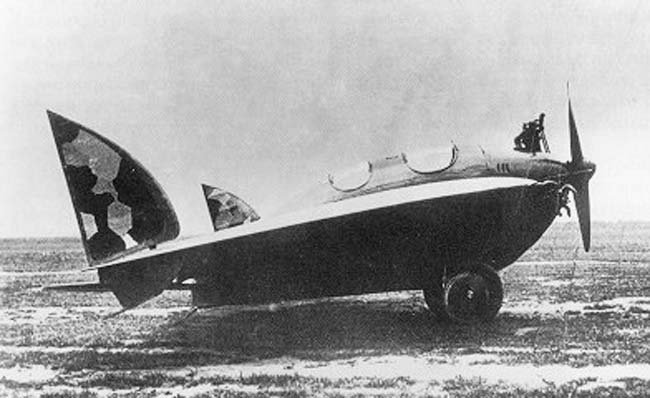
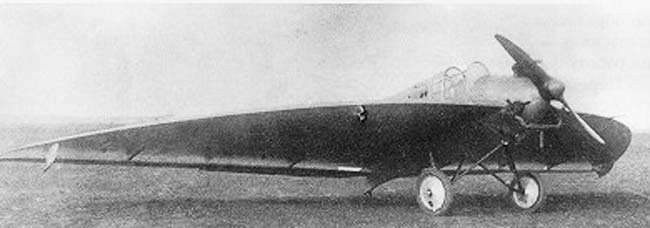
This innovation was implemented in the BiCh-7 aircraft, released in late 1929. The BiCh-7 was a development of the BiCh-3, but featured a 100 hp “Bristol-Lucifer” engine and a wing area increased by one and a half times. Its rudders were small, finless, and located at the wingtips.
The single-wheel landing gear with central and side outriggers made it difficult for the aircraft to gain speed for takeoff and prevented it from becoming airborne. The rudders also proved insufficiently effective, leading to the aircraft being redesigned into the next type.
The Advancement of the BiCh-7A
Continuing to develop his original parabola-wing aircraft design, B.I. Cheranovsky completed work on the two-seater BiCh-7A in 1932. Structurally, the BiCh-7A was a refinement of the BiCh-7, but featured an enclosed cockpit transitioning into a vertical, highly effective empennage, and a conventional pyramidal landing gear. The tests conducted confirmed the designer’s main calculations.
Compared to the earlier tailless aircraft with parabolic wing planforms created by the designer, the new machine was distinguished by its larger size and engine power. It featured somewhat altered wing, elevator, and aileron profiles, which became more convex on the underside, increasing their effectiveness and improving stability and control. Instead of the BiCh-7’s single-wheel landing gear, the BiCh-7A had a conventional, three-point setup.
BiCh-7A Characteristics and Performance
The BiCh-7A’s construction was wooden, with fabric covering. The cockpit was enclosed, transitioning directly into the vertical empennage. The wing was thick, with an area of 30 sq.m. The ailerons and rudders were suspended beneath its trailing edge. The empty weight of the aircraft was 627 kg, with a takeoff weight of 880 kg.
Pilot N.P. Vlagin was pleased with the machine. The aircraft, with its unusual design, responded excellently to the controls, and was stable both in horizontal flight and during turns. With a 100 hp engine, its speed reached 165 km/h, and its ceiling was up to 5,000 m. The landing speed did not exceed 70-75 km/h.
Technical Specifications
| Modification | БИЧ-7 |
| Wingspan, m | 12.20 |
| Aircraft length, m | 4.70 |
| Aircraft height, m | 2.40 |
| Wing area, m2 | 30.00 |
| Empty weight | 627 |
| Maximum takeoff weight | 880 |
| Engine type | 1 Piston engine Bristol Lucifer |
| Power, hp | 1 x 100 |
| Maximum speed, km/h | 165 |
| Cruising speed, km/h | 138 |
| Practical range, km | 200 |
| Practical ceiling, m | 5000 |
| Crew, crew members | 2 |
Image and diagram gallery of the BiCh-7
 BICH-7 |
 BICH-7 |
 BICH-7 |
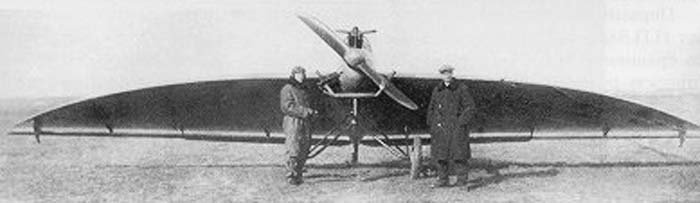 BICH-7 |
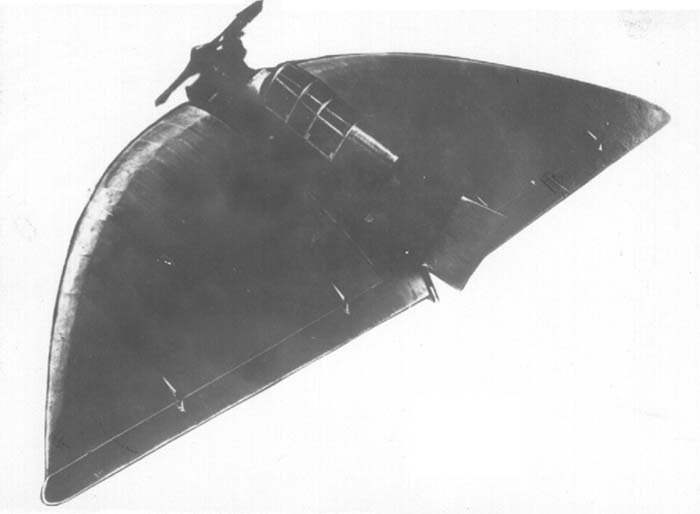 BICH-7 |
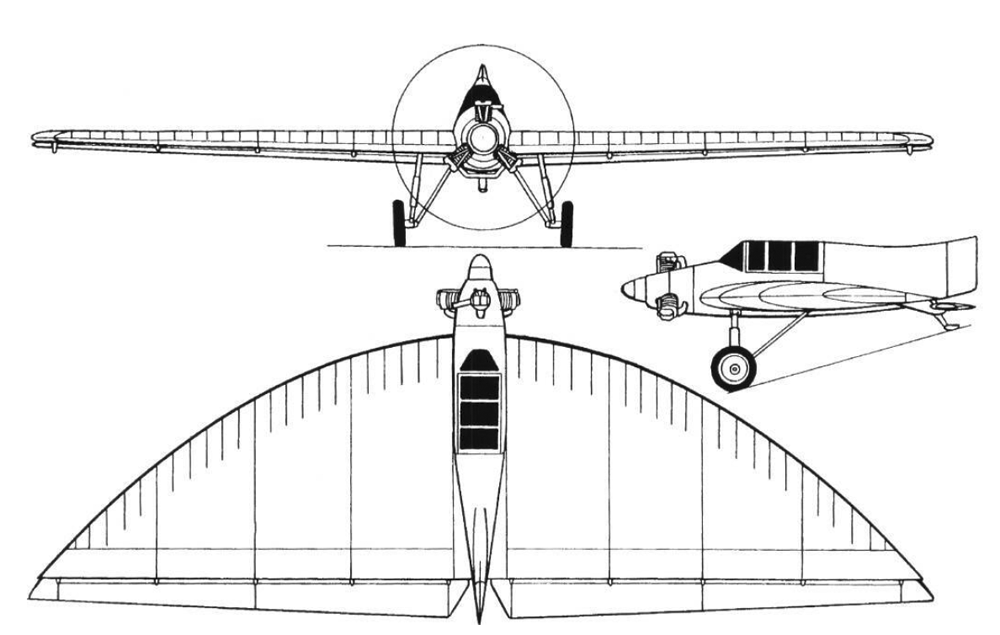 BICH-7 |
Equipo Editorial de ArchivoAéreo
Grupo de investigadores y entusiastas de la aviación dedicados a documentar y preservar la historia aeronáutica mundial. Todos los artículos son revisados para garantizar precisión histórica.
Fuentes y Rigurosidad
La información presentada en esta ficha técnica ha sido compilada a partir de manuales de vuelo desclasificados, archivos históricos y bibliografía especializada. Aunque nos esforzamos por mantener la máxima precisión, algunos datos de rendimiento pueden variar según la variante específica o las condiciones operativas.