Biser Glider
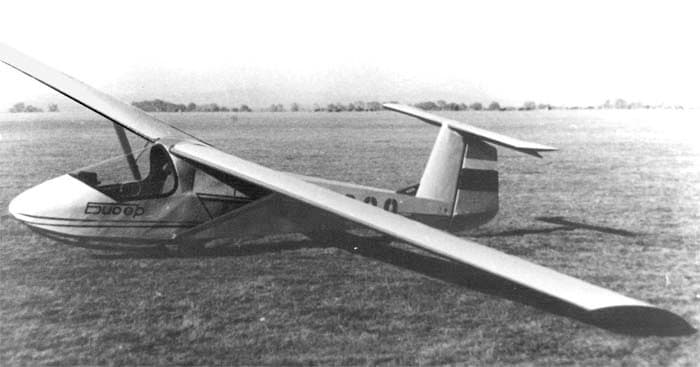
Origins and Development of the Biser Glider
For many years, the primary transitional glider from the two-seat training gliders “Pioner”, “Yastreb”, and “Zherav” was the UR-1 Grunau Baby 2A. However, production of this glider ceased in the 1950s. Therefore, in 1963, the Public Design Bureau was tasked with developing a new single-seat training glider.
Engineers Dimitar Panchovski, Andrey Vlaichev, Kiril Varsamov, and Dimitar Kanev worked on the project. Associate Professor Engineer Boris Stoyanov and Associate Professor Engineer Lyuben Panov actively participated, especially during test flights. The prototype was completed in 1964, and tests were conducted in August of that year.
Features and Serial Production
During testing, it was established that the glider, named “Biser” (meaning “pearl”), possessed excellent qualities. Its cockpit was comfortable and offered excellent visibility. The air brakes were very effective, allowing for precise calculations when landing on fields outside airfields.
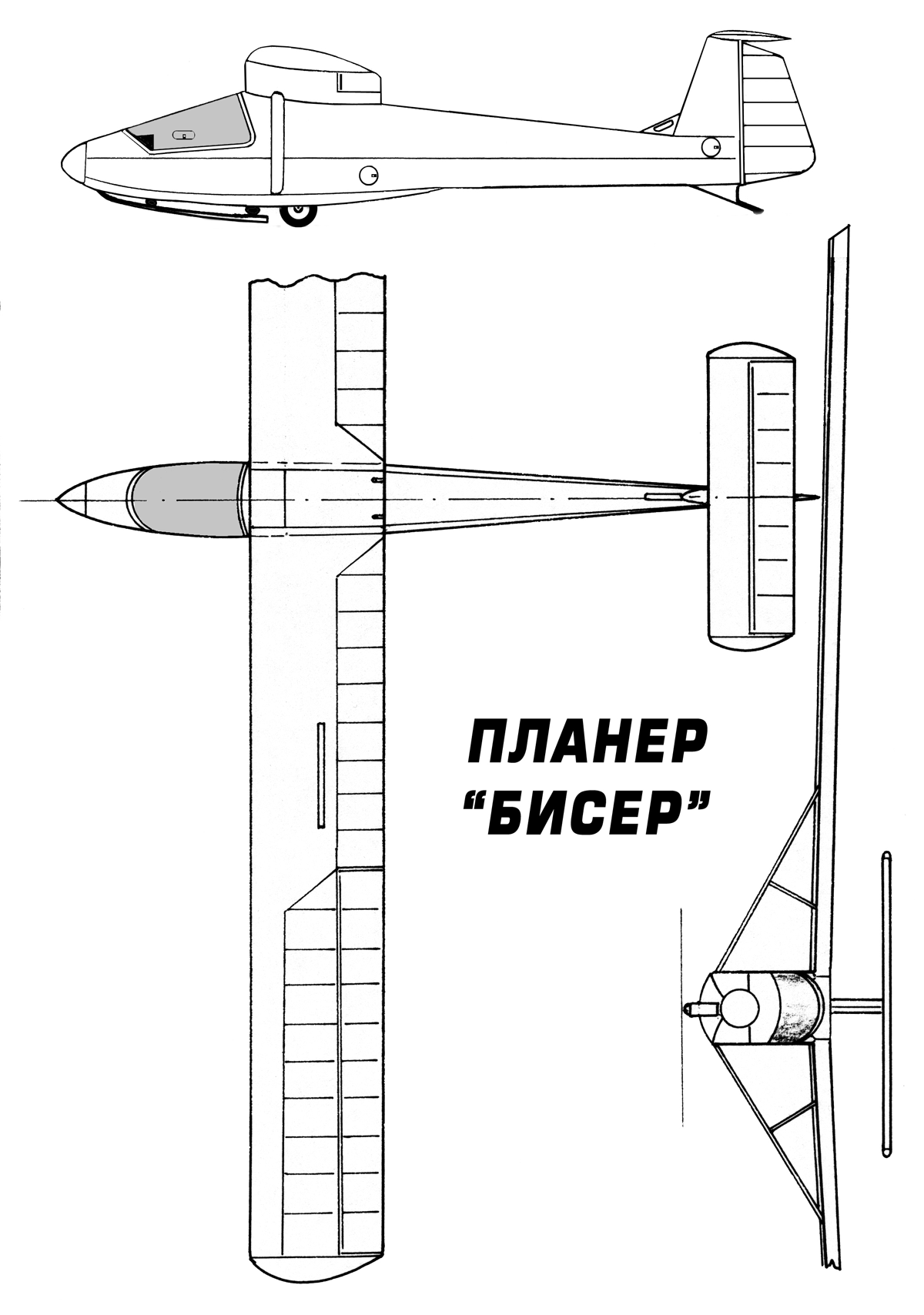
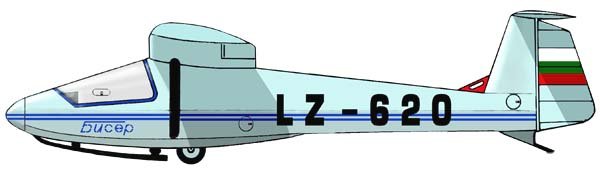
In 1965, the DOCO workshop in the city of Mihaylovgrad (now Montana) began serial production of the “Biser” glider. A total of 34 gliders were manufactured, replacing the UR-1. The Biser featured a wooden construction, a high-wing design with a braced rectangular wing, and T-shaped tail surfaces. The landing system consisted of a skid, a wheel, and a tail skid. The cockpit instruments allowed for flights in complex meteorological conditions, and the glider was also tested in aerobatics.
The Biser-Laminar and the End of an Era
In 1966, the design bureau projected the “Biser-Laminar” glider, and a prototype was built. Its fuselage was similar to the “Biser-Standard,” but its wing had a laminar profile and also featured flaps. This was the last glider built in the DOCO workshop and was handed over to the Central Aeroclub-Bozhurishte.
By the end of 1969, all activity related to glider production ceased. As stated by the renowned Bulgarian glider pilot, Honored Master of Sport, and recipient of the Gold “C” Badge with Diamonds, Ivan Karapanchev, who personally tested most serial and prototype gliders: “…Only history, memories, and agonizing pain remained from the tradition of independent design and aircraft manufacturing, which originated in 1926!”
The Moto-Biser Motorglider
In 1972, based on the “Biser” glider, the “Moto-Biser” motorglider was created. It was equipped with an air-cooled two-cylinder “Trabant” car engine, mounted on struts above the wing, with a tractor propeller. Initially, the State Aviation Inspection refused to grant permission for flight tests.
However, on September 17, 1972, without the necessary permission, the first flight was carried out. The renowned glider pilot Angel Milanov was in the cockpit, risking his flying rights. The glider took off within 80 meters, achieving a vertical climb rate of 2 m/s, a maximum speed of 100 km/h, and a cruising speed of 70 km/h. During the tests, the motorglider’s engine was successfully stopped and restarted.
After a thorough inspection of all documents and the entire structure by the inspectors, permission was eventually obtained. The “Moto-Biser” motorglider would have been of great importance for the sport of gliding, significantly reducing training costs, but it remained only as a prototype. However, by then, Bulgaria no longer had an aviation industry, and there was nowhere to produce the several dozen of these much-needed gliders.
In more recent times, active work has been carried out on the construction of hang gliders and powered hang gliders by amateur clubs, with serial production now established. Yet, true design and production activity for creating Bulgarian gliders for training and high sporting achievements has not existed in Bulgaria for four decades.
Technical Specifications
| Modification | Biser |
| Wingspan, m | 12.25 |
| Length, m | 5.87 |
| Height, m | 1.48 |
| Wing area, m2 | 12.15 |
| Empty weight | 156 |
| Maximum weight | 246 |
| Maximum speed, km/h | 200 |
| Max. aerodynamic quality | 20 |
| Speed at max. aerodynamic quality, km/h | 78 |
| Crew | 1 |
Image and diagram gallery of the Biser Glider
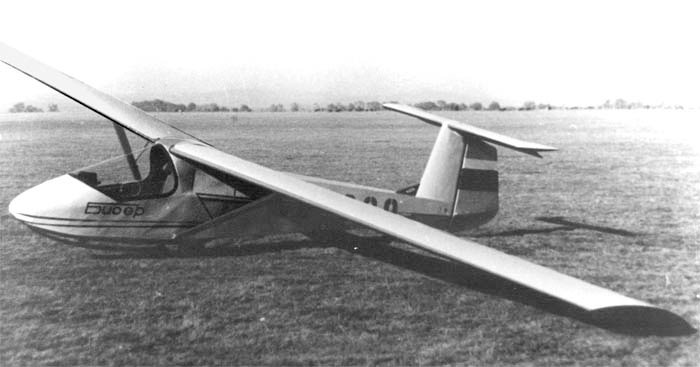 Biser |
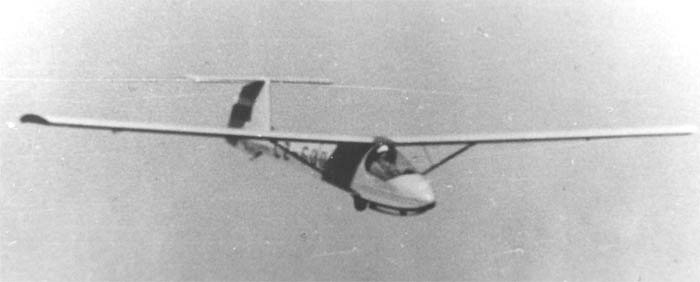 Biser |
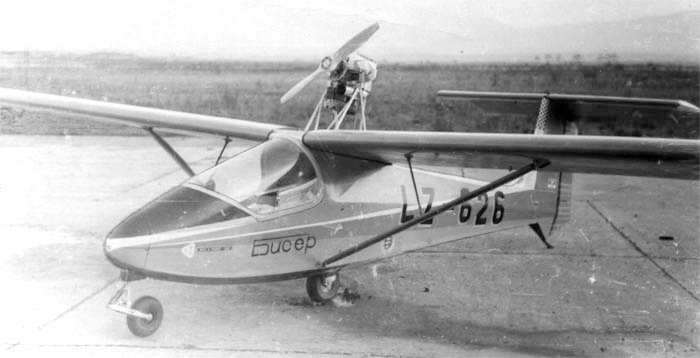 Biser |
 Biser |
 Biser |
Equipo Editorial de ArchivoAéreo
Grupo de investigadores y entusiastas de la aviación dedicados a documentar y preservar la historia aeronáutica mundial. Todos los artículos son revisados para garantizar precisión histórica.
Fuentes y Rigurosidad
La información presentada en esta ficha técnica ha sido compilada a partir de manuales de vuelo desclasificados, archivos históricos y bibliografía especializada. Aunque nos esforzamos por mantener la máxima precisión, algunos datos de rendimiento pueden variar según la variante específica o las condiciones operativas.