BLUE STEEL
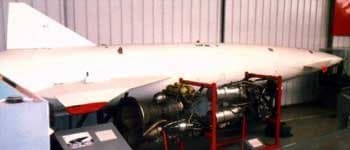
The development of the British strategic missile Blue Steel began in 1954, undertaken by the Hawker Siddeley Dynamics company. This missile was specifically designed to be carried by strategic bombers and was equipped with an inertial guidance system, ensuring precision in targeting.
Design and Aerodynamics
The missile adopted a “canard” aerodynamic configuration. Its nose section featured a triangular (in plan) elevator with truncated ends. The tail section was equipped with a triangular wing and two vertical fins. The ventral fin was designed to fold during missile suspension and would deploy vertically after the aircraft’s takeoff.
Control of the missile was achieved through the nose rudders, ailerons, and the rudder on the upper fin. This comprehensive control surface arrangement allowed for effective maneuverability throughout its flight path.
Propulsion System
Located in the rear section of the missile was the two-chamber Stentor liquid-propellant rocket engine. The maximum thrusts of the large (upper) and small combustion chambers at sea level were 7260 kg and 1800 kg, respectively. The upper chamber was primarily used to accelerate the missile to its cruising speed, after which it would shut down.
Subsequently, the smaller chamber would activate, providing less thrust but a longer burn time, allowing the missile to continue its flight while gaining altitude. The thrust of the small chamber varied according to flight conditions, maintaining the missile’s speed at a constant level. According to some reports, the warhead of the missile separated during the terminal dive towards the target.
Testing and Operational Service
Tests of the Blue Steel missile were conducted between 1959 and 1961 in Australia, at the Woomera range. Launches were performed from the strategic bomber Valiant. In 1962, the missile entered service with the British strategic bombers Victor and Vulcan.
Each aircraft was capable of carrying only one Blue Steel missile. These missiles remained in active service until 1980, when they were officially retired from the British arsenal.
Equipo Editorial de ArchivoAéreo
Grupo de investigadores y entusiastas de la aviación dedicados a documentar y preservar la historia aeronáutica mundial. Todos los artículos son revisados para garantizar precisión histórica.
Fuentes y Rigurosidad
La información presentada en esta ficha técnica ha sido compilada a partir de manuales de vuelo desclasificados, archivos históricos y bibliografía especializada. Aunque nos esforzamos por mantener la máxima precisión, algunos datos de rendimiento pueden variar según la variante específica o las condiciones operativas.