BN.1
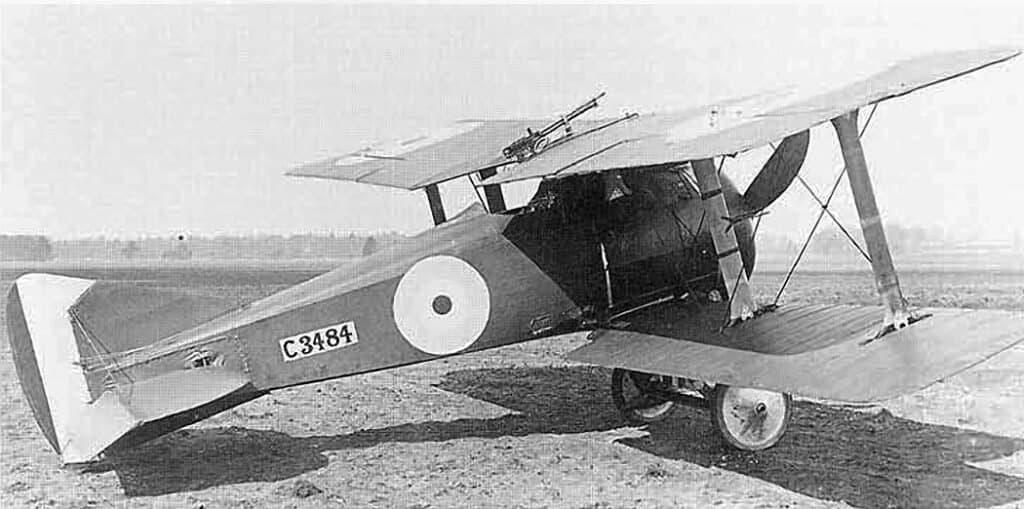
In June 1938, engineer Pietro Luigi Nardi presented research results defining the optimal aerodynamic configuration for a twin-engine aircraft, concluding that a twin-fuselage design was ideal. To validate this theory, Nardi proposed constructing a light, four-seater aircraft capable of challenging German sport planes for supremacy.
A decision made after the air races dedicated to the Third Fascist Aviation Meeting (III Avia Raduno del Littorio) in July 1938 highlighted the inability of Italian machines like the Caproni Ca.309 and Nardi FN.305 to defeat the twin-engine Siebel Si.104 and single-engine Messerschmitt Bf.108 “Taifun.” It was concluded that German superiority could only be overcome by aircraft with superior aerodynamics, leading to consideration of the single-engine SAI-Ambrosini 7 and Nardi’s twin-engine, twin-fuselage aircraft.
Development and Early Challenges
On September 5, 1938, the Amministrazione Aeronautica (Aviation Administration) signed the first contract with the Bestetti company for the manufacture of the experimental BN.1 touring aircraft, named Bestetti-Nardi modello 1, for participation in the Fourth Fascist Aviation Meeting, along with structural components for static tests. The Bestetti firm was managed by brothers Guido and Angelo Bestetti, successors to their father Carlo Bestetti, a pioneer in the aviation industry. Their enterprise was located in Arcore, Brianza, a region known for its furniture industry, and the company collaborated with various aircraft designers, producing their light aircraft designs such as the Bestetti-Colombo C.3.
Nardi’s aircraft was initially planned to be fitted with Hirth engines, later to be replaced by Alfa Romeo 116 units, which were Alfa Romeo 115 engines equipped with a supercharger. A significant feature of the aircraft was its entirely wooden construction, utilizing “reconstituted” wood where material served as a fiber source rather than just parts. Each structural element was made from weakened wood reassembled with a special glue. This process used native Italian wood like beech, poplar, and spruce, and impregnation with fire retardants made the “reconstituted” material non-flammable.
The unavailability of the anticipated Alfa Romeo 116 engines forced a return to the Alfa Romeo 115. This change impacted the aircraft’s estimated performance characteristics: the total full weight decreased from 2000 to 1900 kg, and payload capacity from 800 to 650 kg, while the empty weight increased from 1200 to 1250 kg. Furthermore, the maximum speed dropped from 360 to 350 km/h, and the flight range decreased from 1500 to 1100 km.
Following the engine change, on April 26, 1939, the Supreme Aviation Committee approved a new draft contract with Bestetti, which, however, kept the price for the prototype (362,000 lire) and static test components (184,000 lire) unchanged. Consequently, the aircraft could not be prepared by the summer of 1939. On September 30, the Direzione Costruzioni di Milano, responsible for the Bestetti aircraft, submitted a report on the static tests of the experimental twin-fuselage aircraft, which already had both pilot cockpits ready.
Flight Tests and Operational Issues
Flight tests of the BN.1 commenced in the summer of 1940 but were interrupted by an accident on July 31. Test pilot De Michelis, approaching for landing too low, struck a power line. The damaged aircraft crashed, and leaking fuel ignited, yet the plane was saved thanks to its excellent fire-resistant construction. After six months of repairs, the BN.1, under pilot Bonomi, took to the air again.
Due to the aircraft’s poor maneuverability, Bonomi gave a low assessment of its flight qualities. It was necessary to alter the balancing of the vertical empennage, implement aerodynamic compensation for the horizontal empennage, and increase the overall size of the tail assembly. Following 50 test flights, the aircraft was to be sent to the Experimental Center in Guidonia.
In July 1941, the DGCA dispatched a commission to Arcore, consisting of a captain and a lieutenant. Upon arrival at the firm’s airfield, they confirmed the aircraft had significant handling problems. A second DGCA commission arrived six months later and rejected the BN.1 as unsuitable for military requirements, primarily because the horizontal empennage compensation had not been fully developed at that time (though such a system was developed shortly after the commission’s work). The twin-fuselage aircraft remained with the company and continued to fly intermittently in 1942-43. Its fate after the armistice is unknown.
Using his “reconstituted wood” technology, engineer Nardi began designing a small parasite fighter, the BN.2, capable of detaching from a carrier aircraft via a special hook, where it would spend most of its flight. Static tests of the BN.2’s wing and fuselage began in Milan in late March 1943. However, by this point, the Royal Italian Air Force had lost interest in this “composite” aircraft proposal; in the context of Allied air superiority, the chances for Italian parasite fighters were extremely low. Furthermore, Nardi had already ceased collaboration with Bestetti, which was exclusively focused on military orders, a year prior.
On March 25, 1943, the DGCA proposed to Reggiane that they manufacture two all-wooden wings for the Re.2005 and Caproni Ca.331 fighters, utilizing Nardi’s experimental technology. The aim was to use autarkic resources and the workforce employed in the furniture industry for military production. On June 3, 1942, the DGCA had already inquired with Reggiane about the feasibility of a Re.2005 with a wooden fuselage. Nardi joined Reggiane on November 15, 1942, at which point the Ca.331 modification was dropped, and efforts concentrated solely on the Re.2005, with 39 engineers and technicians assigned to the task. General Aldo Gugliel, inspecting Reggiane on April 26, 1943, found the work in a preliminary phase, hindered by difficulties and delays. Nevertheless, an interesting consequence was the study into the possibility of creating a twin-fuselage Re.2005, deemed the most modern solution for a multi-purpose twin-engine fighter. “Reconstituted” wood could have been used to create components as strong as metal ones, facilitating the conversion of existing metal aircraft production to local resources.
Unfortunately, engineer Nardi’s ideas in the post-war era found application only in the production of spiral staircases and fire-resistant wooden interiors. The twin-fuselage aircraft appeared only briefly in the Italian sky, a vain hope to rekindle victories in air races.
Technical Specifications of the BN.1
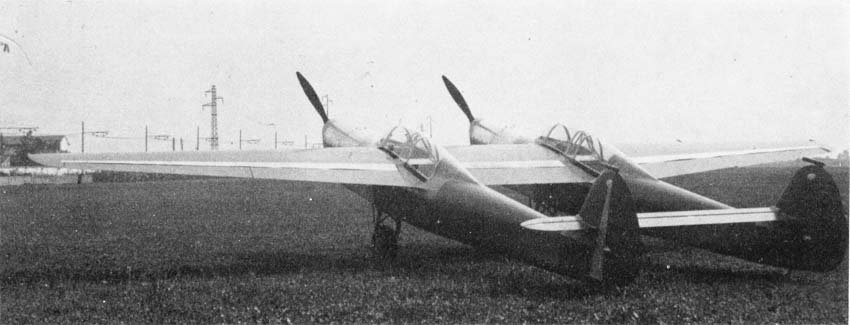
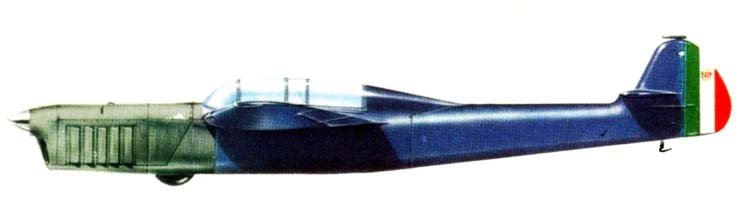
The BN.1 was an experimental touring and sport twin-engine, four-seater, high-wing monoplane of all-wood construction. The wing consisted of a center section connecting the fuselages and two trapezoidal outer panels. The single-spar wing, whose elements (spar and ribs) were made of “reconstituted wood,” featured a plywood skin covered with fabric. The ailerons and flaps, extending along the entire trailing edge of the outer panels, had a wooden structure and were covered with fabric.
The empennage comprised a single horizontal stabilizer and two vertical fins. The empennage structure was wooden with fabric covering, and the movable surfaces incorporated an aerodynamic compensation system. The landing gear struts retracted forward into nacelles located behind the engines. The landing gear wheels were low-pressure with a pair of shock absorbers and brakes. The tail skids were also shock-absorbed.
The fuselage was constructed from “reconstituted” wood, with a thin plywood covering extending to the end of the cabin and fabric covering from the cabin to the tail. The front pilot seats in both cockpits (accessible by tilting the transparent canopies sideways) were equipped with standard instrumentation for measuring flight parameters and engine control. In both cabins, the second seat was for a passenger. The engines were fitted with metallic two-blade variable-pitch propellers. Fuel tanks, with a total capacity of 420 liters, were located in the fuselages between the engines and the cabins.
Technical Specifications
| Modification | BN.1 |
| Wingspan, m | 11.45 |
| Length, m | 8.15 |
| Height, m | 2.10 |
| Wing area, m2 | 17.36 |
| Empty weight | 1419 |
| Maximum takeoff weight | 2063 |
| Engine type | 2 Piston engines Alfa Romeo 115 |
| Power, hp | 1 x 185 |
| Maximum speed, km/h | 360 |
| Cruising speed, km/h | 290 |
| Practical range, km | 1100 |
| Crew | 2 crew |
Image and diagram gallery of the BN.1
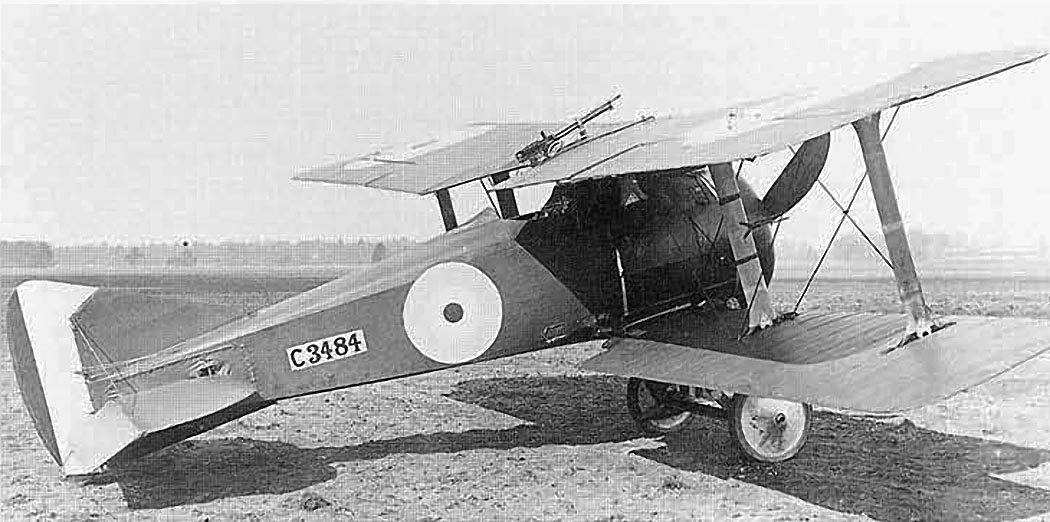 BN.1 |
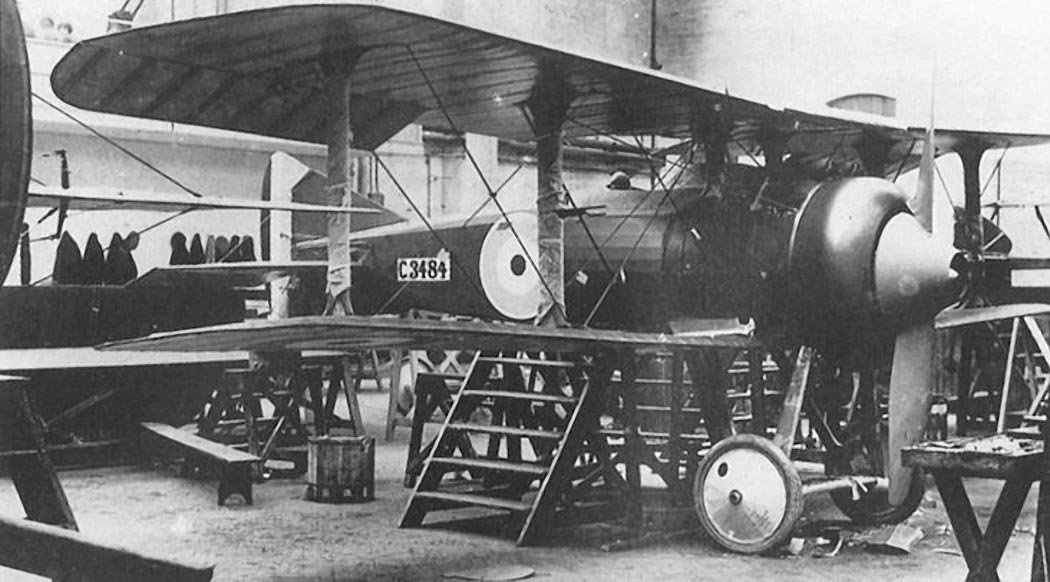 BN.1 |
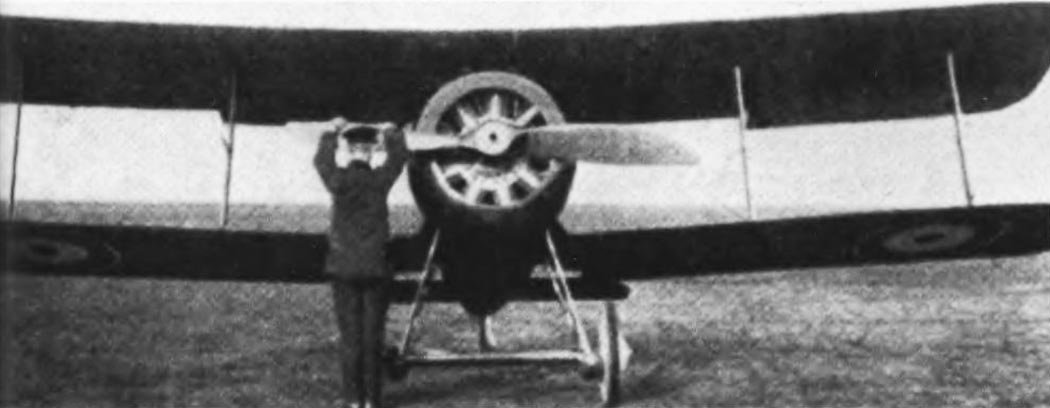 BN.1 |
 BN.1 |
 BN.1 |
 BN.1 |
 BN.1 |
Equipo Editorial de ArchivoAéreo
Grupo de investigadores y entusiastas de la aviación dedicados a documentar y preservar la historia aeronáutica mundial. Todos los artículos son revisados para garantizar precisión histórica.
Fuentes y Rigurosidad
La información presentada en esta ficha técnica ha sido compilada a partir de manuales de vuelo desclasificados, archivos históricos y bibliografía especializada. Aunque nos esforzamos por mantener la máxima precisión, algunos datos de rendimiento pueden variar según la variante específica o las condiciones operativas.