BP-2 (TsAGI-2) Glider
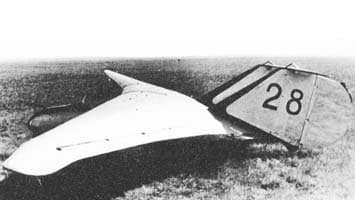
The Revolutionary BP-2 Design
The Soviet scientist V. N. Belyaev made a significant contribution to the study of the “tailless” scheme with a negatively swept wing. Under his leadership, the BP-2 (TsAGI-2) glider was built at TsAGI in 1934. The glider’s wing featured significant taper (n = 6) and positive twist along the span (aerodynamic and geometric).
According to the designer’s calculations, this combination, along with the negative sweep, was intended to ensure minimum wing mass, a successful circulation distribution along the span (close to elliptical), and good anti-flutter characteristics. The glider’s wing center section had an S-shaped M-6 profile. A suspended flap was installed on the trailing edge of the center section, designed for glider balancing in flight and for longitudinal control.
Stability and Control Features
Additionally, the glider was equipped with a horizontal tail, installed at the rear above the center section on vertical fins. However, wind tunnel data showed that the BP-2 glider possessed longitudinal stability even without the horizontal tail. To ensure the necessary center of gravity, the fuselage was strongly extended forward, providing good visibility from the cockpit.
However, this configuration also caused directional instability of the glider, an effect to which the negative wing sweep contributed. To compensate for the destabilizing moments of the wing and fuselage, the BP-2 glider was equipped with two large-area fins (19% of the wing area), to which the rudders were attached. These fins also served to improve the glider’s lateral damping, as a highly tapered wing complicates lateral damping. Lateral control was provided by ailerons.
Testing and Legacy
The BP-2 glider underwent extensive air tests, including a flight from Koktebel to Moscow, and wind tunnel evaluations. The results of these tests revealed good stability and controllability. The only noted drawback was the low effectiveness of the rudders.
However, contrary to expectations, the aerodynamic perfection of V. N. Belyaev’s glider turned out not to be very high. Its maximum aerodynamic quality was 18, and the minimum sink rate (additional information is cut off here). Nevertheless, based on the BP-2 glider, the record-breaking BP-3 glider and the twin-engine DB-LK bomber were created, leaving a significant legacy in experimental Soviet aviation.
Technical Specifications
| Modification | БП-2 |
| Wingspan, m | 8.00 |
| МАК | 18 |
| Minimum descent rate, m/s | 1.15 |
| Crew, crew | 1 |
Image and diagram gallery of the BP-2 (TsAGI-2) Glider
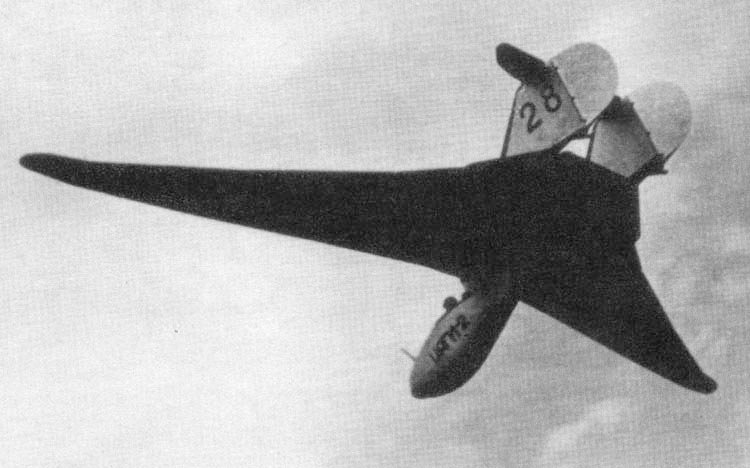 BP-2 (TsAGI-2) |
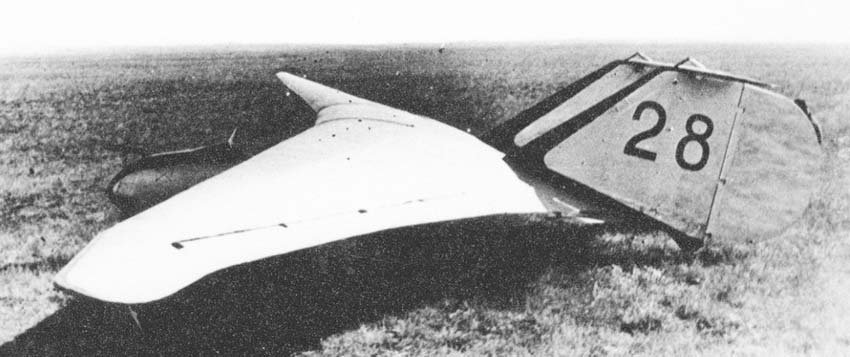 BP-2 (TsAGI-2) |
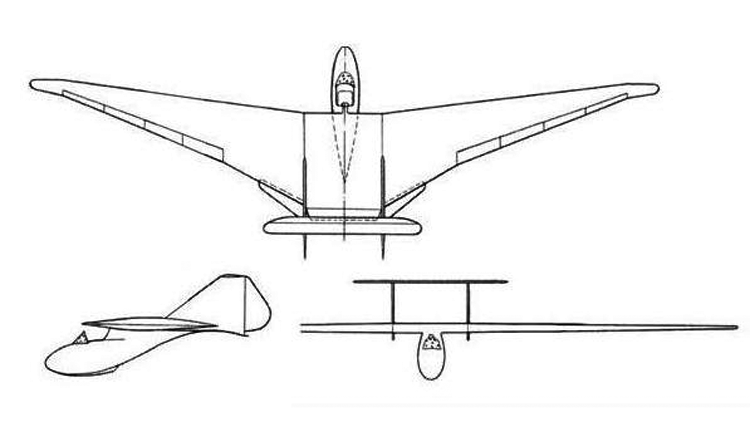 BP-2 (TsAGI-2) |
Equipo Editorial de ArchivoAéreo
Grupo de investigadores y entusiastas de la aviación dedicados a documentar y preservar la historia aeronáutica mundial. Todos los artículos son revisados para garantizar precisión histórica.
Fuentes y Rigurosidad
La información presentada en esta ficha técnica ha sido compilada a partir de manuales de vuelo desclasificados, archivos históricos y bibliografía especializada. Aunque nos esforzamos por mantener la máxima precisión, algunos datos de rendimiento pueden variar según la variante específica o las condiciones operativas.