Brabazon
The Brabazon Committee and the Turbine Aviation Era
The history of civil aviation development has seen many remarkable events, but undoubtedly the most important was the equipping of the first airliners with gas-turbine engines in the late 1940s.
Not only did gas-turbine aircraft, as a class, have to prove their right to exist amidst the “golden age” of piston aviation, but within their own camp, there was long-standing uncertainty regarding the preference for commercial airliners between turboprops (TWD) and turbojets (TRD).
Ultimately (at the turn of the 1950s and 1960s), the scales tipped in favor of TRDs and their variations, heralding the advent of the jet civil aviation era, which subsequently changed the entire face of the modern world.
At its origins lay the formation in Great Britain in 1942 of the Committee to Determine the Directions for the Development of Post-War British Civil Aviation. The British Civil Aviation Committee for Post-War Transport was established by order of Prime Minister W. Churchill when World War II was in full swing, and its outcome was far from decided.
Lord Brabazon of Tara, one of the authorities in British aviation, was appointed chairman of the Committee. He became the first British pilot to fly an aircraft in 1909, then gained fame as a developer of aerial photography techniques, and from 1940-1942 held the posts of Minister of Transport and Aircraft Production.
However, the most important period of his activity was associated with his work on the Civil Aviation Committee, better known as the Brabazon Committee. As time showed, the activities of the Brabazon Committee had a significant impact not only on British but on all world transport aviation.
The Committee’s work began in December 1942. In a report published three months later, requirements were formulated for the main types of commercial transport aircraft that could meet the needs of air travel in the then British Empire and provide worthy competition to American manufacturers.
The aircraft conditionally recommended for development were divided into a high-comfort transatlantic airliner (Type I), passenger aircraft for short (Type II) and long (Type III) imperial routes, a transatlantic postal aircraft (Type IV), and a passenger aircraft for local airlines (Type V).
The British, lacking sufficient production facilities and financial resources, could not compete with the Americans in manufacturing already established piston airliners. Therefore, the only way to displace them from dominant positions was the fastest possible creation of commercial transport aircraft with gas-turbine engines.
Great Britain was the second power in the world after Germany to bring work on these engines to a practical stage in the late 1930s. By the time the report of the first meeting of the Brabazon Committee was published, the firms Power Jets, Rolls-Royce, Metropolitan-Vickers, and De Havilland already had working prototypes of TWDs and TRDs.
Furthermore, since May 1941, the experimental jet fighter Gloster G.40 (E.28/39) “Pioneer” had been flying. However, the Committee understood that the development of significantly more powerful, economical, and most importantly, reliable GTDs for civil aircraft involved a rather high technical risk and would require time.
Based on this, the implementation of requirements for aircraft with TWD (Type I, II, III, V) was divided into two stages: the creation of new piston aircraft or those based on military prototypes, and then with TWD. For the “Type IV” postal aircraft, TRDs were initially recommended, so an alternative power plant was not foreseen.
Between 1943 and 1945, the Brabazon Committee, in cooperation with aircraft manufacturing companies and operating airlines, consistently refined the requirements for prospective aircraft. From 1946, the functions of the Brabazon Committee effectively passed to the Inter-Departmental Committee on Civil Aircraft Requirements (ICARC).
This committee was responsible for coordinating the procurement and design policies of the British aviation corporations BOAC, BEA, and BSAAC. Simultaneously, the Ministry of Supply (MoS), responsible for ordering new aircraft, formulated its own, more specific requirements for each, based on the recommendations of both Committees.
As a result, practically all initial recommendations of the Brabazon Committee were, to one degree or another, implemented in MoS contracts with aircraft manufacturing firms between 1943 and 1948. Largely thanks to the Brabazon Committee, the MoS initiated the development of a number of GTDs for civil transport aircraft from 1943.
Design and Ambition of the Brabazon Giant
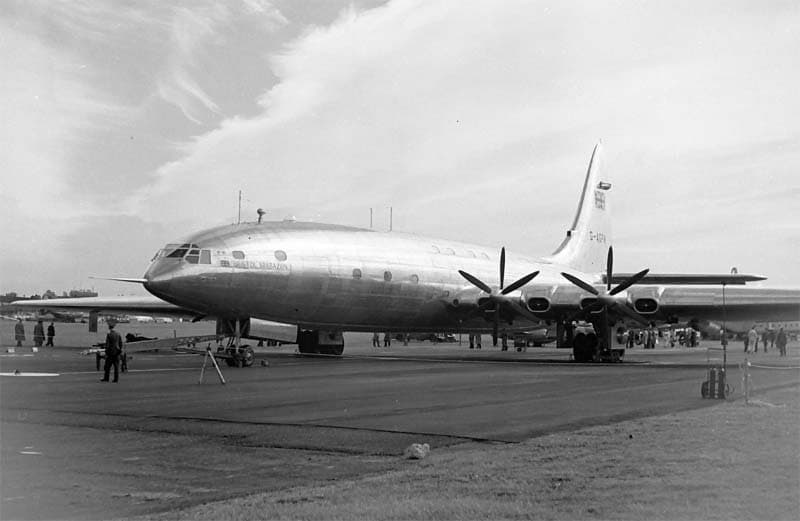
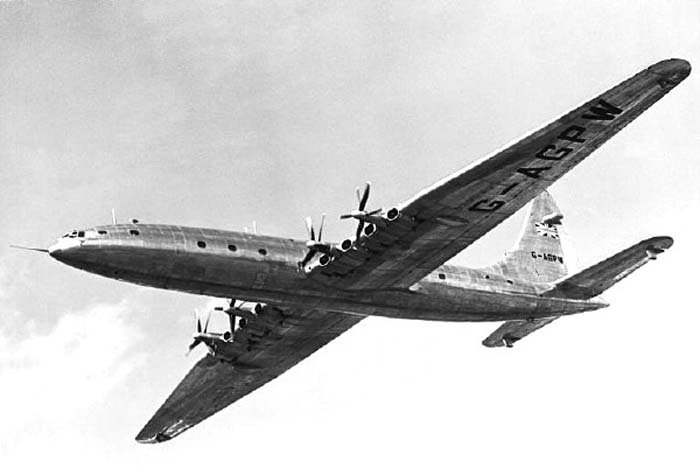
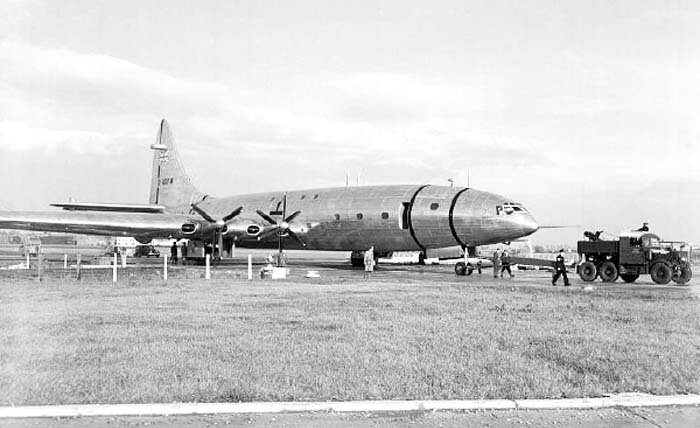
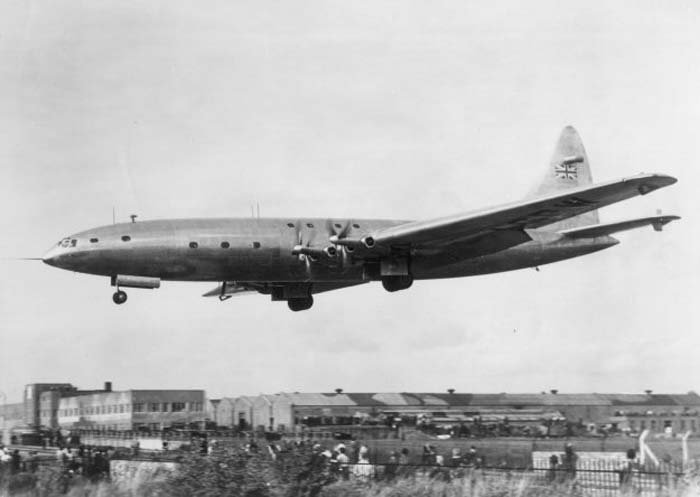
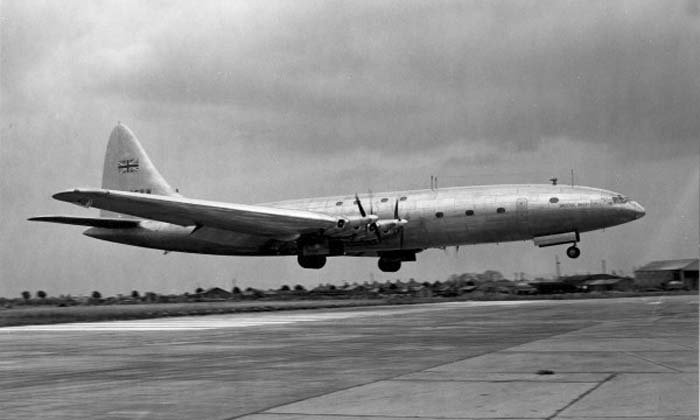
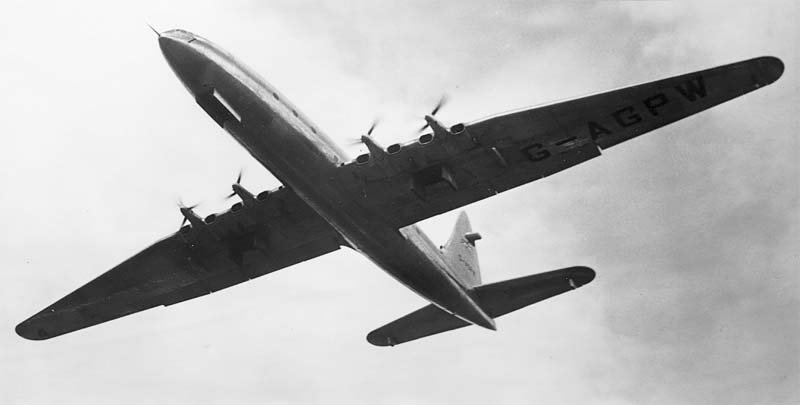
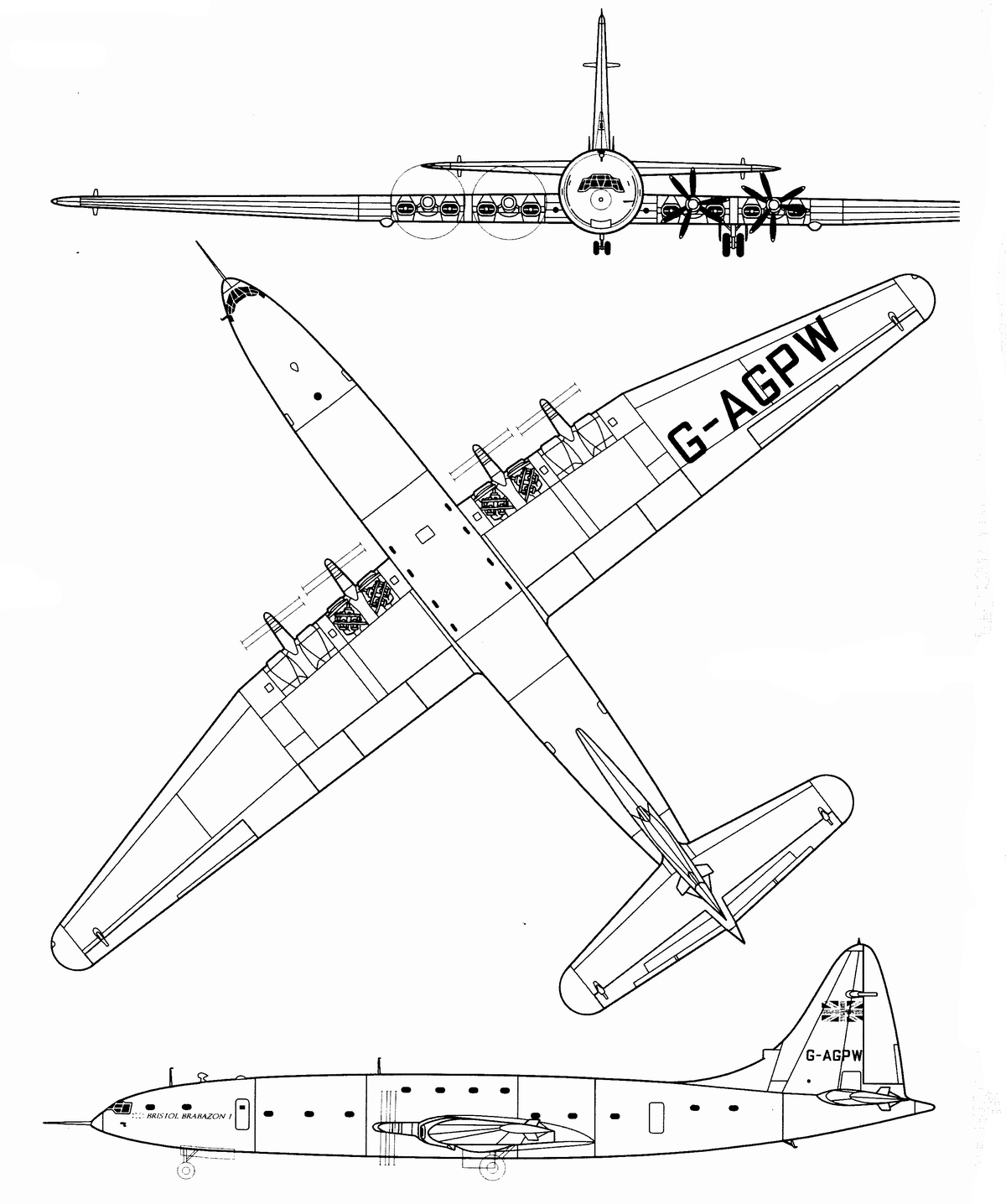
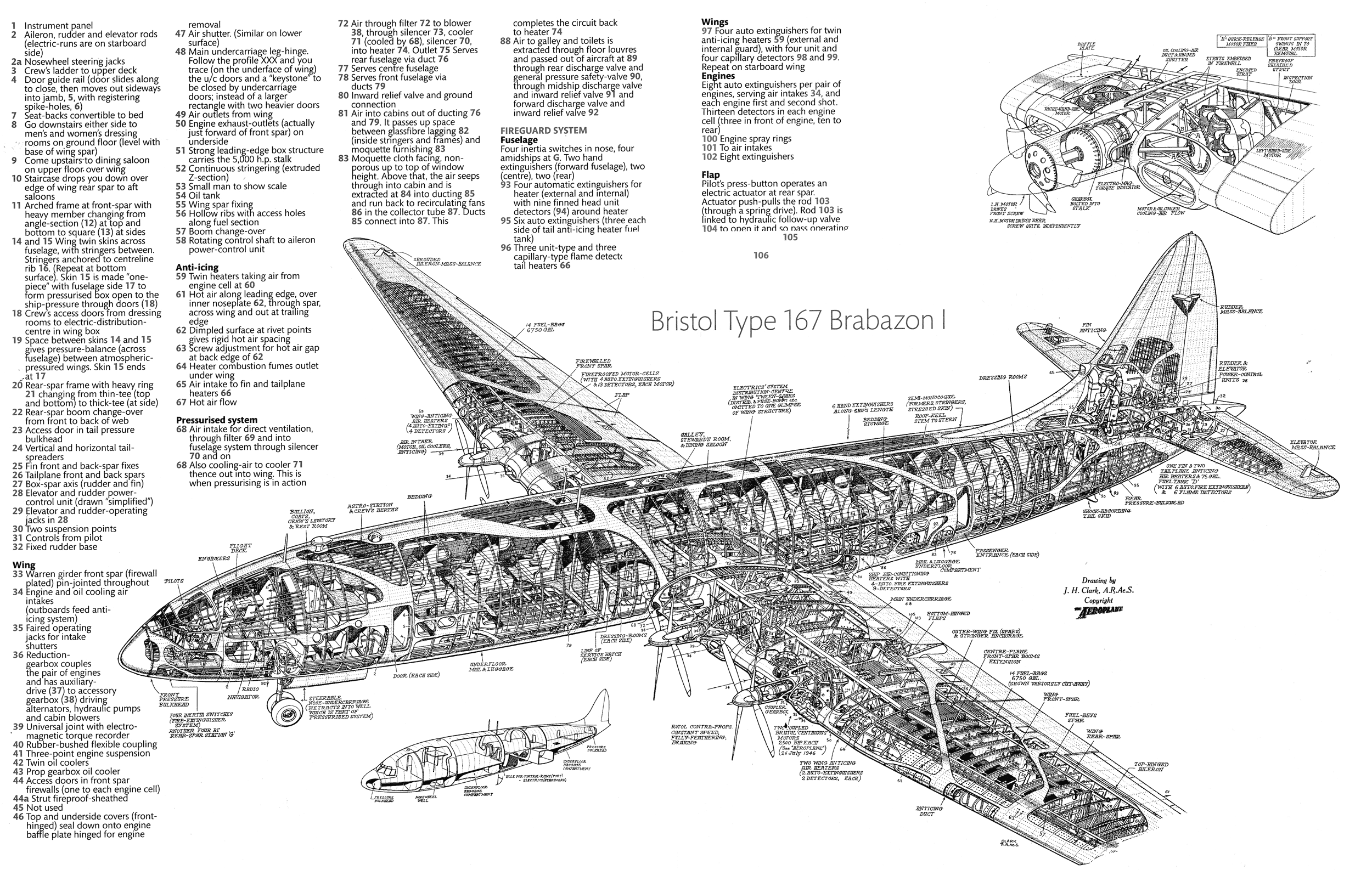
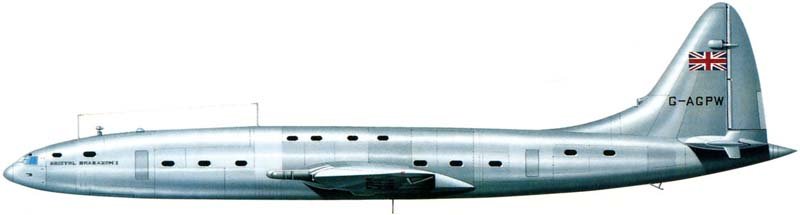
A contract for the development of a giant transatlantic airliner was signed by the MoS with the Bristol company in 1944. The project received the designation “Bristol 167” and the name “Brabazon”. The first prototype, “Brabazon I”, was developed according to the “Type Ia” concept and was to be equipped with eight coupled Bristol “Centaurus-20” piston engines, each with 2360 hp.
Also in 1944, Bristol’s engine division received a contract for the development of the powerful “Proteus” turboprop. In 1945, the MoS ordered the “Brabazon 2” (“Type 16”) with these engines. This aircraft was intended for BOAC operations on the most prestigious London-New York route.
However, the mentality of a maritime power at that time did not allow for a correct assessment of its economic performance. Therefore, the huge aircraft, with a wingspan of 70.1 m, a length of 54.3 m, a takeoff mass of over 130 t, and a fuel capacity of 62,000 liters, was only supposed to carry 60 passengers (in the luxury variant, 25-30), or up to 100 passengers for shorter distances, at a speed of 530 km/h over a route of approximately 6000 km.
The “Brabazon” more closely resembled an ocean liner: separate compartments for passengers with sleeping berths, a wardroom, a bar, and service areas on the lower deck. It is noteworthy that it was also built like a ship, with marine specialists invited to install the 5.18 m diameter fuselage (like modern airbuses) into the slipways.
Additionally, Bristol’s head, R.J. Verdon-Smith, managed to secure additional funds for his grandiose venture to build an equally impressive 320 m long assembly hall and a 2520 m long runway in Filton.
Challenges and Project Cancellation
Flight tests of “Brabazon I” were planned for April 1947, and for “Brabazon 2”, for early 1948. In this scenario, “Brabazon 2” could have become the world’s first passenger aircraft with GTDs and entered transatlantic service as early as 1949. However, these dreams were not destined to come true.
Bristol, having virtually no experience in building passenger aircraft, took on the overwhelming task of creating a huge airliner with a whole host of technical innovations, including a dual power plant, a large-volume pressurized cabin, a booster control system, and more. The aircraft’s construction was not accelerated by the replacement of its chief designer, L.J. Frize, by A.E. Russell in 1946.
Ultimately, “Brabazon I”, whose airframe was practically finished in 1946, was only lifted into the air by test pilot William Pegg in September 1949. A limited certificate of airworthiness was issued on June 14, 1950. The next day, Brabazon I performed several demonstration flights at London Airport, for which 30 seats were installed in the rear fuselage.
Fatigue cracks in the propellers caused the Aviation Register to refuse to issue an unlimited certificate of airworthiness, preventing BEA from commencing trial operations of the liner in its 189-seat variant on the London-Nice route.
The construction of “Brabazon 2” stalled due to difficulties with the development of the “Proteus” turboprop. The first variant of this engine, Pt.1, with a power of 3350 eshp, began bench tests in January 1947 but proved unsuitable for aircraft installation, and its development ceased.
Its second variant, Pt.2 (Proteus series “600”), also faced issues, and development completion shifted to spring 1951, pushing the “Brabazon 2” entry into service dates to 1953-1954. However, on the London-New York route since the late 1940s, four-engine piston aircraft like the Douglas DC-6, Lockheed L-749 “Constellation”, and Boeing B-377 “Stratocruiser” were already extensively operating.
These aircraft transported up to 60 passengers per flight at significantly lower costs than the “Brabazon”. Therefore, Bristol no longer had a chance to find a customer, especially since BOAC, seeing the unfolding situation with the “Brabazon”, prudently ordered aircraft from Lockheed and Boeing.
By 1951, it became evident that the aircraft’s career was nearing its end. In February 1952, the construction of the half-finished “Brabazon 2” was halted, and in September, “Brabazon I” made its last, 164th, test flight. Attempts were still made to find some commercial or military use for the built aircraft.
However, neither BEA’s proposal for their use on short routes in a 180-seat variant nor plans to convert the aircraft into military transports received government support. Furthermore, it was discovered that the construction of both “Brabazon” aircraft had cost significantly more funds (over 3 million pounds sterling) than planned.
The project was closed, and the aircraft were sold for scrap. Interestingly, Bristol welcomed this decision, as it urgently needed to vacate the assembly hall for its new development based on the “Type IIIb” concept, with the equally promising name “Britannia”. To deflect accusations of wasteful public spending, the “Britannia” was declared almost a direct development of the “Brabazon”.
Technical Specifications
| Modification | Brabazon I |
| Wingspan, m | 70.10 |
| Aircraft length, m | 53.95 |
| Aircraft height, m | 15.24 |
| Wing area, m2 | 493.95 |
| Empty weight | 65816 |
| Maximum takeoff weight | 131542 |
| Engine type | 8 Piston engines Bristol Centaurs |
| Power, hp | 8 x 2500 |
| Maximum speed, km/h | 483 |
| Cruising speed, km/h | 402 |
| Practical range, km | 8851 |
| Service ceiling, m | 7620 |
| Crew, crew members | 12 |
| Payload | up to 100 passengers |
Image and diagram gallery of the Brabazon
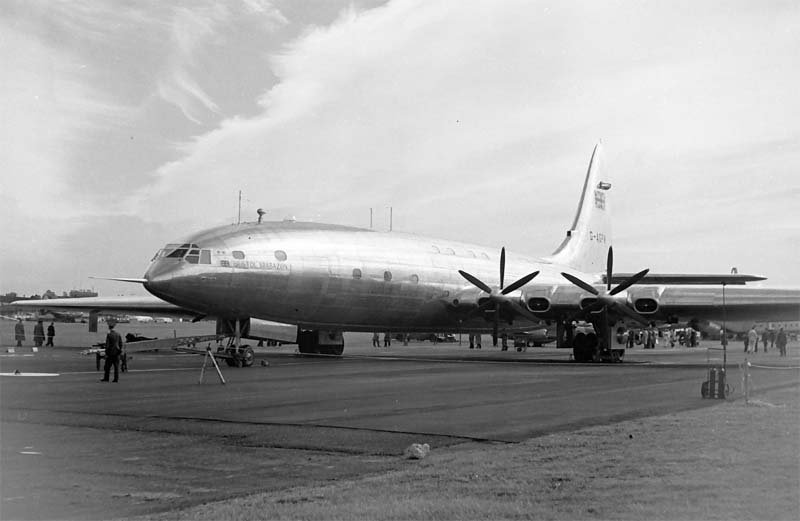 Brabazon. Photograph: Giant Rider |
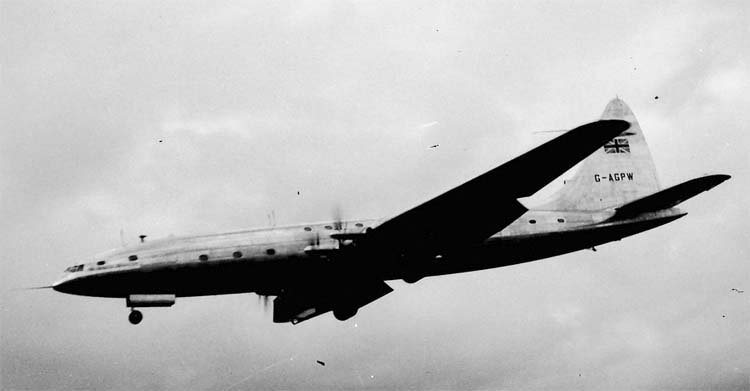 Brabazon. Photograph: David Whitworth |
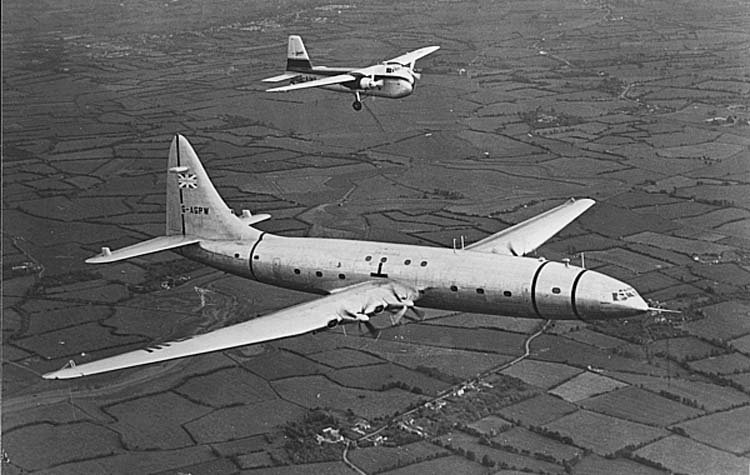 Brabazon |
 Brabazon |
 Brabazon |
 Brabazon |
 Brabazon |
 Brabazon |
 Brabazon |
 Brabazon |
 Brabazon |
Equipo Editorial de ArchivoAéreo
Grupo de investigadores y entusiastas de la aviación dedicados a documentar y preservar la historia aeronáutica mundial. Todos los artículos son revisados para garantizar precisión histórica.
Fuentes y Rigurosidad
La información presentada en esta ficha técnica ha sido compilada a partir de manuales de vuelo desclasificados, archivos históricos y bibliografía especializada. Aunque nos esforzamos por mantener la máxima precisión, algunos datos de rendimiento pueden variar según la variante específica o las condiciones operativas.