Breda-Zappata BZ.308
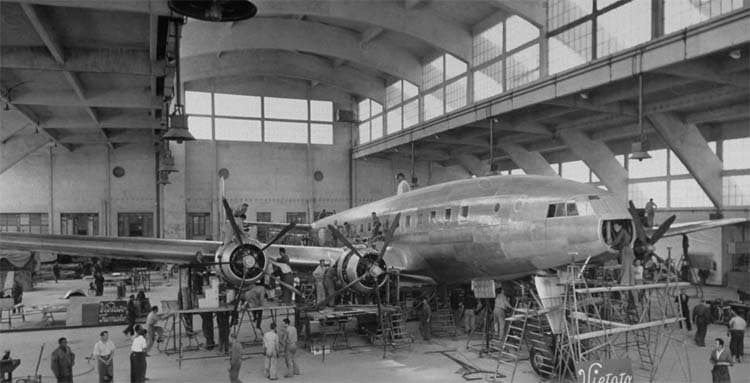
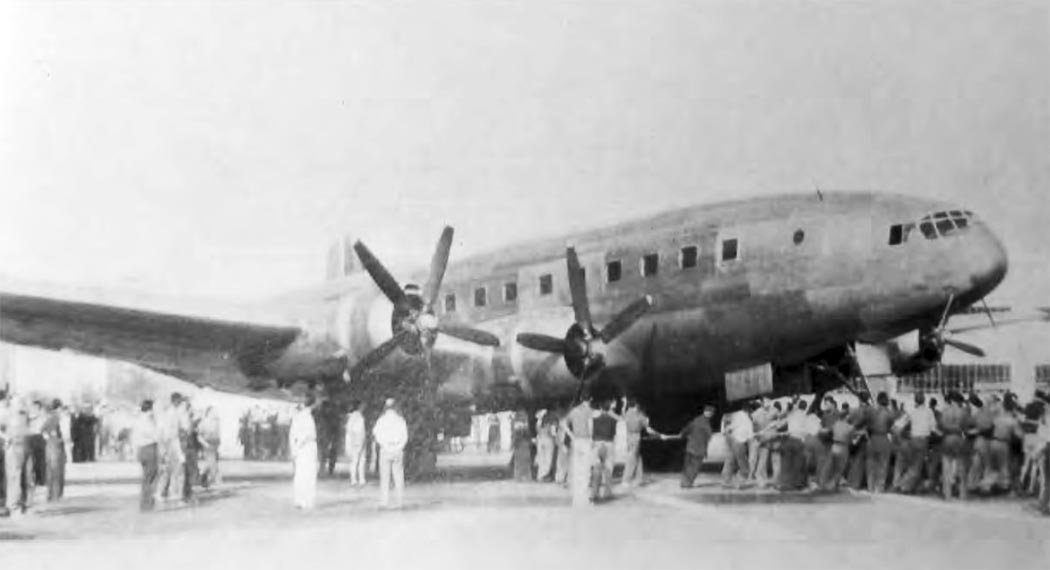
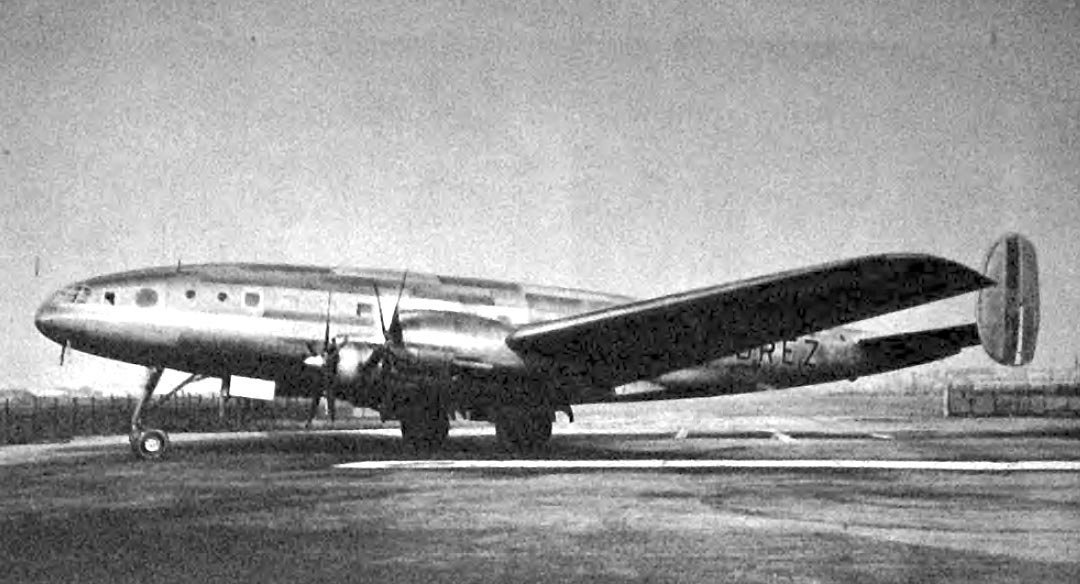
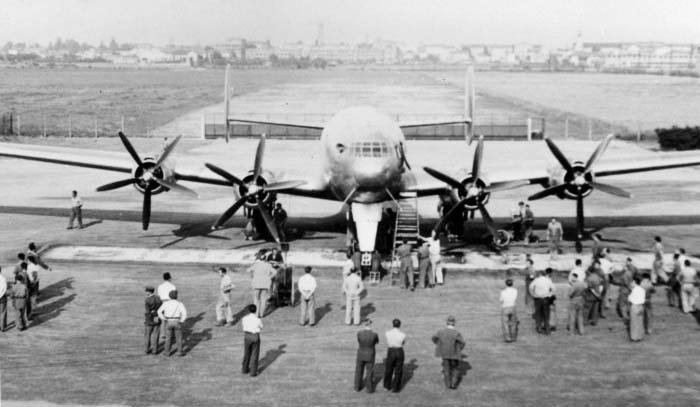
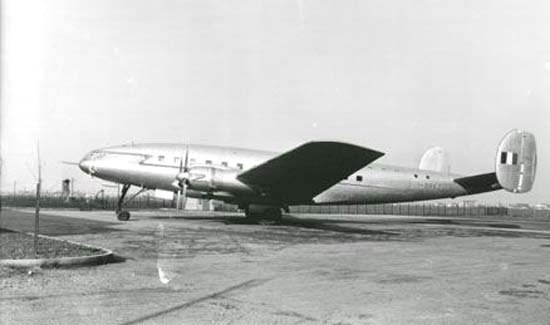
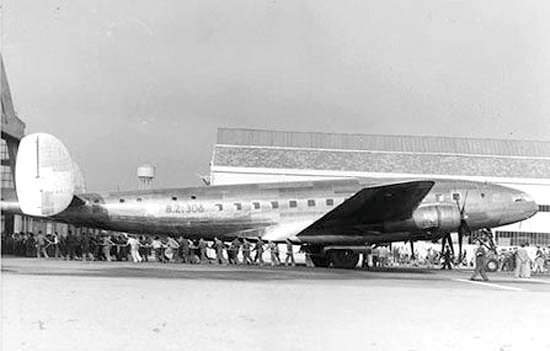
The “Breda-Zappata” BZ.308 is considered one of the most interesting aircraft in the history of Italian aviation. This four-engine transport aircraft had a difficult birth and was built with significant delays. Even after taking to the air, its life was short, and its demise was something between tragedy and farce.
In 1942, engineer Filippo Zappata worked at the Breda factory in Sesto San Giovanni (Northern Italy), where he was responsible for the licensed production of Cant. Z. 1018 “Leone” aircraft. It was at this time that he proposed the idea of the BZ.308, an aircraft that, by its contours, high commercial load, and technical features, was ahead of its time. Nevertheless, the creation of the machine faced a series of problems.
Initially, the machine was designed for “Cyclone” and “Double Wasp” engines from Wright and Pratt & Whitney, respectively, but they settled on the “Centaurus” 568 with a take-off power of 2500 hp.
Wartime Delays and Obstacles
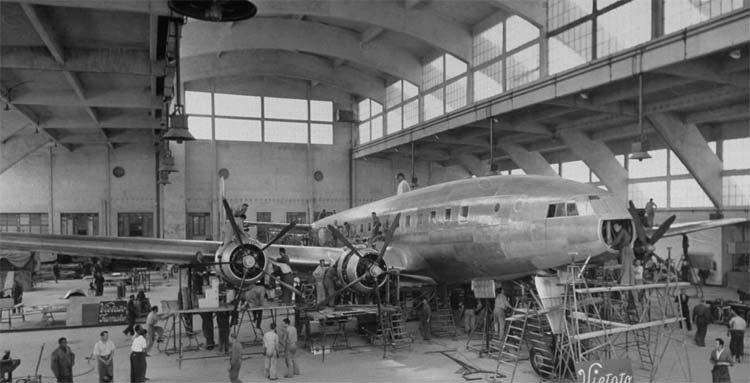
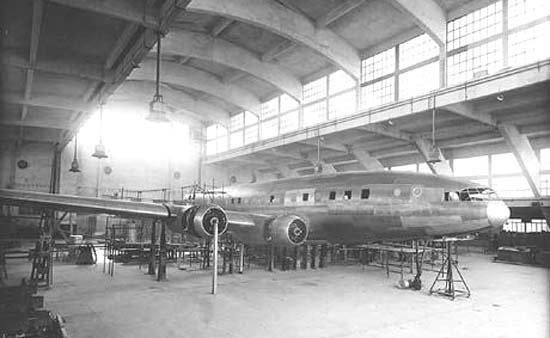
In wartime Italy, there was a severe shortage of construction materials. Moreover, the Breda factory was frequently bombed. By the time of the armistice on September 8, 1943, only the fuselage had been built.
Then, during the period of the Social Republic (“Italian Social Republic” – Mussolini’s puppet fascist republic in Northern Italy), all efforts were focused on building combat aircraft. By the end of the war, Italy’s factories lay in ruins, but the aviation industry was in the worst position.
Work on the experimental BZ.308 also stopped due to a shortage of manpower and the Allies’ unwillingness to allow Italy to build its own aircraft. Only in 1946 did the Allied Control Commission finally relent, and engineer Zappata, with his young team, resumed the construction of the machine.
Zappata’s team was strong. It included engineers Demma, who first applied hydraulic devices in static aircraft tests in Italy; Prati, responsible for research; and Vallisneri.
First Flight and Unfulfilled Promise
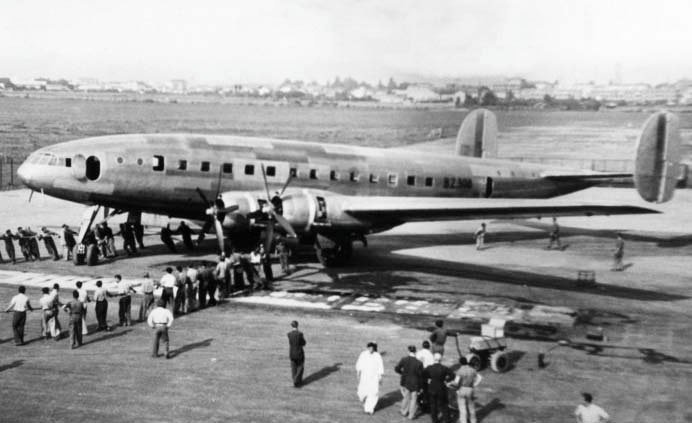
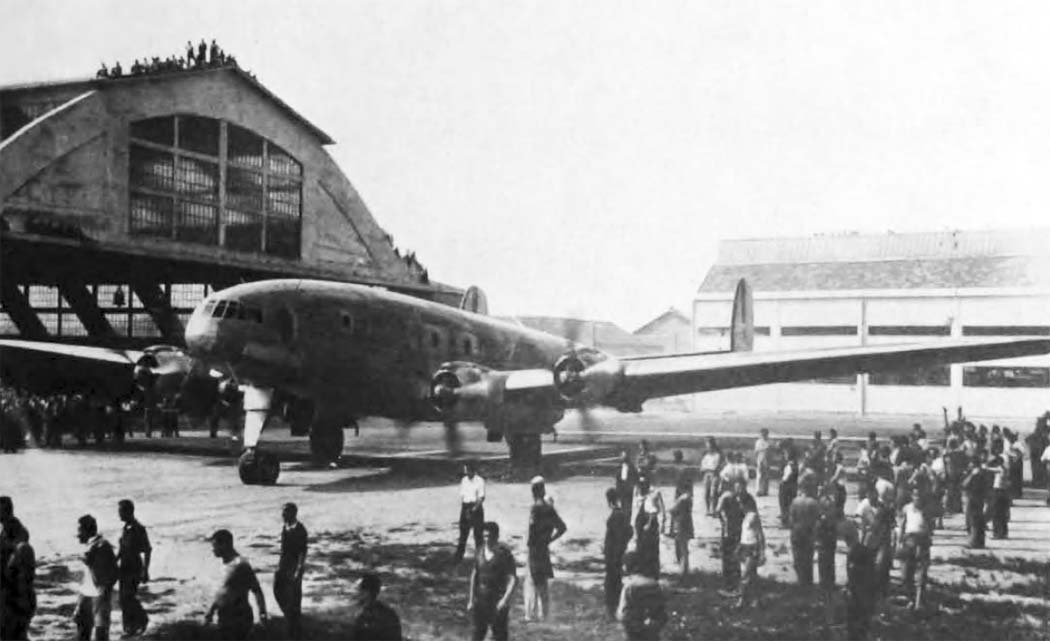
On August 20, 1948, the BZ.308, with the registration I-BREZ, took to the air for the first time, lifting off from Cinisello Balsamo airfield, near Milan. At the controls was the world-renowned pilot Mario Stoppani, who had worked with Zappata before the war, testing various machines, including seaplanes for the “Cantieri Riuniti dell’Adriatico” consortium. Stoppani held numerous speed and altitude records, which brought fame and commercial success to the company.
Next to Stoppani sat engineer Spinelli, head of flight tests. His vast technical knowledge, combined with his ability to pilot aircraft, made Stoppani the ideal person for this job.
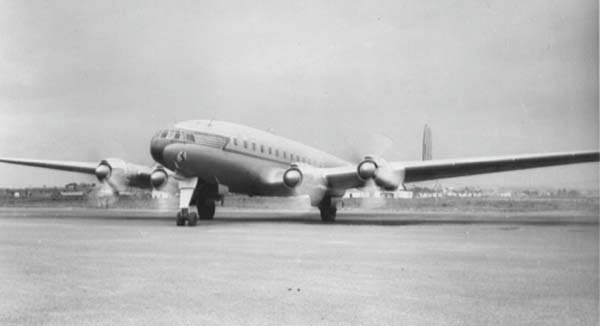
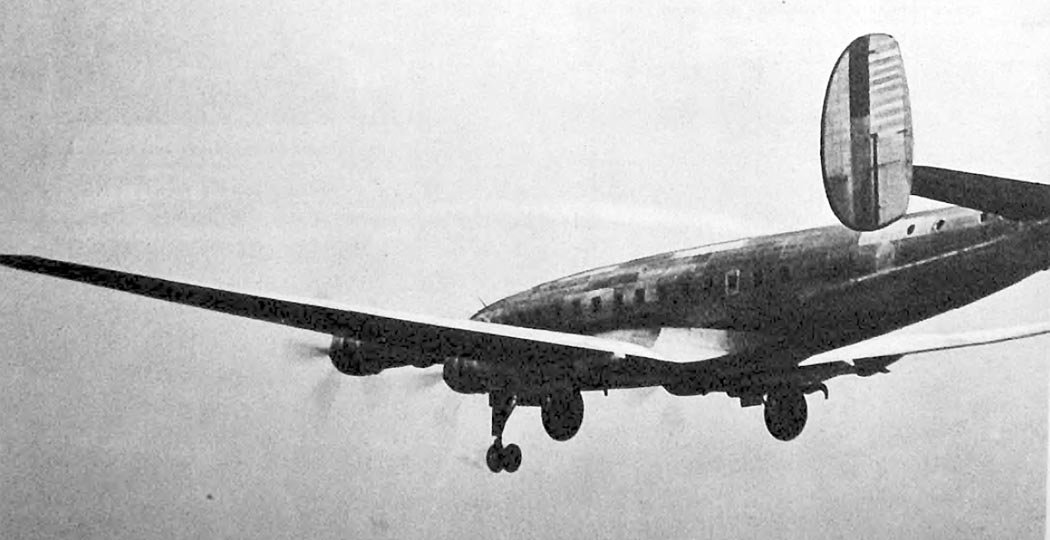
The aircraft showed excellent handling, superb stability, and an impressive cruising speed, largely thanks to the selected Bristol Centaurus 568 engines. After successfully completing flight tests, specialists studied the market. It seemed the machine was assured a long life.
But despite everything, only the experimental machine was built. There were two main reasons for this: firstly, Breda’s financial difficulties; secondly, the lack of support from both the Italian government and the United States, who genuinely feared competition for their own projects.
By the time the experimental BZ.308’s tests were completed, American new-generation multi-engine aircraft like the DC-6 and Constellation from Douglas and Lockheed, respectively, had become well-known. In short, the BZ.308 stopped at the finish line. Perhaps if Breda’s next aircraft, the twin-engine tactical transport BR.471, had been successful, funds would have been found for the BZ.308’s development. But the failure of the BR.471 marked the end of aircraft manufacturing for Breda.
A Tragic End in Mogadishu
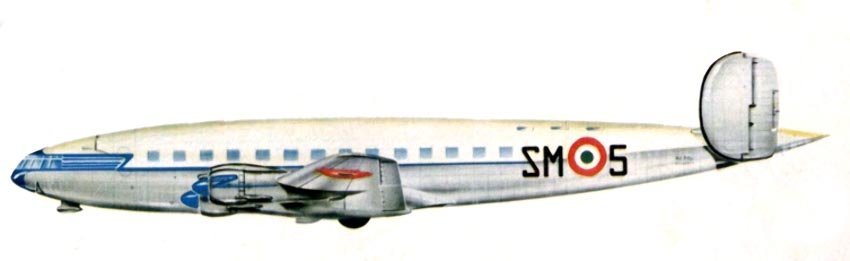
The experimental BZ.308, acquired by the Italian Air Force, became their largest aircraft. In 1950, the machine joined the “Reparto Volo Stato Maggiore” based at Ciampino airport and received the registration SM-5. The aircraft’s former test pilot, Stoppani, trained three lieutenants for it: Fagiola, Pietrolucchi, and Binotti.
The aircraft was mainly used for liaison and transporting important persons, and it was also one of the main exhibits at the aviation exhibition in Lucca. According to the pilots, the machine had excellent flying characteristics, and its maximum speed reached 570 km/h.
At this time, Somalia was still under Italian administration, and in 1952, the Air Force decided to use the BZ.308 for connecting the colony with Italy. The first flight to Somalia (Mogadishu) was performed by pilots Pietrolucchi and Binotti with navigator Captain Zucconi, with intermediate landings in Cairo and Djibouti. From Mogadishu, flights were made to South Africa and Madagascar.
That’s when the troubles began. Although, looking at these events two decades later, they seem like the script of a comedic film “How we almost flew from Mogadishu.” Indeed, Somalia’s gravitational pull proved too strong for the BZ.308.
To be precise, the aircraft completed the first leg of its planned journey, reaching Dar es Salaam, but a landing gear tire burst upon landing. Due to the lack of spare parts in Dar es Salaam, the passengers continued their journey on another aircraft. When, much later, the aircraft was able to take off again, it was decided to return to Italy. But to do so, it was necessary to reach Mogadishu.
The BZ.308 reached Mogadishu and, taking a lion cub donated to the Rome zoo, flew on. An hour later, one of the engines failed, and the crew decided to return to Mogadishu. The engine damage was quickly repaired, but while attempting to install it, it was dropped on the ground. The engine was now beyond repair; all that remained was to wait for a new one to be brought from Italy. This took several months.
While taxiing for take-off, the BZ.308 collided with a cement mixer used for runway repairs. The impact tore off a fragment about two meters long from the left wingtip. One did not need to be a fortune teller or a specialist to conclude that the BZ.308 would spend all of summer 1953 in Mogadishu.
Due to difficulties in delivering spare parts to Somalia, the Italian Air Force eventually abandoned the machine’s repair, stripping various instruments and expensive components from it. The pilots returned to Italy. And the BZ.308 was left in Mogadishu. Once, it was an aircraft advanced in its characteristics, with significant reserves for improvement. Instead, it ended its days in Mogadishu, where its remains lay for many years.
The BZ.308 was designed for high commercial efficiency, operating on both Atlantic routes (take-off weight 47000 kg) and continental routes (take-off weight 41000 kg).
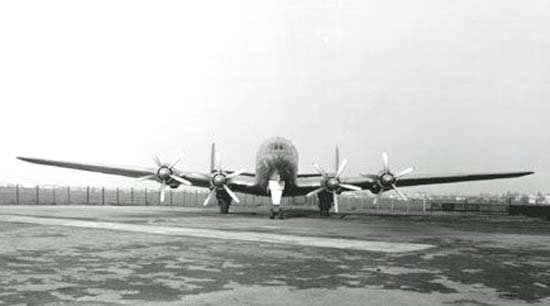
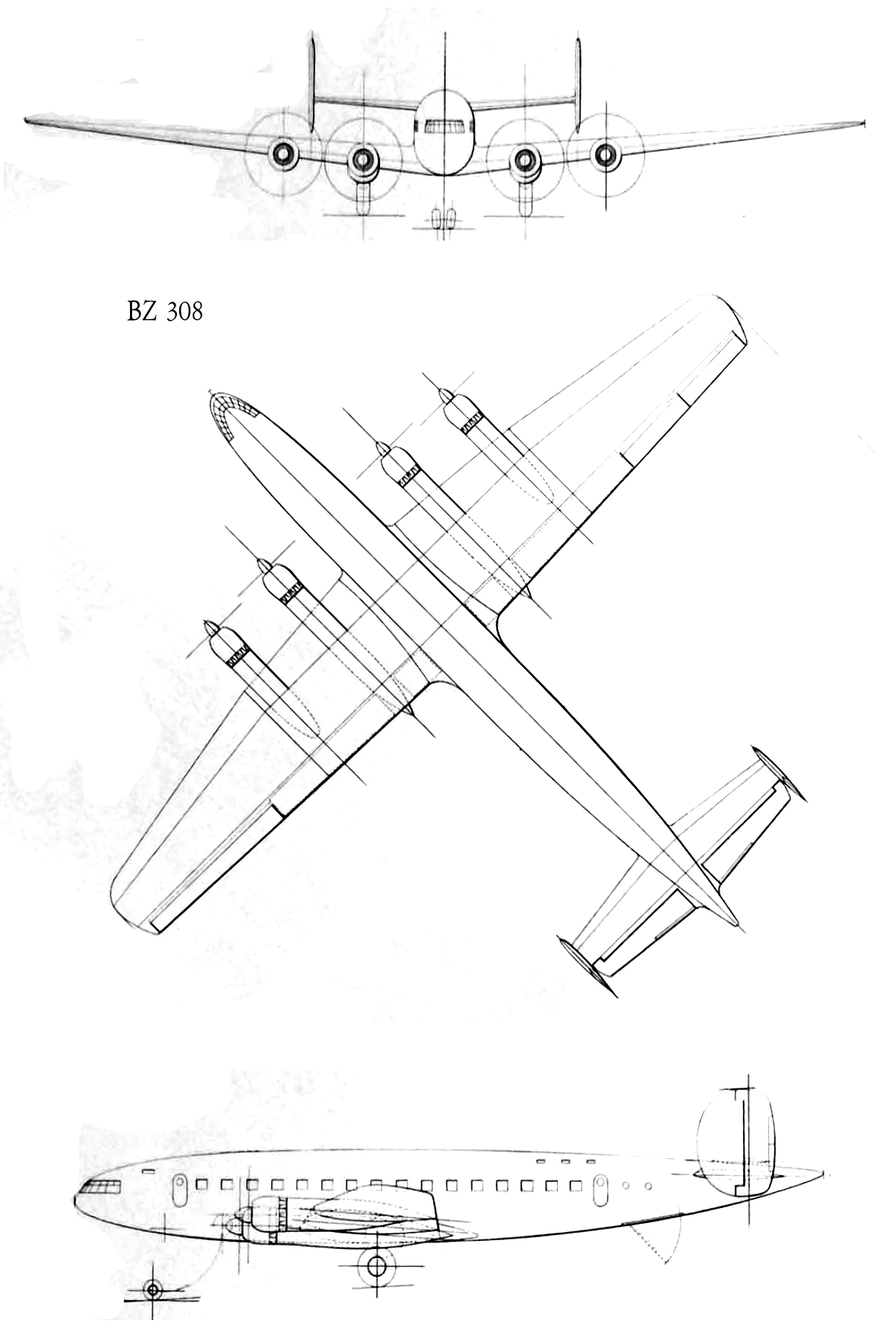
The two-spar wing, equipped with slotted flaps, consisted of a center section with four engine nacelles and two detachable outer wings. The ailerons were metallic, with a trim tab on the right one. The landing gear was a tricycle type with a twin-wheeled nose strut. The main landing gear retracted hydraulically into the inner engine nacelles, but their wheels protruded outwards.
Eight tanks in the center wing (12870 l) and six in the outer wings (6340 l) were located between the spars. There was a crawlway in the center wing for engine inspection during flight. The fuselage was an all-metal monocoque, streamlined, with an oval cross-section, and notable for its large internal volume. Below the cabin floor, there was a cargo compartment.
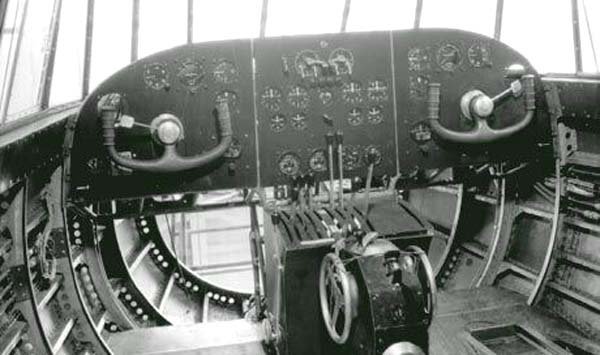
Both pilots sat side-by-side, behind them were the navigator’s cabin and the radio room. For long-haul flights, the aircraft had 12 sleeping berths and 37 seats, and for short routes, up to 80 seats. A cargo-passenger variant was also envisioned, accommodating 31 passengers and 4000 kg of cargo. The prototype aircraft had an 80-passenger configuration.
Passengers entered the aircraft via a built-in airstair in the tail section of the fuselage. At the time, this was an innovative solution, later becoming widely adopted on many passenger aircraft. The tail unit was all-metal, cantilever, with two elliptical rudders.
The developers, hoping to initially build a certain number of BZ.308s, conceived its substratospheric variant BZ.3086nc. The company’s portfolio also included a seaplane variant BZ.408, which utilized the experience Zappata gained working on the four-engine transoceanic Cant. Z.S11. The latter was intended for military use. Two prototypes were tested until the armistice in September 1943. From the Cant., it was planned to use all-metal floats allowing cargo to be placed inside them.
Technical Specifications
| Modification | BZ.308 |
| Wingspan, m | 42.10 |
| Aircraft length, m | 33.52 |
| Aircraft height, m | 7.20 |
| Wing area, m2 | 206.60 |
| Empty weight | 26000 |
| Maximum takeoff weight | 46500 |
| Engine type | 4 Piston engine Bristol Centaurus 568 |
| Power, hp | 4 x 2550 |
| Maximum speed, km/h | 570 |
| Cruising speed, km/h | 442 |
| Practical range, km | 7700 |
| Practical ceiling, m | 7350 |
| Crew, crew members | 5 |
| Payload | up to 80 passengers or 9000 kg of cargo |
Image and diagram gallery of the Breda-Zappata BZ.308
 BZ.308 |
 BZ.308 |
 BZ.308 |
 BZ.308 |
 BZ.308 |
 BZ.308 |
 BZ.308 |
 BZ.308 |
 BZ.308 |
 BZ.308 |
 BZ.308 |
 BZ.308 |
 BZ.308 |
 BZ.308 |
 BZ.308 |
 BZ.308 |
 BZ.308 |
 BZ.308 |
Equipo Editorial de ArchivoAéreo
Grupo de investigadores y entusiastas de la aviación dedicados a documentar y preservar la historia aeronáutica mundial. Todos los artículos son revisados para garantizar precisión histórica.
Fuentes y Rigurosidad
La información presentada en esta ficha técnica ha sido compilada a partir de manuales de vuelo desclasificados, archivos históricos y bibliografía especializada. Aunque nos esforzamos por mantener la máxima precisión, algunos datos de rendimiento pueden variar según la variante específica o las condiciones operativas.