Bristol 123
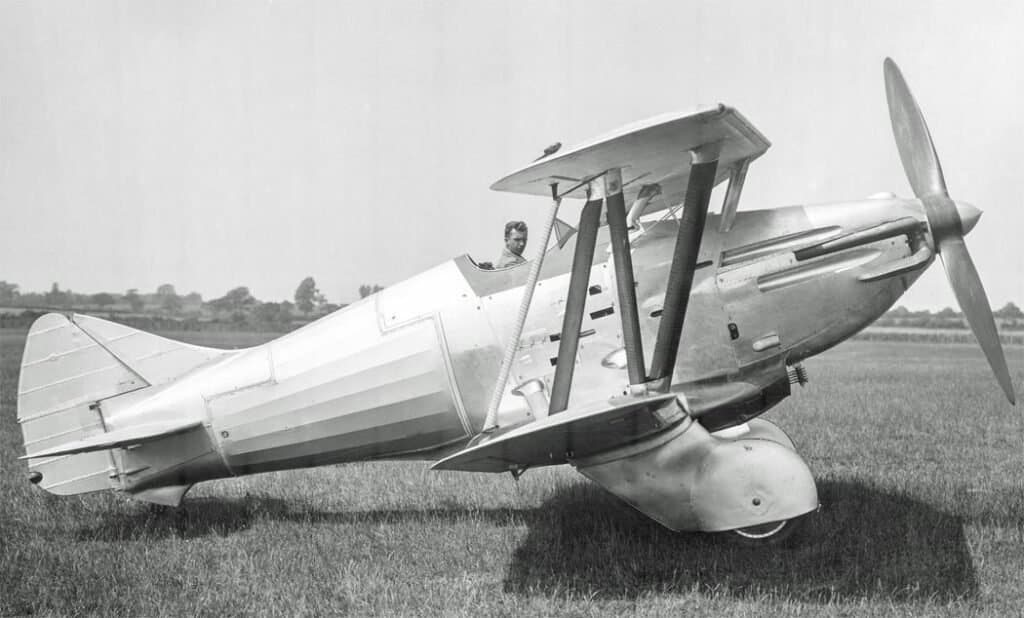
In 1930, the Air Staff, more than ever before in need of a single-seat day and night fighter with higher performance and firepower, prepared Specification F.7/30, issued to industry in late 1931. This invited participation in a competition for technical design development, with the best projects to be ordered as prototypes for a 1934 competition, and with the promise of substantial production orders for the winner. Firms not selected for prototype construction were invited to submit prototypes built at their own expense.
The specification demanded characteristics far superior to contemporary fighters, especially maneuverability, longer flight duration, excellent all-round visibility, low landing speed, and a high initial rate of climb for night operations. Armament was to include four synchronized Vickers machine guns and full radio-telephone equipment. Finally, the Air Staff favored the Rolls-Royce Kestrel IV engine with an evaporative cooling system, which had practically completed flight trials and was planned for production as the Goshawk.
Bristol’s Proposals and Design Evolution
The Bristol Aeroplane Company, though reluctant to use a rival’s engine, could not disregard an invitation with such a significant prize at stake. In January 1932, they submitted a project featuring the Goshawk engine – the Type 123 – along with alternative monoplane proposals. Two of these were almost identical low-wing designs: the Type 127 with a Goshawk engine and the Type 128 with a Mercury engine, while the Type 129 was a high-wing monoplane with a pusher propeller, providing the pilot an unobstructed view and unlimited firing capability with minimal streamlined area in the airflow.
The low-wing monoplane featured a monocoque rear fuselage made of aluminum alloy, a front section with steel tube construction, and canvas-covered steel wings. To these, an emergency pylon on top and non-retractable landing gear below were attached by faired wires, similar to Schneider Trophy seaplanes. The Mercury engine version had a Townend ring, while the Goshawk version had condensers arranged along the leading edge with additional radiators in the landing gear fairings.
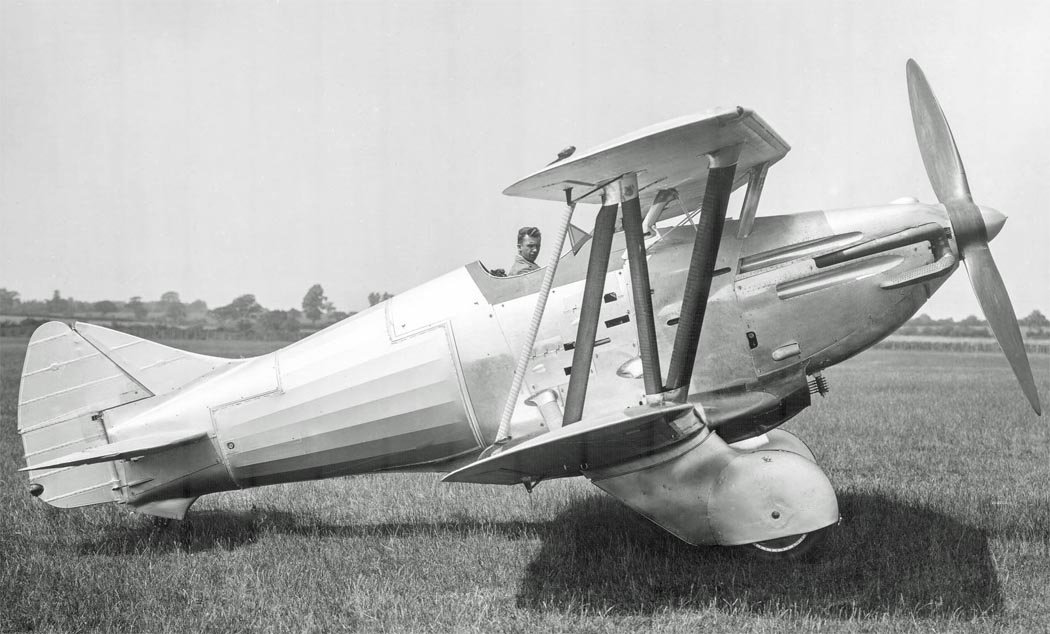
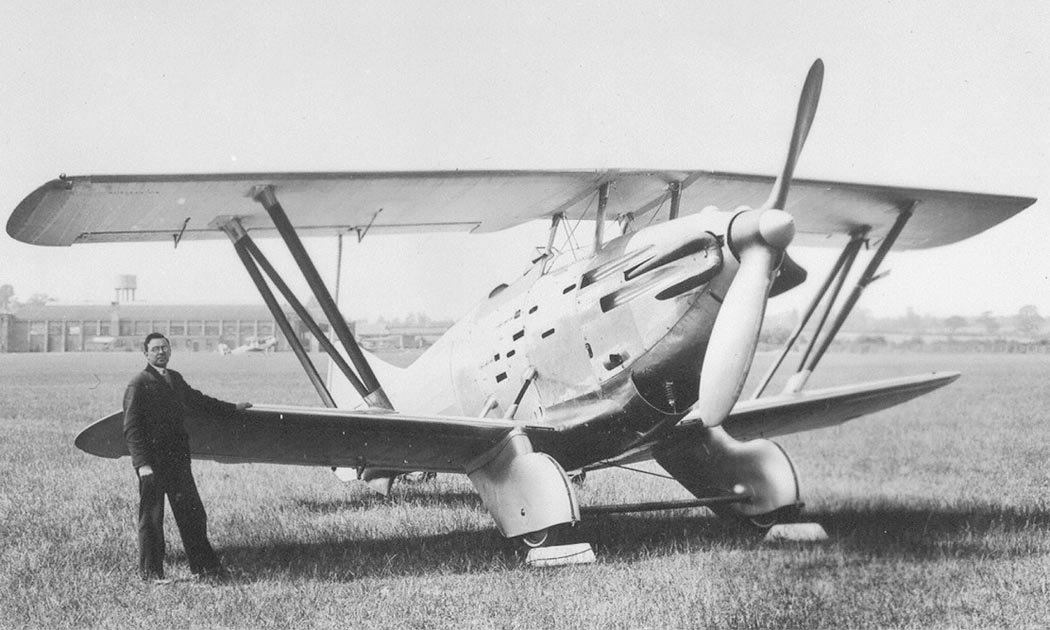
The Type 123 biplane featured a tapering cantilever lower wing, through which the load from the two upper wing halves was transferred by V-struts (one on each side) without any external bracing. A wide-track split landing gear was attached to the lower wing. The roots of the upper wing were hinged to very thin struts above the fuselage centerline to interfere as little as possible with the pilot’s view and cause minimal drag.
Prototype Development and Technical Challenges
None of these initial designs were accepted for a prototype order, but the company, utilizing the latest available information, was invited to create a redesigned biplane built at its own expense. Flap-type ailerons, combined with slotted and interceptor controls already tested on the Bulldog, were incorporated into a completely new Type 123 mock-up in November 1932. In March 1933, construction of one prototype, No. 7775, at Bristol’s own expense was approved, with the Air Ministry supplying the Goshawk III engine, machine guns, and other equipment on loan.
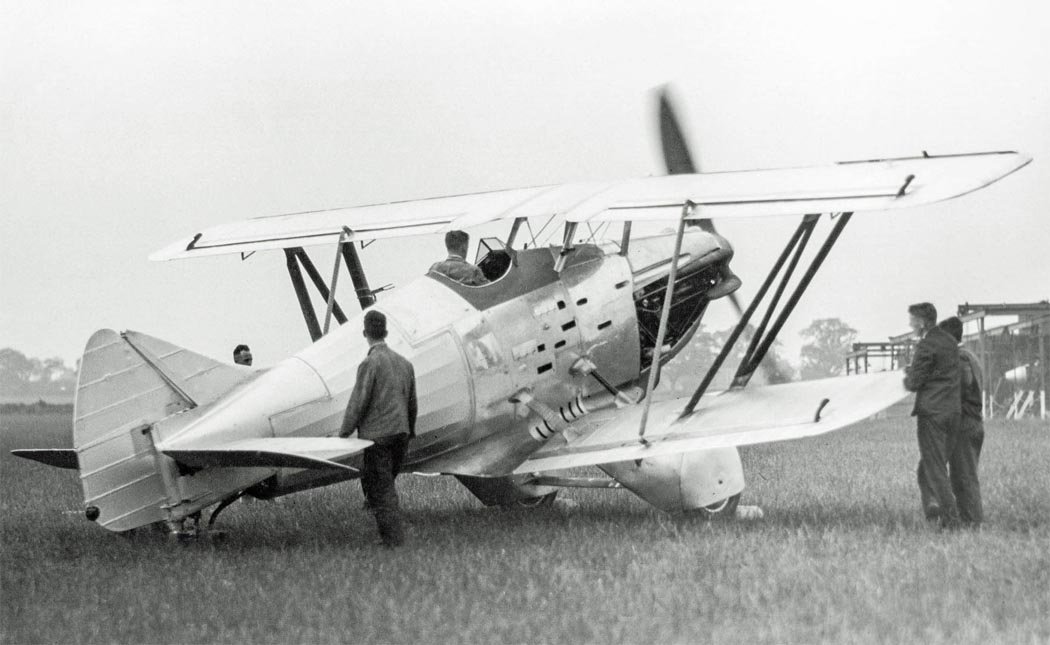
As a redesign, the wings were almost rectangular in plan, with a highly extended upper wing that had sweep and no dihedral, and a straight lower wing with 6 degrees of dihedral. The landing gear consisted of two faired, braced struts with rubber shock absorption. The struts extended from the lower wing along with short braces from the wing to the fuselage. It was hoped the landing gear struts would be fully within the fairings, but the baseline was too short for lateral rigidity, necessitating an inter-wheel axle.
The front fuselage and engine mount formed a fully triangulated framework of high-strength steel tubes, carrying fuel tanks and two pairs of machine gun mounts. The fuselage structure behind the cockpit was a simple Warren truss of bent strips of high-strength steel roll, faired by light metal ribs and stringers. Wing spars were made of high-strength steel beams and a lattice of light alloy sheets. The upper wing’s leading edge featured a stressed-skin box structure and carried full-span leading-edge slats. These slats, combined into two groups, were made of duralumin.
The entire trailing edge of the upper wing was occupied by ailerons, linked to interceptors and outer slats for lateral control, and symmetrically lowering when the inner slats were opened at high angles of attack. The cantilever single-piece lower wing had a double-layered leading edge forming radiators for the cooling system; these were connected to a central honeycomb condenser installed in a tunnel under the fuselage fairing. Fuel tanks, all in the front fuselage, were complex in shape and easily removable sideways. Overall, the design was an extreme example of trying to achieve the impossible.
Flight Testing and Final Outcome
There were several weeks of delay before the promised engine arrived at Filton, and then problems with the cooling system preceded flight tests, which began on June 12, 1934. When partially corrected, the biplane proved laterally unstable because the deployment of the inner slats was critical.
Subsequently, the inner slats were permanently sealed, and the area of the fin and rudder was increased, but lateral instability at high speed persisted, apparently due to wing tip deflection. Uwins recommended that further development would only be a waste of time and money, and the Type 123 was the last Bristol biplane built at Filton.
Technical Specifications
| Modification | Bristol 123 |
| Wingspan, m | 9.02 |
| Length, m | 7.67 |
| Height, m | 2.89 |
| Wing area, m2 | 23.04 |
| Empty weight | 1497 |
| Normal takeoff weight | 2149 |
| Engine type | 1 Piston engine Rolls-Royce Goshawk III |
| Power, hp | 1 x 695 |
| Maximum speed, km/h | 378 |
| Cruising speed, km/h | 322 |
| Crew | 1 |
| Armament | four synchronized 7.7-mm Vickers machine guns |
Image and diagram gallery of the Bristol 123
 Bristol 123 |
 Bristol 123 |
 Bristol 123 |
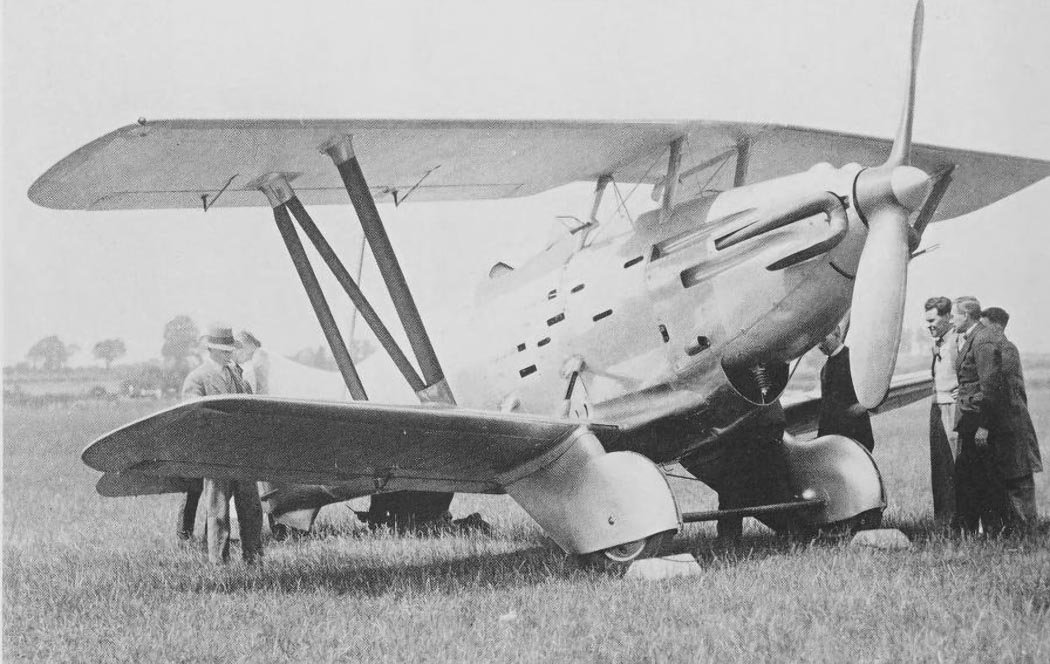 Bristol 123 |
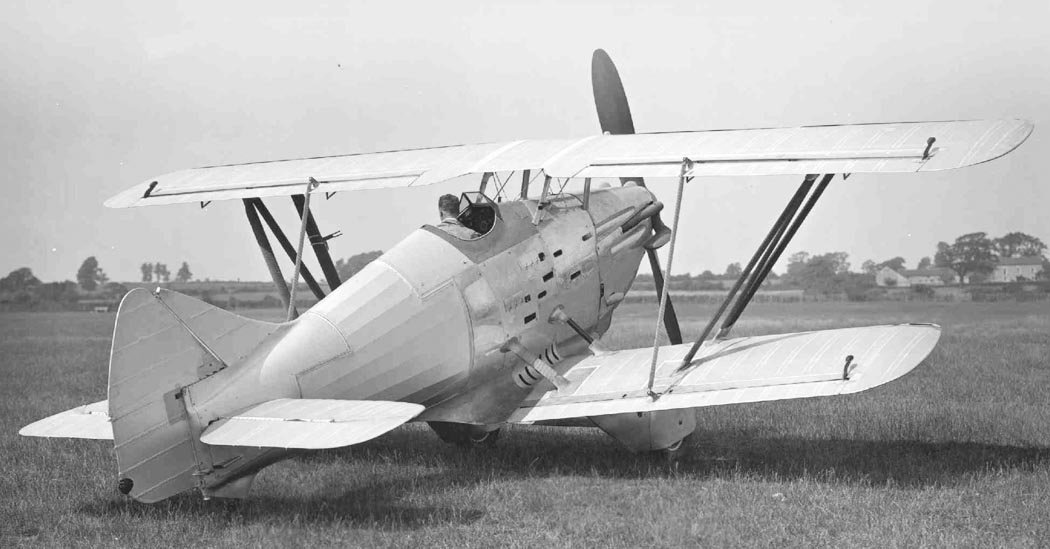 Bristol 123 |
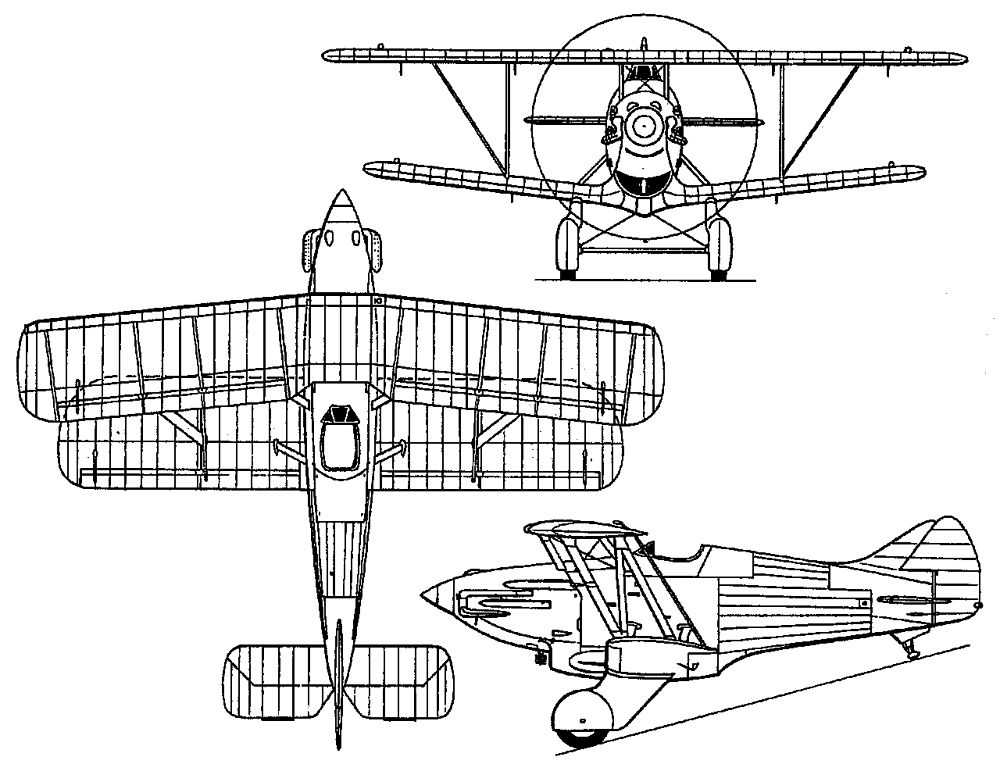 Bristol 123 |
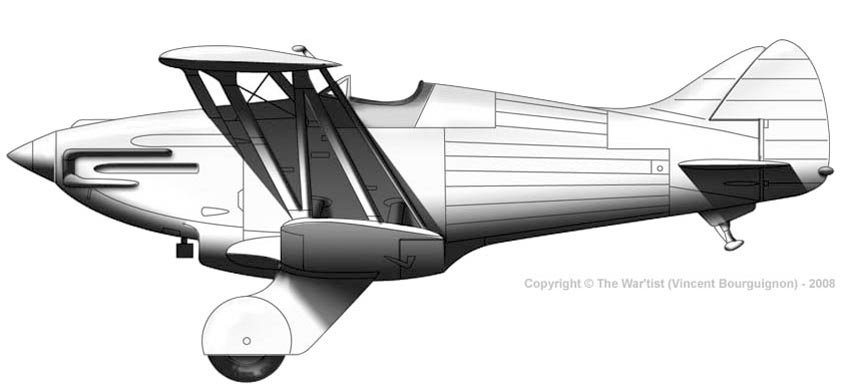 Bristol 123 |
Equipo Editorial de ArchivoAéreo
Grupo de investigadores y entusiastas de la aviación dedicados a documentar y preservar la historia aeronáutica mundial. Todos los artículos son revisados para garantizar precisión histórica.
Fuentes y Rigurosidad
La información presentada en esta ficha técnica ha sido compilada a partir de manuales de vuelo desclasificados, archivos históricos y bibliografía especializada. Aunque nos esforzamos por mantener la máxima precisión, algunos datos de rendimiento pueden variar según la variante específica o las condiciones operativas.