Burt Rutan's BiPod
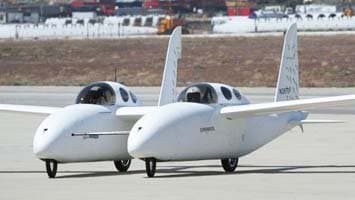
On the eve of his retirement in early 2011, Burt Rutan engaged Scaled Composites employees in developing a hybrid-powered flying car. This system comprised two small 450 cm³ internal combustion engines and two electric motors, powered by lithium batteries. The electric motors could drive the propellers, mounted in nacelles with the electric motors on the stabilizer, and also contribute to the hybrid system for driving the wheels via a transmission.
The Model 367 BiPod project, from transmission development to its first flight on March 30, 2011, took only four months. This rapid progress highlighted the efficiency and ingenuity of Rutan’s team in realizing such an ambitious idea in a short timeframe.
Unique Design Features
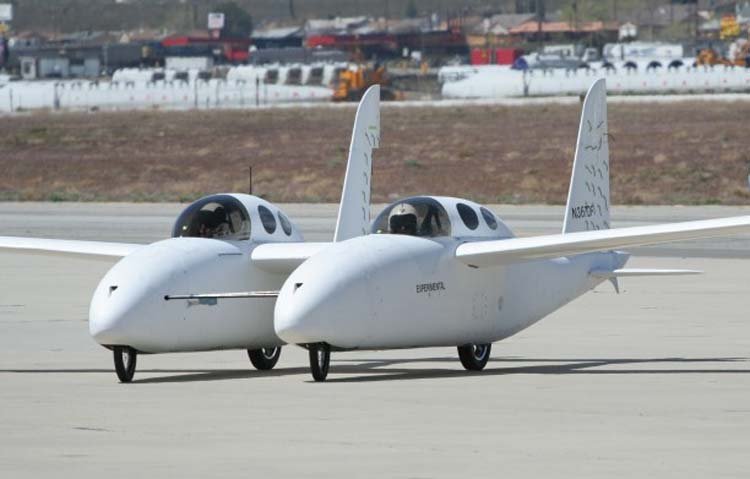
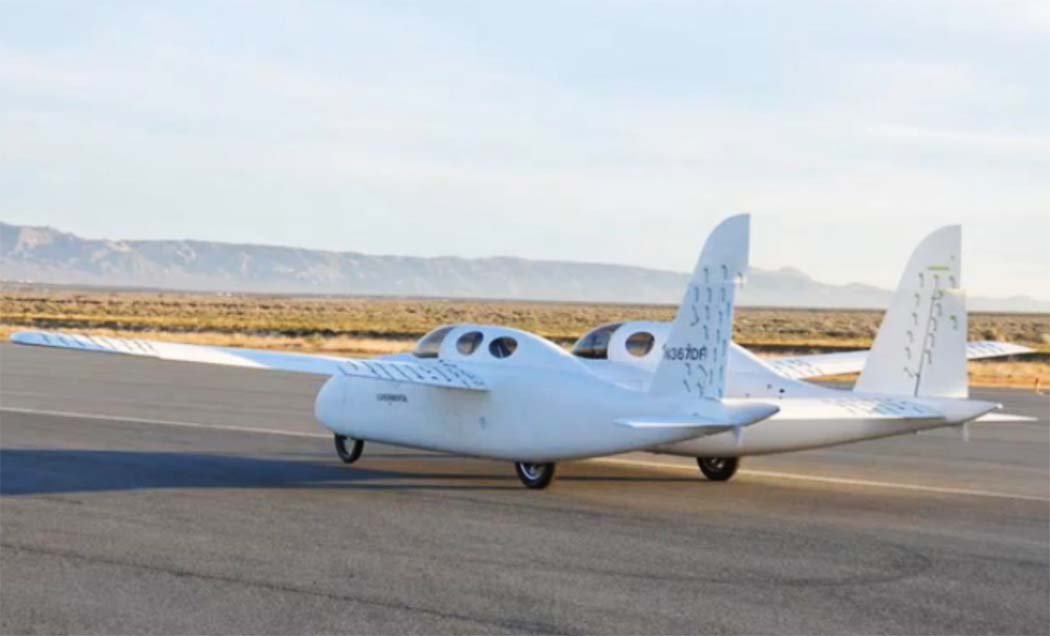
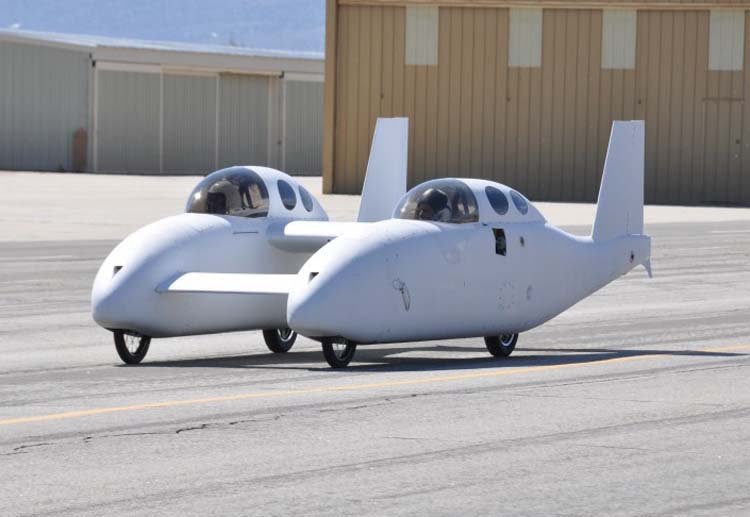
Beyond its hybrid powertrain, the flying car featured several unique layout characteristics. Firstly, Rutan opted for two fuselages, which allowed him to reduce the total mid-section area in flight and position the wing panels between the fuselages, protecting them from road damage. Subsequently, designers of the German Carplane transformer partially borrowed a similar dual-fuselage configuration.
Secondly, the use of electric motors allowed the propeller unit to be placed on the stabilizer, a solution that eliminated the need for a mechanical transmission. The dual-fuselage setup also increased the track width to 2.4 meters, which, combined with a low stance, ensured excellent stability on the highway.
Safety and Operational Mode
The hybrid setup significantly enhanced flight safety. In the event of internal combustion engine failure, the aircraft could continue its takeoff on electric motors alone, powered by the batteries. The lithium battery charge was sufficient to provide thrust for an emergency landing, adding a vital layer of redundancy.
In its “car” operational mode, the BiPod complied with road traffic and safety standards. The wing panels, each 9.17 meters long, were detachable and could be transported on special holders. This modularity allowed for easy transition between flight and road modes.
Mysteries and Potential Explanations
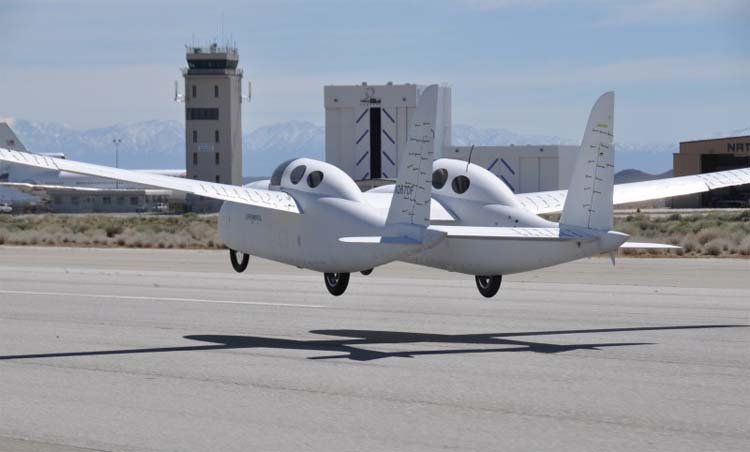
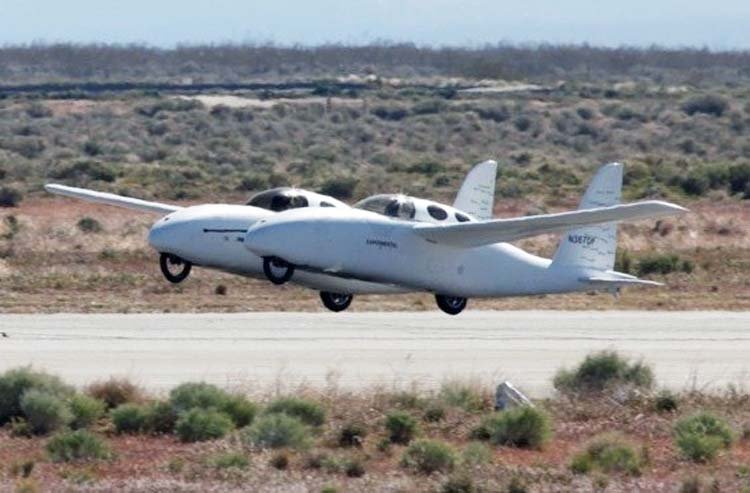
Unfortunately, there is no information available regarding the results of flight tests. Interestingly, in none of the photographs published on the company’s website, even during takeoff, are engine nacelles with rotating propellers visible on the stabilizer. However, in a photo of the BiPod in road configuration, the rear part of the right engine nacelle is visible. It is possible that for the initial taxiing and liftoff, the speed developed by the wheel drive was sufficient.
The wheels, incidentally, were large in diameter, resembling motorcycle (rear) or bicycle (front) wheels. One photo shows the BiPod turning off the runway; the front wheels in the fuselage bays allow this, though the turning radius is hard to ascertain. Judging by layouts found online, variants of the transformer with four electric motors were considered: two on the stabilizer and two on the wing panels, but the BiPod was not built in this configuration.
It is difficult to say why the project received the name “BiPod” (a stand for firing a rifle or machine gun). The flying car was not planned for serial production and was created solely to test the viability of the concept. Perhaps this “stand” was considered a basis for launching a larger project. Or maybe Rutan simply wanted to build another original machine before leaving the firm.
Technical Specifications
| Modification | BiPod |
| Wingspan, m | 9.70 |
| Aircraft length, m | 6.57 |
| Maximum takeoff weight | 639 |
| Engine type | 2 Piston engines |
| Power, hp | 2 x |
| Maximum speed, km/h | 322 |
| Cruising speed, km/h | 162 |
| Practical range, km | 1 127 |
| Crew | 1 |
| Payload | 1 passenger |
Image and diagram gallery of the Burt Rutan's BiPod
 BiPod |
 BiPod |
 BiPod |
 BiPod |
 BiPod |
Equipo Editorial de ArchivoAéreo
Grupo de investigadores y entusiastas de la aviación dedicados a documentar y preservar la historia aeronáutica mundial. Todos los artículos son revisados para garantizar precisión histórica.
Fuentes y Rigurosidad
La información presentada en esta ficha técnica ha sido compilada a partir de manuales de vuelo desclasificados, archivos históricos y bibliografía especializada. Aunque nos esforzamos por mantener la máxima precisión, algunos datos de rendimiento pueden variar según la variante específica o las condiciones operativas.