BV.222C Wiking
Initial Development and Propulsion
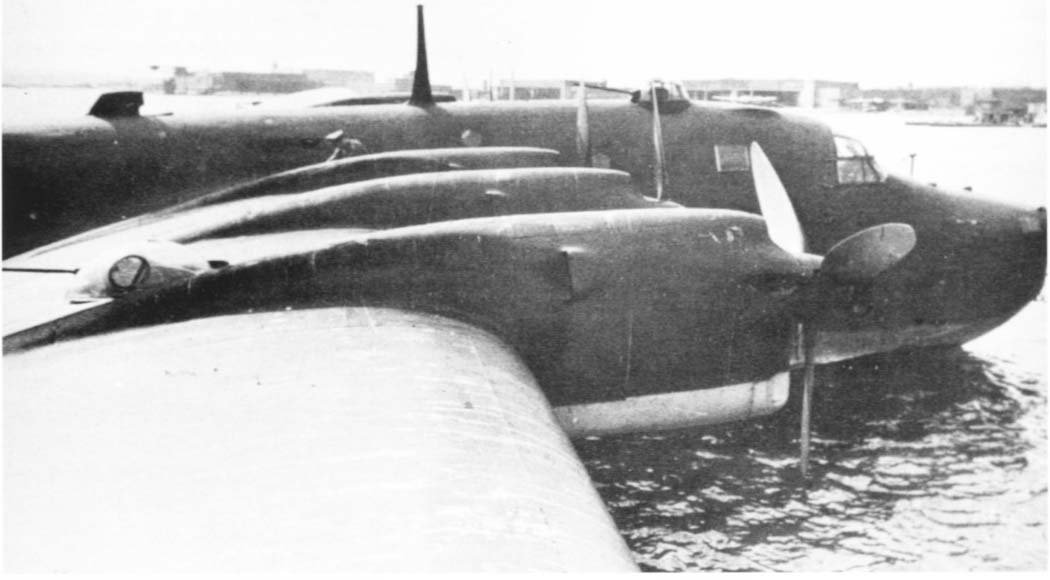
In early 1939, Blohm & Voss began studying the possibility of installing diesel engines on a new seaplane variant. A proposal for the BV.222 with six Junkers Jumo-208 diesels was sent to Lufthansa, but this modification never left the project stage due to Junkers’ failure to refine the Jumo-208 engine.
Further diesel research in 1941 led the Technical Department to accept Blohm & Voss’s proposal to install Jumo-207C diesels on the fourth BV.222a-0. Designated BV.222-V7 (TB+QL), it made its first flight on April 1, 1943, as the prototype for the BV.222c.
Design and Armament Innovations
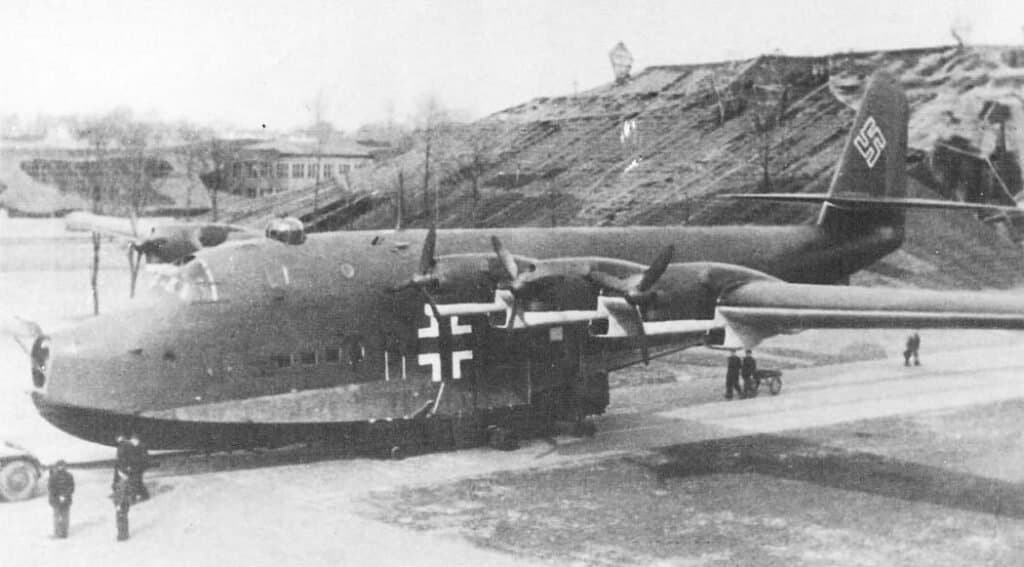
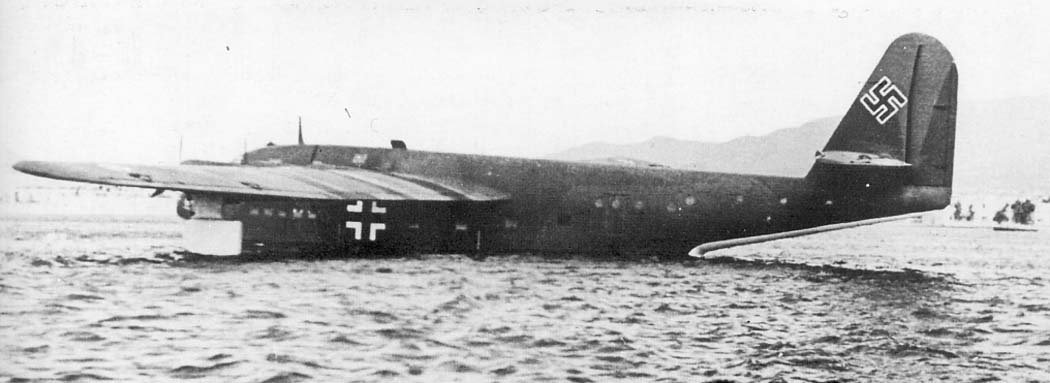
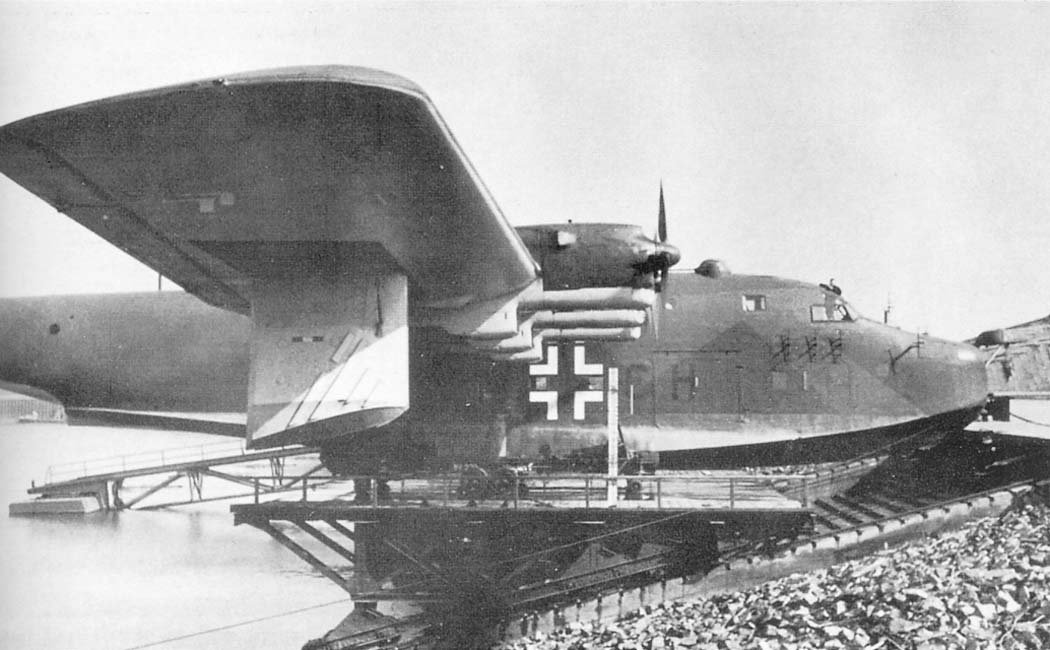
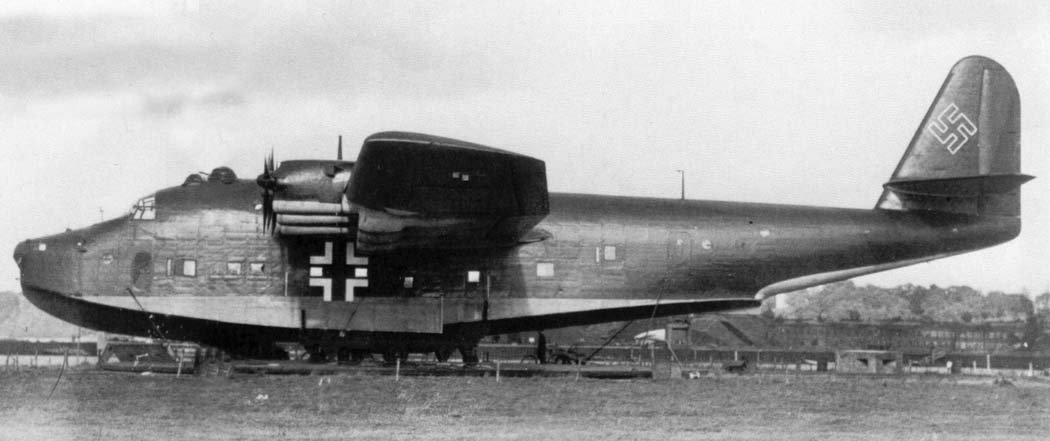
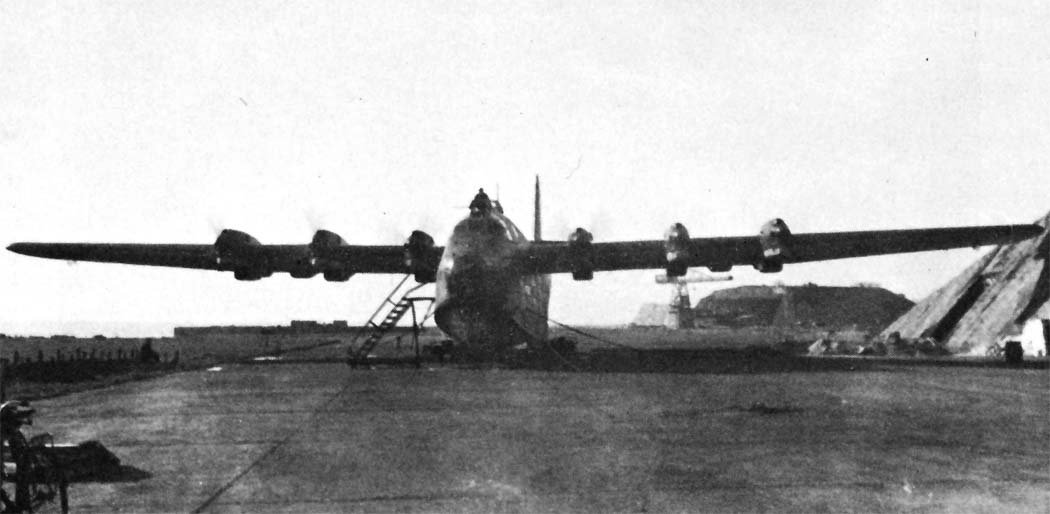
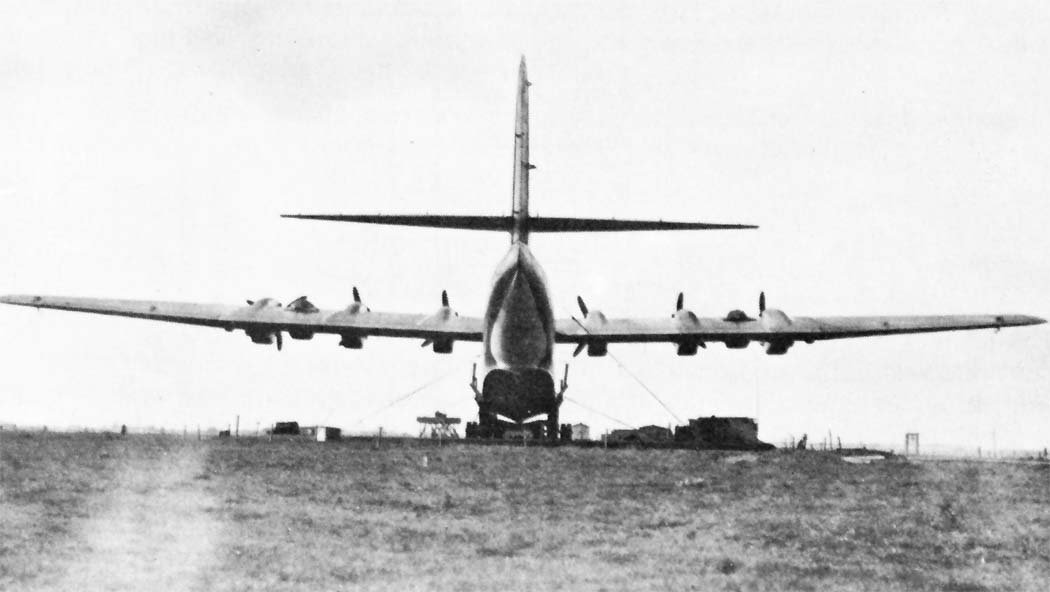
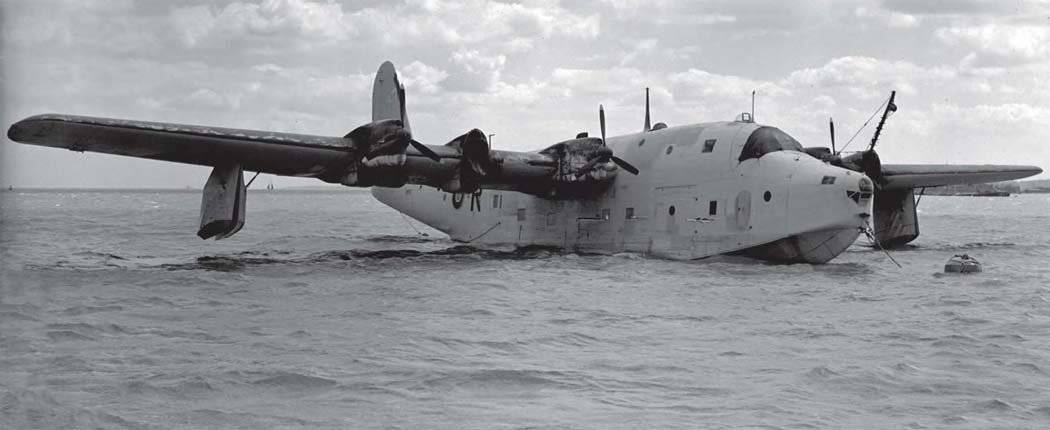
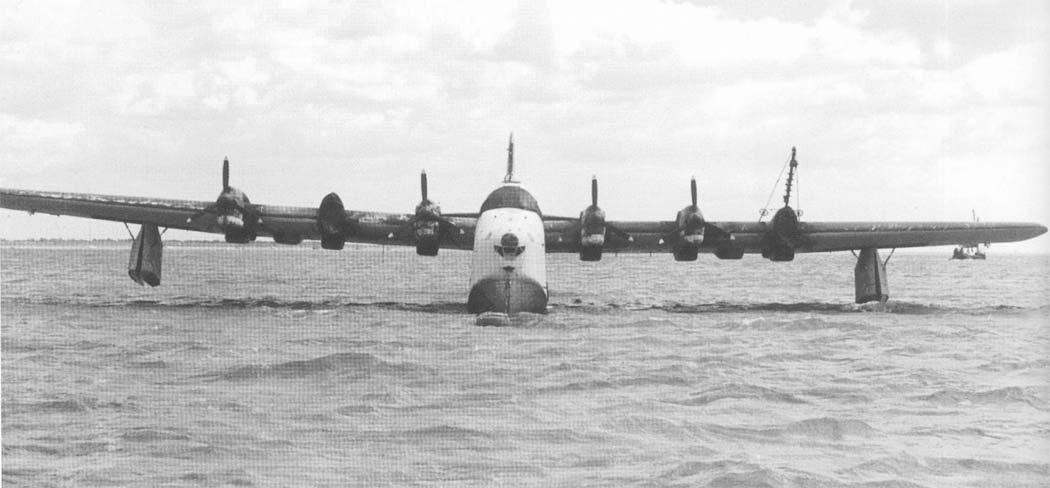
The BV.222c’s design was generally similar to the A-series aircraft, primarily intended for long-range reconnaissance. Fuel capacity was reduced, with each spar tank holding 2870kg of fuel instead of 3450kg in the A-series. Six 172-liter oil tanks replaced the previous six 86-liter and one 480-liter tanks.
Defensive armament underwent changes again. An MG-131 machine gun was installed in the nose, with an additional MG-131 in the nose window. MG-81 machine guns in the rear windows were replaced with MG-131s. Wing turrets were repositioned to the end of the central engine nacelles.
Normal takeoff weight increased to 46 tons, with a maximum of 49 tons. The power of the six Jumo-207C engines proved insufficient for normal takeoff, leading to provisions for four solid-fuel rocket boosters under the wing. These boosters provided full thrust 10 seconds after launch and operated for 30 seconds.
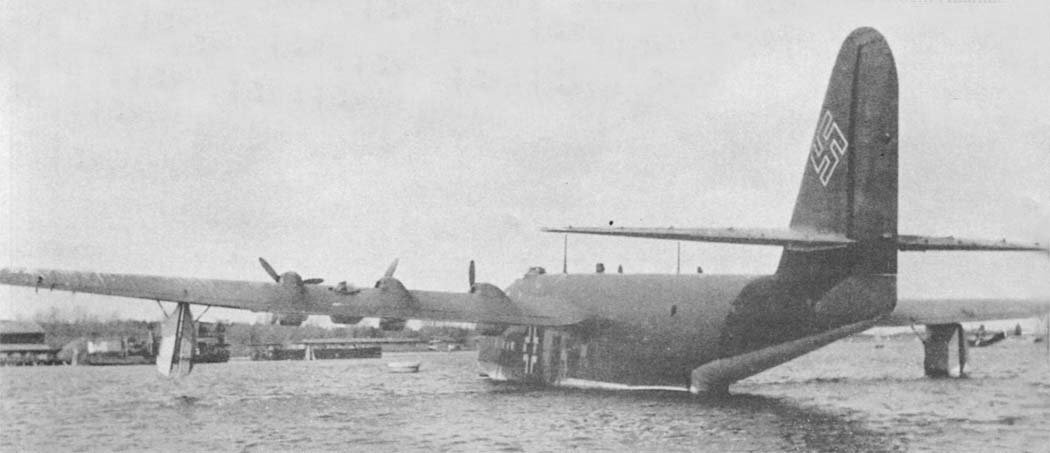
The stabilizing floats were redesigned to retract in 20 seconds at a speed of 225 km/h. The typical crew consisted of 11 personnel: two pilots, two engineers, a navigator, a radio operator, and five gunners.
C-Series Development and Operational Deployment
Work on several pre-production C-series aircraft began even before the A-series was completed. The first of these, the BV.222c-09, was finished six weeks after the prototype V7’s first flight and was planned for the “Atlantic” command. It joined See 222 squadron on July 23, 1943, differing from V7 by a new position for the wing turrets, now forward, between the outer engine pairs.
V7 joined C-09 in active service on August 16, 1943. Soon after, C-010, C-011, and C-012 followed. C-013 was intended to receive Jumo-207D engines with 1500 hp at takeoff, serving as the prototype for the BV.222d, and four more keels for the D-series were laid.
However, due to prolonged delays, Junkers failed to deliver the engines. C-013 had to be completed with Jumo-207C diesels, and the next four aircraft (C-014 to C-017) were also planned with these engines. Meanwhile, the RLM (Reich Air Ministry) decided to halt further work on Junkers diesel engines due to maintenance and fuel issues.
A lengthy discussion ensued between Blohm & Voss and the RLM regarding alternative engines for the four remaining flying boats. Blohm & Voss proposed installing four to six BMW-801 engines, reviving earlier 1939 “Project 97” (six BMW-801s) and “Project 98” (four BMW-801s). However, the RLM insisted on reserving BMW-801 engines for higher-priority aircraft.
Consequently, Blohm & Voss had no choice but to revert to the Fafnir-323R-2 engines, and these flying boats were designated BV.222e. The production program ultimately ended in early 1944, with Blohm & Voss ordered to switch to more essential aircraft, and already laid-down BV.222s were scrapped.
Wartime Operations and Challenges
Following successful troop trials in November 1941, the BV.222-V1 returned to Blohm & Voss for defensive armament installation. In the Mediterranean, it was replaced by V3, the first six-engine flying boat accepted into Luftwaffe service on December 9, 1941. This aircraft was designated “Wiking” and formed its own unit, See-222V3 squadron. Between January and March 1942, it completed 21 transport flights between Italy and Tripoli.
On April 20 and July 7, 1942, V4 and V5 entered service, operating with Air Communication Squadron “Z” until they joined the BV.222-V1, which returned to service on May 10, 1942, with Air Transport Squadron See-222. In May, BV.222-V3 was dispatched to the Bay of Biscay for long-range reconnaissance as part of the “Atlantic” command.
During the summer, LTS See-222 was reinforced by BV.222-V2, delayed by testing in Travemünde, and V6, which arrived on August 10 and 21. By October 26, with V3’s return, the unit’s strength reached six “Wikings.” By the end of 1942, “Wikings” operating as transport aircraft in the Mediterranean had carried 1453 tons of cargo, 17778 fully equipped soldiers, and 2491 wounded personnel.
Outside the Mediterranean theatre, they transported 2043 tons of cargo, 19750 people, and 2678 wounded. Operations revealed several serious issues. It was discovered that even with caution, fuel tanks needed to be filled in a specific sequence: tanks #1, 6, 2, 5, 3, and 4. Failure to adhere to this sequence carried a high risk of overturning.
Standard practice involved an engine inspection by an onboard engineer immediately after takeoff, then after 30 minutes, and subsequently every hour of flight. Defensive armament proved insufficient for flights without fighter escort, despite enemy encounters being highly probable.
The first loss for LTS See-222 occurred on November 24, 1942, when V6, during a solo flight south of Pantelleria, was intercepted and shot down by British fighters. Following this loss, the command of KG.z.b.V2, which LTS See-222 was subordinated to, ordered all BV.222 flights to be conducted in formation at low altitude. Despite this precaution, on December 10, 1942, V1, V4, and V8, flying at low altitude towards Tripoli, were intercepted by three British Beaufighters. V8 was shot down, and V4 was severely damaged but managed to reach Tripoli.
In his report on this incident, the squadron staff captain noted that “the inadequacy of the BV.222’s defensive armament can be considered proven; low-altitude flight, previously considered the best defense, now has little value, as any fighter taking a position behind and three meters below the flying boat cannot be engaged from any firing point. Furthermore, flying in tight formation, the BV.222 cannot use evasive maneuvers.”
This report led to a decision to switch to night flights until defensive armament could be reinforced. However, it soon became clear that night flights were no less dangerous than daytime ones. North African ports, frequented by BV.222s, were constantly bombed by Allied aircraft at night, preventing any lights from being used to guide aircraft into port.
Consequently, the risk of colliding with floating or submerged objects during taxiing sharply increased. Indeed, in February 1943, BV.222-V1 sank in Athens after colliding with a buoy that ripped several meters of its hull plating. As a result, See-222 squadron ceased flights, and the “Wikings” were sent for rearmament and modernization.
After refurbishment, the BV.222s were transferred to the “Atlantic” command, joining V3 in the See-222 long-range reconnaissance squadron in Biscarrosse, part of 3./Ku.Fl.Gr.406. However, in June 1943, two “Wikings” – V3 and V5 – were sunk at anchor in Biscarrosse harbor during an attack by British fighter-bombers. V2 and V4 remained in service.
On July 23, BV.222c-09 joined them, followed by BV.222-V7 on August 16. BV.222c-10 arrived in October. By this time, the squadron was redesignated 1.(F)/SAGr.129. These five BV.222s, collaborating with submarines, conducted long-range reconnaissance over the Atlantic from Biscarrosse until the base’s evacuation.
In October 1943, one BV.222 was intercepted and shot down by a patrolling Lancaster. In early 1944, BV.222c-10 was shot down near Biscarrosse by British night fighters. As the war situation deteriorated, the remaining BV.222s gradually shifted to transport duties. Squadron 1.(F)/SAGr.129 was disbanded in July 1944.
The fate of the remaining “Wikings” was as follows: V2 was found in Norway and blown up by British forces; V4 was destroyed by its own crew in Kiel, V7 in Travemünde, and BV.222c-09 was heavily damaged there. BV.222c-011 and -013 were captured by American forces and flown to the USA, while BV.222c-012 was acquired by the British and tested in the UK.
Technical Specifications
| Modification | BV.222c-09 |
| Wingspan, m | 46.00 |
| Length, m | 37.00 |
| Height, m | 11.90 |
| Wing area, m2 | 247.00 |
| Empty weight | 30700 |
| Normal takeoff weight | 46000 |
| Maximum takeoff weight | 49000 |
| Engine type | 6 Jumo-207C Piston engines |
| Power, hp | 6 x 1000 |
| Maximum speed at sea level, km/h | 302 |
| Maximum speed at altitude, km/h | 343 |
| Practical range, km | 6000 |
| Maximum rate of climb, m/min | 150 |
| Practical ceiling, m | 7300 |
| Crew, crew members | 11 |
| Armament | one 13-mm MG-131 machine gun in the nose position, one 20-mm MG-151 cannon in the upper nose turret, one 20-mm MG-151 cannon in each of the two underwing turrets, four MG-131 machine guns in the side positions. |
Image and diagram gallery of the BV.222C Wiking
 BV.222C Wiking |
 BV.222C Wiking |
 BV.222C Wiking |
 BV.222C Wiking |
 BV.222C Wiking |
 BV.222C Wiking |
 BV.222C Wiking |
 BV.222C Wiking |
 BV.222C Wiking |
 BV.222C Wiking |
 BV.222C Wiking |
 BV.222C Wiking |
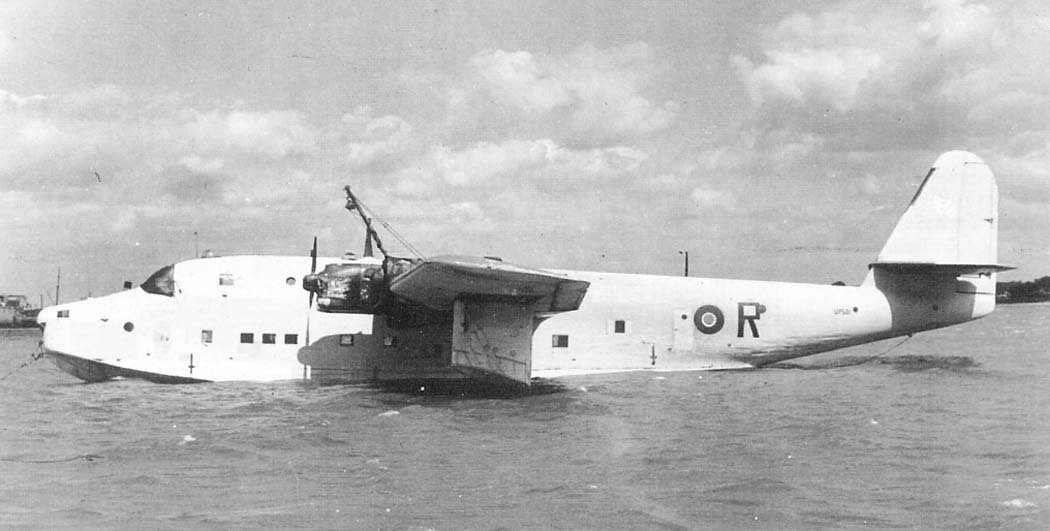 BV.222C Wiking |
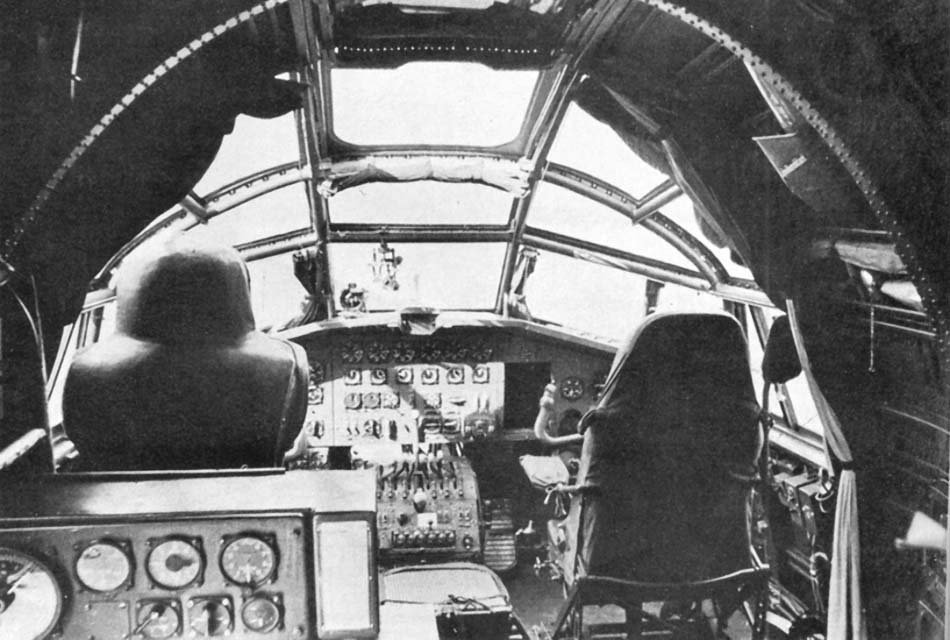 BV.222C Wiking |
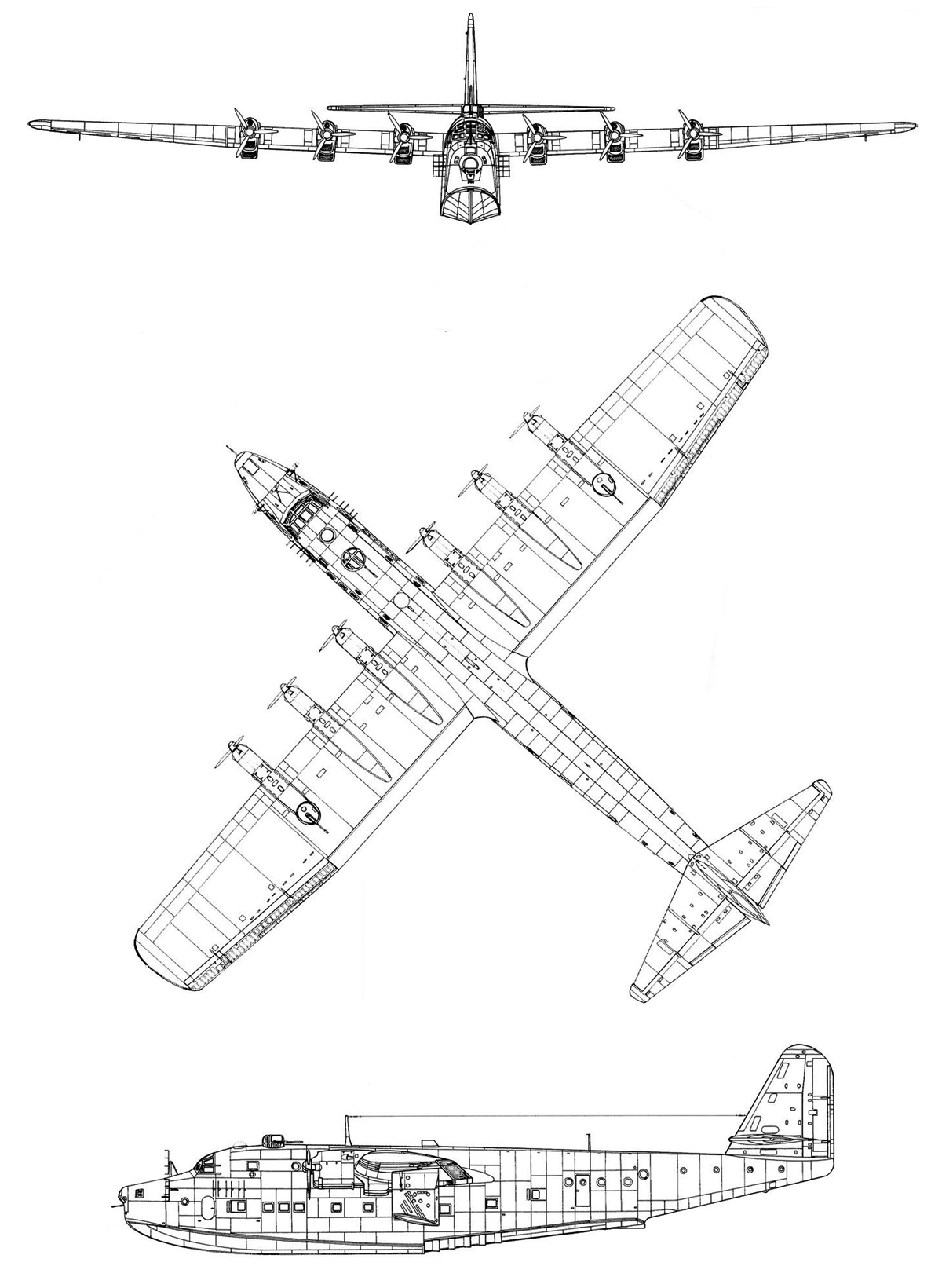 BV.222C Wiking |
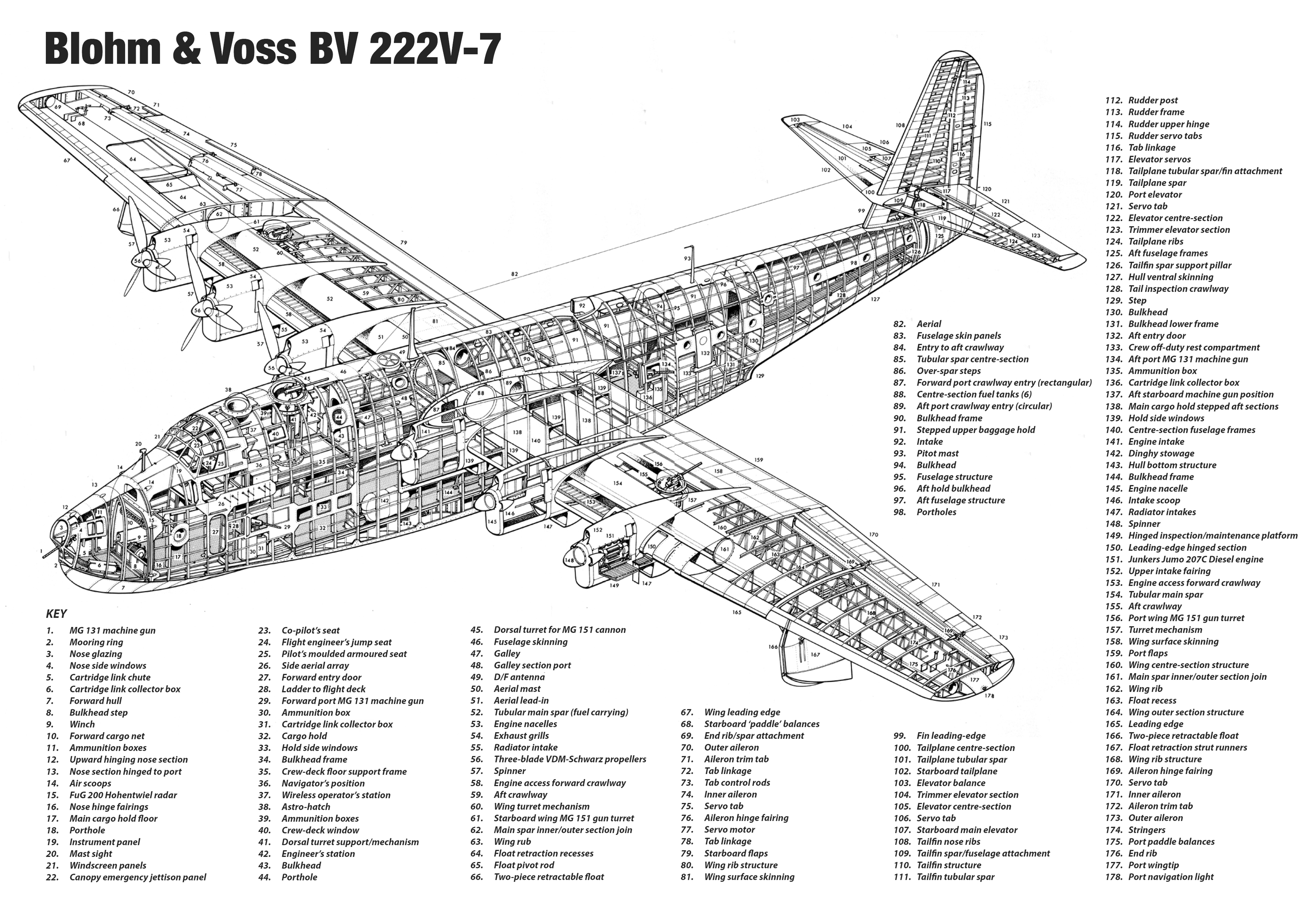 BV.222C Wiking |
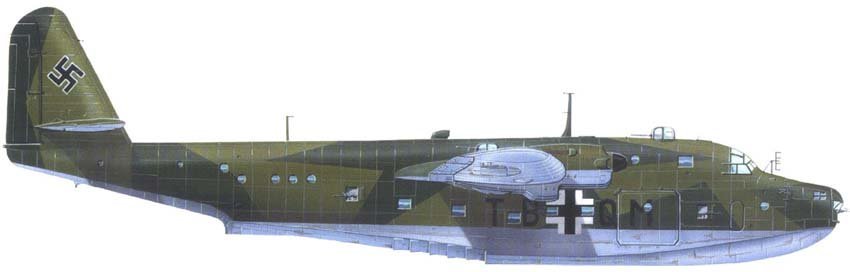 BV.222C Wiking |
Equipo Editorial de ArchivoAéreo
Grupo de investigadores y entusiastas de la aviación dedicados a documentar y preservar la historia aeronáutica mundial. Todos los artículos son revisados para garantizar precisión histórica.
Fuentes y Rigurosidad
La información presentada en esta ficha técnica ha sido compilada a partir de manuales de vuelo desclasificados, archivos históricos y bibliografía especializada. Aunque nos esforzamos por mantener la máxima precisión, algunos datos de rendimiento pueden variar según la variante específica o las condiciones operativas.