BV.246 Hagelkorn
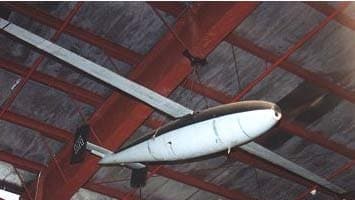
The predecessor to the BV.246 Hagelkorn (Hailstone) was the BV.226 gliding bomb. Dr. Richard Vogt developed the bomb, capable of replacing the FX-1400, and the designation BV.226 was changed to BV.246 on December 12, 1943, when the bomb entered serial production.
The core of the development was that the BV.246 had a much greater autonomous flight range, allowing the bomb to be released outside the engagement radius of the target’s air defense systems.
Design and Initial Performance
The ‘Hagelkorn’ featured a clean, cigar-shaped fuselage and a twin vertical tail with rudders. The wings were mounted on the upper part of the fuselage, were very thin, and had a high aspect ratio, similar to glider wings.
An interesting design feature was that the wings had a special internal structure capable of springing, pushing the ‘Hagelkorn’ away from the carrier aircraft upon bomb release.
The BV.246’s glide trajectory was approximately 1:25, meaning that if dropped at an altitude of 7000 meters, it could fly approximately 175 kilometers to the target. The gliding bomb was intended to be radio-guided from the carrier aircraft, but the RLM’s interest in the project diminished as the Allies learned to effectively jam the German radio command control system.
The BV.246 ‘Hagelkorn’ program was halted on February 26, 1944, partly due to the almost complete cessation of missile tests, although they continued weakly at Karschhagen with KG101.
Revival and the ‘Radieschen’ System
The BV.246 project was revived in early 1945. A passive VHF guidance system called ‘Radieschen’ (Radish) was installed on the proven gliding bomb base, designed to guide the bomb towards enemy radar emissions. The new BV.246 featured a modified nose with the ‘Radieschen’ system receiver, which controlled the gyroscopes for the rudder and elevator.
Ten modified BV.246 ‘Radieschen’ were manufactured for testing at the Unterless proving ground. As the equipment was also experimental and refined during testing, eight launches were unsuccessful, but two ended quite successfully – the bombs landed within two meters of the target. This instilled certain hopes in the RLM command, and over 1000 new model BV.246s were ordered and manufactured, but they were never deployed.
Equipo Editorial de ArchivoAéreo
Grupo de investigadores y entusiastas de la aviación dedicados a documentar y preservar la historia aeronáutica mundial. Todos los artículos son revisados para garantizar precisión histórica.
Fuentes y Rigurosidad
La información presentada en esta ficha técnica ha sido compilada a partir de manuales de vuelo desclasificados, archivos históricos y bibliografía especializada. Aunque nos esforzamos por mantener la máxima precisión, algunos datos de rendimiento pueden variar según la variante específica o las condiciones operativas.