C-122 Avitruc
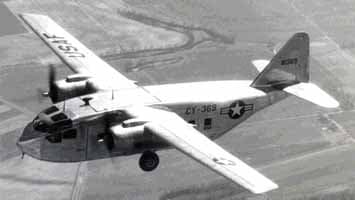
The C-122 Avitruc was a transport aircraft developed by aircraft designer Michael M. Stroukoff, head of Chase Aircraft Company. It was based on the heavy assault glider XCG-18. By December 1947, two XCG-18A gliders stipulated in the contract were completed, with three more in various stages of construction.
Initial tests of the first prototype demonstrated excellent flight performance and technical characteristics. This prompted the military to test the second prototype as a motorized variant, which Stroukoff had designed for two 1,425 hp Wright R-1820-101 engines. However, due to the need to accelerate work, 1,100 hp Pratt & Whitney R-2000-11 engines were used, provided by the military from a crashed C-54, along with their nacelles.
First Flight and Initial Tests
On November 18, 1948, the motorized “Avitruc” variant, designated YC-122, took its first flight from the Mercer County factory airfield. This aircraft also received the official company designation MS-7 (M for Mikhail, S for Stroukoff). Tests were conducted at the Air Force Center in Wright Field throughout 1949, with Stroukoff himself flying on some missions with the crew.
Overall, the YC-122 showed good results. With a takeoff weight of 13,200 kg, the takeoff distance to a hypothetical obstacle height was only 250 m, and the landing distance was 190 m. In one flight, the aircraft reached a speed of 430 km/h.
Variants and Development
In 1948, without waiting for the completion of testing, the military requested that two XCG-18A gliders under construction be finished as motorized variants, designated YC-122A. The first YC-122A was identical to the original YC-122. The second, however, finally received the long-awaited Wright R-1820-101 engines with 3.8 m diameter propellers, and was designated YC-122B.
Although the YC-122B’s flight performance improved, its payload capacity did not satisfy the clients, who presented a series of new requirements. In response, Stroukoff developed a project for a new modification, the YC-122C, in 1949. This variant differed from its predecessors in the shape and size of its empennage and flaps, the installation of fuel tanks in the wing, and other improvements. More powerful engines were envisioned due to the increased takeoff weight.
In 1949, Chase received an order for a military production series of nine YC-122C aircraft. However, early examples had to use the older Wright engines, whose poor performance prolonged the testing. It wasn’t until mid-1951 that the company managed to acquire new engines, although they were still of insufficient power.
Despite the suboptimal engine type, the YC-122C’s flight performance indicated that with more powerful and reliable engines, the aircraft could find military use as a replacement for the C-47. However, in the early 1950s, the Air Force shifted towards jet aviation.
End of Production and Civilian Use
Civilian operators preferred to buy C-46s and C-47s at bargain prices, as they were similar to the YC-122 in weight class. Consequently, production of the YC-122 ceased. All built YC-122s, organized into a separate squadron, were successfully operated for several years.
In 1957, two of them were transferred to Hiller for conversion into the X-18 VTOL aircraft. The remaining seven YC-122s entered service with civilian airlines in the latter half of the 1950s.
Technical Specifications
| Modification | YC-122 |
| Wingspan, m | 29.20 |
| Aircraft length, m | 18.90 |
| Aircraft height, m | 8.39 |
| Wing area, m2 | 98.40 |
| Empty weight | 11890 |
| Maximum takeoff weight | 14515 |
| Engine type | 2 Piston engines Wright R-1820-101 Cyclone |
| Power, hp | 2 x 1460 |
| Maximum speed, km/h | 326 |
| Cruising speed, km/h | 262 |
| Practical range, km | 4670 |
| Practical ceiling, m | 7200 |
| Crew | 2-3 |
| Payload | up to 30 paratroopers |
Image and diagram gallery of the C-122 Avitruc
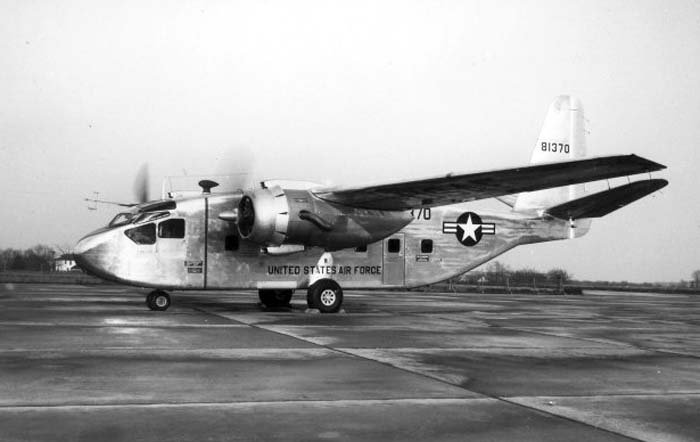 C-122 Avitruc |
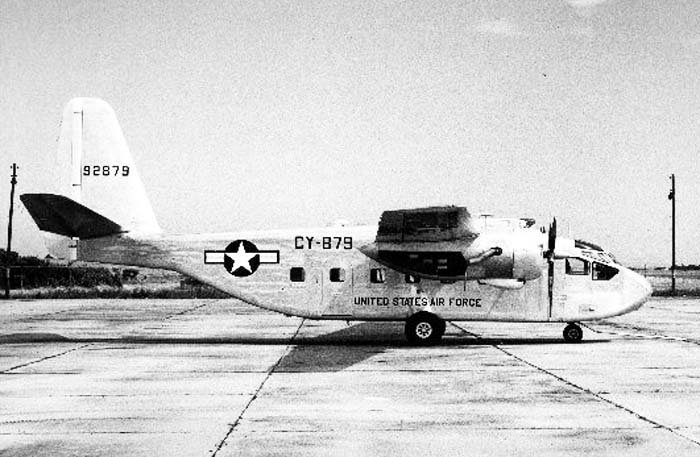 C-122 Avitruc |
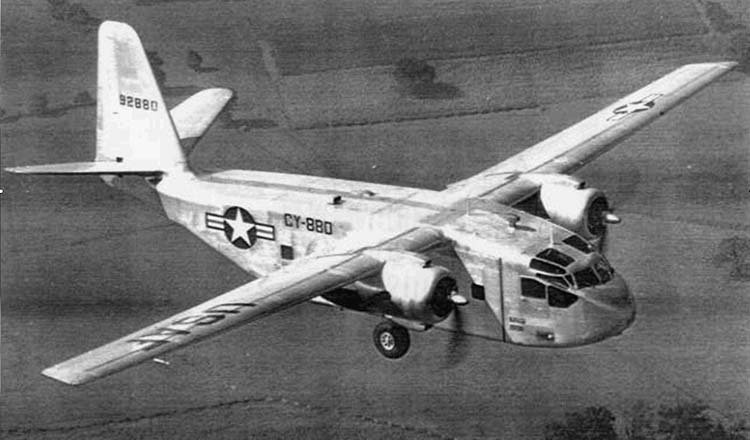 C-122 Avitruc |
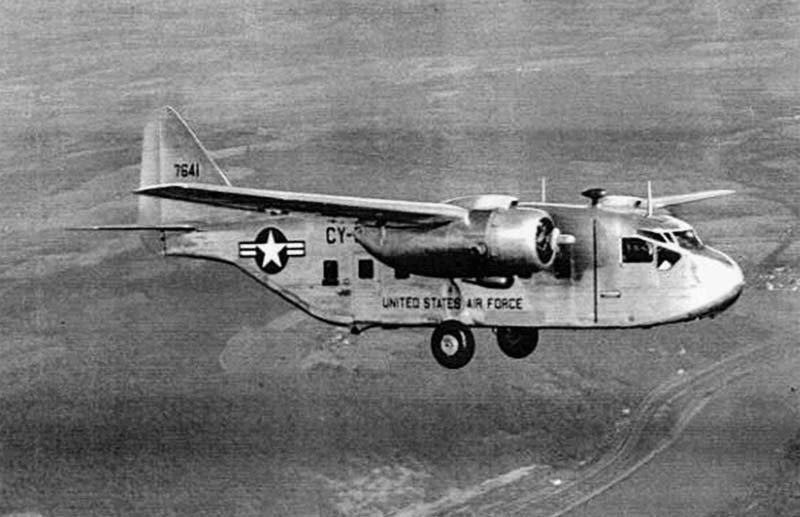 C-122 Avitruc |
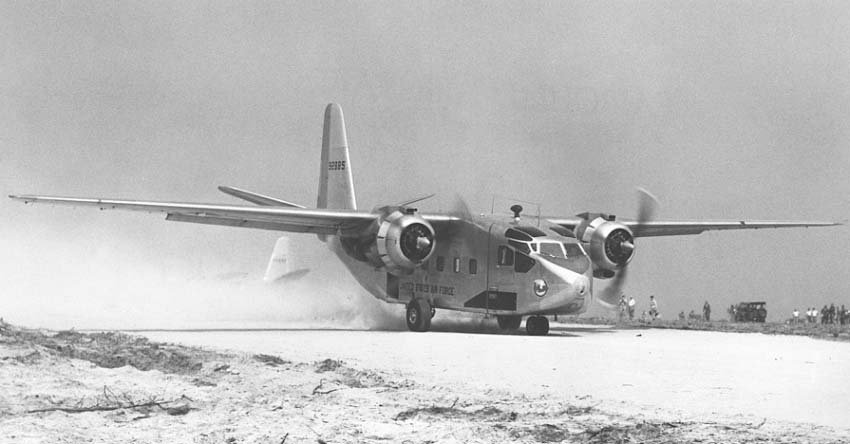 C-122 Avitruc |
Equipo Editorial de ArchivoAéreo
Grupo de investigadores y entusiastas de la aviación dedicados a documentar y preservar la historia aeronáutica mundial. Todos los artículos son revisados para garantizar precisión histórica.
Fuentes y Rigurosidad
La información presentada en esta ficha técnica ha sido compilada a partir de manuales de vuelo desclasificados, archivos históricos y bibliografía especializada. Aunque nos esforzamos por mantener la máxima precisión, algunos datos de rendimiento pueden variar según la variante específica o las condiciones operativas.