C-134 Pantobase
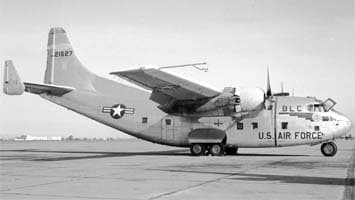
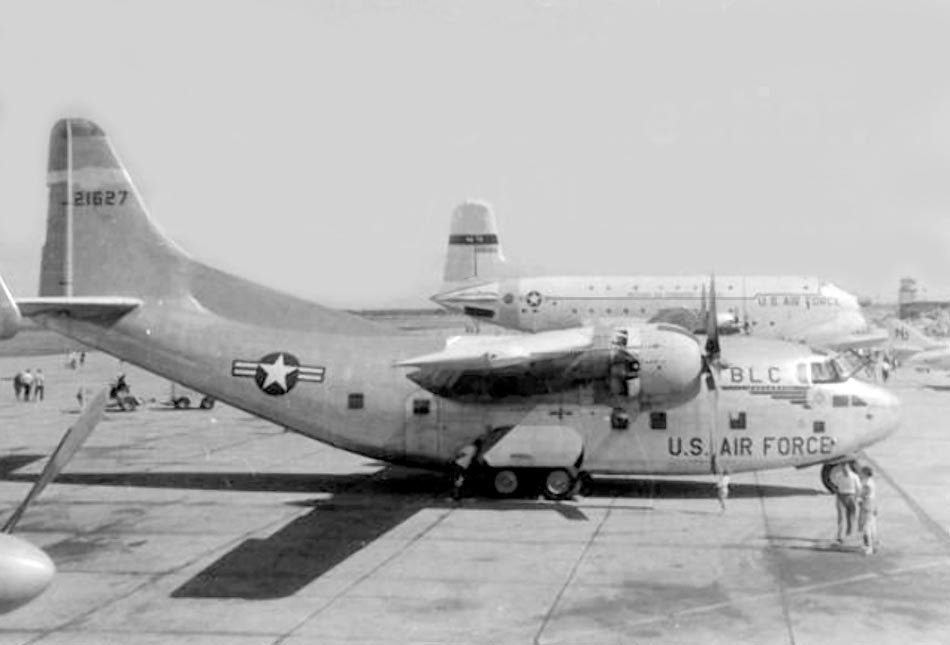
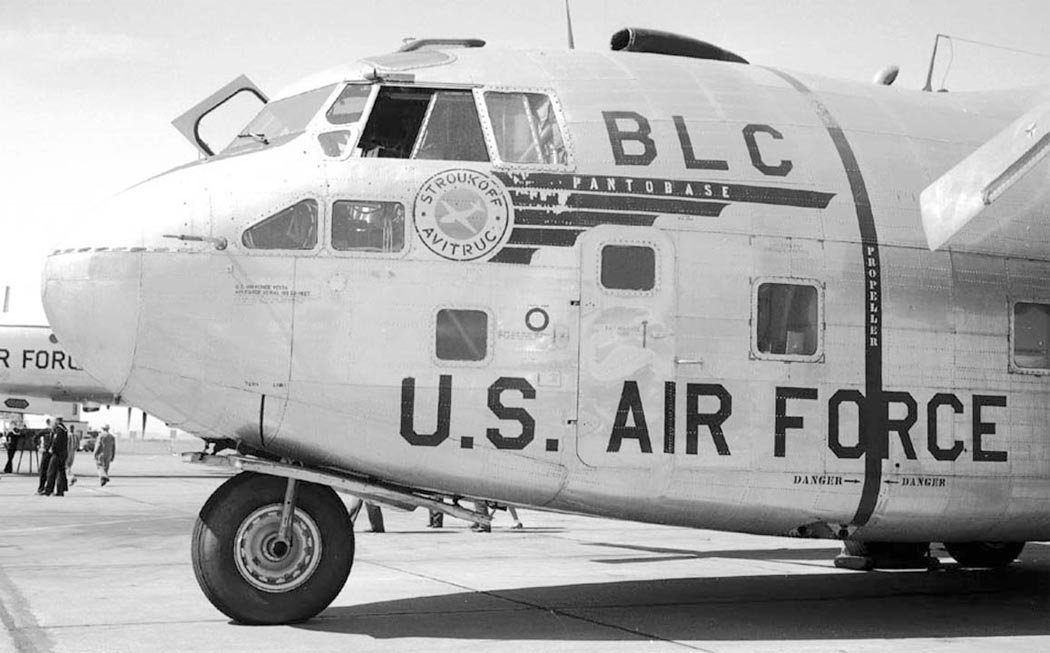
Throughout its long service life, the C-123 served as a base for modifications that developed original means to enhance flight characteristics, especially those related to takeoff and landing. In November 1954, at the request of the Air Force, Stroukoff’s firm equipped one of the production ‘Providers’ with a boundary layer control (BLC) system.
C-123 STOL Enhancements
Air was drawn by a turbocompressor from under the inner flaps between the fuselage and engine nacelles, then blown out through slots over the ailerons and outer flaps. The modified XC-123D successfully passed tests, demonstrating low stall speed, short takeoff, and landing distances. The Air Force swiftly awarded Stroukoff a contract for a military production run of six XC-123D aircraft.
The Innovative ‘Pantobase’ All-Surface Concept
However, the head of the firm proposed a more appealing modification, the XC-123E, developed according to his ‘Pantobase’ concept (‘based everywhere’). This aircraft featured a pressurized fuselage with its lower section shaped like a boat hull, conventional landing gear, two retractable water-ski/snow skis, and two underwing floats. The XC-123E could operate from virtually any surface: land, water, ice, snow, and sand. Its maiden flight occurred on July 28, 1955, and during trials in various climatic zones, the aircraft demonstrated unique results.
Advanced YC-134 Development
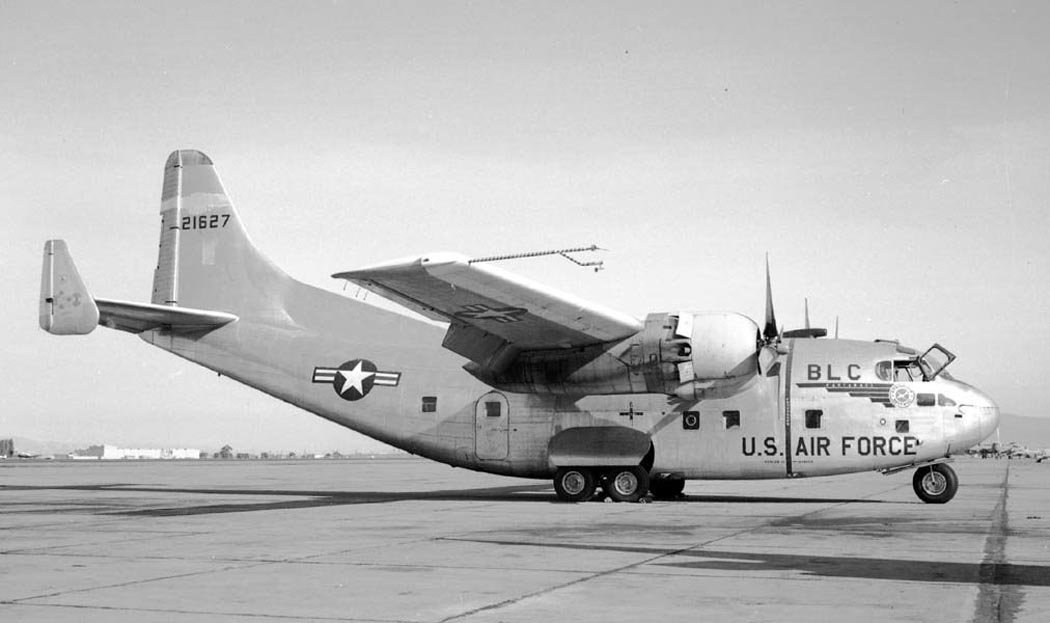
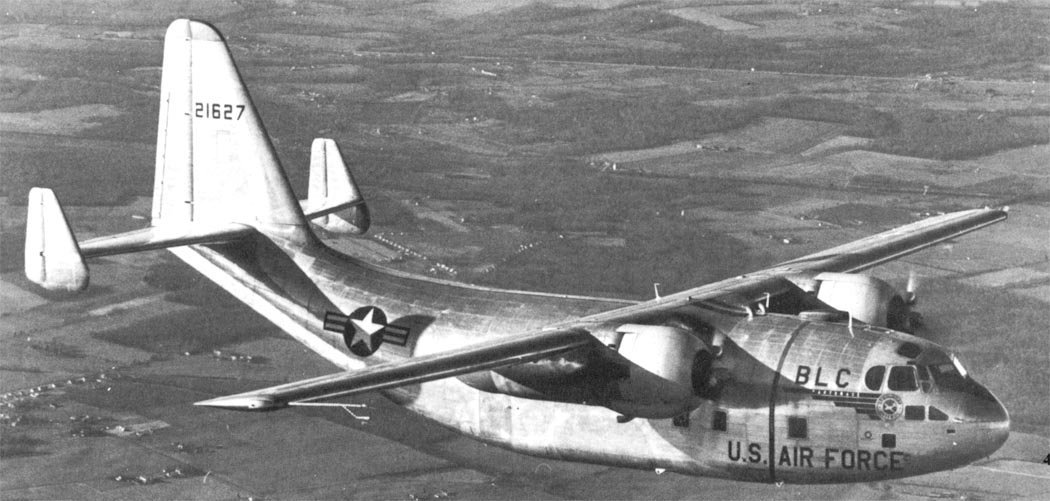
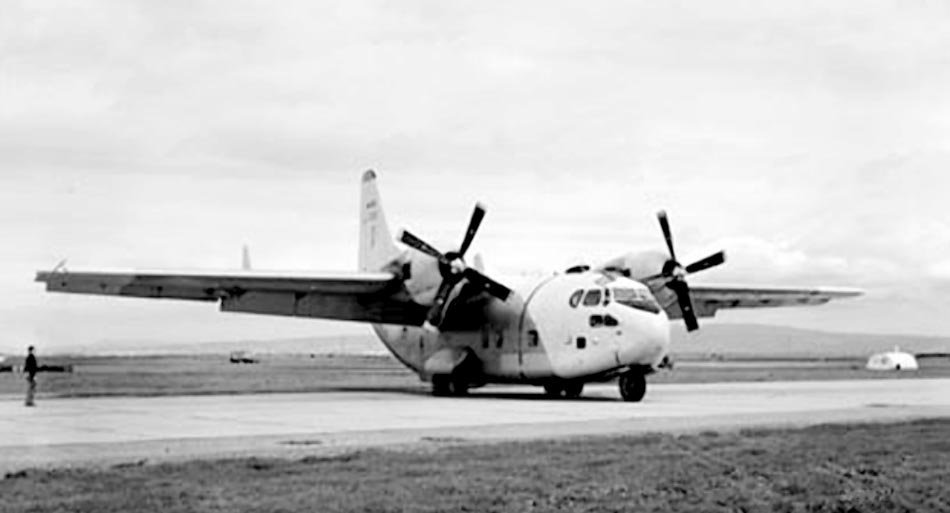
Building on this success, Stroukoff proposed creating an aircraft with four turboprop engines, BLC, and ‘Pantobase’ systems. However, the customers signed a contract for a prototype with two more powerful piston engines. After a series of fundamental research studies at NASA laboratories, Stroukoff Aircraft converted a production C-123B, designating it YC-134 (MS-18). Modifications included a redesigned empennage with vertical fins and rudders at the stabilizer tips, and a new thickened wing to accommodate a more efficient BLC system and additional fuel tanks.
Two 400 hp turbocompressors were installed in the wing root. The ‘Pantobase’ system was not yet present. The aircraft first took to the air on December 19, 1956. Tests revealed good flight characteristics, leading the military to order two more aircraft. These subsequent machines were equipped with a modernized BLC system featuring a more powerful compressor and the ‘Pantobase’ system.
The YC-134 demonstrated the following takeoff and landing capabilities: takeoff run on land – 244 m, on snow and water – 458 m; landing roll on land – 320 m, on snow – 305 m, on water – 228 m. By early 1958, all three YC-134s were delivered to the Air Force.
Technical Specifications
| Modification | YC-134 |
| Wingspan, m | 33.53 |
| Aircraft length, m | 23.96 |
| Aircraft height, m | 10.40 |
| Wing area, m2 | 113.60 |
| Empty weight | 17400 |
| Maximum takeoff weight | 18900 |
| Main engines | 2 Piston engines Wright R-3350-89A |
| Auxiliary engines | 2 Turbojets J44 |
| Main engine power, hp | 2 x 3500 |
| Maximum speed, km/h | 565 |
| Cruising speed, km/h | 378 |
| Practical range, km | 4500 |
| Practical ceiling, m | 8800 |
| Crew, crew members | 2 |
| Payload | up to 62 soldiers |
Image and diagram gallery of the C-134 Pantobase
 C-134 Pantobase |
 C-134 Pantobase |
 C-134 Pantobase |
 C-134 Pantobase |
 C-134 Pantobase |
Equipo Editorial de ArchivoAéreo
Grupo de investigadores y entusiastas de la aviación dedicados a documentar y preservar la historia aeronáutica mundial. Todos los artículos son revisados para garantizar precisión histórica.
Fuentes y Rigurosidad
La información presentada en esta ficha técnica ha sido compilada a partir de manuales de vuelo desclasificados, archivos históricos y bibliografía especializada. Aunque nos esforzamos por mantener la máxima precisión, algunos datos de rendimiento pueden variar según la variante específica o las condiciones operativas.