C.295
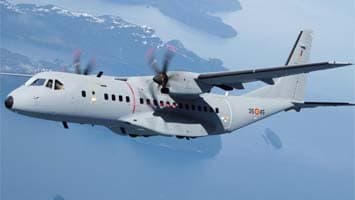
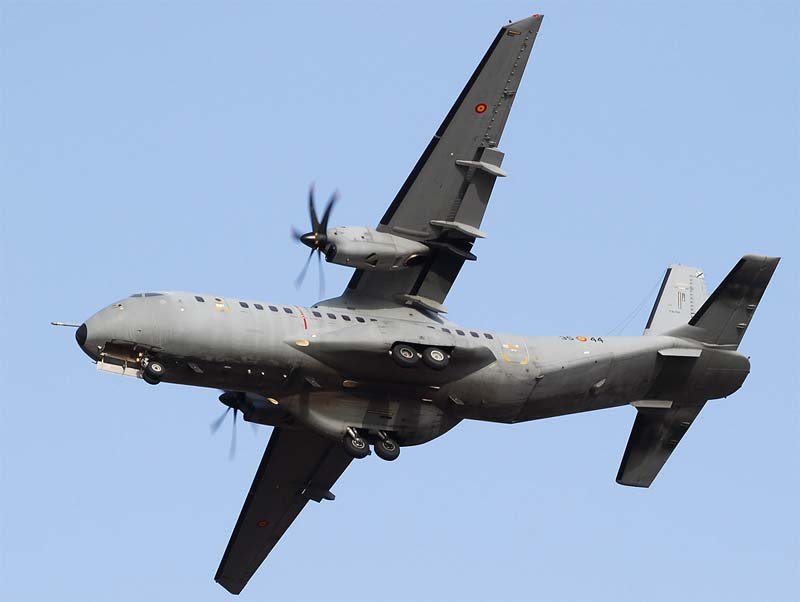
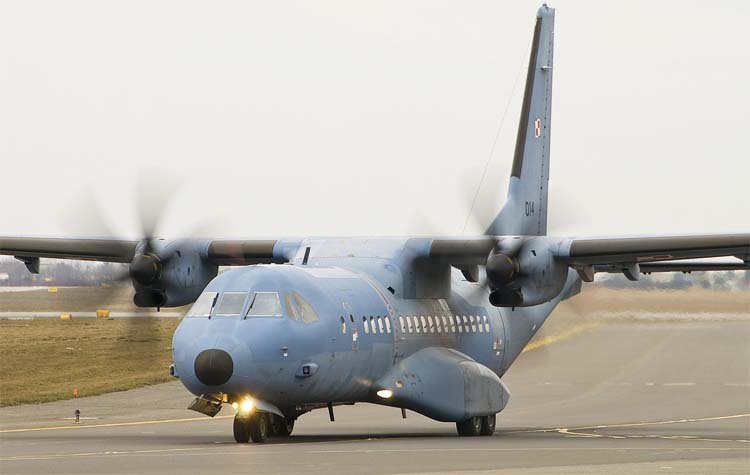
The C-295 from Airbus Military, built upon the joint Spanish-Indonesian CN.235 development, is a versatile military transport aircraft. Although it missed the competition for the single transport aircraft (ETC) for the US Air Force and Army, orders for it continue to come from all over the world.
Origins and Development of the CN.235
In 1981, at the Paris Air Show, the Indonesian firm IPTN and the Spanish CASA announced their intention to create the CN.235 transport aircraft as part of the joint “Airtech” program. Nominally, the aircraft was aimed at the regional airliner market, but when it was rolled out in September 1983, it immediately became clear that it was an excellent military transport aircraft. Indeed, the CN.235 was not popular with airlines, but it gained military customers as a reliable transport capable of operating from unprepared airfields. Later, the aircraft was built in military and paramilitary variants under the designation CN-235.
The CASA firm (subsequently EADS CASA, and since spring 2009, “Airbus Military”) developed an extended version of the basic aircraft for special purposes under the designation C-295, which could also be used as a high-capacity airliner. In 1997, at the Paris Air Show, CASA announced the completion of the independent development of the C-295.
Capabilities and Technical Specifications
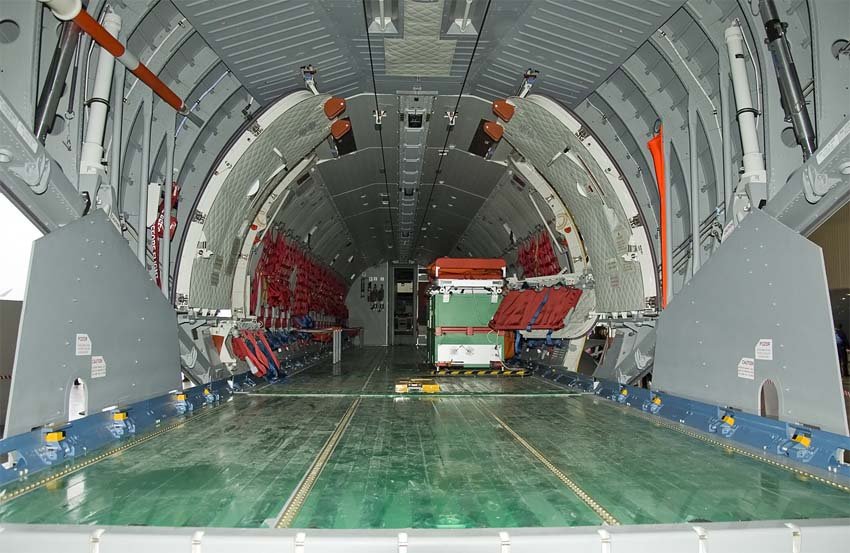
Its fuselage is 24.45 m long, which is 3.05 m longer than that of the CN-235. The maximum payload was increased by more than 50% (up to 9250 kg), allowing it to transport 71 servicemen or 49 paratroopers, five standard pallets, or three aircraft engines. In its medical variant, the C-295 can accommodate up to 24 stretcher-bound wounded and up to seven medical personnel.
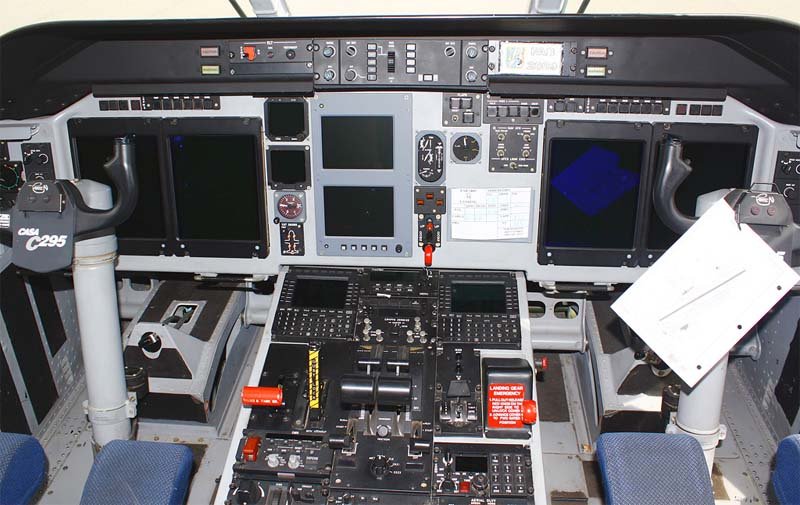
The aircraft is equipped with two Pratt & Whitney Canada PW127G turboprop engines, each providing 2645 hp (1972 kW), driving Hamilton Standard HS0568F-5 six-bladed propellers. The cockpit features a Sextant Topdeck electronic flight information system, including a flight management system, attitude and heading reference system, autopilot, and three-color LCD screens, as well as an airborne collision avoidance system and a ground proximity warning system.
Global Success and Future of the C-295
The demonstration flight took place on November 28, 1997, and the first production C-295 took off on December 22, 1998. The US Federal Aviation Administration certificate was obtained in December 1999. In February 2000, the Spanish Air Force confirmed its order for nine aircraft, made in April 1999. By the end of 2008, the Spanish air fleet had 13 C-295 aircraft, with two more under construction.
Although the C-295 lost a lucrative contract for a new unified transport aircraft (ETC) for the USA to the Alenia C-27J, it was successful with other customers. Algeria acquired six aircraft, Brazil eight (with four more ordered), Finland two, Jordan two, Poland eleven (one lost), and Portugal ordered seven. On May 13, 2009, the Czech Republic became another buyer, ordering four aircraft to replace its An-26s. The first of these was to be delivered by the end of 2009, and the rest in 2010.
Saab proposed producing a C-295 variant called Erieye with an AEW&C (Airborne Early Warning and Control) system. This aircraft, equipped with a radar antenna in a “frame” fairing, similar to those installed on the Saab 340/2000 and EMB-145 Erieye, is expected to be sold to Poland and other countries.
Technical Specifications
| Modification | C-295 |
| Wingspan, m | 25.81 |
| Length, m | 24.45 |
| Height, m | 8.82 |
| Wing area, m2 | 59.10 |
| Empty weight | 11200 |
| Normal takeoff weight | 20700 |
| Maximum takeoff weight | 23200 |
| Fuel, l | 7650 |
| Engine type | 2 Turboprop engines Pratt Whitney Canada PW127G |
| Power, kW | 2 x 1975 |
| Cruising speed, km/h | 482 |
| Practical range, km | 4500 |
| Combat range, km | 1350 |
| Service ceiling, m | 7620 |
| Crew | 2 |
| Payload | 69 soldiers or 48 paratroopers or 27 stretchers with 4 attendants or 9700 kg of cargo |
Image and diagram gallery of the C.295
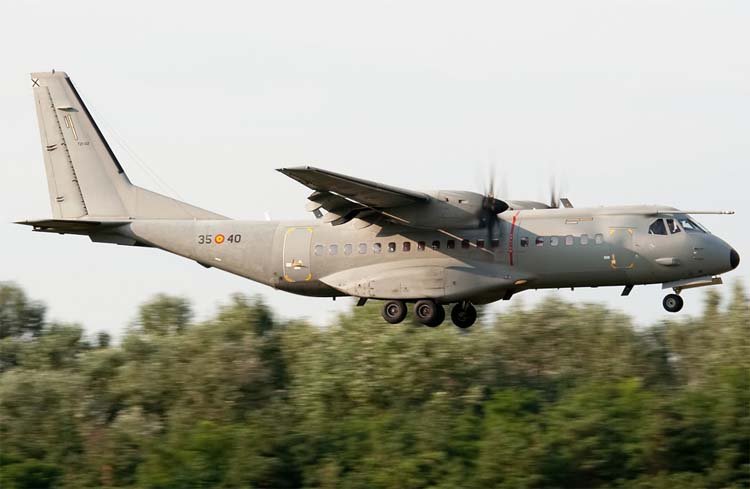 C.295 |
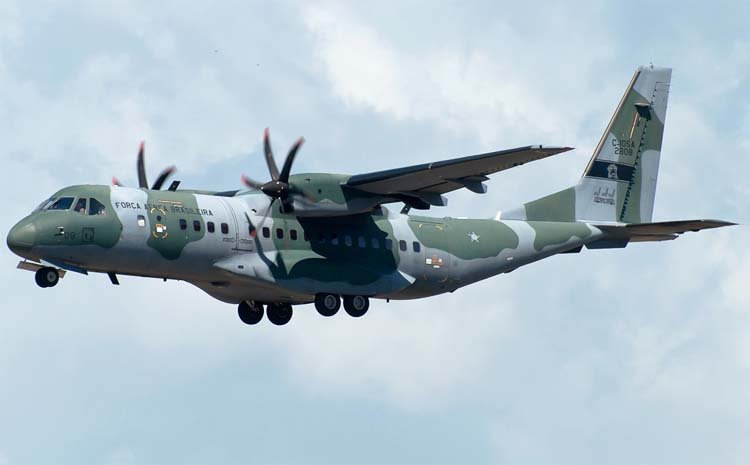 C.295 |
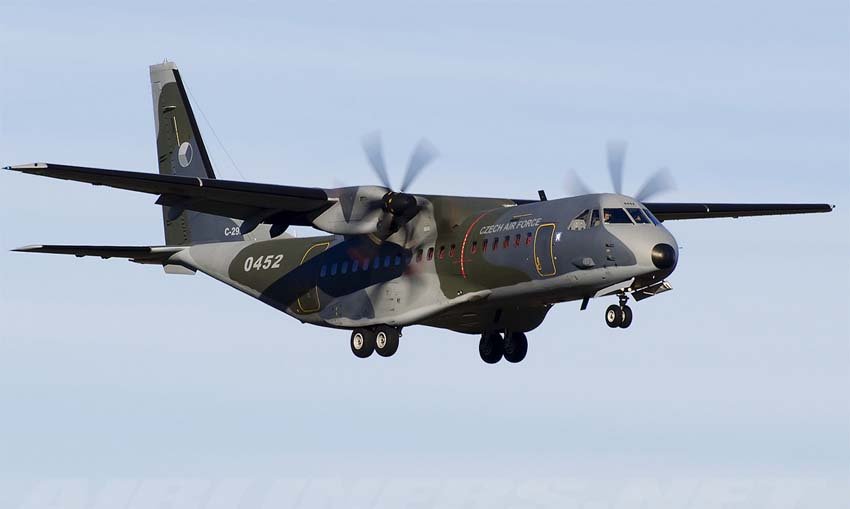 C.295 |
 C.295 |
 C.295 |
 C.295 |
 C.295 |