C-9 Nightingale
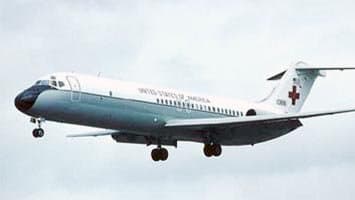
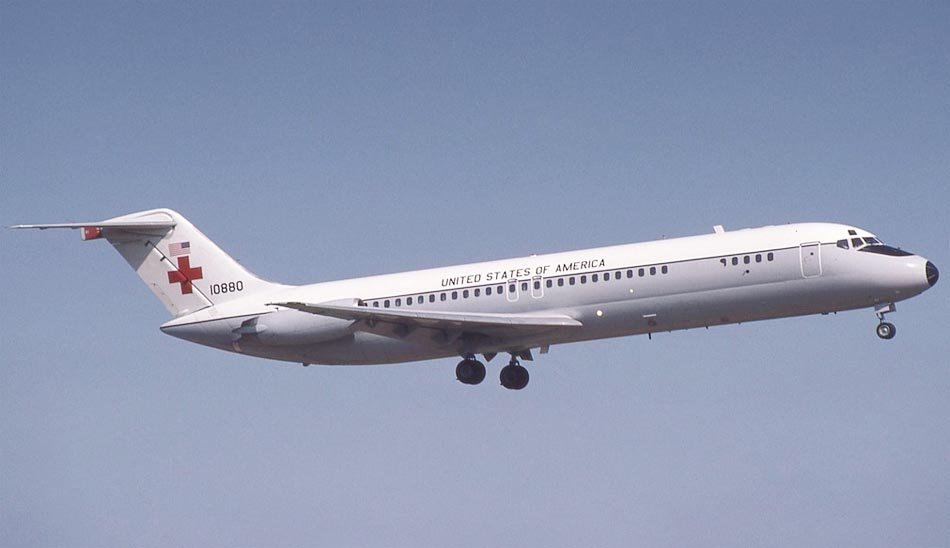
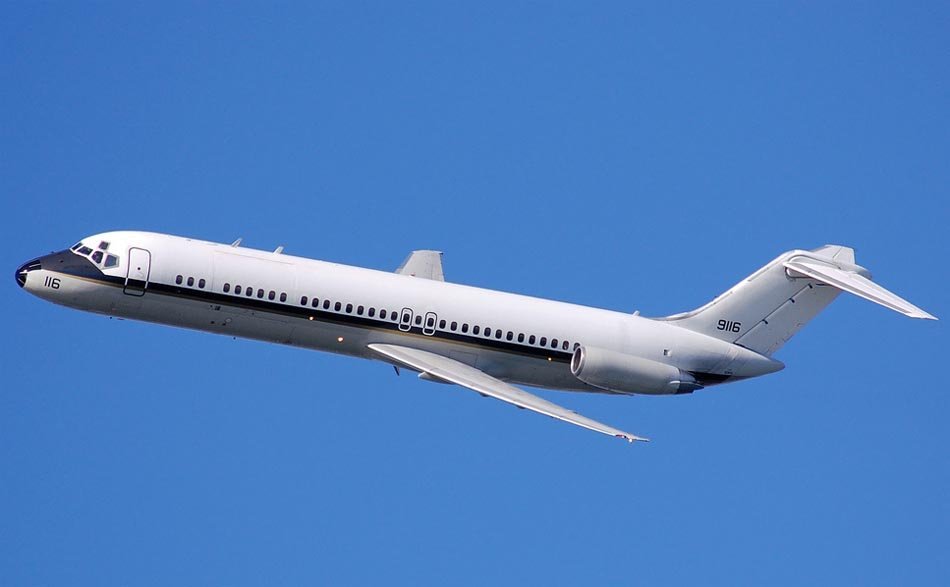
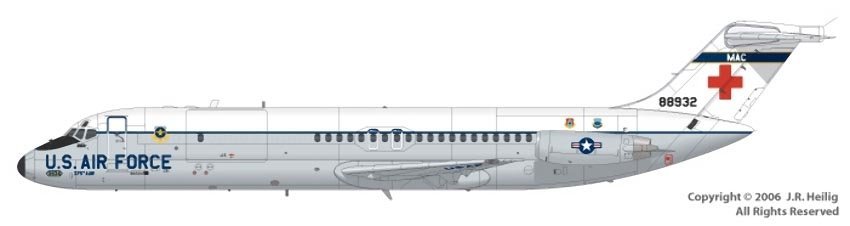
For military purposes, the DC-9 was used as an aeromedical transport aircraft for carrying wounded under the designation C-9A Nightingale, and for cargo transport as the C-9B Skytrain. The first aircraft made its maiden flight in May 1963 and entered service in December 1965.
Medical Capabilities and Design
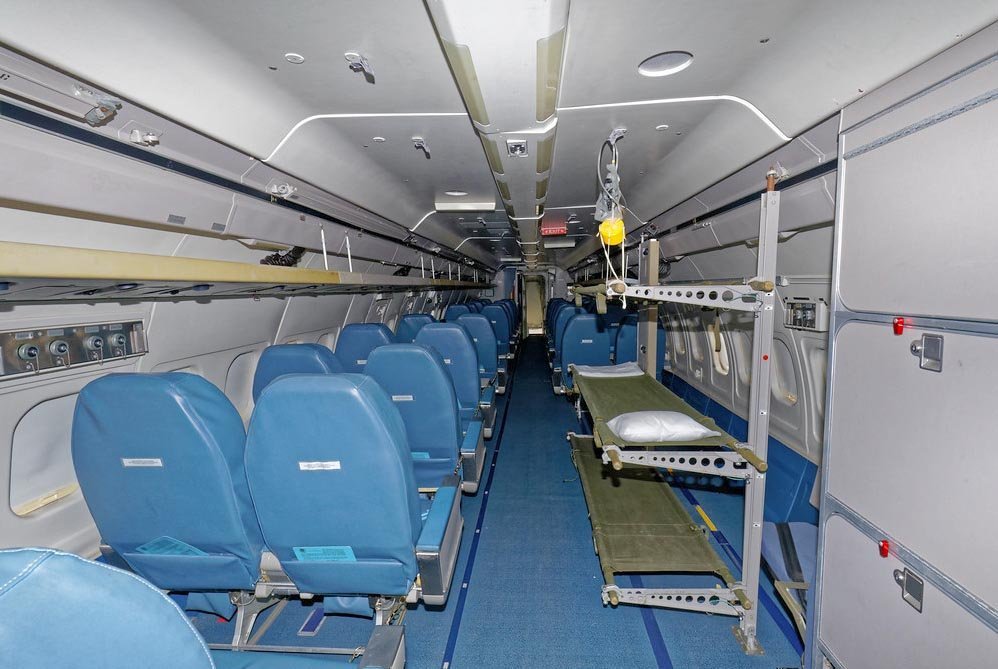
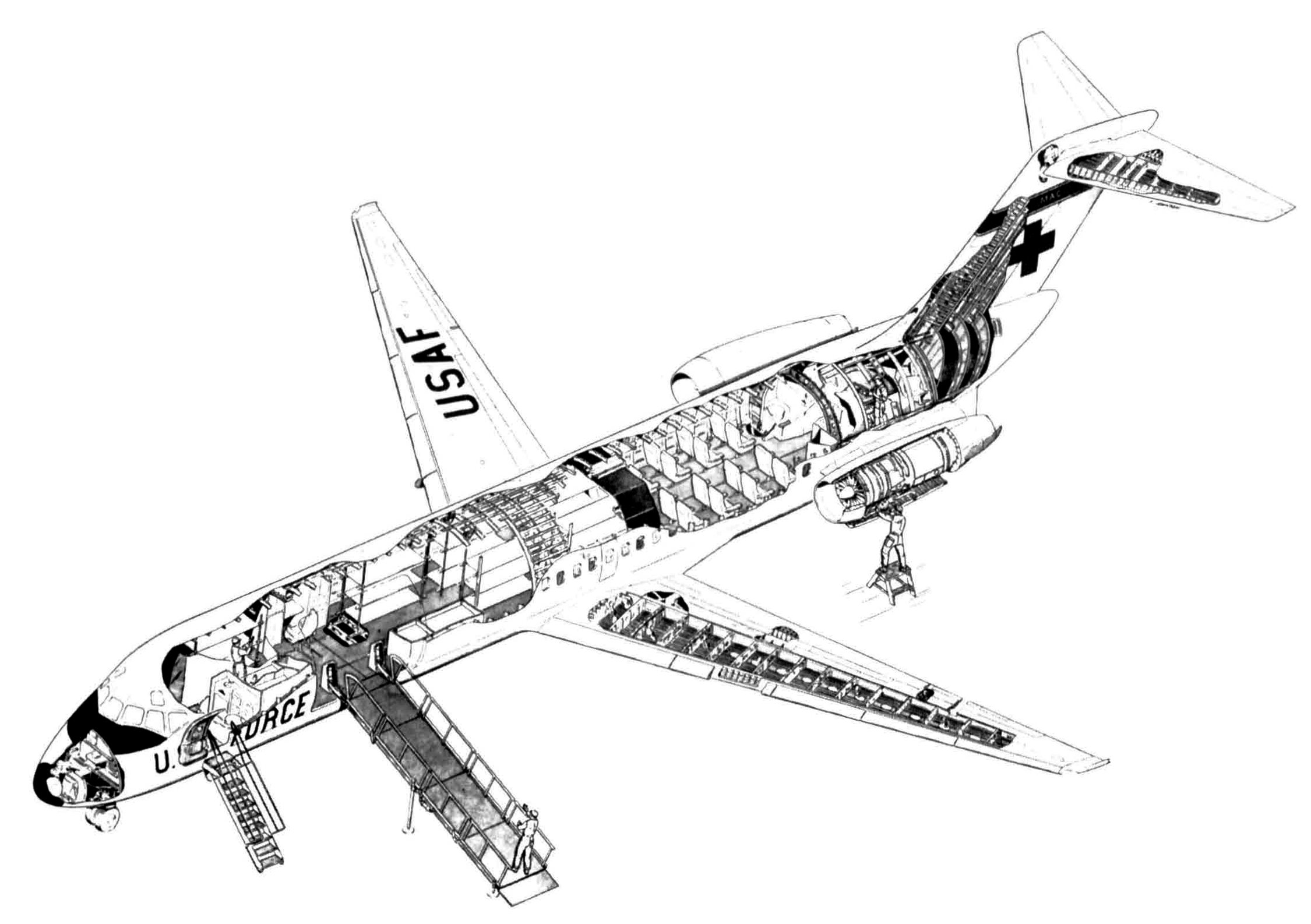
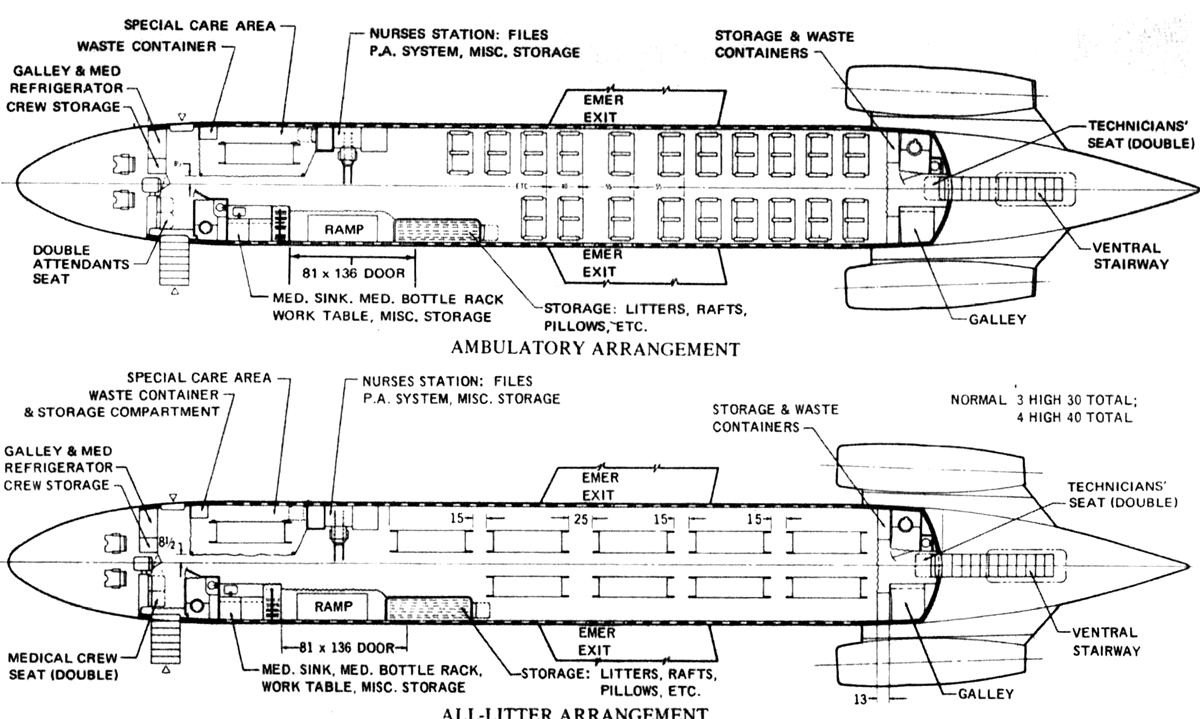
The C-9A could accommodate 30–40 stretcher patients and over 40 seated patients. Other configurations for casualties were also possible, with all stretcher berths installed in the forward section of the aircraft and equipped with nurse call buttons. The cabin featured a height of 2.06 meters and a volume of 125 cubic meters.
The “Nightingale” also included a special intensive medical care compartment with independent air conditioning and ventilation systems. This compartment was fully hermetically sealed and equipped with a diverse range of medical equipment.
Service History and Retirement
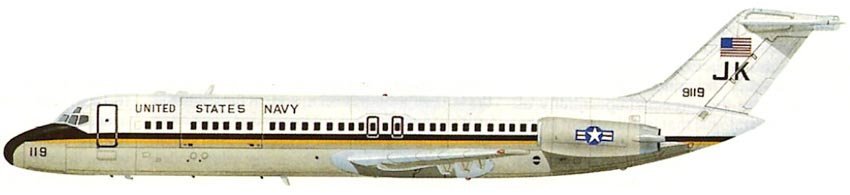
The last flight of a C-9A Nightingale took place in September 2005, and the C-9C was decommissioned in September 2011. The U.S. Navy retired its last C-9B in July 2014, and the two remaining C-9s in Marine service were retired in April 2017. A total of 48 aircraft of these modifications were built.
Key Military Variants
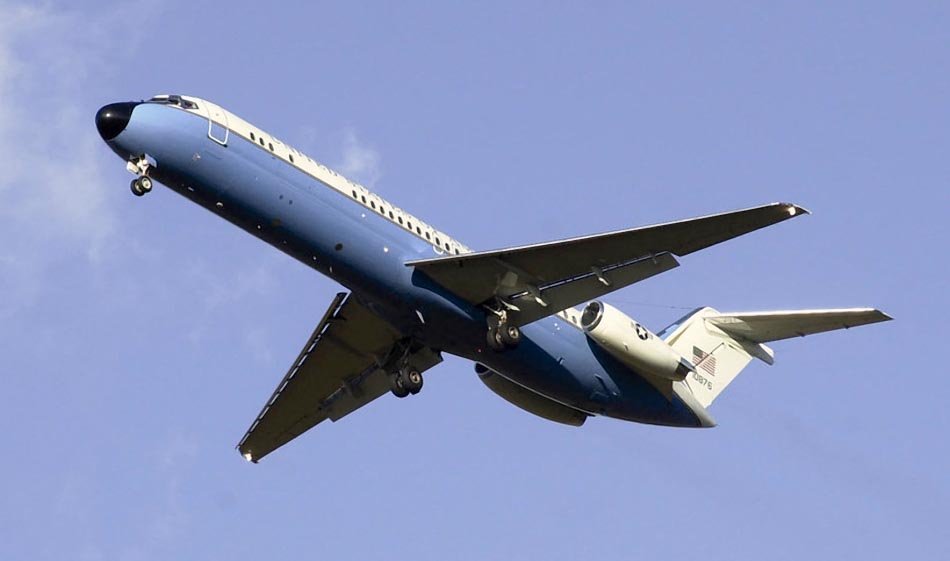
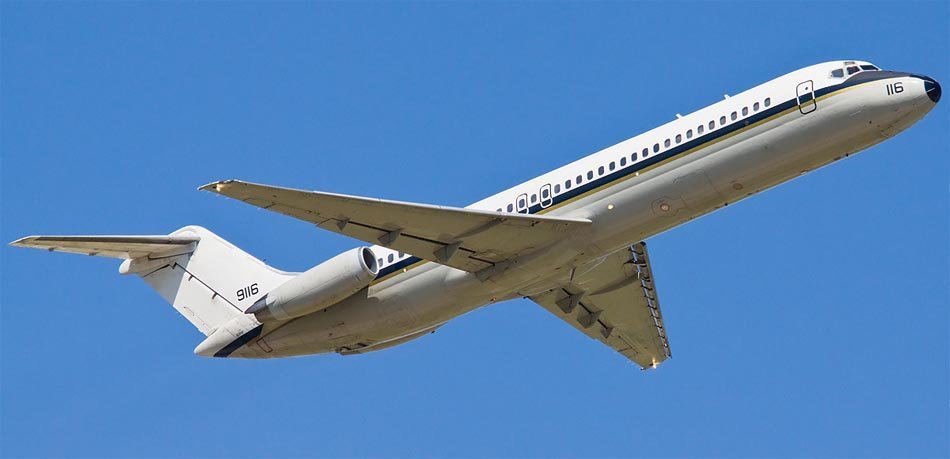
The C-9A designation refers to the first production modification. The C-9B was a modification for the U.S. Navy, based on the DC-9-32CF aircraft. The C-9C, a modification of the C-9A, served as a VIP transport for 42 passengers, also known under the C-9C designation in the U.S. Air Force.
Technical Specifications
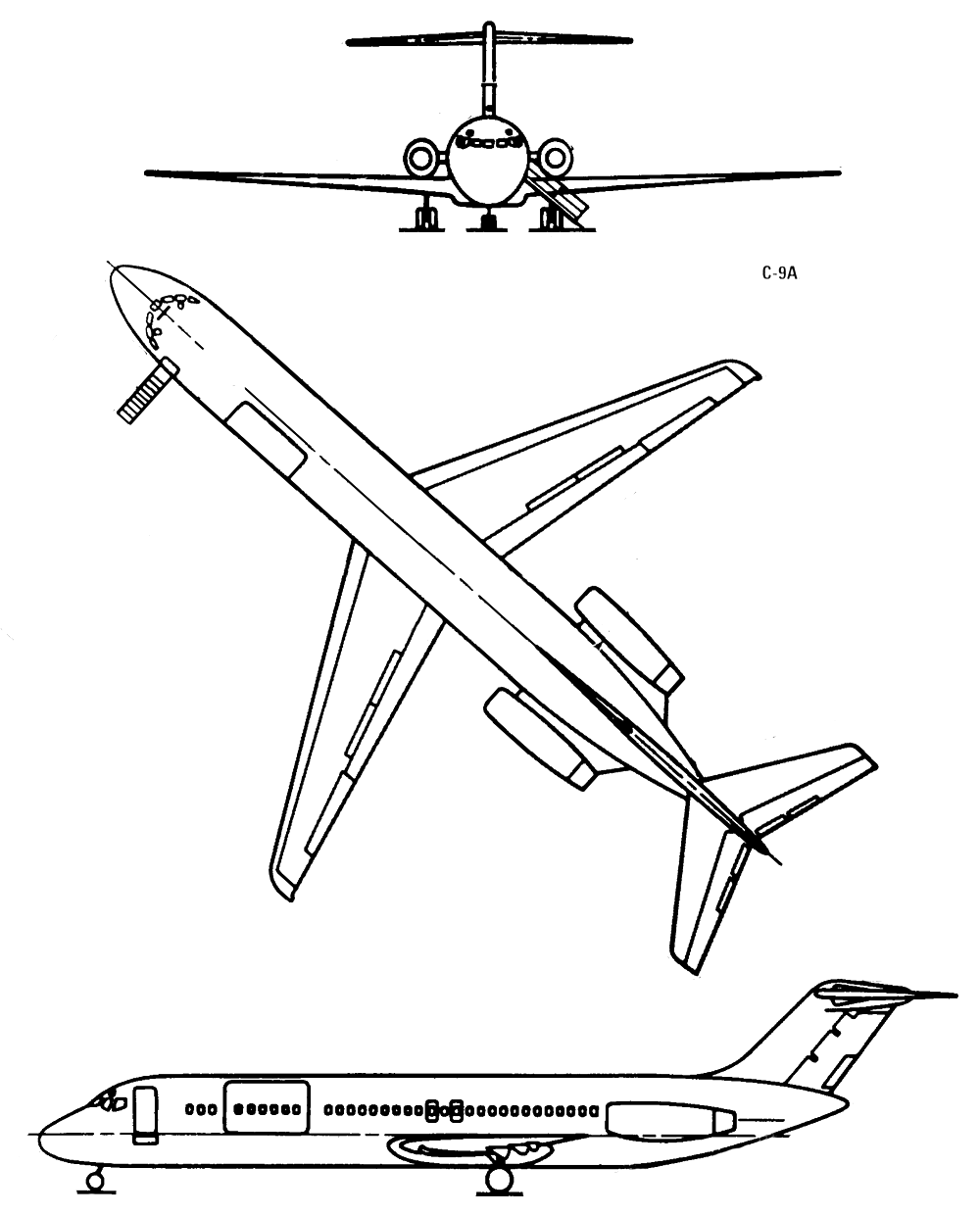
| Modification | C-9A |
| Wingspan, m | 28.47 |
| Aircraft length, m | 36.37 |
| Aircraft height, m | 8.38 |
| Wing area, m2 | 92.97 |
| Empty weight | 25940 |
| Maximum takeoff weight | 54885 |
| Internal fuel, l | 13927 |
| Engine type | 2 Pratt Whitney JT8D-9 Turbofan engines |
| Thrust, kN | 2 x 64.50 |
| Maximum speed, km/h | 995 |
| Cruising speed, km/h | 907 |
| Practical range, km | 3669 |
| Operational range, km | 2390 |
| Service ceiling, m | 11280 |
| Crew, crew | 2-3 |
| Payload | 40 stretchers, 40 seated wounded and 5 attendants or 14118 kg of cargo |
Image and diagram gallery of the C-9 Nightingale
 C-9 Nightingale |
 C-9 Nightingale |
 C-9 Nightingale |
 C-9 Nightingale |
 C-9 Nightingale |
 C-9 Nightingale |
 C-9 Nightingale |
 C-9 Nightingale |
 C-9 Nightingale |
 C-9 Nightingale |
 C-9 Nightingale |
 C-9 Nightingale |
Equipo Editorial de ArchivoAéreo
Grupo de investigadores y entusiastas de la aviación dedicados a documentar y preservar la historia aeronáutica mundial. Todos los artículos son revisados para garantizar precisión histórica.
Fuentes y Rigurosidad
La información presentada en esta ficha técnica ha sido compilada a partir de manuales de vuelo desclasificados, archivos históricos y bibliografía especializada. Aunque nos esforzamos por mantener la máxima precisión, algunos datos de rendimiento pueden variar según la variante específica o las condiciones operativas.