Caudron-Renault C.670
Origins and Development
On July 1, 1933, the merger of two aviation pioneers, Louis Renault and René Caudron, and the subsequent creation of small, lightweight racing aircraft, brought France a wealth of prestigious aviation records. Among the achievements of the Caudron-Renault racing planes, known for their refined lines and the inherent handling complexity of racing aircraft, were victories in the Coupe Deutsch de la Meurthe races.
These aircraft, now considered “classics,” ultimately led to the development of a peculiar light twin-engine combat aircraft. Its construction began in the winter of 1935-36, initiated by M. Lehideux, then head of Caudron-Renault. During those years, some French aircraft manufacturers championed the creation of the lightest possible combat aircraft, including Société Caudron-Renault, undoubtedly one of the most prolific and creatively active companies.
Despite a promising start, this trend lacked a future, becoming a casualty of conflicting decisions. M. Riffard entrusted the development of the new aircraft to a team led by M. G. Otfinovsky. The design team, with the assistance of Brun de St-Hippolyte and de V. Wrgechtch, immediately began work.
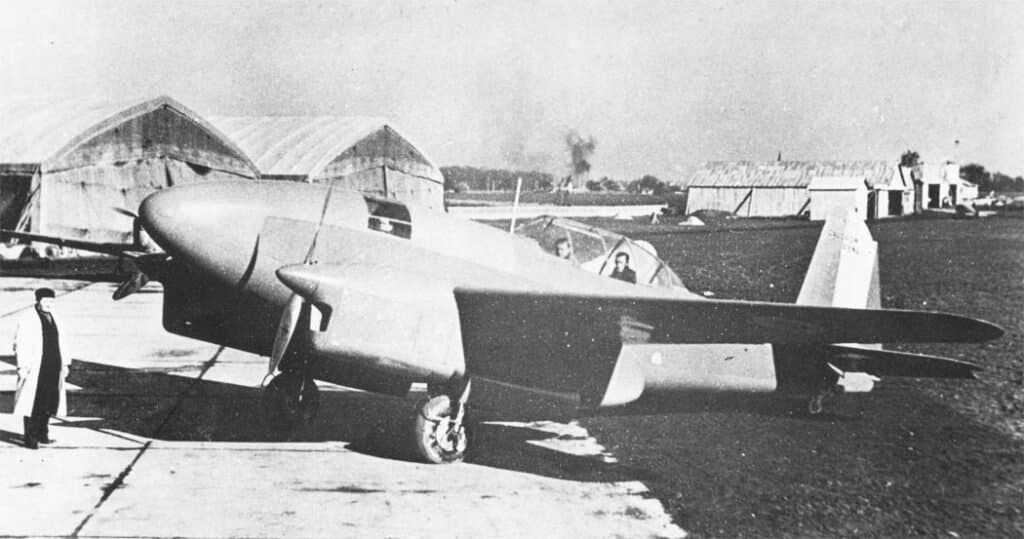
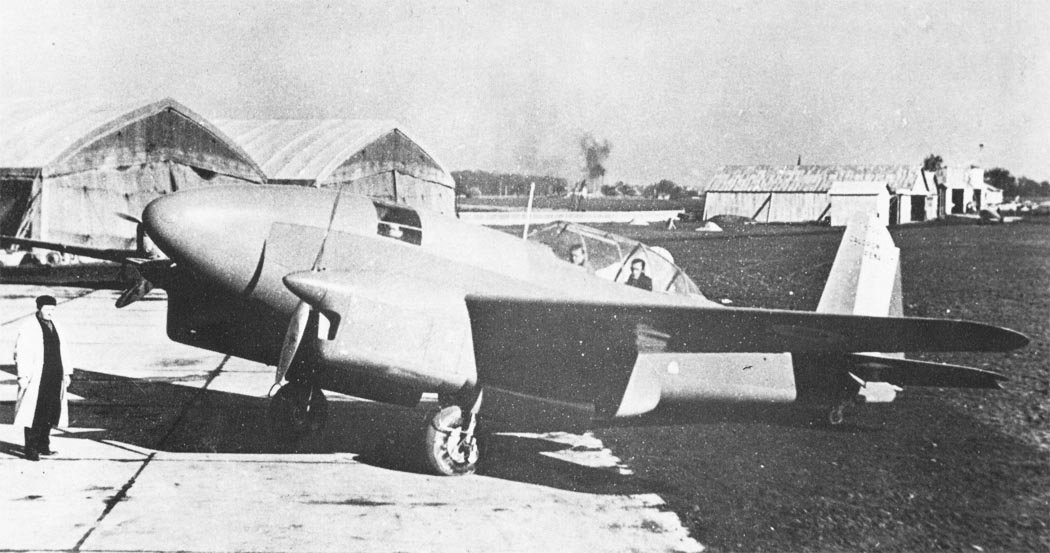
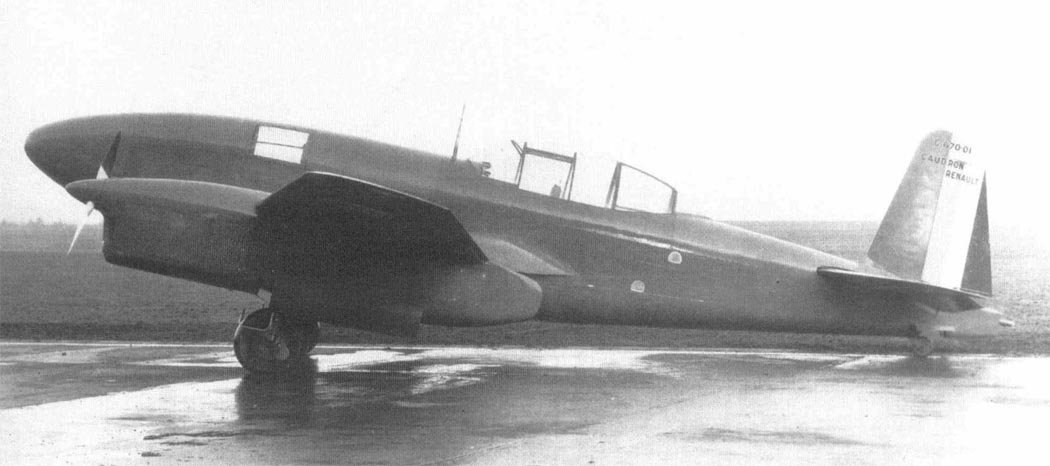
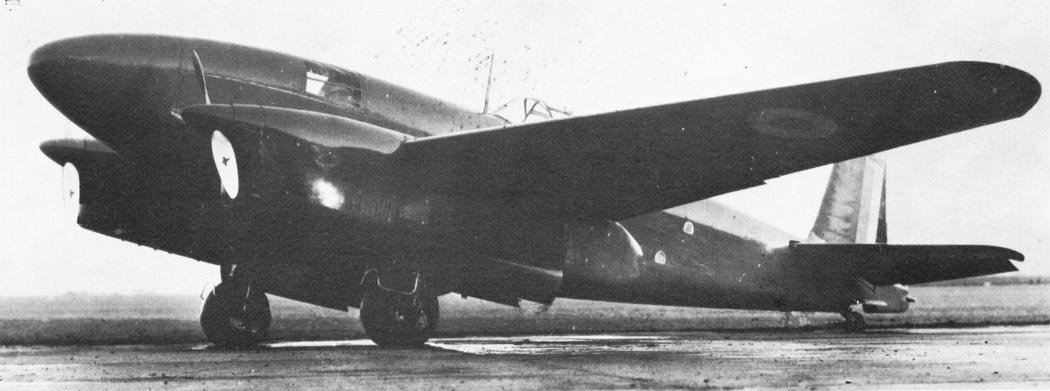
The designers decided to incorporate as many elements as possible from the light multi-purpose C.640 Typhon. The wing, with its engine nacelles, engines, main landing gear struts, and tail assembly, was taken from an available C.640 and attached to a new fuselage designed according to the updated technical requirements. The new aircraft, designated C.670, largely met the strength requirements of the “Technical Program for the Creation of Light Multi-seat Air Defense Fighters” and soon became known as the “reprisal aircraft.”
The first C.670-01 prototype left the “O” factory workshops in Billancourt in March 1937. That month, Raymond Delmotte made the maiden flight in Guyancourt, followed by four or five additional flights in subsequent days. Charles Franco carried out the initial (unofficial) test flights starting May 24.
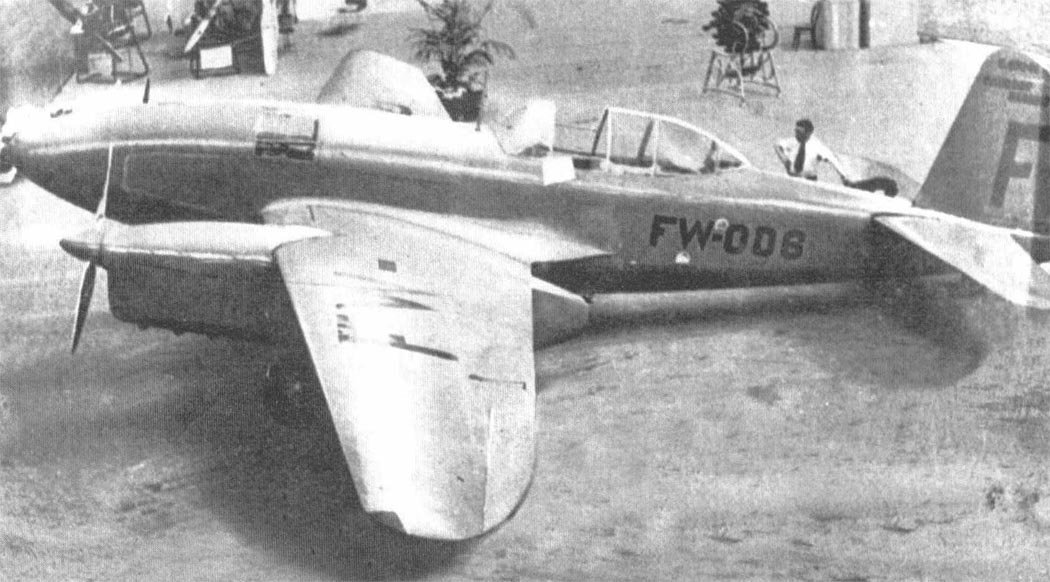
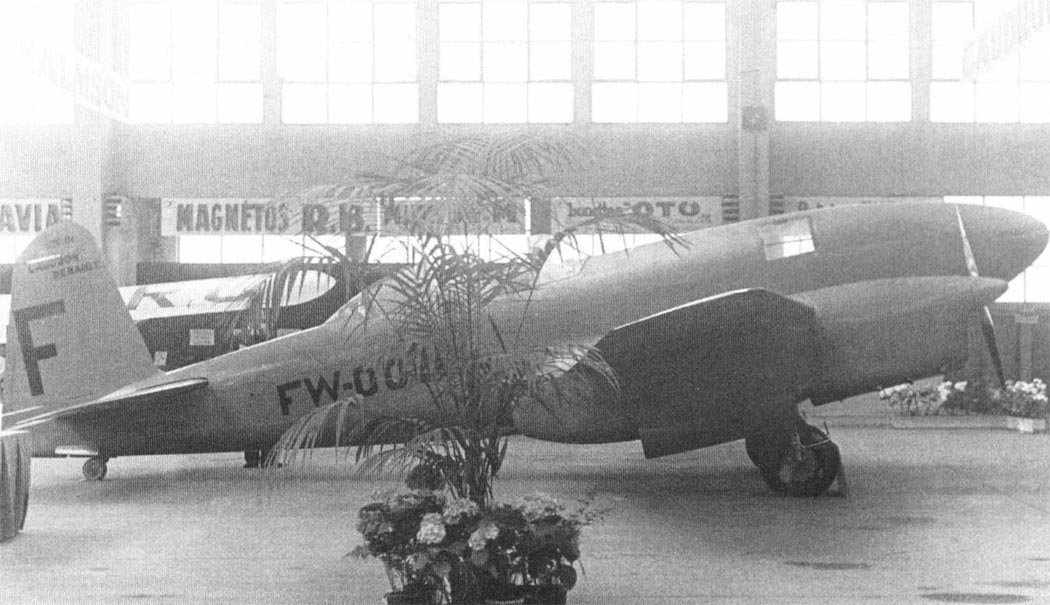
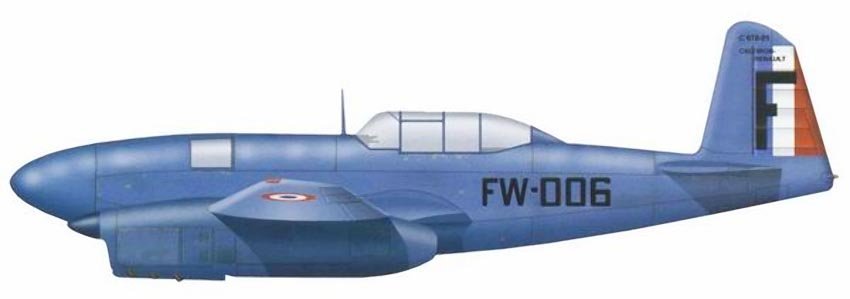
The Brussels Aviation Exhibition provided the new aircraft with an opportunity for its first journey and, crucially, to secure much-needed publicity for an aircraft developed outside official programs. Charles Franco was scheduled to fly the C.670-01, bearing the temporary civil registration FW-006, from Guyancourt to Brussels.
In the Belgian capital, the C.670-01 prototype was exhibited until July 8. Besides the FW-006, the French stand featured prototypes like the M. S.405-01, Potez 58, a Salmson touring aircraft, and the Caudron-Renault Simoun. The light passenger aircraft Caudron-Renault C.440 was not presented at the exhibition due to the distance between its engines and its narrow doors.
It should also be noted that France’s showing at the 1937 Brussels aviation exhibition was not convincing. French participants were overshadowed by aircraft from other countries, primarily Germany, whose aviation industry was booming. On July 8, Charles Franco returned from Belgium to Guyancourt in the C.670-01, making an intermediate stop at Le Bourget.
Aircraft testing continued, but it soon became clear that the Renault engines, with which the aircraft was equipped, developed insufficient power to achieve the required flight characteristics. This primarily concerned the rate of climb, important for “reprisal tasks,” although its flight range of 8 hours was good. There is information that company designers considered a C.730 variant, equipped with two twelve-cylinder Renault 12 engines, but it is only known that wind tunnel tests of the engine nacelles were conducted, and their results remain unknown. As for the first C.670-01 prototype, information about it is lost after fifteen flights.
Design and Structure
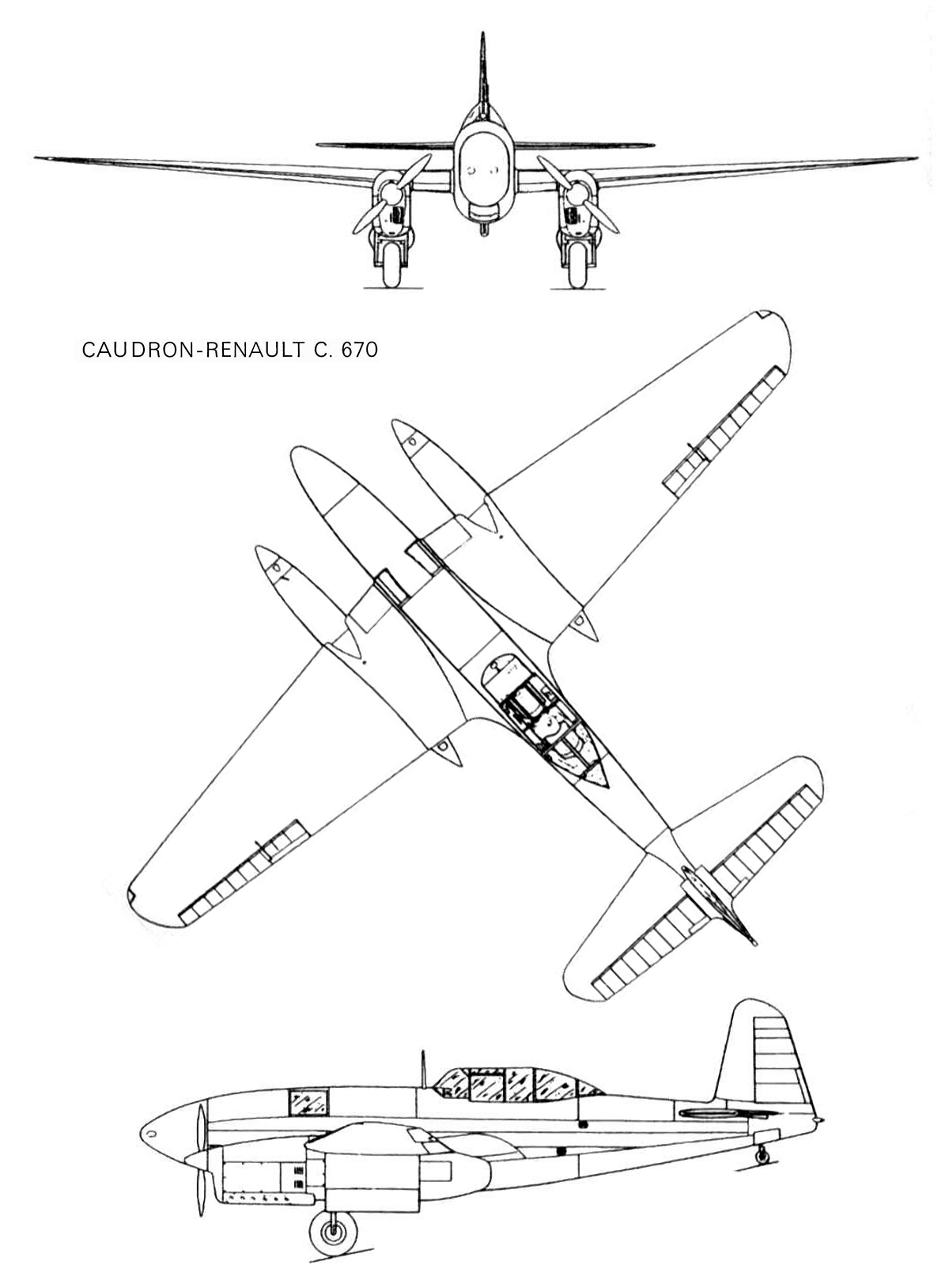
The Caudron-Renault C.670 was an elegant twin-engine aircraft, built in the traditions of the Caudron-Renault company, characterized by its enormous, far-aft glazed cockpit and the low power of its engines. The low-wing, trapezoidal in planform with an aspect ratio of 7.8, featured an all-wooden construction.
Its primary structural frame was a box spar (caisson); the side walls of the caisson formed two main spars with flanges made of limba and spruce. The caisson itself was divided into compartments by birch plywood bulkheads and spruce struts. The wing skin was stressed and made of five-ply SNBC plywood, installed at a 60° angle to the aircraft’s axis of symmetry between the wing spars. The thickness of the wing skin gradually decreased from the root sections to the tips.
The movable wing surfaces had a wooden framework and fabric covering. The ailerons were attached to the rear spar, while the landing flaps were attached to a magnesium alloy sheet that formed an auxiliary spar.
The aircraft’s fuselage essentially consisted of two vertical halves, comprising opposing walls of box-section transverse beams made of birch plywood, and spruce spars and struts. According to 2 LR specifications, the fuselage halves were joined using a wooden beam and easily removable skin panels. Lengthwise, the fuselage could be divided into four sections.
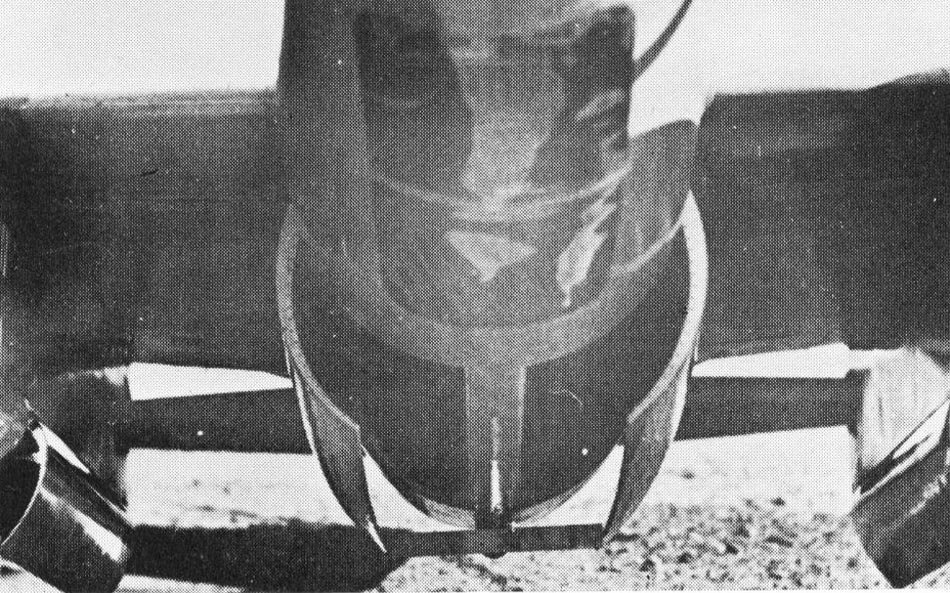
The front first section housed the bombardier’s station, followed by the bomb bay, whose doors opened by gravity. Behind the bomb bay, in the central part of the fuselage, was a large two-seat glazed cockpit, where the pilot and gunner were seated in tandem. A conical tail section of the fuselage was located behind the cockpit.
The construction of the empennage’s fixed parts was typical for Caudron-Renault and similar to that of the wing panels. The horizontal stabilizer was positioned at the upper part of the fuselage, outside the aerodynamic shadow of the wing. Its angle of attack was adjustable from the pilot’s cockpit using a worm gear. The elevators and rudder had a wooden framework and fabric covering.
The powerplant consisted of two six-cylinder inverted inline Renault 454 engines, which developed a nominal power of 220 hp at an altitude of 4000 meters and rotated two-bladed Ratier metal propellers with an electrically operated variable-pitch mechanism.
The main landing gear struts were housed in the rear parts of the engine nacelles, welded from steel tubes, between the two wing spars. Each strut consisted of a wheel and two Messier oleo-pneumatic shock absorbers. Retraction and extension of the struts were performed by means of a hydraulic drive. The tail wheel was also retractable.
In accordance with 2 LR requirements, the fuel tanks, with a capacity of 850 liters, were equipped with emergency dump valves that could empty the tanks in less than 20 seconds. During normal operation, the engine fuel lines were isolated, but in an emergency, one engine could be supplied from a portion of the fuel system supplying the other engine. According to 2 LR, the oil tanks were located in the wing’s leading edge.
Armament and Equipment
The aircraft’s armament consisted of two long 20mm cannons, installed in the forward fuselage and firing in the direction of the aircraft’s mean velocity. Each cannon had a 60-round loading device, and they could also be fitted with 30-round magazines, placed on special racks near the bombardier’s station, who was responsible for reloading the cannons and firing. The pilot initiated firing using a pneumatic actuator mounted on the control stick.
It also carried two 100-kg bombs for strikes deep behind enemy lines or two 250-kg bombs for close-range targets. A 7.5mm M.A.C. machine gun was installed in the rear part of the two-seat cockpit, mounted on a special adjustable support with mechanical correction for firing. Hinged panels allowed downward firing, significantly increasing the firing sectors; however, given the speeds developed by the aircraft, the effectiveness of this solution was questionable.
In the stowed position, the machine gun was retracted to the rear of the cockpit and rigidly fixed by a simple support lock, then covered by a fairing. The supports were attached to the fuselage floor, where eight magazines, each holding a hundred rounds, were stored.
The crew consisted of a bombardier, a pilot, and a gunner. The first crew member was located in the nose section of the fuselage, separate from the others. Access to the forward compartment was via a sliding door, allowing the bombardier to move around easily in flight. Lateral visibility in the bombardier’s cockpit was provided by two celon windows located on both sides of the fuselage. Aiming was done using a removable hatch and a bombing sight located at the cockpit floor level. For reconnaissance flights, the bombardier’s compartment was equipped with a camera.
The pilot, acting as aircraft commander, occupied the forward part of the two-seat cockpit, which was pushed far back and offered good forward and upward visibility. Visibility for firing was 65%; for group flight and ground observation, 85%; overall visibility was estimated at 5250 points. Protection of the rear hemisphere was entrusted to the gunner, positioned behind the pilot. The gunner’s seat was rotatable with locking in forward and rear positions. When fixed facing forward, he could serve as co-pilot and radio operator; when fixed in the rear position, the gunner could fire the machine gun.
Among the equipment prescribed by the “Technical Program for the Creation of Light Multi-seat Air Defense Fighters” for installation on the aircraft were: a Morel long-range navigation compass, located at the pilot’s feet; an R.I.2 air-to-ground radio station (optional), with signal transmission via a suspended antenna; a No. 5 radio station with reception amplification for inter-aircraft communication (retractable antenna); and an aircraft intercom. For reconnaissance sorties, the aircraft was equipped with a Planiphoto F.300 camera with a cassette for 220 18 x 24 cm frames.
Technical Specifications
| Modification | C. 670 |
| Wingspan, m | 14. 80 |
| Length, m | 11.60 |
| Height, m | 3. 00 |
| Wing area, m2 | 28.00 |
| Empty weight | 2127 |
| Maximum takeoff weight | 3704 |
| Engine type | 2 Piston engine Renault 454 |
| Power, hp | 2 x 220 |
| Maximum speed, km/h | 40 5 |
| Cruising speed, km/h | 3 82 |
| Practical range, km | 2640 |
| Service ceiling, m | 7000 |
| Crew, crew members | 3 |
| Armament: | two 20-mm HS9 cannons, one 7.5-mm MAC-34 machine gun; bomb load – 200 kg, in overload – 500 kg |
Image and diagram gallery of the Caudron-Renault C.670
 C.670 |
 C.670 |
 C.670 |
 C.670 |
 C.670 |
 C.670 |
 C.670 |
 C.670 |
 C.670 |
 C.670 |
Equipo Editorial de ArchivoAéreo
Grupo de investigadores y entusiastas de la aviación dedicados a documentar y preservar la historia aeronáutica mundial. Todos los artículos son revisados para garantizar precisión histórica.
Fuentes y Rigurosidad
La información presentada en esta ficha técnica ha sido compilada a partir de manuales de vuelo desclasificados, archivos históricos y bibliografía especializada. Aunque nos esforzamos por mantener la máxima precisión, algunos datos de rendimiento pueden variar según la variante específica o las condiciones operativas.