Cessna 680A Citation Latitude
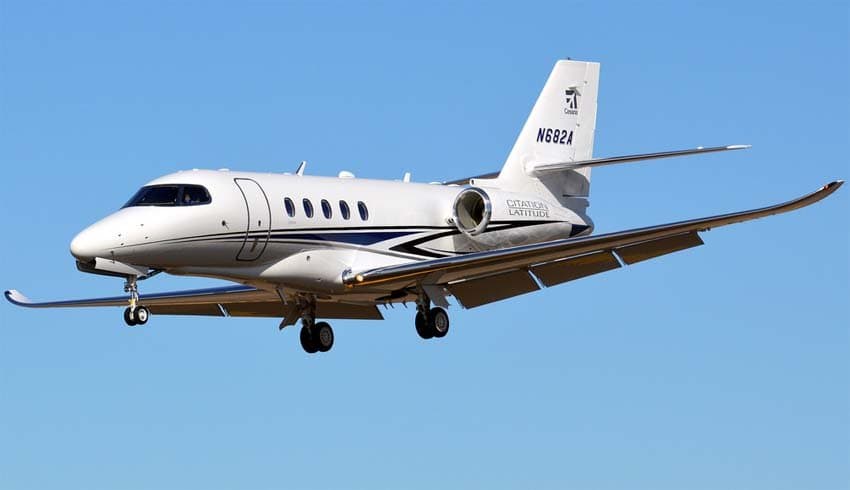
The Citation Latitude (Cessna Model 680A) business jet is the latest testament to Textron Aviation’s post-recession resurgence, as the company re-engages in the struggle for its historical share of the business aviation market. This marks Cessna’s first aircraft in the super-midsize class, boasting a cabin cross-section size almost identical to that of the Hawker 4000.
Opting against composite materials, Cessna developed a new aluminum alloy fuselage, integrating it with wings, engines, and primary systems from the CE-680 Sovereign+ project. The aircraft’s maiden flight occurred on February 18, 2014, and since then, two prototype aircraft have completed over 600 flights, accumulating a total of 1550 hours.
Innovative Design and Performance
The structural efficiency of the airframe is a significant strength of this machine. The empty weight of the super-midsize aircraft’s fuselage is only 160 kg more than the Sovereign+ model. Cabin pressurization has increased to 0.66 atm, equivalent to an altitude of 1800 m when flying at FL450 (the aircraft’s maximum cruising altitude).
This low empty weight allows the business jet to carry up to five people with a full fuel load, with parking and takeoff weight increasing by only 11 kg. The Citation Latitude can operate from the same airports as the Sovereign+, thanks to using identical powerplants and wings. Operators can plan most flights based on a cruising speed of 400 knots per hour.
While this is 40 knots less than its main competitor, the Embraer Legacy 450, the Latitude can take off and land on shorter runways. This opens up access to most smaller business aviation airfields located near major business centers.
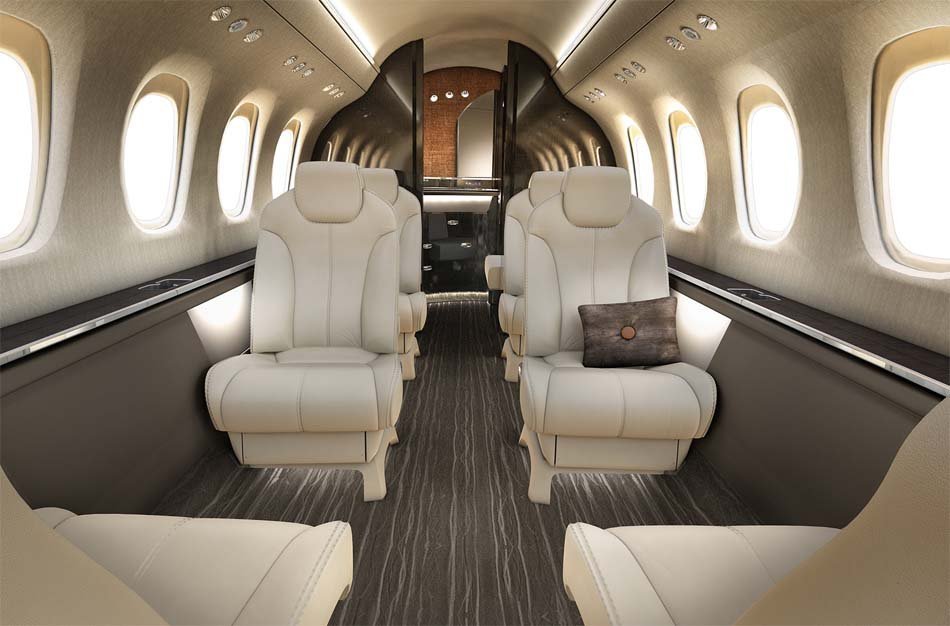
The Latitude’s cabin is wider in cross-section than all its Citation family predecessors, making it one of the most spacious in its class. The main section features six individual seats, while a two-seater sofa is installed in the forward section.
Consistent with all Citation family models, the Latitude’s primary airframe is an aluminum semi-monocoque, featuring skin panels, ribs, frames, and stringers joined by rivets, bolts, or adhesive. There is minimal use of composite materials, such as in the radar radome, wing-to-fuselage fairings, and the rear service hatch.
While the T-tail is considered a drawback, its structural design is highly effective, accommodating a wide range of center of gravity configurations with varying loads. The new spring-loaded passenger cabin door features manual opening, as well as automatic and manual closing. Each step is LED-illuminated, with the bottom step positioned close to the ground for easier boarding.
New fuselage design features have improved the nose section’s aerodynamics, leading to reduced aerodynamic drag and cabin noise levels. The windshield boasts a hydrophobic coating, eliminating the need for a moisture removal system on its surface.
Crew members will appreciate the updated baggage compartment hatch in the aircraft’s aft section. Its new design simplifies the loading and unloading process. The baggage section itself is Class C fire safety certified, equipped with a fast-discharge extinguisher integrated with the APU, and a slow-acting extinguisher activated below 25,000 feet to suppress any residual flames.
The wing’s sweep along the quarter-chord line is only 12.7°, but thanks to a low-drag airfoil, the aircraft can achieve speeds of up to 450 knots per hour. Operators can select a flight level of FL410-FL420, where the cruising speed will be 420-430 knots per hour for long-haul flights.
The capacity of the wing fuel tanks is 5168 kg. The primary refueling receptacle is located on the right wing near the leading edge, but alternative receptacles on top of the wing can also be used. Electric fuel pumps are utilized for engine start, fuel transfer, and as backup pumps.
The main electrical system is a split DC bus, powered by 300-amp starter-generators, a Honeywell RE100 auxiliary power unit (certified for starts up to 20,000 feet and normal operation up to 30,000 feet), an external power source, or two 44 Ah nickel-cadmium batteries. Two small engine-driven AC generators power the windshield heater.
De-icing protection for air pressure, external temperature, and angle of attack sensors is provided by electrical heaters. Only a few primary circuit breakers are located in the cockpit; most are housed in a distribution box in the aircraft’s tail, away from the crew, in accordance with EASA recommendations.
Latitude business jets are equipped with a single constant-pressure hydraulic system (204 atm) with hydraulic pumps driven by the engines or an auxiliary electric pump. This hydraulic system controls the landing gear mechanism, braking systems, thrust reverser system, nose wheel steering, and multi-functional spoilers. All landing gear struts feature dual wheels. Nose wheel steering via pedals allows an angle of up to 7°, while a handwheel can turn the nose wheel by 81°. The service life of the main landing gear tires exceeds 300 landings.
Nitrogen cylinders in the nose compartment are used for emergency braking and landing gear deployment. A separate battery serves as an alternative power source for nose wheel steering. Each wing features five interceptor panels: three central panels function as spoilerons, and two outer panels act as in-flight interceptors and ground lift dumpers.
The rudder is equipped with a trim tab driven by the bleed air system, reducing pedal effort in the event of an engine failure. The trim tab’s gain coefficient is inversely proportional to the aircraft’s indicated airspeed.
Advanced Comfort and Technology
Bleed air, passing through pre-cooling chambers in the pylons, is used for cabin pressurization, air conditioning, and heating, as well as for wing, horizontal stabilizer, and engine anti-icing systems. Catalytic ozone converters are employed to purify cabin air. The degree of cabin pressurization is automatically controlled by the onboard avionics.
The aircraft features a dual-zone temperature control system and an air recirculation device to accelerate cabin cooling. Long-life LED lamps are used for navigation and strobe lights. Incandescent lamps illuminate the landing and taxi lights, as well as the wing leading edge lights.
The entrance door is one of the widest in the Citation family. Behind the cockpit bulkhead, in front of the entrance door, is a galley with containers for hot and cold food, an ice bin, cutlery, and kitchenware. A microwave oven can be optionally installed, but a sink and faucet are not provided at all.
To the right of the co-pilot’s seat is a narrow lavatory. Opposite the entrance, a two-seater sofa with curved armrests is installed. An optional single seat with a large wardrobe can be placed on the right side. Cabin window height is 43 cm, and width is 33 cm. Windows are equipped with two plastic shades: one for slight dimming, and the second to completely block light.
LED lighting in the ceiling, at the base of the seats, and on the side panels visually enhances the cabin’s size. Seat upholstery and various interior items in the passenger cabin are crafted from high-quality leather and fabrics. LED lights create comfortable illumination. Rectangular cup holders, which can accommodate various containers besides cups, are located in the armrests, unlike the Sovereign+. Each seat is equipped with a USB output, and each pair of seats features a separate 117 V power outlet.
Latitude business jets can transport up to nine people, though in real-world operations, most operators carry no more than six. With full fuel tanks, the Latitude can accommodate five passengers, with each additional passenger reducing the range by 100 km.
The Cessna Clarity multimedia system is built on a fiber-optic architecture designed by Head-Up Technologies. This system controls cabin lighting, temperature, and window dimming. Each seat features a touchscreen display for controlling overhead lighting and the work table. Passengers can connect to the multimedia system using their iOS and Android smartphones and tablets. An optional Aviator 300 Inmarsat satellite broadband internet system from Aircell can be installed.
No super-midsize business jet with traditional controls offers such responsive handling or exceptional takeoff performance. While the Latitude may not lead in cruising speed, commercial payload, or full-fuel range, its cost of $16.25 million makes it a valuable acquisition across various parameters.
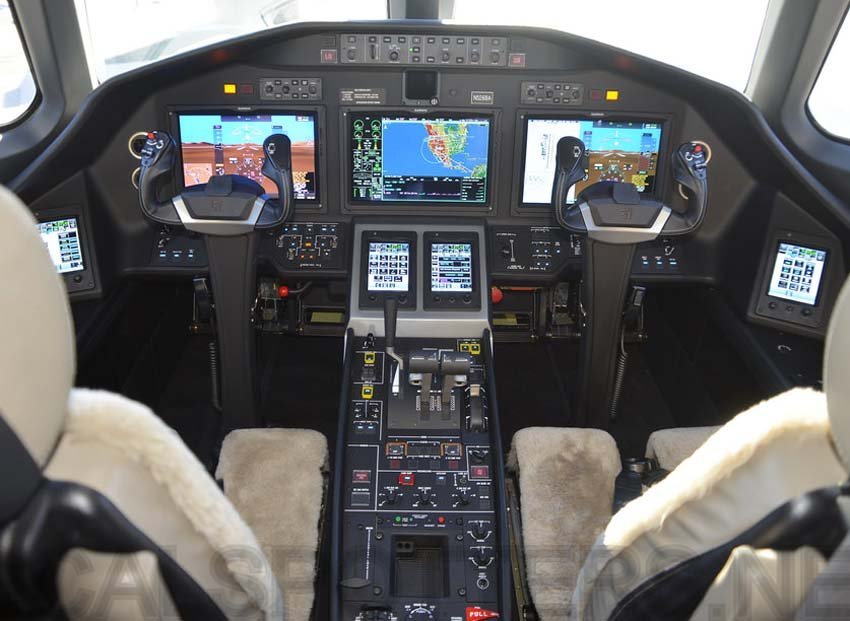
The Garmin G5000 is the best avionics suite we’ve tested in business jets of this class. The precision and smoothness of the auto-throttle operation are beyond praise. The synthetic vision system and 3D traffic display on the main screen are further significant advantages. The G5000 embodies a new generation of avionics built on graphical interfaces common in consumer electronics, features that pilots will undoubtedly appreciate for their ease of use and reduced workload.
Technical Specifications
| Modification | Citation Latitude |
| Wingspan, m | 22.05 |
| Aircraft length, m | 18.97 |
| Aircraft height, m | 6.38 |
| Wing area, m2 | 50.40 |
| Empty weight | 8462 |
| Normal takeoff weight | 13971 |
| Maximum takeoff weight | 14084 |
| Engine type | 2 Turbofan Pratt Whitney Canada PW306D1 |
| Thrust, kN | 2 x 25.6 |
| Maximum speed, km/h | 876 |
| Cruising speed, km/h | 826 |
| Practical range, km | 5278 |
| Practical ceiling, m | 14000 |
| Crew, crew members | 2 |
| Payload | 9 passengers |
Image and diagram gallery of the Cessna 680A Citation Latitude
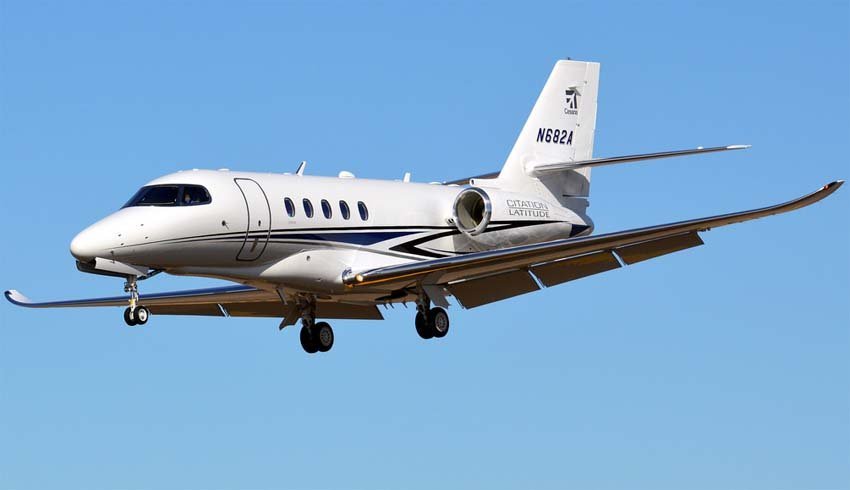 Cessna 680A Citation Latitude |
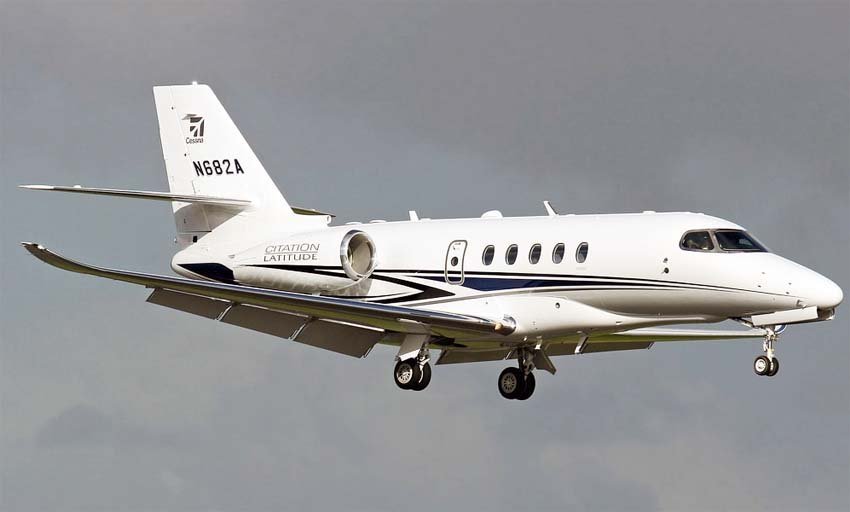 Cessna 680A Citation Latitude |
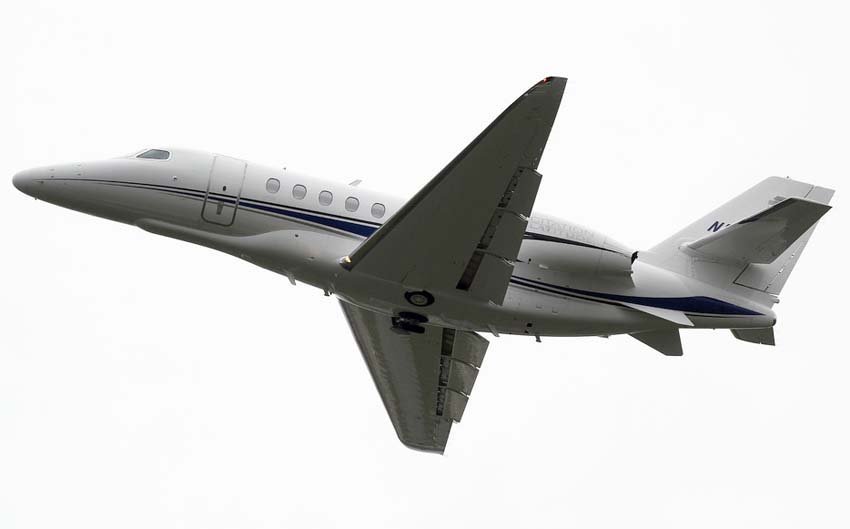 Cessna 680A Citation Latitude |
 Cessna 680A Citation Latitude |
 Cessna 680A Citation Latitude |
 Cessna 680A Citation Latitude |
Equipo Editorial de ArchivoAéreo
Grupo de investigadores y entusiastas de la aviación dedicados a documentar y preservar la historia aeronáutica mundial. Todos los artículos son revisados para garantizar precisión histórica.
Fuentes y Rigurosidad
La información presentada en esta ficha técnica ha sido compilada a partir de manuales de vuelo desclasificados, archivos históricos y bibliografía especializada. Aunque nos esforzamos por mantener la máxima precisión, algunos datos de rendimiento pueden variar según la variante específica o las condiciones operativas.