Semión Trofímovich Býchkov
Explora la trágica historia de Semión Býchkov, Héroe Soviético despojado de honores tras su deserción y ejecución. Ascenso y caída de un piloto.
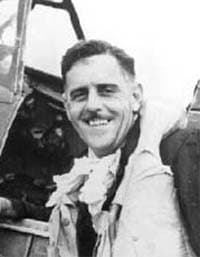
Clive “Killer” Caldwell was a prominent fighter pilot, boasting an impressive record of 27 personal aerial victories, 3 shared kills, 15 damaged aircraft, and 6 unconfirmed. His first victory was recorded on June 26, 1941, flying aircraft such as the P-40 and the Spitfire, which saw him rise to fame.
Throughout his distinguished career, Caldwell shot down three German aces: Wolfgang Lippert, Erbo von Kageneck, and “Fifi” Stahlschmidt. He was awarded the Distinguished Service Order and the Distinguished Flying Cross, a testament to his bravery and exceptional skill in combat.
Considered arguably the most aggressive Allied pilot during the Desert War, the Australian Caldwell demonstrated formidable combat prowess. Piloting his “Tomahawk” with the 250th Squadron, he accounted for 16 enemy aircraft, including 8 Bf 109s. Among his victims was the Luftwaffe ace, Wolfgang Lippert.
On December 5, 1941, Caldwell claimed five Junkers Ju 87s in a single engagement. Later, on December 24, he damaged a “Messerschmitt-109,” believed to have been flown by German ace Erbo von Kageneck. Kageneck, credited with 67 victories, died 19 days later from his wounds. In January 1942, Caldwell became commander of the 112th “Kittyhawks” Squadron, where he shot down three more aircraft, including another Luftwaffe expert, “Fifi” Stahlschmidt (59 victories), who made a forced landing on February 24, 1942.
Despite his aggressive reputation, Caldwell was also remarkably cautious in flight. He possessed a unique ability to evade enemies attacking from behind, a tactic reminiscent of the celebrated German pilot Erich Hartmann.
He described his evasion technique as: “Push everything into the corner, even if it hurts.” In these critical situations, Caldwell would throw his aircraft into a practically uncontrolled dive. This maneuver was nearly impossible for his pursuers to replicate, allowing the Australian, after about three seconds of freefall, to regain control and position himself above his adversary.
In January 1943, Clive Caldwell assumed command of a fighter wing in Darwin, Australia, transitioning to the “Spitfire VB” fighter. In engagements against Japanese forces, he added 8 more enemy aircraft to his tally, bringing his total personal victories to 27.
Beyond his confirmed kills, Caldwell destroyed three aircraft in group combat, damaged 15, and six of his claimed victories remained unconfirmed. His legacy as one of the most effective and tactical Allied pilots of World War II endures.
Grupo de investigadores y entusiastas de la aviación dedicados a documentar y preservar la historia aeronáutica mundial. Todos los artículos son revisados para garantizar precisión histórica.
La información presentada en esta ficha técnica ha sido compilada a partir de manuales de vuelo desclasificados, archivos históricos y bibliografía especializada. Aunque nos esforzamos por mantener la máxima precisión, algunos datos de rendimiento pueden variar según la variante específica o las condiciones operativas.
Explora la trágica historia de Semión Býchkov, Héroe Soviético despojado de honores tras su deserción y ejecución. Ascenso y caída de un piloto.
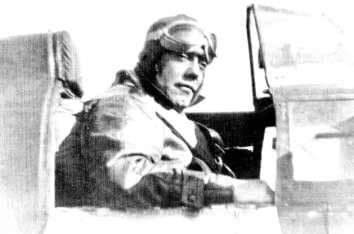 Biografia
Descubre a Jaime Buye Berni, piloto republicano español. Luchó en la Guerra Civil, se formó en la URSS y lideró la 3ª Escuadrilla de Chatos volando I-15s.
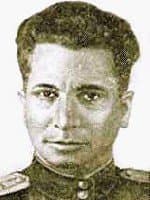 Biografia
Descubre la vida de Viktor Nikolaevich Buyanov, Héroe de la Unión Soviética, as de la aviación con 12 victorias aéreas en la Gran Guerra Patria.
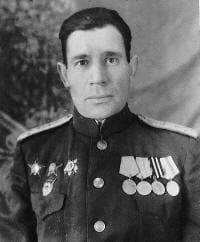 Biografia
Descubre el distinguido servicio militar de Boris Konstantinovich Butko, condecorado con la Orden de la Guerra Patria de 1.ª clase y otras medallas soviéticas.