Emils Briedis
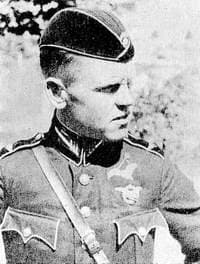
Emils Briedis was born on July 4, 1905. During the First World War, his family moved to Russia, first to Pogorelaya Gorodishche and later to Moscow. In 1918, the family relocated to Siberia.
In July 1921, they finally returned home to Latvia. In February 1926, Emils volunteered for aviation service. He initially worked as a clerk, and by 1933, he completed courses to become an engine mechanic.
Early Life and Military Service
In 1934, Briedis transferred to the Aero Club, where he began his flight training. By September 1935, he was assigned to the 2nd Fighter Squadron with the rank of sergeant.
World War II and Captivity
In January 1941, after the Red Army’s arrival, Emils began flying in the civil fleet, operating a sanitary aircraft. In July 1941, he underwent training for twin-engine aircraft in Mineralnye Vody, after which he was sent to Eastern Siberia.
He flew a U-2 as part of the Latvian night bomber squadron within the RKKA. During one of his sorties, he was shot down and captured. After interrogations, he was sent to a concentration camp in German territory, where he made two unsuccessful escape attempts.
Emils Briedis was eventually liberated by Soviet troops and returned to his family in Riga.
Post-War and Later Years
However, on November 27, 1948, he was arrested and sentenced to 15 years in labor camps, also being stripped of his Soviet Army lieutenant rank. He was granted early release on December 8, 1954.
He returned to Riga. No information is available regarding his later fate.
Equipo Editorial de ArchivoAéreo
Grupo de investigadores y entusiastas de la aviación dedicados a documentar y preservar la historia aeronáutica mundial. Todos los artículos son revisados para garantizar precisión histórica.
Fuentes y Rigurosidad
La información presentada en esta ficha técnica ha sido compilada a partir de manuales de vuelo desclasificados, archivos históricos y bibliografía especializada. Aunque nos esforzamos por mantener la máxima precisión, algunos datos de rendimiento pueden variar según la variante específica o las condiciones operativas.