Fiat BGA Medium Bomber
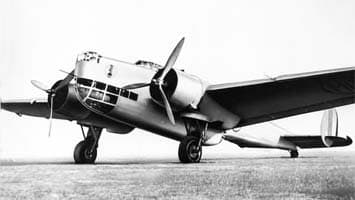
The Origins of CMASA and the MF Series
The Fiat BGA (Bombardamento Genio Aeronautico) medium bomber was built at the “Marina di Pisa” facility of Costruzioni Meccaniche Aeronautiche SA (better known as CMASA), a company belonging to the Fiat group. This company manufactured several types of aircraft under license, including flying boats of the Dornier Wal family.
Subsequently, under the leadership of designer Mario Stiavelly, the company developed a series of seaplanes given the general prefix MF (from “Marina Fiat”). This series included the CMASA MF.4, a three-seat parasol-wing reconnaissance flying boat powered by a 600 hp (447 kW) Piaggio Stella IX R engine with a pusher propeller.
Also part of the series were the twin-engine MF.5 commercial flying boat, based on the Wal aircraft, and the two-seat MF.6 reconnaissance seaplane. The MF.6 was catapult-launched, featured a single central float with auxiliary floats on the wingtips, and was equipped with a 575 hp (429 kW) Piaggio Jupiter VI engine. Finally, the MF.10 was a two-seat reconnaissance biplane flying boat, also catapult-launched, and powered by a 600 hp (447 kW) Fiat A.30 RA engine.
The Fiat BGA Bomber’s Design and Development
A new chapter for the company began with the design (by Aldo Guglielmetti) of an all-metal low-wing medium bomber. This aircraft was equipped with two Fiat A.80 RC.41 radial engines, each producing 1000 hp.
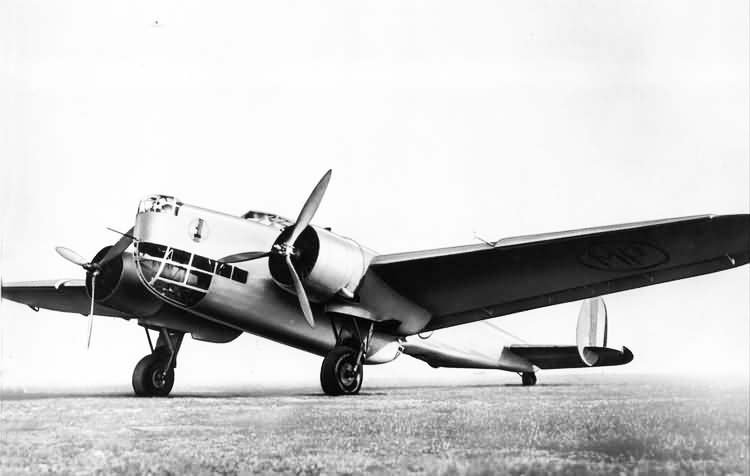
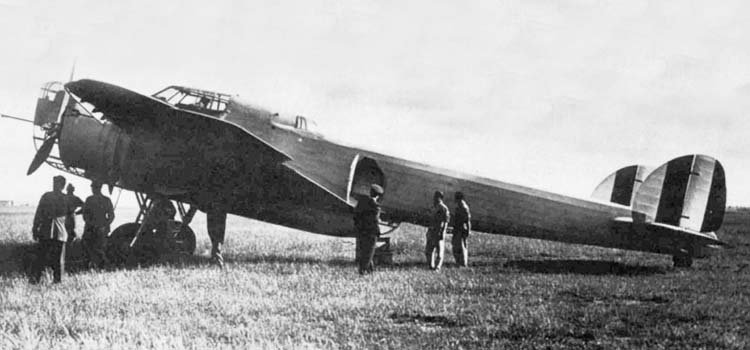
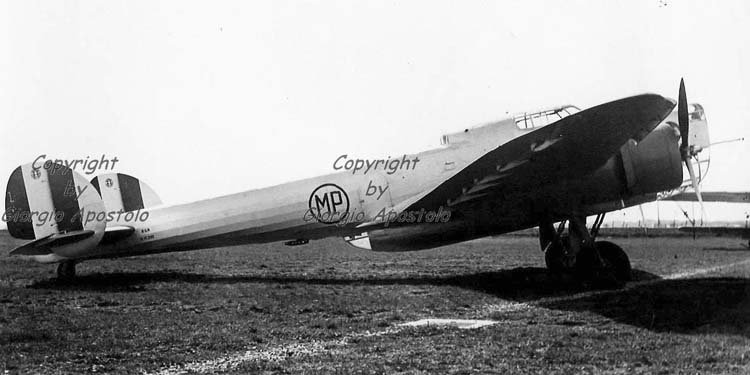
The fuselage, behind the dorsal and ventral machine gun turrets, appeared “cut” in a manner similar to the British Handley Page Hampden. It featured a twin-tail empennage, and the main landing gear retracted into the engine nacelles, with an additional tail wheel. Armament comprised three 7.7-mm machine guns located in three firing positions: one dorsal, one ventral, and one in the tail section.
The BGA aircraft was developed to meet the requirements of the Italian Ministry of Aviation from 1934. It made its maiden flight in 1936, piloted by Giovanni de Briganti. The sole prototype (MM.295) was transferred to the Guidonia test center in April 1938. Flight trials of the BGA yielded disappointing results, leading to its withdrawal from the competition.
Technical Specifications and Armament
The CMASA BGA bomber was a four-seat, all-metal medium bomber with retractable landing gear. The elongated elliptical fuselage was a two-part construction. The forward section was an all-metal monocoque with duralumin skin, while the rear section featured a height-reduced frame welded from steel tubes and covered with fabric.
The lower part of the nose was fully glazed to improve visibility for the bombardier. The pilot’s cockpit was situated above the wing, and a bomb bay was located beneath the wing. The wing was all-metal, cantilever, featuring automatic leading-edge slats along the entire span and slotted flaps.
The horizontal stabilizer was positioned at the top of the fuselage’s tail boom. The twin-fin vertical stabilizer was cantilever and mounted on the horizontal stabilizer. The power plant consisted of two twin-row Fiat A.80 RC.41 radial engines, driving three-bladed FIAT variable-pitch propellers. These propellers were manufactured in Italy under license from the American company Hamilton.
The aircraft featured a tricycle landing gear with retractable main struts. When retracted, the main struts and wheels were positioned between the two sides of the engine mount behind the engine. The tail wheel was non-retractable.
The aircraft’s armament comprised three single-machine gun defensive positions, equipped with 7.7-mm SAFAT-Scotti machine guns: one forward and two rear. The forward position was a turret above the bombardier’s station. The rear defensive positions included a ventral hatch mounting and a dorsal mounting directly behind the pilot’s cockpit.
Technical Specifications
| Modification | BGA |
| Wingspan, m | 21.46 |
| Length, m | 15.73 |
| Height, m | 4.85 |
| Empty weight | 6000 |
| Normal takeoff weight | 8500 |
| Engine type | 2 Piston engines Fiat A.80 RC.41 |
| Power, hp | 2 x 1000 |
| Maximum speed, km/h | 405 |
| Cruising speed, km/h | 310 |
| Practical range, km | 2000 |
| Crew, crew members | 4 |
| Armament | three 7.7-mm machine guns; bomb load – 1600 kg |
Image and diagram gallery of the Fiat BGA Medium Bomber
 BGA |
 BGA |
 BGA. Photograph: Giorgio Apostolo |
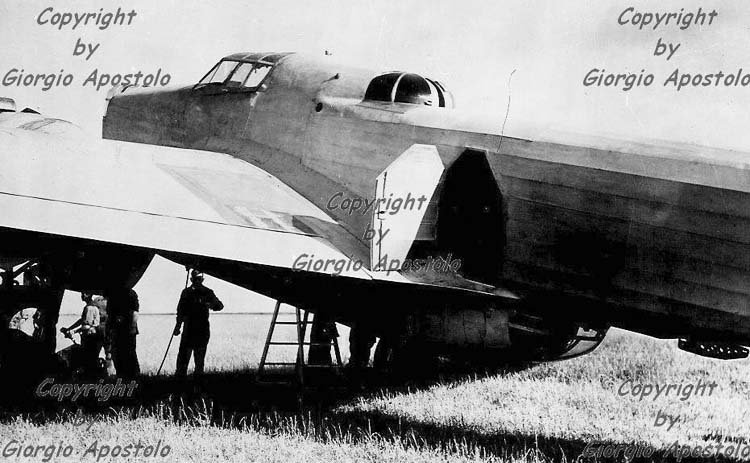 BGA. Photograph: Giorgio Apostolo |
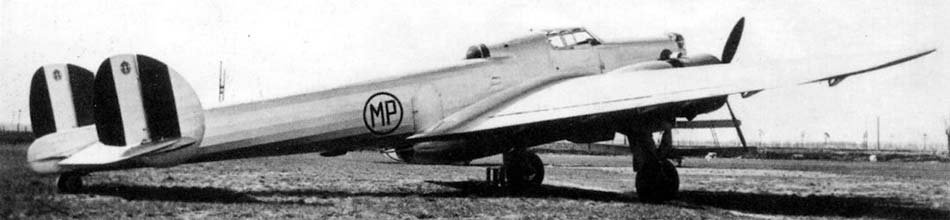 BGA |
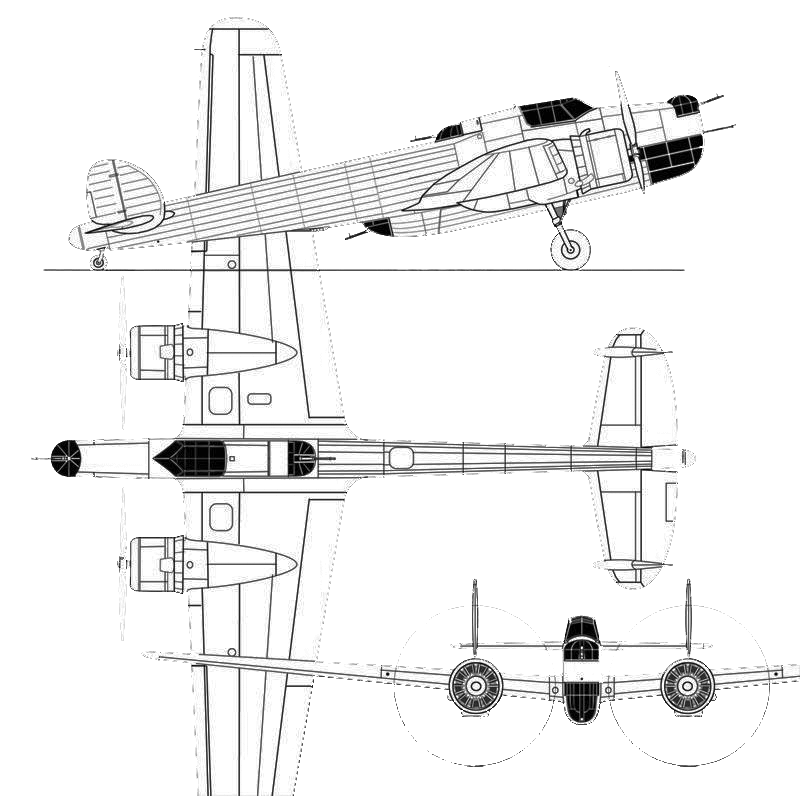 BGA |
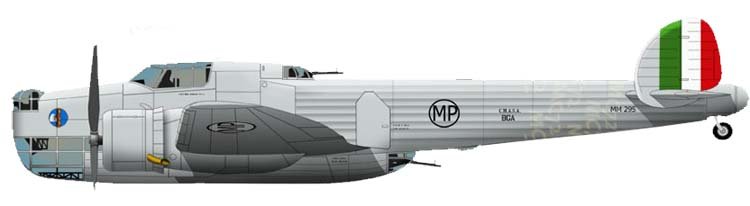 BGA |
Equipo Editorial de ArchivoAéreo
Grupo de investigadores y entusiastas de la aviación dedicados a documentar y preservar la historia aeronáutica mundial. Todos los artículos son revisados para garantizar precisión histórica.
Fuentes y Rigurosidad
La información presentada en esta ficha técnica ha sido compilada a partir de manuales de vuelo desclasificados, archivos históricos y bibliografía especializada. Aunque nos esforzamos por mantener la máxima precisión, algunos datos de rendimiento pueden variar según la variante específica o las condiciones operativas.