Fyodor Yakovlevich Brysev
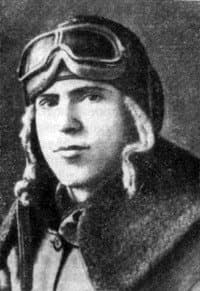
Fyodor Yakovlevich Brysev was born on February 15, 1915, in Slavyansk. He completed an incomplete secondary school education and a chemical technical school before his military career.
He joined the Red Army in 1935 and graduated from the Voroshilovgrad School of Pilots in 1937. Following his training, he was assigned to Long-Range Aviation, a crucial branch for strategic operations.
World War II and Long-Range Aviation
Brysev encountered the war on the Southern Front, delivering his first strike against German troops on June 22, 1941. He also participated in raids on targets within Romanian territory.
In August 1941, as part of his regiment, Brysev took part in the occupation of Iran. He carried out several missions, including dropping leaflets and bombing Tehran. From 1942 to 1944, he was actively involved in raids on Germany, bombing significant cities such as Königsberg, Tilsit, and Insterburg.
Throughout the war, Fyodor Brysev completed a total of 263 combat missions, with 242 of them conducted under the cover of night. His accumulated flight time in combat amounted to 1106 hours, demonstrating his dedication and skill.
Hero of the Soviet Union and Post-War Life
By a Decree of the Presidium of the Supreme Soviet of the USSR on August 19, 1944, Captain Brysev F.Y., then deputy squadron commander of the 109th Aviation Regiment of the 48th Long-Range Division, was awarded the title of Hero of the Soviet Union.
After the war, he continued his military service and went on to command an aviation regiment. He was discharged from the army in 1955 and spent his later years residing in the city of Voronezh. Fyodor Yakovlevich Brysev passed away on March 31, 1995.
Equipo Editorial de ArchivoAéreo
Grupo de investigadores y entusiastas de la aviación dedicados a documentar y preservar la historia aeronáutica mundial. Todos los artículos son revisados para garantizar precisión histórica.
Fuentes y Rigurosidad
La información presentada en esta ficha técnica ha sido compilada a partir de manuales de vuelo desclasificados, archivos históricos y bibliografía especializada. Aunque nos esforzamos por mantener la máxima precisión, algunos datos de rendimiento pueden variar según la variante específica o las condiciones operativas.