Godwin Brumowski
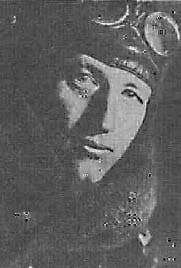
Godwin Brumowski was born on July 26, 1889, in Wadowice, a Polish town. From the late 18th century, these lands belonged to the Austrian Crown. Therefore, when it was time for Godwin to join the army, he was conscripted under the black-and-yellow banners of Emperor Franz Joseph. In 1910, artilleryman Brumowski entered officer school, and upon graduation, he was assigned to the 6th Light Field Artillery Regiment.
From Artillery to Aviation
He spent the first year of the war in the trenches on the Eastern Front. In 1915, he secured a transfer to aviation. After successfully completing flight training, he was seconded for combat internship to a German fighter squadron fighting in France, where he achieved his first victories.
In 1916, he was entrusted with forming and leading a fighter division, personally selecting the flying personnel. Godwin nailed a horseshoe to the wing strut of his red “Albatros,” a lucky charm that did not fail him. Brumowski’s 41st Division soon became the best on the Italian Front.
Austria-Hungary’s Top Ace
Godwin himself, having shot down 40 enemy aircraft in two years of combat, received many awards and the title of the first ace of the Austro-Hungarian Empire. After the war, the pilot did not wish to return to his homeland and continued to serve in the now republican Austrian Air Force. Godwin Brumowski died in an airplane crash on June 3, 1936, leaving behind a legacy as one of the most distinguished combat pilots of his era.
Equipo Editorial de ArchivoAéreo
Grupo de investigadores y entusiastas de la aviación dedicados a documentar y preservar la historia aeronáutica mundial. Todos los artículos son revisados para garantizar precisión histórica.
Fuentes y Rigurosidad
La información presentada en esta ficha técnica ha sido compilada a partir de manuales de vuelo desclasificados, archivos históricos y bibliografía especializada. Aunque nos esforzamos por mantener la máxima precisión, algunos datos de rendimiento pueden variar según la variante específica o las condiciones operativas.