Hillson Bi-Mono
Hillson’s Early Ventures and Licensed Production
Before the start of the Second World War, a new aviation firm, Hillson, was founded in Trafford Park. Its first design was the Mignet HM.14 ‘Flying Flea’ G-ADOU, built in 1935. Equipped with a Scott A.2S ‘Flying Squirrel’ engine, the aircraft first flew in October, but after a series of incidents, the design was deemed unpromising, and a second example, already under construction, was not completed.
Due to this setback, it was decided to first master the licensed production of an ultralight. The Czech Praga E.114 Air Baby was chosen. Aircraft designated as Hillson Praga became quite popular among civilian pilots, and the firm produced 28 such machines.
Pre-War Developments and Wartime Shift
With funds for new developments, the firm’s designers continued work on touring and training aircraft. As a result, two projects emerged: the Hillson Pennine and the Helvellyn. The Pennine was a two-seater monoplane, in the Praga format, with a 36 hp Praga B engine. The first prototype, G-AFBX, flew in late 1937 but was not a new word in aviation technology and was soon dismantled.
The second development, the Hillson Helvellyn G-AFKT, was also a two-seater training aircraft, primarily intended for military use. It was equipped with a 90 hp Blackburn Cirrus Minor 1 engine. The aircraft was tested in 1939 and used by the firm as a “stopgap”. With the start of the war, the firm received contracts from Avro for the production of parts for the popular Anson aircraft.
However, their own developments did not cease. They managed to attract W.R. Chown, who had previously worked at Blackburn Aircraft. The designer embarked on the development of a fighter, even though the RAF already had “Spitfire” and “Hurricane” in service.
The Innovative Hillson Bi-Mono Project
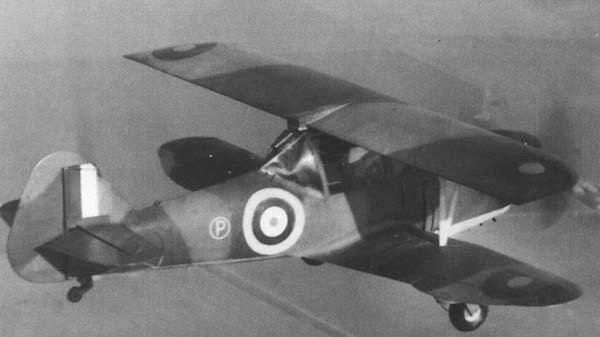
Chown turned his attention to the seemingly outdated biplane configuration. This was because such an aircraft could use airfields with shorter runways (a path later taken by British designers with the famous “Harrier”). It was decided to build an aircraft named Hillson Bi-Mono.
The new wing was made of wood using standard technology of the time. The engine for the new machine was a 200 hp de Havilland Gipsy Six. Initially, it had a standard wooden propeller, later replaced by a metal one developed by de Havilland. The model was tested in the wind tunnel of the Royal Aircraft Establishment in Farnborough.
The first flight of the future fighter prototype took place on July 16, 1941.
Technical Specifications
| Modification | Bi-Mono |
| Wingspan, m | 6.10 |
| Length, m | 4.40 |
| Wing area, m2 | 12. 26 |
| Engine type | 1 Piston engine de Havilland Gipsy Six |
| Power, hp | 1 х 200 |
| Maximum speed, km/h | 185 |
| Crew | 1 |
Image and diagram gallery of the Hillson Bi-Mono
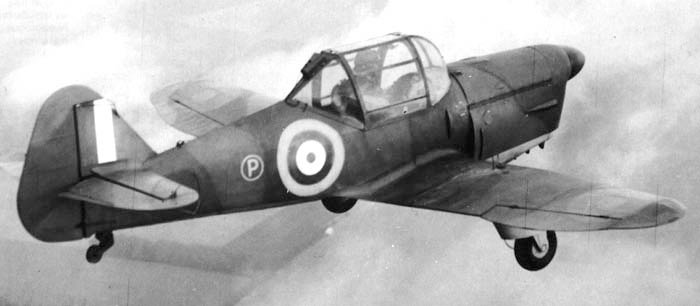 Bi-Mono |
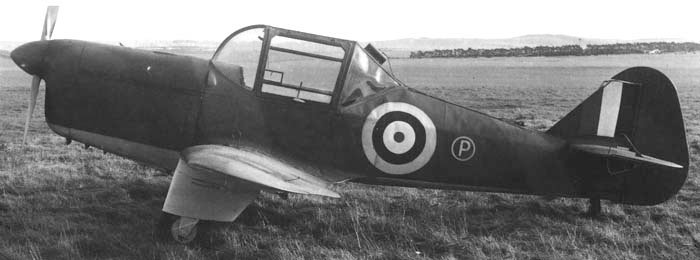 Bi-Mono |
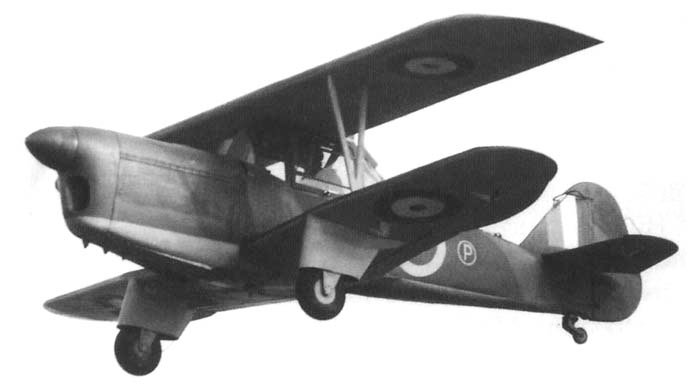 Bi-Mono |
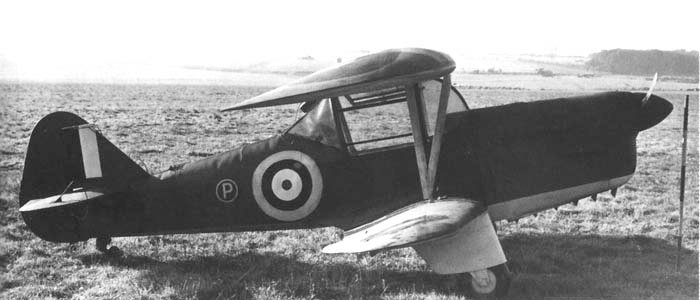 Bi-Mono |
 Bi-Mono |
Equipo Editorial de ArchivoAéreo
Grupo de investigadores y entusiastas de la aviación dedicados a documentar y preservar la historia aeronáutica mundial. Todos los artículos son revisados para garantizar precisión histórica.
Fuentes y Rigurosidad
La información presentada en esta ficha técnica ha sido compilada a partir de manuales de vuelo desclasificados, archivos históricos y bibliografía especializada. Aunque nos esforzamos por mantener la máxima precisión, algunos datos de rendimiento pueden variar según la variante específica o las condiciones operativas.