Kurt Bühlingen
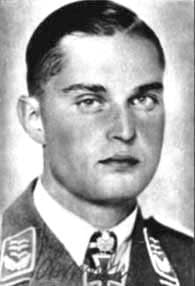
Kurt Bühlingen, a celebrated German Luftwaffe ace, achieved a remarkable 112 aerial victories throughout his career. Of these, 40 were claimed in North Africa and 72 on the Western Front, including 24 four-engine bombers. His combat journey began during the “Battle of Britain” in July 1940, accumulating over 700 sorties and earning him the Knight’s Cross with Oak Leaves and Swords.
Starting as a humble NCO, Bühlingen joined Air Group II/JG 2 in July 1940. Success was not immediate; he secured his first kill on September 4th. Over the following year, his victory tally grew slowly until a pivotal moment on June 13, 1941. On this day, Bühlingen took to the skies as Heinrich Greisert’s wingman to intercept a British “circus” formation near Boulogne.
First Victories in “Circus” Operations
“I descended, then climbed steeply with my commander, and each of us chose a ‘Spitfire’,” Bühlingen recalled. “Catching the wing of the enemy aircraft in my sights, I began to close in. The ‘Spitfire’ grew very quickly. When the distance was sufficient, I opened fire. My commander did the same. A real battle unfolded in the air, but I managed to stay on the ‘Spitfire’s’ tail, and bursts from my cannons and machine guns hit the target.” Debris flew from the fuselage, followed by black smoke, and the Spitfire began to lose altitude. Bühlingen did not see the pilot parachute.
He continued: “The commander probably also fired successfully, but by then we were quite far apart. I watched my victim for a moment, then looked back and noticed the commander trying to engage another Englishman.” His commander was approaching too fast and, instead of attacking from below the Spitfire’s fuselage, he gained altitude, got on its tail, and continued left, seemingly intending another pass. The Spitfire pilot also dove left, apparently trying to outmaneuver the German aircraft.
“I rushed after the Englishman and tried to make the tightest turn possible. He clearly wanted to shoot down my commander,” Bühlingen recounted. “My maneuver succeeded, and in the turn, I managed to get on his tail. Once close to the enemy aircraft, I immediately pressed the trigger and instantly saw that the enemy fighter was hit. It was already enveloped in smoke, and I continued to fire. Soon, pieces of the British fighter’s tail assembly flew off.”
The combat report reveals interesting tactical elements. The lead pilot did not attempt to attack bombers, which would have been a grave error given the strong fighter escort. The initial attack involved a swift dive below the Spitfires’ flight path, followed by gaining altitude to attack from the enemy’s rear blind spot. Retreating was recommended by sharp descent, staying in the blind spot, rather than climbing.
Bühlingen’s achievement was successfully executing a quick turn with his second victim. While a British Spitfire could easily out-turn Bühlingen’s Bf 109F at equal speeds, his initial rear position gave him a time advantage. This allowed him a favorable firing position without needing an excessively steep turn, despite the rapidly increasing lead angle. The Spitfire’s maneuverability advantage could only be decisive for a few seconds during the tightest turns.
North Africa and Western Front Campaigns
In addition to the two Spitfires, Bühlingen successfully attacked another British Hurricane in the same sortie, again shooting his victim from below. Thus, in a single mission, he destroyed three enemy aircraft. From then on, his number of victories accelerated, reaching 21 confirmed kills by September 4, 1941.
Equipped with new Focke-Wulf Fw 190A fighters, II/JG 2 was transferred to Tunisia in November 1942. There, in battles against numerically superior forces, Kurt Bühlingen achieved 40 victories in just five months. Returning to the Western Front in 1943, he had accumulated 100 kills by June 1944. By this time, he had risen to group commander and earned a formidable reputation as a “scourge of heavy bombers.” Despite over 700 combat sorties, Bühlingen was shot down only three times. Only two Luftwaffe pilots surpassed his final count of 112 victories on the Western Front.
Equipo Editorial de ArchivoAéreo
Grupo de investigadores y entusiastas de la aviación dedicados a documentar y preservar la historia aeronáutica mundial. Todos los artículos son revisados para garantizar precisión histórica.
Fuentes y Rigurosidad
La información presentada en esta ficha técnica ha sido compilada a partir de manuales de vuelo desclasificados, archivos históricos y bibliografía especializada. Aunque nos esforzamos por mantener la máxima precisión, algunos datos de rendimiento pueden variar según la variante específica o las condiciones operativas.