Messerschmitt Bf 110B(A): The Early Zerstörer
The Bf 110 in the Battle of Britain
In early August 1940, Messerschmitt Bf 110 strategic fighters, comprising the elite “hunter” groups of the Luftwaffe, launched the “Adlerangriff” aerial offensive from bases in France and the Benelux countries, aiming to bring England to its knees. German propaganda claimed these “hunter” groups were invincible, with no doubt that the “hunter” could fulfill all tasks assigned by Göring and the Luftwaffe High Command.
However, within weeks, the “hunter’s” invulnerability proved to be a myth, existing only in the declarations of the verbose Reichsmarschall. From the very beginning of “Adlerangriff,” the long-range, heavy Bf 110 fighter was practically on the verge of destruction against the opposing Hurricanes and Spitfires. Losses were so heavy that the aircraft, designed to escort bombers, itself required fighter cover.
The failure in the Battle of Britain was immediately attributed solely to the aircraft itself, believing it was a flawed design from the outset. Yet, setting aside its shortcomings in that context, the Bf 110 was the best aircraft in its category. The poor results of summer 1940 were primarily due to errors by the Luftwaffe High Command in defining tasks for the Bf 110 and the inability to achieve air superiority, rather than defects of the aircraft itself.
Origins and Design of the Strategic Fighter
The strategic fighter, of which the Bf 110 was a prime example, is generally considered to have been born in the 1930s. In reality, it was conceived during the First World War, and its virtues were praised by proponents of air warfare even before the first lines appeared on drawing boards. Essentially, a strategic fighter was a high-speed, heavily armed aircraft with sufficient range to escort bombers, operate deep within enemy territory, and conduct patrols far from its base.
Since World War I, the aircraft type had been known as Kampfflugzeug – “combat aircraft.” However, in Germany and the Netherlands, names from naval terminology became popular: Zerstörer – literally “destroyer” (according to terminology adopted in the Russian Imperial Navy before 1905) or “hunter” in the former, and “air cruiser” in the latter. But whatever its name, practice showed that despite enormous efforts to develop this type between the World Wars, a truly acceptable strategic fighter was never successfully created.
Perhaps in the 1930s, aircraft designers faced no more challenging task than creating a strategic fighter. Such an aircraft could not be built without compromises, and compromise is not the best way to solve problems. A strategic fighter needed to have higher, or at least comparable, characteristics to the “target” fighters it would first encounter when protecting its bombers. On the other hand, firepower, the necessary fuel supply for the required range, and various other tasks planned by staffs necessitated a rather large, twin-engine aircraft, immediately raising questions about its maneuverability.
Development and Early Flights of the Bf 110
The idea of a strategic fighter arose simultaneously and independently in several countries. The birth year of the strategic fighter was 1934. It was in this year that many turned their attention to a twin-engine, high-speed, multi-role aircraft that, while being a fighter, was also supposed to perform a range of other tasks. In Germany, this idea crystallized into requirements for the “Kampfzerstörer” – “combat hunter” – a multi-role aircraft whose main task was to “clear the way” for bombers, with other roles including close bomber escort, interception of enemy aircraft, ground attack and bombing strikes, and reconnaissance.
A rather strong faction within the C-Amt – the Technical Department of Hermann Göring’s Air Commissariat, where the Kampfzerstörer was conceived – regarded it with suspicion, as did the General Staff. They logically concluded that an aircraft designed for such a wide range of tasks would prove too heavy and unwieldy to effectively perform a specific mission. Despite this prejudice against the “hunter,” the concept itself captured Göring’s imagination, and he set extremely tight deadlines for the design of such an aircraft.
Specifications only stipulated a twin-engine, three-seat, all-metal aircraft with movable gun armament and internal bomb racks. Everything else, including flight characteristics, weight, and dimensions, was left to the developers’ discretion. Specifications were sent to AGO, Dornier, Focke-Wulf, Heinkel, Henschel, Gothaer Waggonfabrik, and, somewhat unexpectedly, to Bayerische Flugzeugwerke (BFW), which had just begun manufacturing its first aircraft. The designers from Augsburg almost immediately ignored most of the few requirements, focusing exclusively on achieving high flight performance.
The proposals put forward by Focke-Wulf and Henschel were closest to the brief, while Bayerische Flugzeugwerke’s proposal was so far from the specifications, despite their breadth, that it virtually excluded any serious consideration. Fortunately, BFW and Messerschmitt were close to Udet, who, though not holding an official post at the time, wielded great influence in German aviation circles. Messerschmitt’s project greatly impressed Udet, who then pressured the Air Commissariat, resulting in BFW, along with Focke-Wulf and Henschel, receiving an order for three prototype aircraft under the designation Bf 110.
By the time work on the prototypes began in Augsburg, the requirements for the “combat hunter” had changed. A more balanced approach prevailed, and in spring 1935, the Kampfzerstörer requirements were replaced by the so-called “Schnellbomber” – a fast bomber, created as a target aircraft. BFW was tasked with converting its “hunter” to meet the new requirements (which materialized in the Bf 162), but the issued contract remained unchanged, although the Bf 110 was now considered a Zerstörer.
It is somewhat unusual that in 1934, the general staffs of several countries simultaneously developed conceptually similar requirements for such a fighter, and even more surprisingly, several similarly configured aircraft were released at the same time. In France in October 1934, the aviation technical service developed specifications that launched several projects, including the Potez 63. In Poland, in late summer 1934, competitive work began on the PZL P.38 “Wilk.” In Germany, the Bf 110 was created simultaneously. All three were elegant twin-engine, cantilever monoplanes of all-metal construction with stressed skin, retractable landing gear, and twin tails. Work on these fighters began in Meaux, Warsaw, and Augsburg with a gap of only a few weeks.
The design of the Messerschmitt strategic fighter was based on the same principles as the Bf 109. The wing consisted of two sections attached to the fuselage at three points – two on the main spar and one on the leading edge. The wing had a single spar at 39% chord and ribs every 0.25 m. Stringers ran along them every 0.3 m, with stressed skin on top. The Handley Page automatic slat occupied 40% of the wingspan. The entire trailing edge of the wing was occupied by a slotted flap and an aileron.
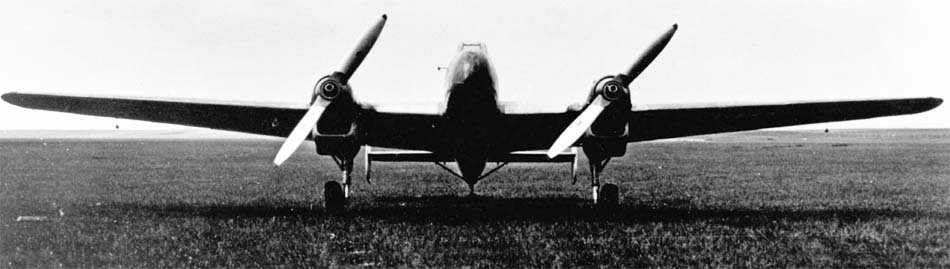
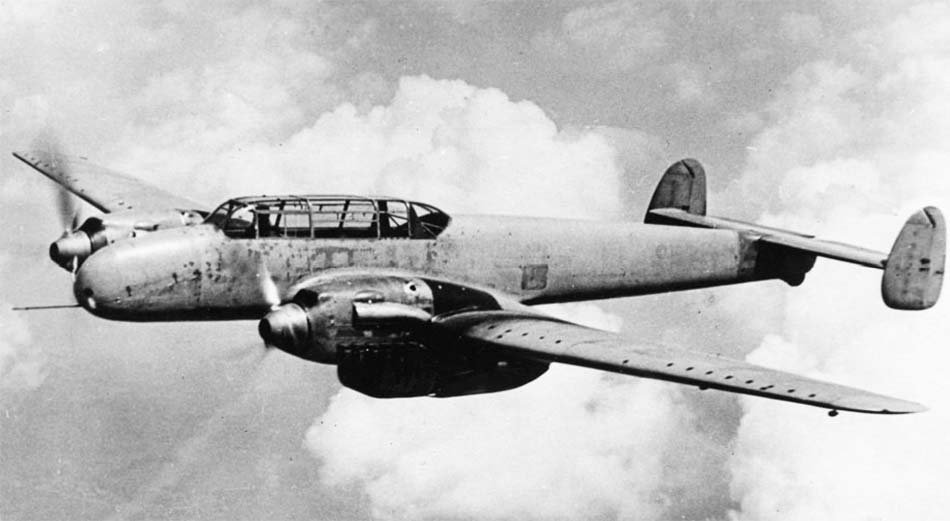
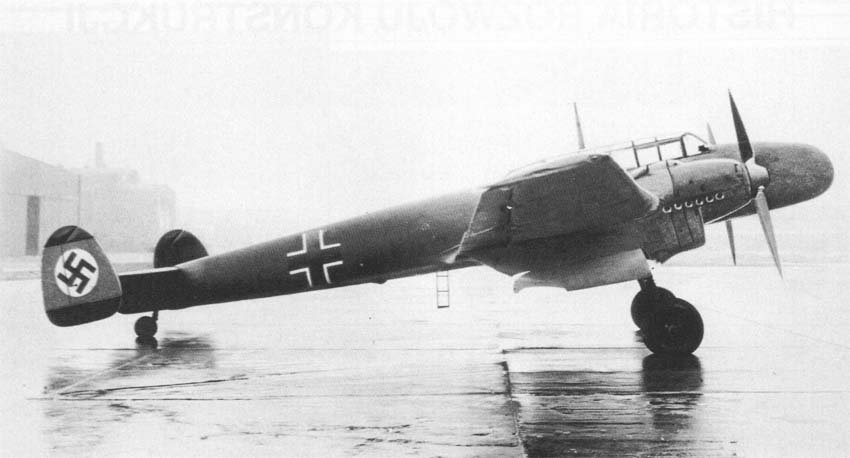
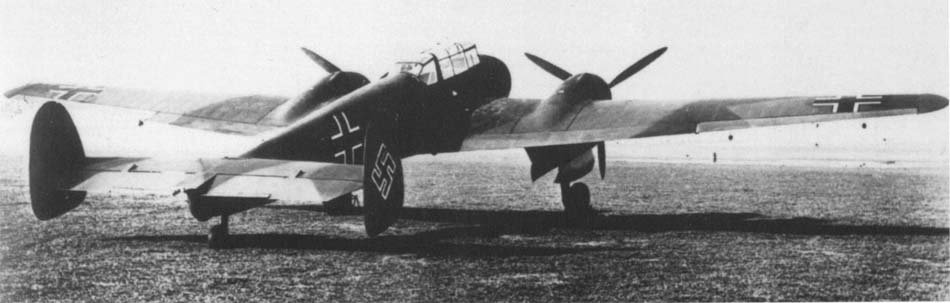
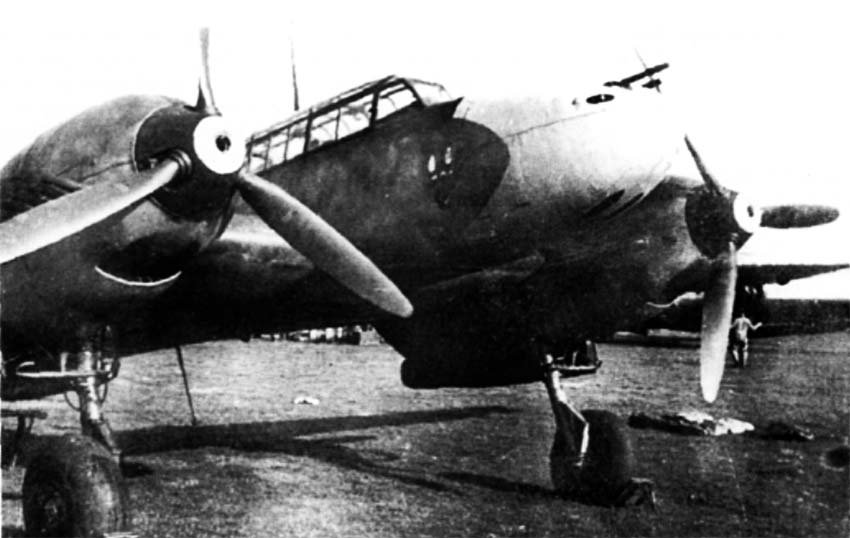
The oval-section fuselage had an all-metal stressed-skin construction. The crew was planned for three. The pilot sat in front of the wing, immediately behind him was the navigator-radio operator. The gunner was located behind the wing. The cockpits were covered by a long, fully glazed canopy. The tail unit consisted of a cantilever stabilizer with endplates. All three landing gear legs retracted hydraulically. The main legs retracted into the engine nacelles and were fully enclosed by fairings. Two Daimler-Benz DB 600A engines developed 910 hp at rated altitude and drove three-bladed variable-pitch propellers. Fuel was stored in four tanks on the sides of the fuselage – a pair before the main spar, and a pair after.
After static tests and taxiing in Augsburg, the first experimental Bf 110 V1 took to the air on May 12, 1936, piloted by Rudolf Opitz. Flight tests, which were constantly interrupted due to low engine reliability, revealed modest acceleration characteristics and minor handling problems at low and medium speeds; however, handling at maximum speeds was excellent. Maneuverability, although low by the standards of the day, proved better than expected. Already at the beginning of tests, with a takeoff weight of 5000 kg, a speed of 503 km/h was achieved at an altitude of 3300 m. The most serious problem presented by the aircraft was a tendency for spontaneous yaw during takeoff and landing, requiring special caution on the ground to prevent skidding. New wheels and treads somewhat alleviated the problem but never fully resolved it.
Due to delays in the delivery of flight-ready DB 600A engines, the flight of the second experimental Bf 110 was delayed until October 24, 1936. Several minor modifications were made to the aircraft based on the test results of the first V1 prototype. On January 14, 1937, the Bf 110 V2 was sent to the test center in Rechlin on the shores of Lake Müritz. Official tests led to the decision to put the aircraft into series production. Competitors – the Focke-Wulf Fw 57 and Henschel Hs 124 – although closer to the Kampfzerstörer concept, proved unacceptable for use either as a “fast bomber” or as a “hunter.” Göring demanded the start of Zerstörer production without delay, and the Bf 110 was the only one that, to some extent, suited the role of a long-range, heavy fighter, which was playing an increasingly important role in the plans of the Luftwaffe High Command, already ready to form “heavy” fighter groups.
The test center confirmed the aircraft’s defects, which had already been identified by BFW pilots, but noted the Bf 110’s good flight performance and handling. Meanwhile, on December 24, 1936, the third prototype, the Bf 110 V3, made its first flight, equipped with armament – a battery of four 7.9 mm MG 17 machine guns in the nose of the fuselage.
Initial Variants and Bf 110 Production
The first production model, the Bf 110A, was intended to receive DB 600Aa engines with a takeoff power of 986 hp and 910 hp at 4000 m altitude. However, Daimler-Benz failed to resolve all the development problems with the DB 600, so the engine was not ready for installation on the production aircraft. When the assembly of the pre-production batch of Bf 110A-0 was already well underway, the DB 600 was withdrawn from production, and its variant with direct fuel injection – the DB 601 – was launched into series production.
The Technical Department of the Air Ministry expected serial DB 601 deliveries to begin in spring 1938, and at the same time, it was planned to start delivering Bf 110s to “heavy” fighter groups. Bayerische Flugzeugwerke was accordingly instructed to reduce the production of Bf 110A-0 and to modify the almost finished aircraft for Junkers Jumo 210Da engines. The transition to new engines was not a serious technical problem, and the first pre-series aircraft, the Bf 110A-01, was rolled out of the Augsburg workshops in August 1937.
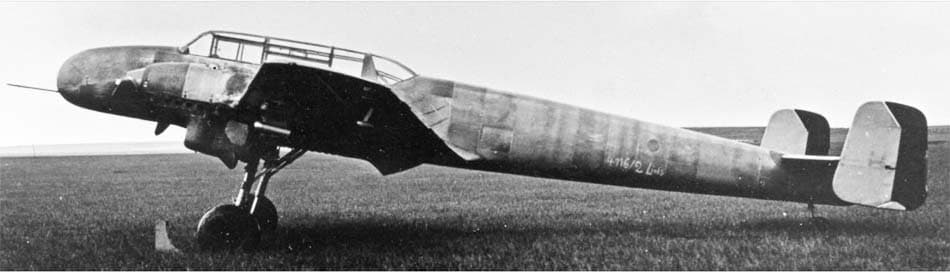
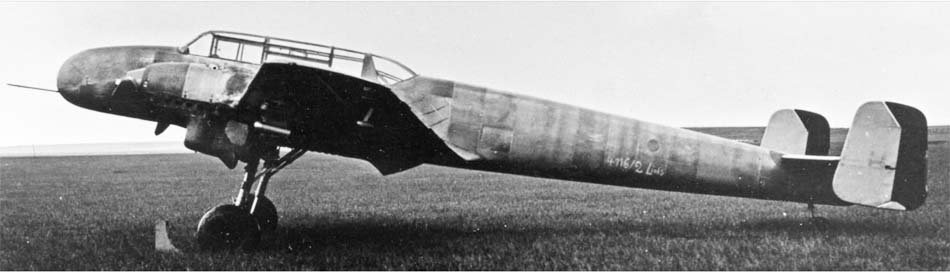
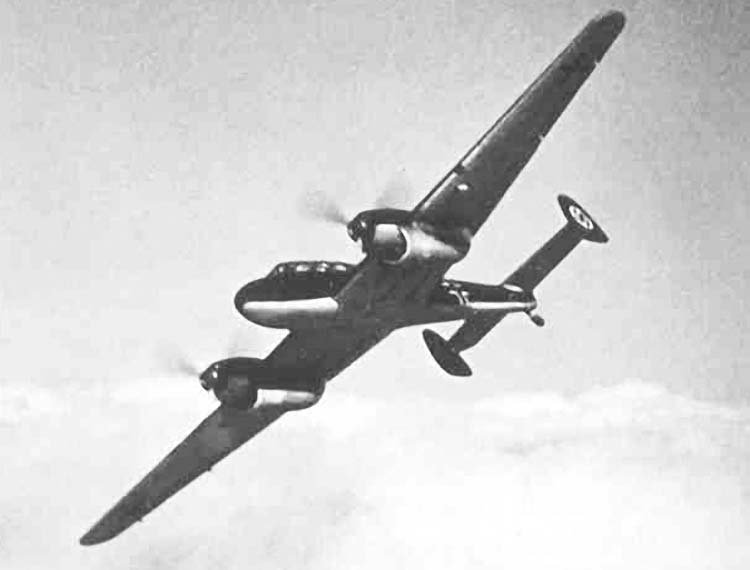
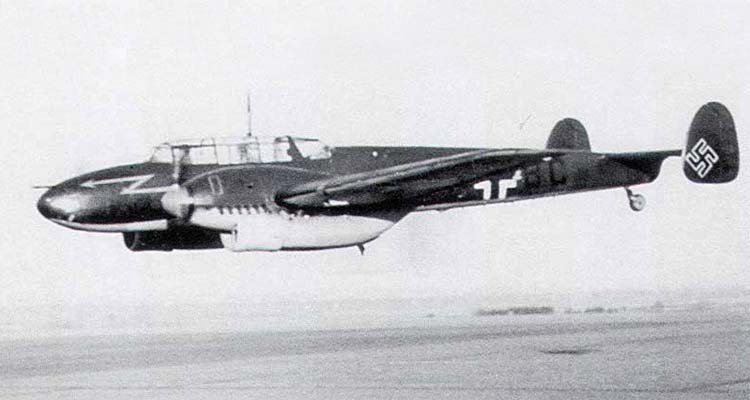
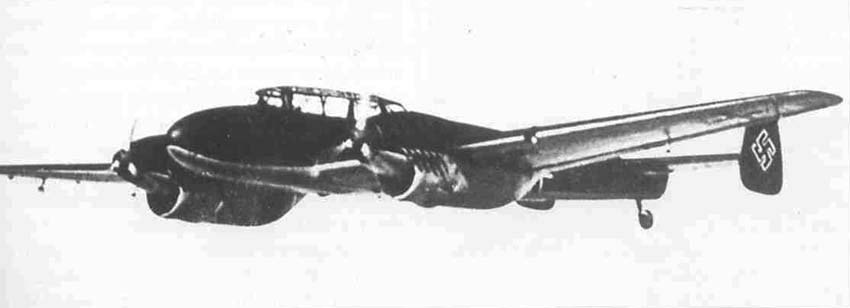
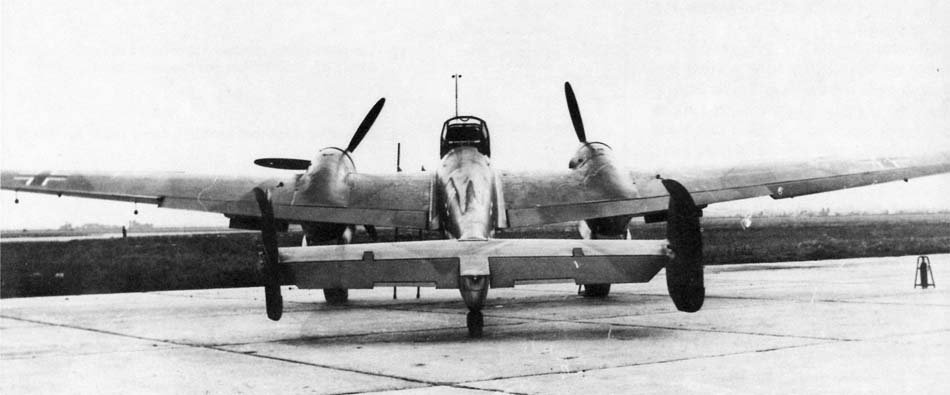
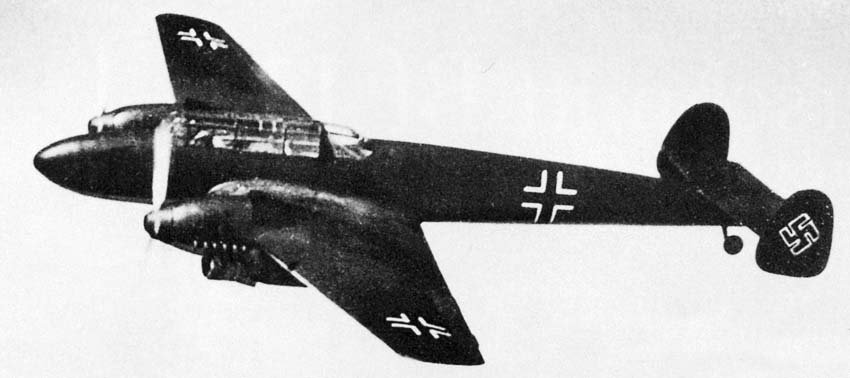
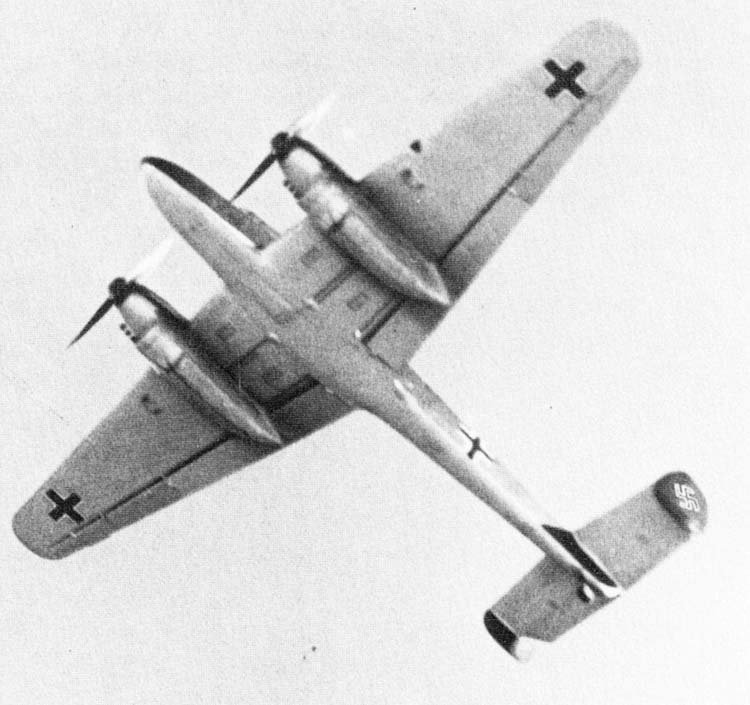
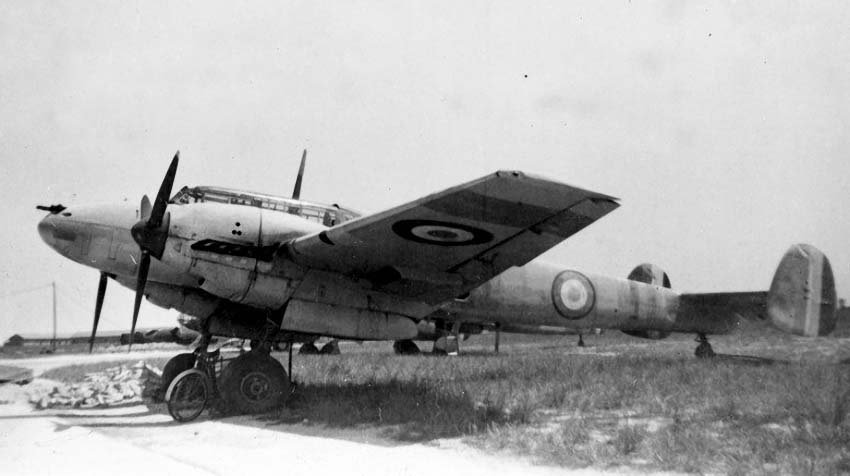
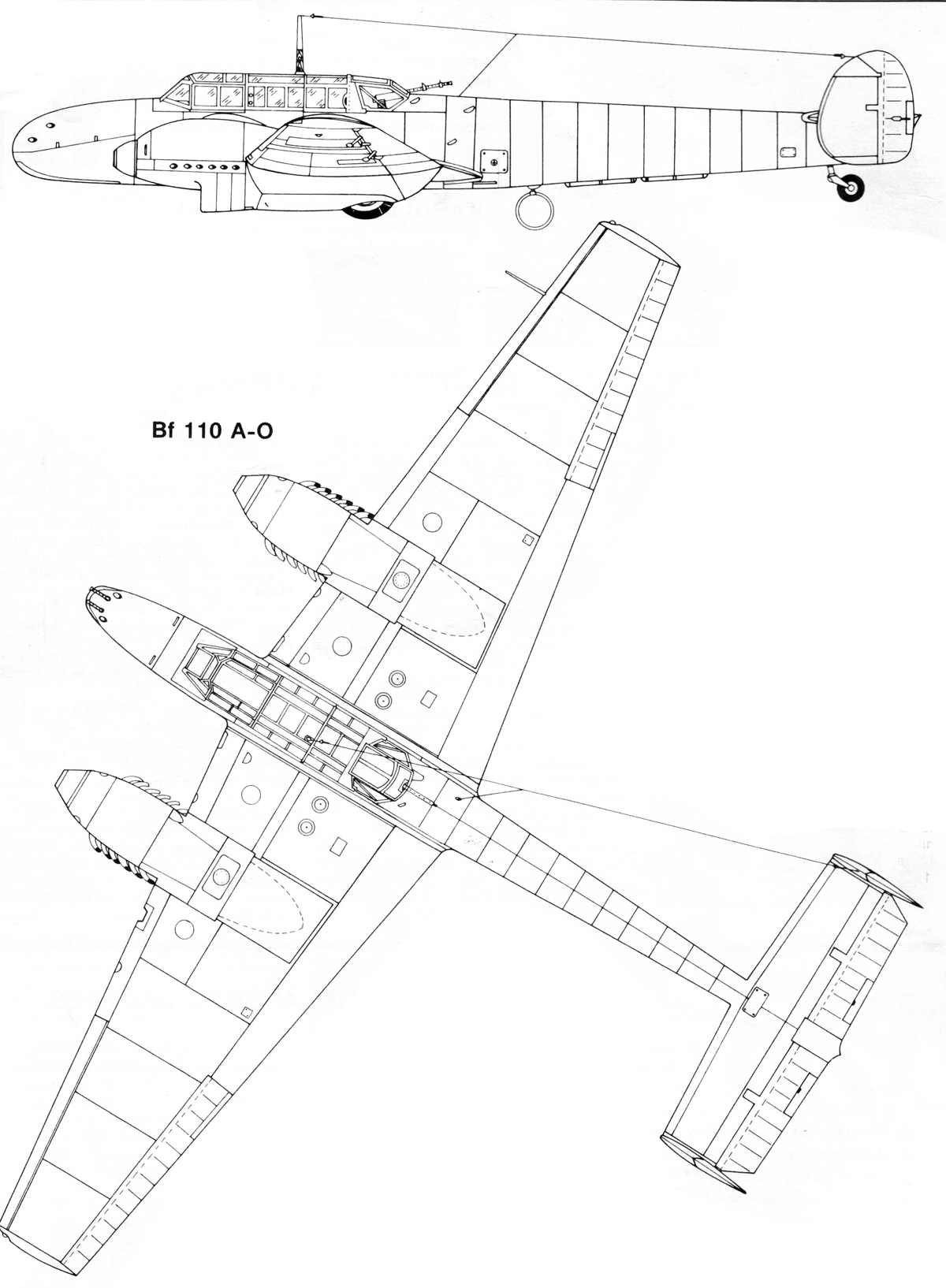
The Jumo 210Da engines developed 680 hp at takeoff and 640 hp for five minutes at 2700 m altitude. The propellers were two-bladed VDM-Hamilton variable-pitch. The lower engine power resulted in reduced flight characteristics. Thus, the Bf 110A-0 barely reached a speed of 430 km/h at 3800 m. Armament consisted of four 7.9 mm MG 17 machine guns in the nose of the fuselage and one MG 15 machine gun in a movable mount at the rear of the cockpit. The engine nacelles were lengthened and acquired a more streamlined shape. As a result, the wheels protruded from the nacelles when retracted. The tail wheel became non-retractable. Takeoff weight with a normal fuel supply reached 5600 kg.
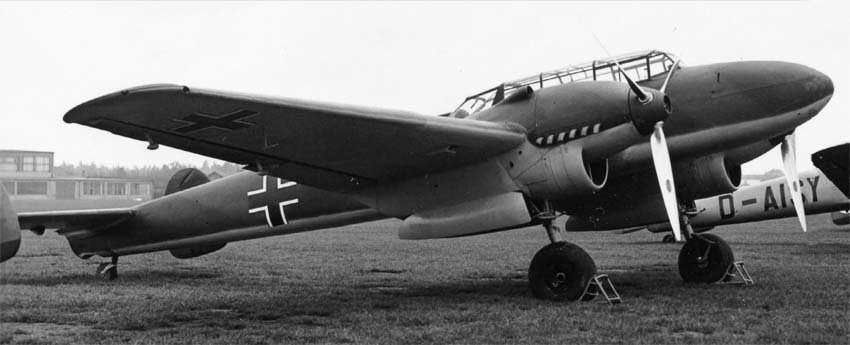
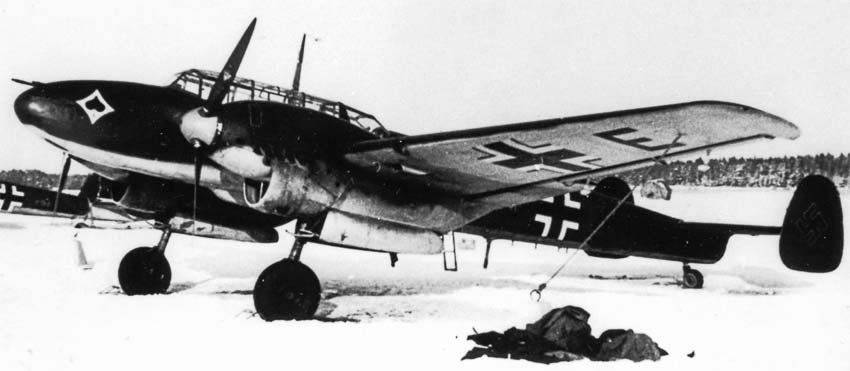
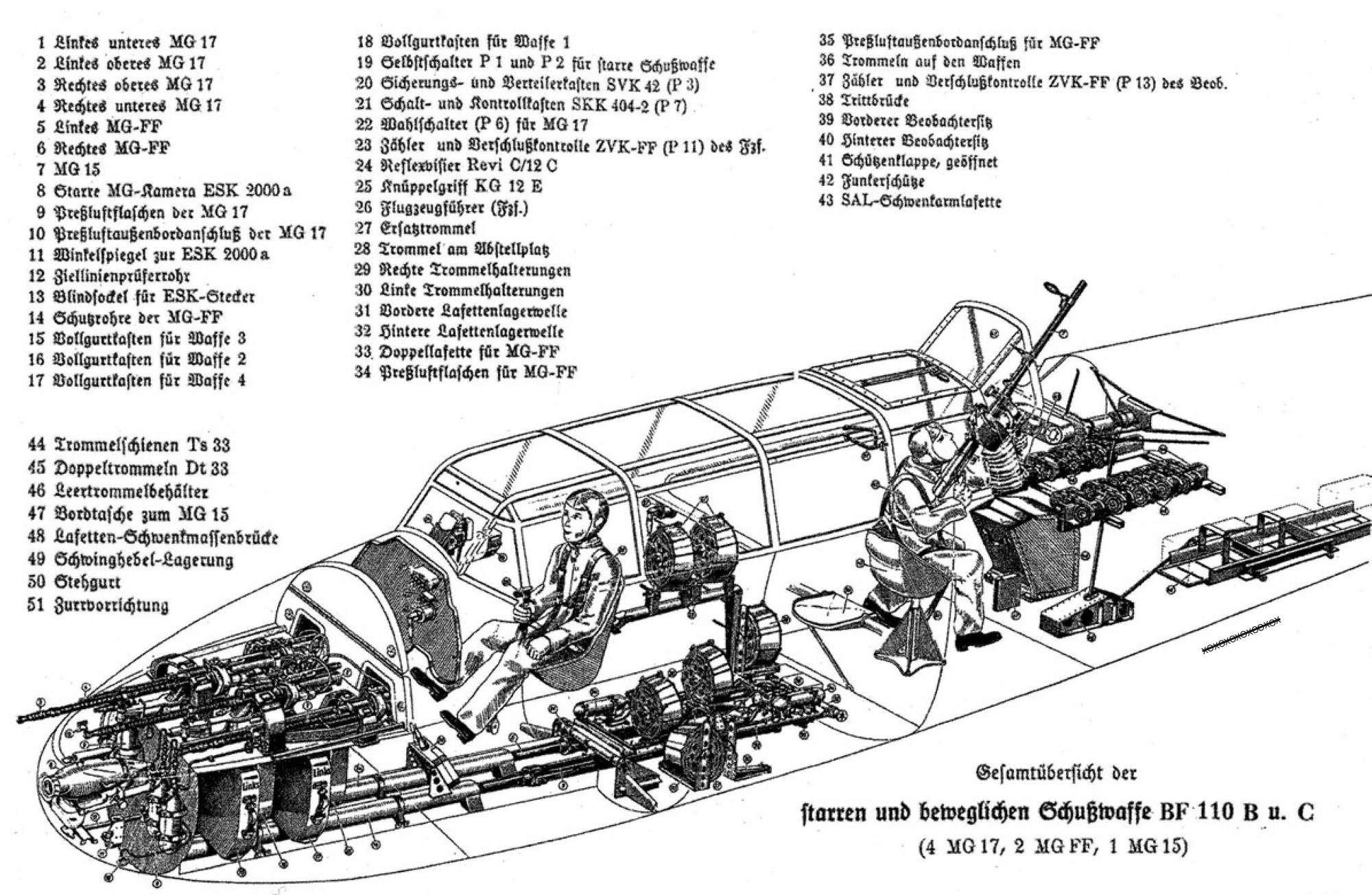
When it became clear that the DB 601A would not go into series production anytime soon, Bf 110 production plans also had to change. The fourth and final aircraft of the pre-production batch, the Bf 110A-04, was delayed on the assembly line until March 1938, while its improved variant, the Bf 110B, was already being prepared for series production. Externally, it differed by a more aerodynamic nose section of the fuselage. The upper part of the nose section with machine guns was tested on the Bf 110A-04. It slid open, providing access to the machine guns and allowing the installation of ammunition boxes. In the lower part of the nose section, ports were made for two 20 mm MG FF cannons, which were mounted on a removable panel under the pilot’s cockpit and reloaded by the navigator.
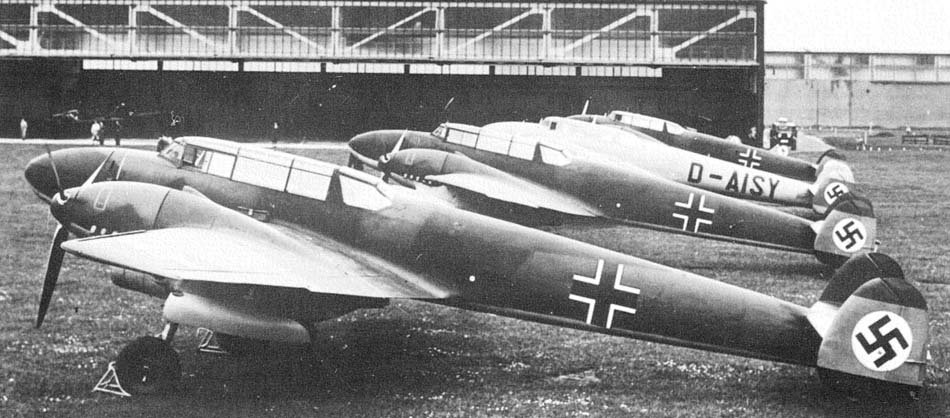
Further delays in the delivery of the DB 601A forced the Bf 110B to be equipped with less powerful Junkers engines. The first of 10 pre-series aircraft, the Bf 110B-01 (No. 917 D-AISY), flew on April 19, 1938, with Jumo 210Ga engines, which featured direct injection and a two-stage supercharger. The propeller was a three-bladed VDM-Hamilton variable-pitch type. Pre-series Bf 110B-0s were delivered without armament, and in July, the first production Bf 110B-1 flew with full armament, including one MG 15 on an Arado mount in the rear of the cockpit.
While the Bf 109 fighter received noisy publicity, the Bf 110, on the contrary, was hidden “under a burqa,” like a “sultan’s wife” – everyone heard about it, but no one saw it. Soon after the first Bf 110B-1 was accepted by the Luftwaffe in August 1938, the head of the French Air Force staff, General Vuillemin, paid an official visit to Germany. The Bf 110 played a role in the bluff being staged for the distinguished guest. It also served as a good opportunity to present the German equivalent of the widely advertised Potez 63, which, unlike the Messerschmitt fighter, had already received several foreign orders.
The French Air Force staff delegation was brought to the Messerschmitt A.G. factory (which Bayerische Flugzeugwerke had been renamed a month earlier). After an impressive demonstration of the new “hunter’s” firepower, General Vuillemin was shown “part” of the assembly line and “just released” Bf 110s, which took off at regular intervals. This spectacular demonstration of “mass production” was nothing more than a well-planned mystification. The aircraft taking off at regular intervals were pre-series Bf 110B-0s and several Bf 110B-1s, specially assembled at the Augsburg factory. After takeoff, they landed out of visual sight, were transported back, only to take off again in front of the guests.
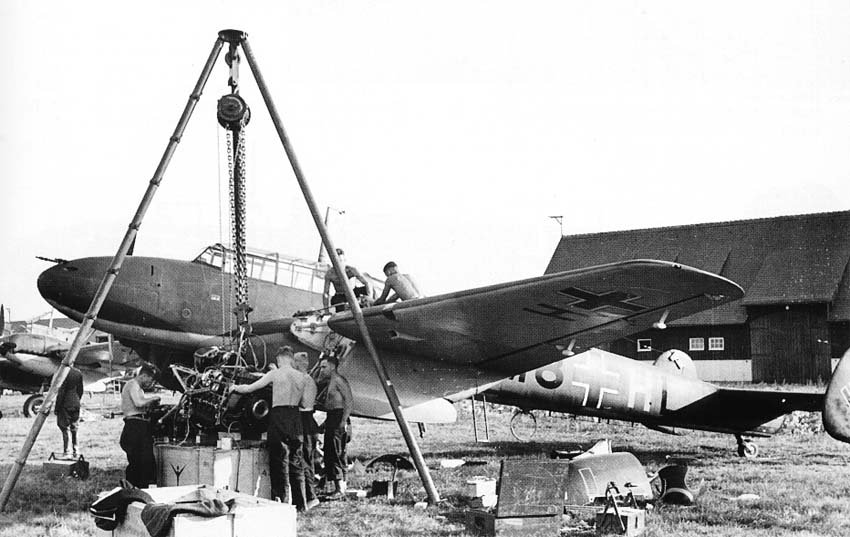
Vuillemin was very impressed, but in reality, only four Bf 110B-1s had been produced by that time, and “heavy fighter groups” were only just forming. Production of the Bf 110B during 1938 barely reached two aircraft per week – as the variant with the Jumo 210Ga was considered suitable only for testing equipment, armament, developing tactical applications, and training purposes. Several Bf 110B-1s entered service with the I “heavy” fighter group of the so-called instructor squadron LG 1, where they were used to develop tactics and application techniques. The group was later renamed I(Z)/LG 1, and the term “heavy fighter” was replaced with “hunter” – Zerstörer.
In early 1939, I/ZG 1 and I/ZG 76 were formed, each with a “hunter” squadron serving for crew training and as a reserve. Production of the Bf 110B totaled 45 aircraft, including several Bf 110B-2s without cannons but with photographic equipment. Most of them were converted into Bf 110B-3 trainers, which were used in this capacity until 1941. On these, cannons were removed (sometimes machine guns were also removed), new radio equipment and “blind” landing instruments were installed. Several Bf 110B were used in various tests, for example, for the Rheinmetall-Borsig MK 101 cannon or for a semi-automatic revolving magazine for 73 mm rockets. The first tests of the rocket magazine were conducted on March 10, 1939, in Tarnewitz on a modified Bf 110B (D-ADJD). The rotating magazine for eight rockets was located inside the fuselage. A rocket launch tube ran under the nose section. 40% of RZ 65 rockets at a distance of 350 m fell within a 6×6 m square. Although tests dragged on until 1943, the device was never brought to practical use.
Technical Specifications
| Modification | Bf 110b-1 |
| Wingspan, m | 16.90 |
| Length, m | 12.60 |
| Height, m | 3.50 |
| Wing area, m2 | 38.90 |
| Normal takeoff weight, kg | 5700 |
| Engine type | 2 Piston engines Junkers Jumo 210Ga |
| Power, hp | 2 x 700 |
| Maximum speed, km/h | 453 |
| Cruising speed, km/h | 315 |
| Practical range, km | 1700 |
| Service ceiling, m | 8000 |
| Crew, crew members | 2-3 |
| Armament | Two 20-mm MG FF cannons with 180 rounds per gun and four 7.9-mm MG 17 machine guns with 1000 rounds per gun, one 7.9-mm MG 15 in a flexible rear mount with 750 rounds. |
Image and diagram gallery of the Messerschmitt Bf 110B(A): The Early Zerstörer
 Bf.110B(A) |
 Bf.110B(A) |
 Bf.110B(A) |
 Bf.110B(A) |
 Bf.110B(A) |
 Bf.110B(A) |
 Bf.110B(A) |
 Bf.110B(A) |
 Bf.110B(A) |
 Bf.110B(A) |
 Bf.110B(A) |
 Bf.110B(A) |
 Bf.110B(A) |
 Bf.110B(A) |
 Bf.110B(A) |
 Bf.110B(A) |
 Bf.110B(A) |
 Bf.110B(A) |
 Bf.110B(A) |
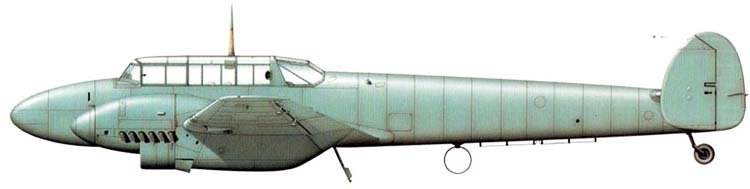 Bf.110B(A) |
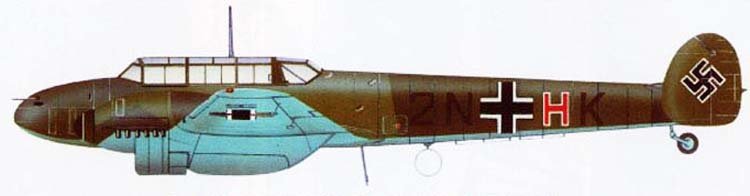 Bf.110B(A) |
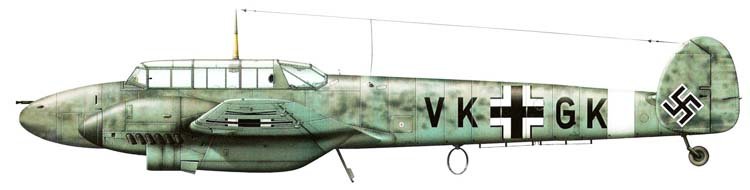 Bf.110B(A) |
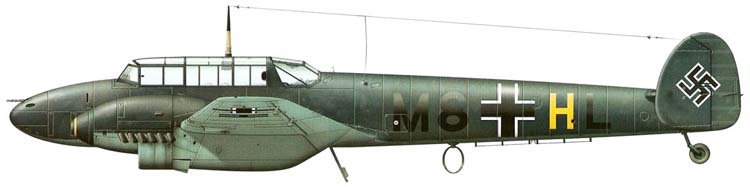 Bf.110B(A) |
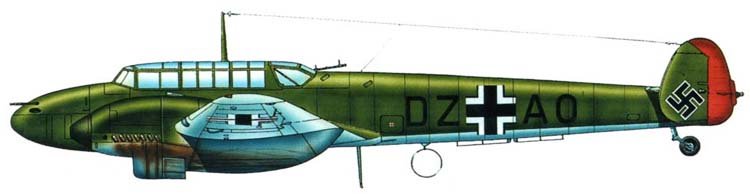 Bf.110B(A) |
Equipo Editorial de ArchivoAéreo
Grupo de investigadores y entusiastas de la aviación dedicados a documentar y preservar la historia aeronáutica mundial. Todos los artículos son revisados para garantizar precisión histórica.
Fuentes y Rigurosidad
La información presentada en esta ficha técnica ha sido compilada a partir de manuales de vuelo desclasificados, archivos históricos y bibliografía especializada. Aunque nos esforzamos por mantener la máxima precisión, algunos datos de rendimiento pueden variar según la variante específica o las condiciones operativas.