An Overlooked Chapter in Early Aviation
Very little is known about Léopold César’s French tandem biplane. This aircraft is characteristic of a series of experiments conducted between 1907 and 1911 that ultimately failed and were forgotten. The aviators who created these planes went on to build other types of aircraft, and the firms that funded them went bankrupt.
Mechanical Innovations and Powerplant
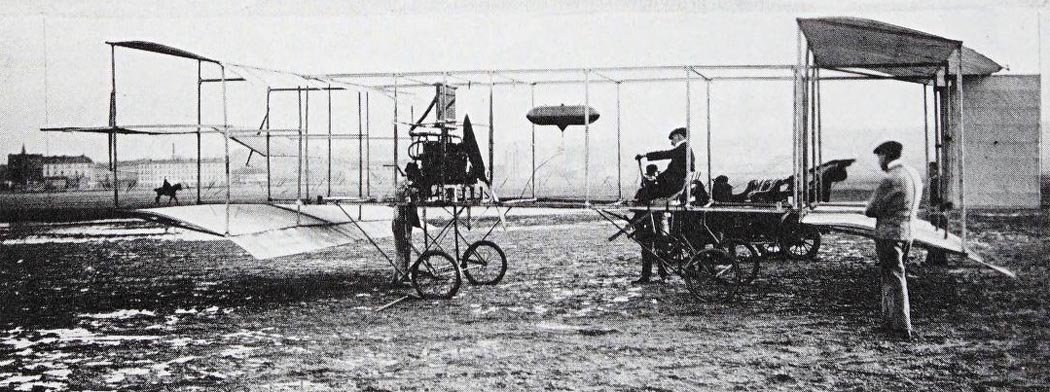
In its early variants, the César Tandem Biplane aircraft was equipped with two propellers driven by a chain transmission from an engine located in the central part of the fuselage. Later, the airplane featured a single propeller with direct drive, where the propeller’s slipstream passed through the pilot’s area.
The engine, a four-cylinder 50 hp Prini-Berthaud, was positioned on the trailing edge of the lower wing of the front pair and powered a pusher propeller. This configuration aimed to optimize thrust and flight efficiency in an experimental design.
Wing Design and Flight Controls
Both wings were profiled from the leading edge to the rear spar, and beyond that point, they presented a flat surface. The main feature of the aircraft was the presence of two wings to reduce the span for a given area. Roll control was achieved with ailerons, similar to the 1909 Curtiss aircraft.
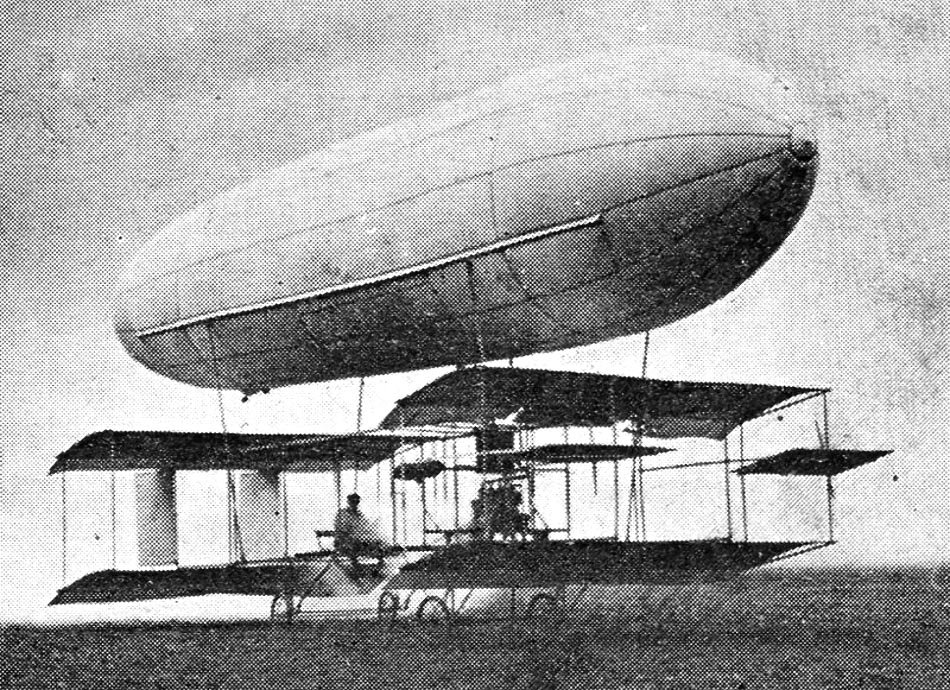
For pitch control, the aircraft was equipped with a front horizontal stabilizer. Twin rudders were installed behind the rear wing. In one of its variants, the tandem biplane was suspended on four struts beneath a cigar-shaped air balloon, exploring alternative lift methods.
Technical Specifications
| Modification | Tandem Biplane |
| Wingspan, m | 6.00 |
| Wing area, m2 | 56.00 |
| Maximum takeoff weight | 480 |
| Engine type | 1 Piston engine Prini-Berthaud |
| Power, hp | 1 x 50 |
| Crew, crew members | 1 |
Image gallery of the César Tandem Biplane