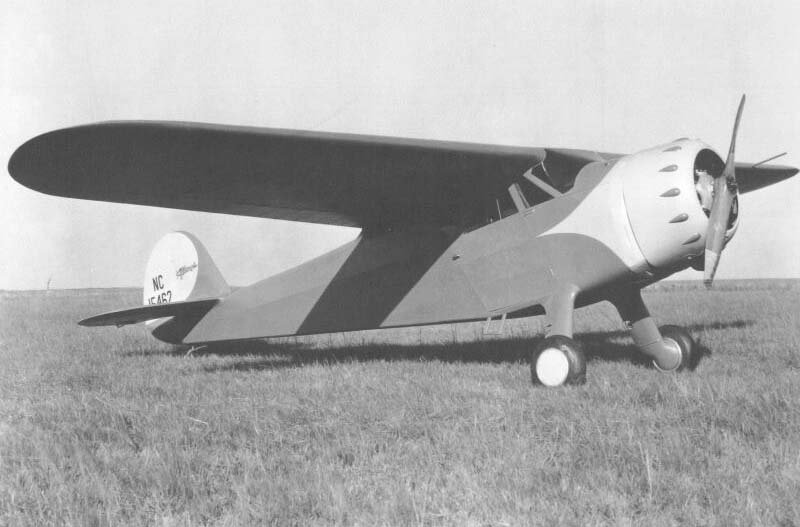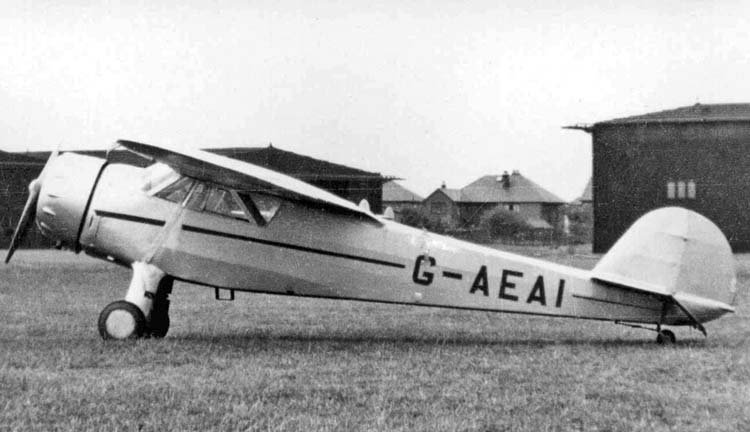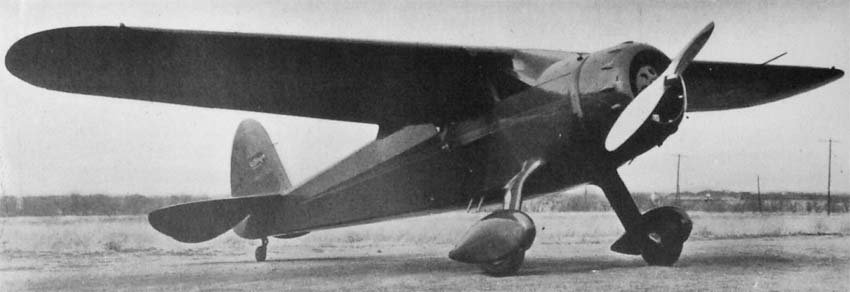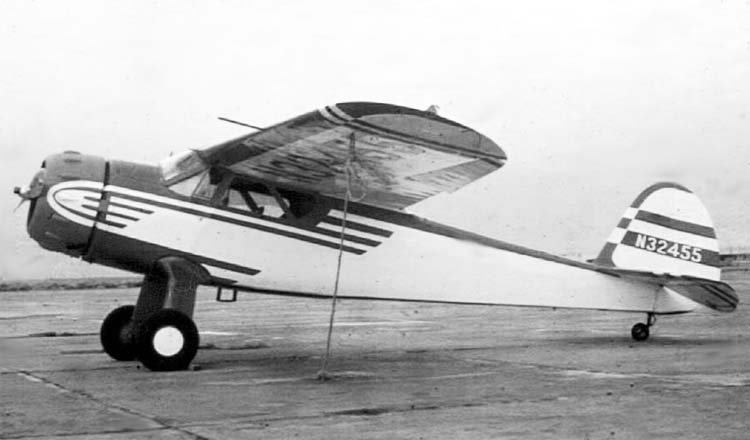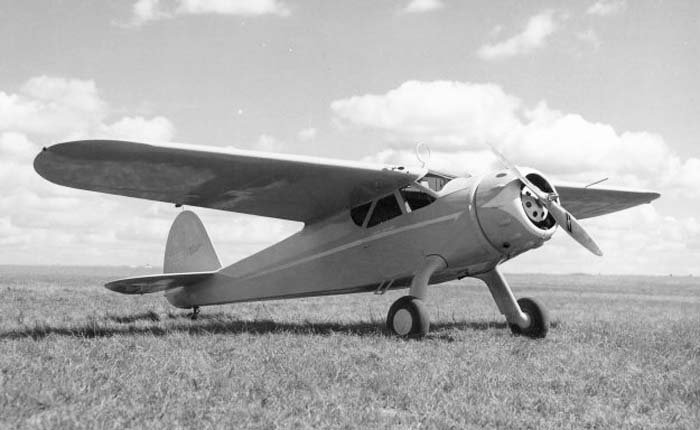
The first product from the Cessna company after it was reopened in Wichita, Kansas, was the Model C-34. This cantilever high-wing aircraft was built utilizing the latest advancements in aerodynamics and structural materials. Its maiden flight took place in June 1935.
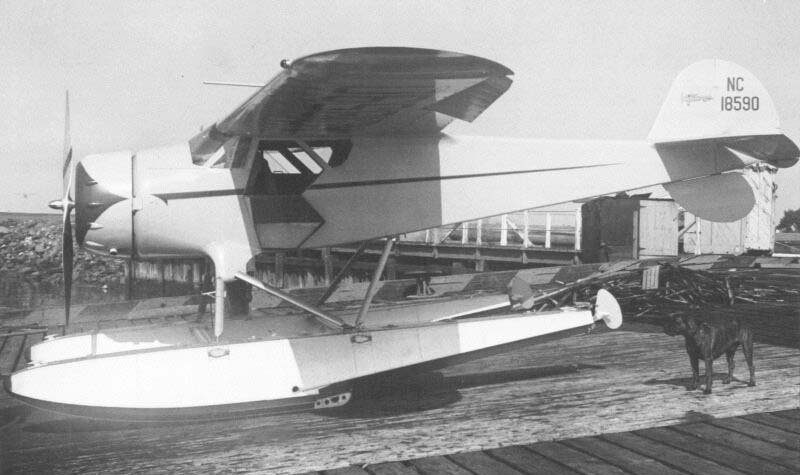
The Model C-34 featured a mixed construction of wood and metal, with duralumin covering on the nose section of the fuselage, plywood covering on the lifting surfaces, and fabric elsewhere. Upon customer request, a metal propeller could be installed instead of a wooden one, and “Edo” brand floats could replace the standard landing gear.
Variants and World War II Service
A total of 42 C-34 aircraft were built, two of which entered service with the US Army Air Forces during World War II under the designation UC-77B.
In 1937, the Model C-37 modification appeared, distinguished by a wider cabin. Forty-six of these aircraft were built, with one entering service in 1942 under the designation UC-77C.
A year later, the Model C-38 Airmaster was introduced, featuring minor structural changes. Essentially, equipment that was previously optional now became standard. This aircraft had a wider landing gear base and a large ventral flap, which served as an airbrake to reduce speed during landing. Only 16 C-38 aircraft were assembled.
The Airmaster Series: Evolution and Production Halt
The final four-seat models of the Cessna family were the C-145 and C-165 Airmaster. The rollout of the new aircraft, then designated Model C-39, occurred on September 11, 1938. However, it was soon renamed Model C-145, with the numerical code now reflecting engine power rather than the year of serial production launch.
The C-145 was equipped with a 145 hp Super Scarab radial engine, while the subsequent Model C-165 and Model C-165D differed only in powerplant output, featuring a 165 or 175 hp Super Scarab engine, respectively. Production of the Airmaster series ceased in 1941. A total of 42 C-145s, 34 C-165s, and three C-165Ds were sold. In 1942, three Model C-165 aircraft were adopted by the USAAF under the designation UC-94.
Technical Specifications
| Modification | C-38 |
| Wingspan, m | 10.41 |
| Aircraft length, m | 7.52 |
| Aircraft height, m | 2.13 |
| Wing area, m2 | 16.81 |
| Empty weight | 621 |
| Maximum takeoff weight | 1066 |
| Engine type | 1 Piston engine Warner Super Scarab Series 50 |
| Power, hp | 1 x 145 |
| Maximum speed, km/h | 261 |
| Cruising speed, km/h | 241 |
| Practical range, km | 885 |
| Service ceiling, m | 5485 |
| Crew, crew | 4 |
Image gallery of the Cessna Model C Airmaster