The twentieth century gave humanity aviation – a new form of transport and a new weapon. In just 10 years, the airplane entered service with the armies of virtually all leading nations, while the birth of its rotorcraft counterpart stretched out for almost half a century. The idea of the helicopter seemed remarkably simple, but attempts to realize it, of which there were a great many in the first 30 years of the century, usually ended in complete fiasco.
Igor Ivanovich Sikorsky made a simple assumption: it was all about the design. Proving this thesis took years, a lot of labor, and money. But then the VS-300 took to the air. Its scheme, with a main lifting rotor and a tail compensating rotor, proved so successful and practical that it was named “classic.”
The success of the serial R-4 helicopter, prototyped by the VS-300 and achieved in the latter period of World War II, did not diminish the optimism of adherents of other schemes. One of them was the American Frank Piasecki, who considered the optimal helicopter configuration to be one with two main rotors of the same diameter arranged longitudinally. The designer, not without reason, assumed that such a scheme had its undeniable advantages.
However, initial calculations revealed that the transmission of such a helicopter was much more complex and heavier. It included components such as a distributing gearbox with a dephasing device to prevent rotor blade overlap and long synchronizing shafts. The control linkage for both rotors was complex, and the forces on the control levers were excessive. The rotors themselves also caused considerable trouble. Their total efficiency decreased due to mutual interference, the blades vibrated, their tips entered flutter, and the shaking transferred to the gearboxes and shafts, which “cracked” and “fell apart.” The fuselage also suffered from pulsating airflows from the rotors, as well as vibrational and acoustic loads.
Development and Innovative Design
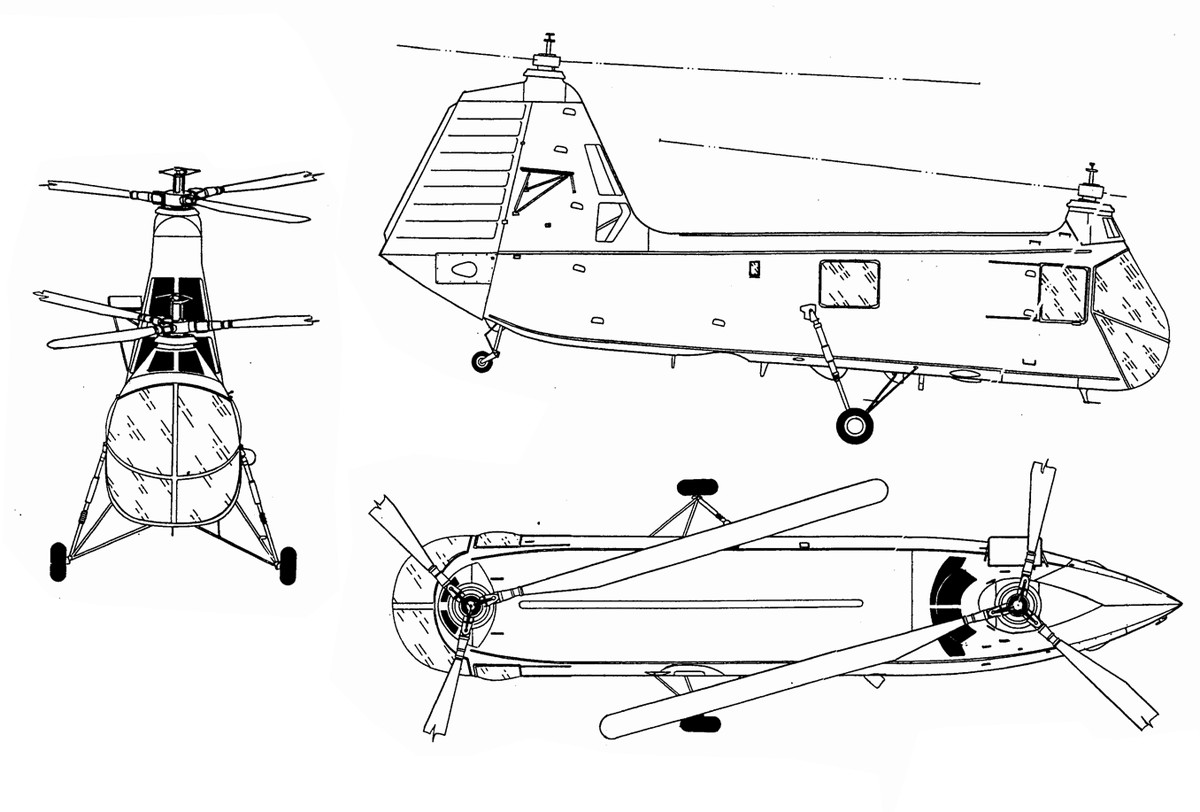
On the other hand, two rotors provided an enormous lifting area, meaning that even with a greater machine mass, a low load per square meter was maintained. This, in turn, allowed for good climb rate, ceiling, and a large payload. Furthermore, the placement of the main rotors at the ends of the fuselage allowed for the elimination of the thin and, in essence, non-functional tail boom. Now, the entire volume of the fuselage could be used for accommodating the crew, cargo, armament, power plant, and helicopter systems.
Moreover, it turned out that even despite the rotor blades sticking out in all directions, the overall dimensions of a tandem-rotor helicopter were smaller than those of “classic” helicopters with a compensating rotor, and the size of the cargo cabin was larger. This quality garnered significant interest from the US Navy and Marine Corps. Sailors sought a successor for the inconvenient onboard seaplanes used on cruisers and battleships, while the Marines hoped the new aircraft would be a worthy replacement for LST landing craft. This would speed up the delivery of troops from ships to shore, safeguarding them from coastal rocks and enabling force maneuvers in all three dimensions of space.
Piasecki’s first production model, the PV-3, better known as the “Flying Banana,” ordered by the American fleet in 1944, generally confirmed all the above. The next tandem-rotor helicopter was designed by Piasecki’s company according to a US Navy technical specification for a multi-purpose rotorcraft capable of operating from aircraft carriers and large ships. Design began in 1945.
The helicopter received the company designation PV-14 (military designation XHJP-1). At this point, Piasecki had a competitor: Sikorsky offered the Navy its HJS-1. The winner of the competition received a substantial order for 186 helicopters. The PV-14 prototype made its first flight in 1948; only two experimental machines were built. Unlike the PV-3, the new helicopter was designed to be all-metal.
Variants and Operational Service
The 525 hp Continental R-975-34 air-cooled radial engine had to be installed in the rear of the fuselage. The Navy strictly limited the helicopter’s dimensions to fit existing aircraft elevators on escort carriers, while maintaining a cabin size sufficient for at least five fully equipped soldiers. The two three-bladed main rotors had manually folding blades. The size restriction forced designers to bring the rotor axes of rotation as close as possible, such that their swept surfaces overlapped by almost half a diameter. The rectangular planform blades had a steel tube frame and plywood skin. The crew consisted of two people, and the cargo-passenger cabin could accommodate four to five people.
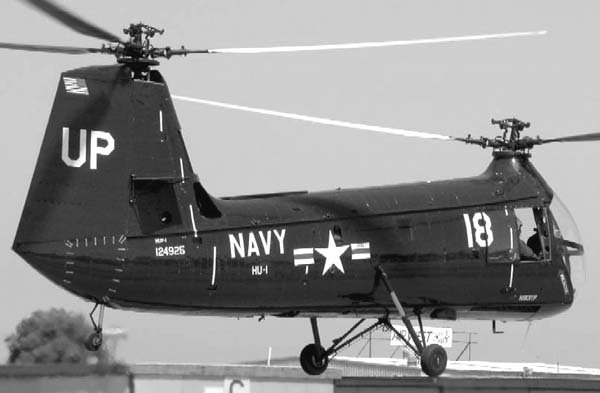
The XHJP-1 helicopter set an unofficial world record for horizontal flight speed for rotorcraft (131 mph) in February 1949 during a calibration flight at the company’s factory airfield in Morton. Serial production began in 1948. By this time, a number of changes had been made to the design, changing its name to PV-18 (HUP-1 Retriever). The HUP-1 series included 32 machines. Some helicopters were equipped with a deployable sonar station.
The first three XHJP-1s arrived at the Marine Corps test center at Patuxent River in the spring of 1949. During military trials, test pilot Jim Ryan performed the world’s first Nesterov loop in the XHJP-1 helicopter. In 1950, experiments were conducted on basing tandem-rotor helicopters on the escort carrier “Palau.”
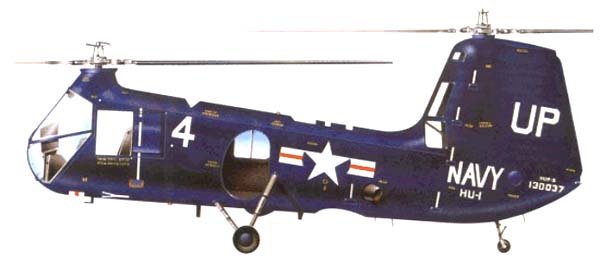
The helicopter did not escape one of the main maladies of tandem-rotor machines: insufficient stability. Designers had to get creative with the tail empennage. Pre-production machines had a conventional stabilizer of relatively small span without transverse V. The serial HUP-1 received inclined “end plates” (a kind of negative V-shape) on the stabilizer tips, while the HUP-2 variant had no stabilizer at all.
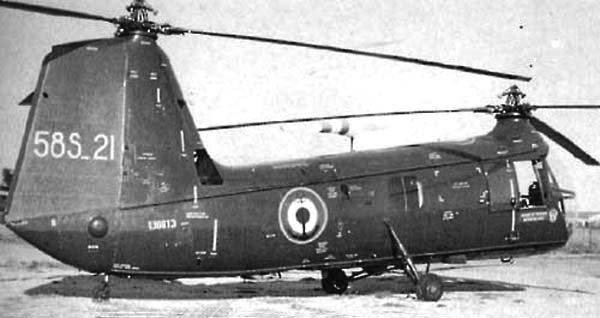
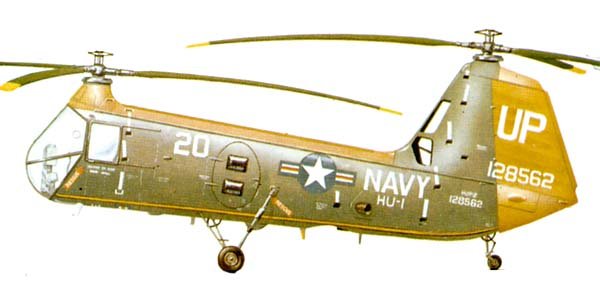
The HUP-2 was fitted with a more powerful R-975-42 engine, and a rectangular emergency hatch was installed in the floor of the forward fuselage. An autopilot was introduced into the onboard equipment, improving the helicopter’s stability. The autopilot’s implementation allowed designers to dispense with the horizontal stabilizer. A hydraulic winch with a lifting capacity of 180 kg was mounted inside the helicopter next to the hatch. The US Navy purchased 165 HUP-2 helicopters, and another 15 machines were transferred to the French Navy. In the American fleet, squadrons HU-1 and HU-2 were the first to receive the new equipment in 1949.
Meanwhile, the American military tested the helicopter’s survivability in simulated nuclear war conditions. The apotheosis of the Desert Rock V maneuvers was the delivery of a helicopter assault directly into the epicenter of a nuclear blast. 39 helicopters landed Marines in the still-hot crater 30 minutes after the explosion. The machines withstood this even better than the people.
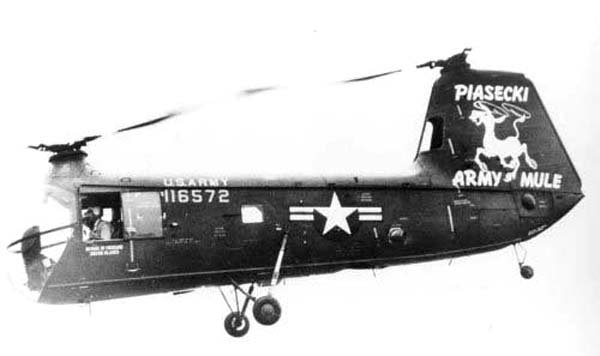
The Retriever had the honor of becoming the world’s first production anti-submarine helicopter. Its HUP-2S modification, equipped with a sonar station, was intended to detect and, eventually, destroy enemy submarines. In 1951, the Air Force and Army ordered a PV-18 modification from Piasecki with a reinforced cabin floor and power steering in the control circuit. The land variant was named H-25A Army Mule. The US armed forces purchased 70 such helicopters, which began entering service in 1953.
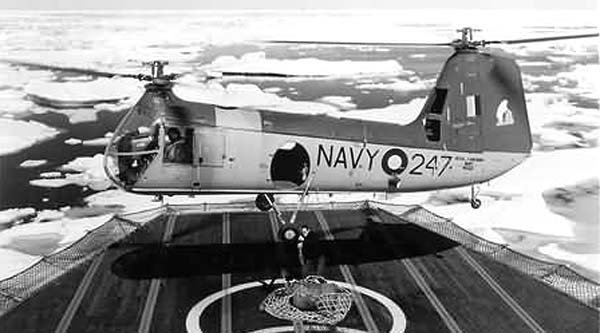
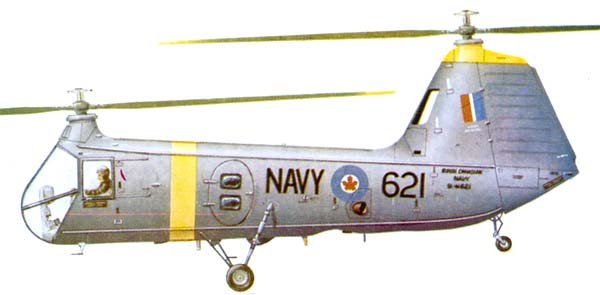
The last naval modification of the Retriever, the HUP-3, was effectively re-purchased from the US Army. The Navy received 50 such helicopters. This aircraft differed from the Army’s H-25A only by a new engine modification – the R-975-46A instead of the R-975-42 on previous models. Its purpose was to transport wounded and medical personnel, as well as deliver ammunition, provisions, and other supplies for commandos. Three of these were purchased by the Royal Canadian Navy. Serial production continued until 1954.
Legacy and Evolution
In 1957, the HUP-2 was tested as an amphibious variant. The lower part of the airframe structure was reinforced, the fuselage bottom was sealed, air intakes were modified, and floats from a light Piper “Cub” seaplane were mounted on trusses along the sides of the fuselage to increase stability.
In the fleet, HUP helicopters were used for transporting people and cargo, as well as for search and rescue. The largest rescue operation involving two HUP-2 and two Sikorsky HO4S helicopters was the evacuation of wounded after an aviation missile explosion on the aircraft carrier “Bennington.” Fires on aircraft carriers provoked by the detonation of aviation ordnance were not uncommon in US Navy history. The incident on the “Bennington” took place in early June 1954. The ship was 75 miles off the coast of New England. Immediately after the fire started, the commander set course for Newport. Helicopters began evacuating the wounded when the aircraft carrier approached the port within 10 miles. Injured sailors were delivered directly to the Newport hospital yard. The last flight was performed as the “Bennington” was docking at its usual berth. An official Navy representative stated that several lives were saved only thanks to the use of helicopters.
The “Mules” served in the US armed forces until the mid-1960s. The possibility of improving the helicopters’ flight characteristics by installing a 700 hp R-1300-3 engine was considered, but the modernization was deemed impractical due to the emergence of more advanced helicopters. The R-1300-3 engine was installed on one helicopter, designated HUP-4. The HUP-4 made its first flight on December 31, 1954. In July 1962, due to a change in the US armed forces aircraft designation system, HUP-2 variants received the designation UH-25B, and HUP-3s became UH-25C.
Technical Specifications
| Modification | CH-25A |
| Main rotor diameter, m | 10.67 |
| Length, m | 17.35 |
| Height, m | 3.81 |
| Empty weight, kg | 1782 |
| Maximum takeoff weight, kg | 2767 |
| Engine type | 1 Piston engine Continental R-975-46A |
| Power, kW | 1 x 410 |
| Maximum speed, km/h | 174 |
| Practical range, km | 790 |
| Practical ceiling, m | 3670 |
| Crew | 1 |
| Payload | 5 soldiers |
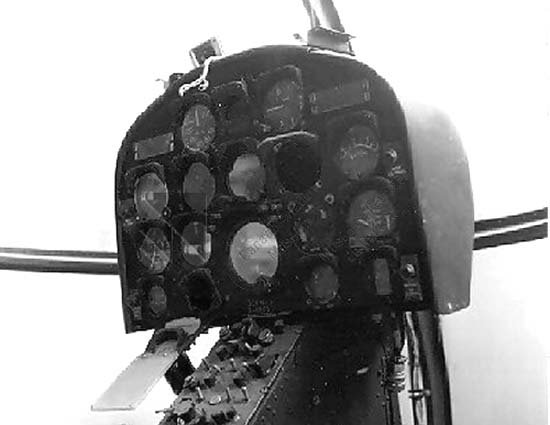
Image gallery of the Piasecki HUP Retriever / H-25 Army Mule