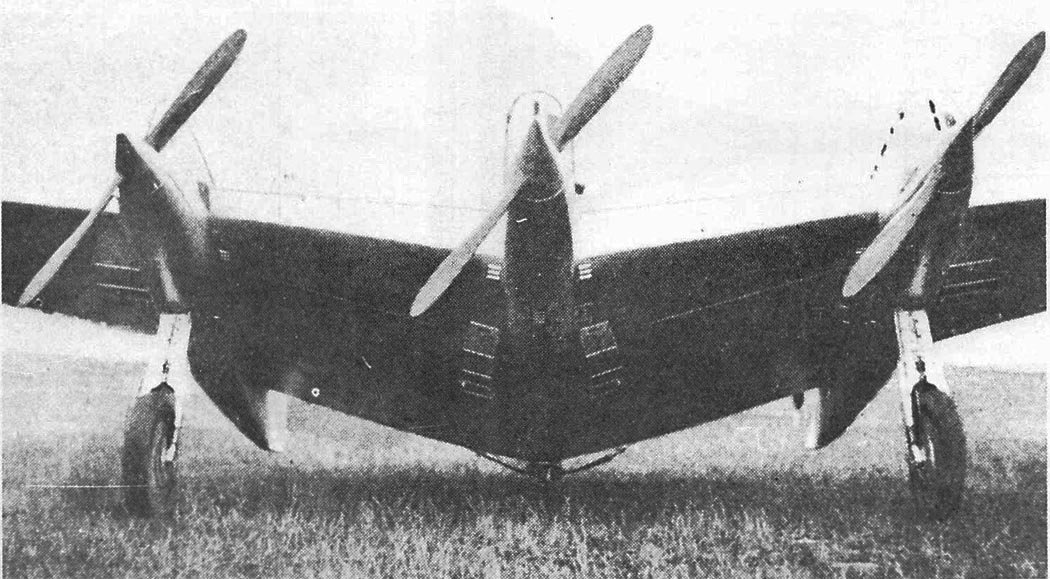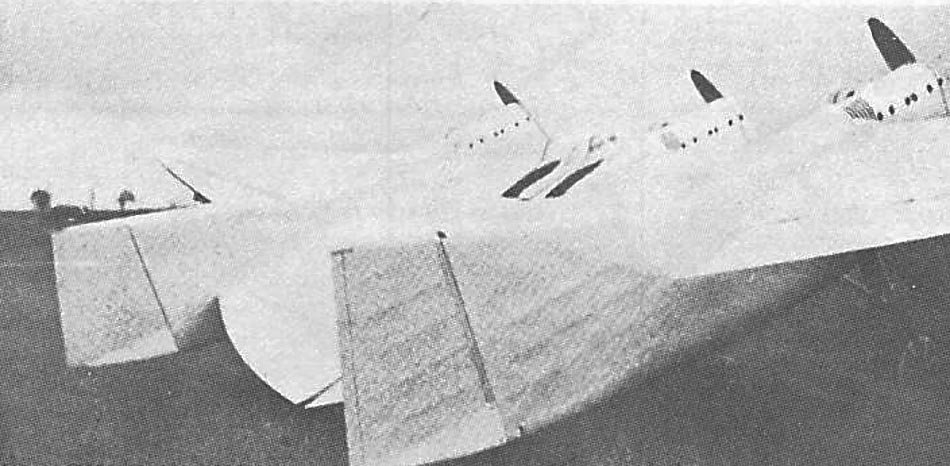
In 1929, Jean Charpentier obtained a patent for a twin-engine aircraft, which he named “flying wing.” It was indeed almost a flying wing, without a keel, and the stabilizer smoothly integrated with the wing. In 1933, Charpentier signed a contract with the French government for the construction of an experimental prototype based on this design.
The Charpentier C-1 aircraft was built at the Caudron factory. In October 1933, taxiing tests began at the Étampes-Mondésir airfield.
Development and Early Trials
Unfortunately, before its first flight, the aircraft was severely damaged. It was repaired for a long time, and its first flight finally took place in January 1935, with Senior Sergeant Poivre as the pilot.
On this very flight, the aircraft crashed so severely that it was never restored. Although Charpentier developed designs for other aircraft (C-2, 310C1), he was unable to build anything else, making the C-1 his only materialized aircraft.
Design and Technical Specifications
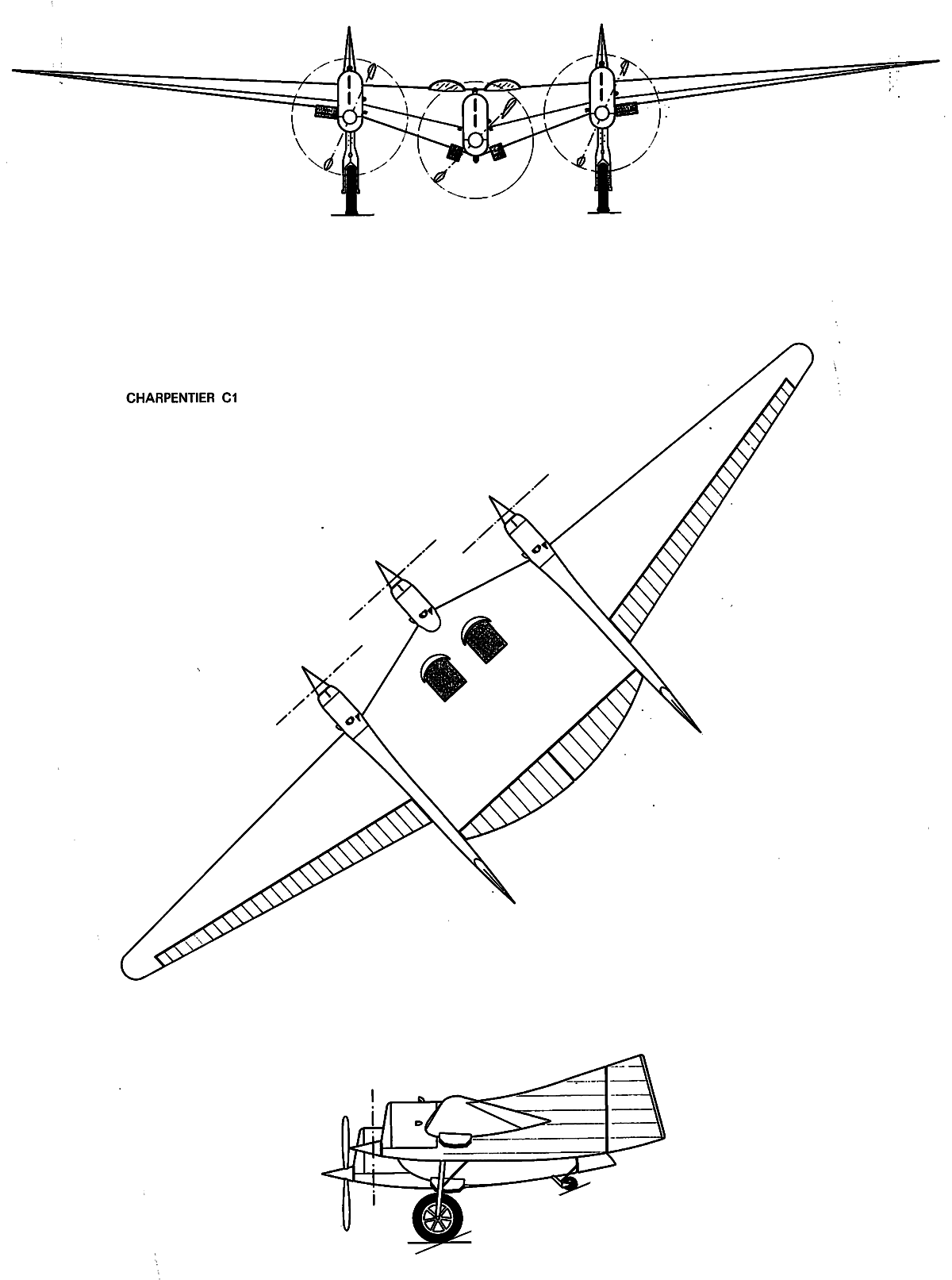
The C-1 was a three-engine tailless aircraft. One engine was installed centrally in front of the wing, while the elongated nacelles of the other two formed beams to which the fins were attached. The elevator was placed between the fins, and the ailerons were on the wingtips.
Two pilots sat side-by-side, but in separate open cockpits with windscreens. It featured tailwheel landing gear, with the main landing gear retracting backward into the nacelles.
The engines were low-power, 100-hp, 6-cylinder Hispano-Suiza units. The radiators were located on the underside of the wing. Due to its brief existence, flight characteristics could not be recorded.
Technical Specifications
| Modification | C-1 |
| Wingspan, m | 15.00 |
| Length, m | 5.30 |
| Wing area, m2 | 24.00 |
| Normal takeoff weight | 2000 kg |
| Engine type | 3 Piston engines Hispano-Suiza 6Pa |
| Power, hp | 3 x 100 |
| Crew | 2 crew members |
Image gallery of the Charpentier C-1