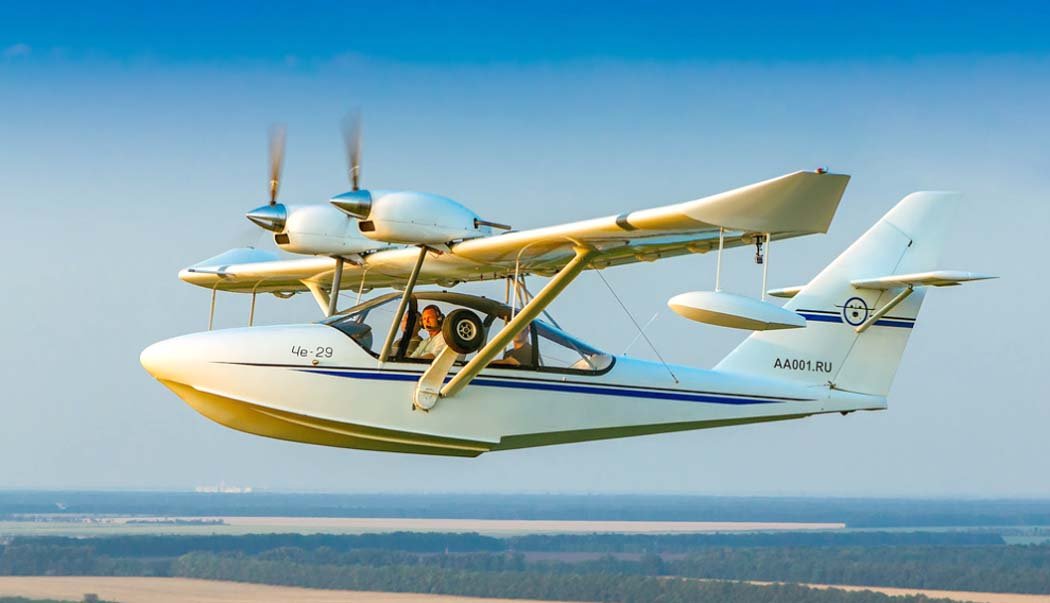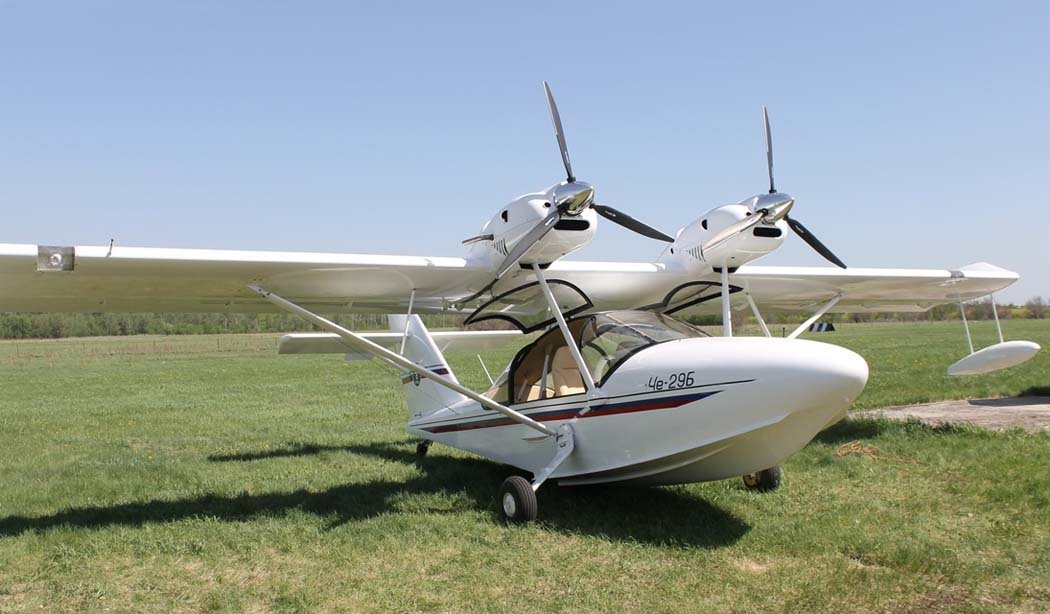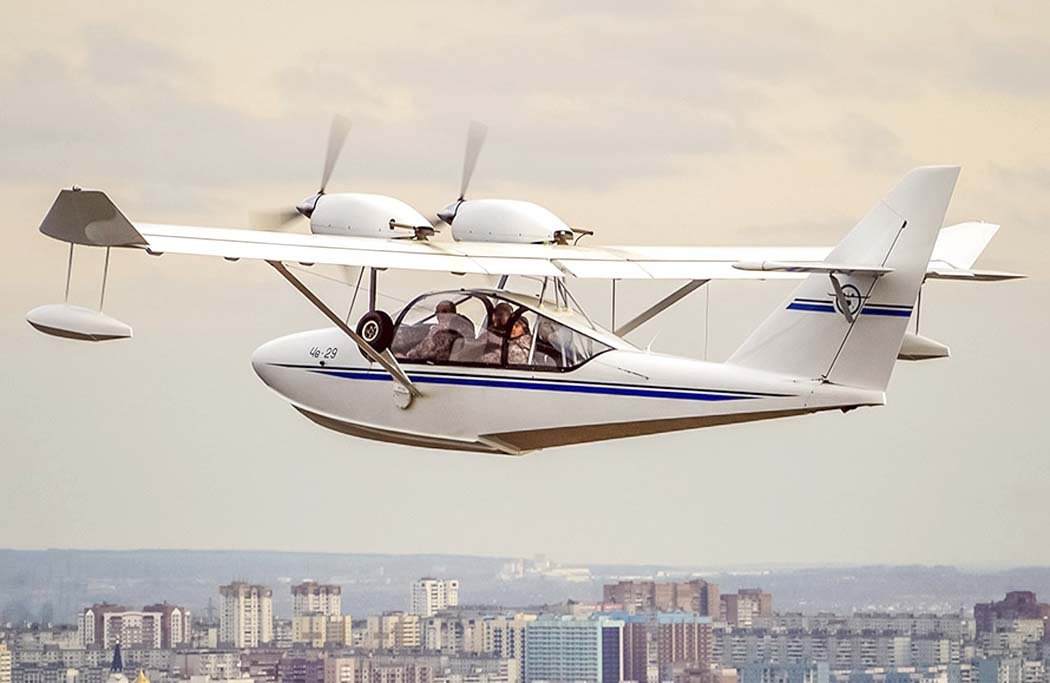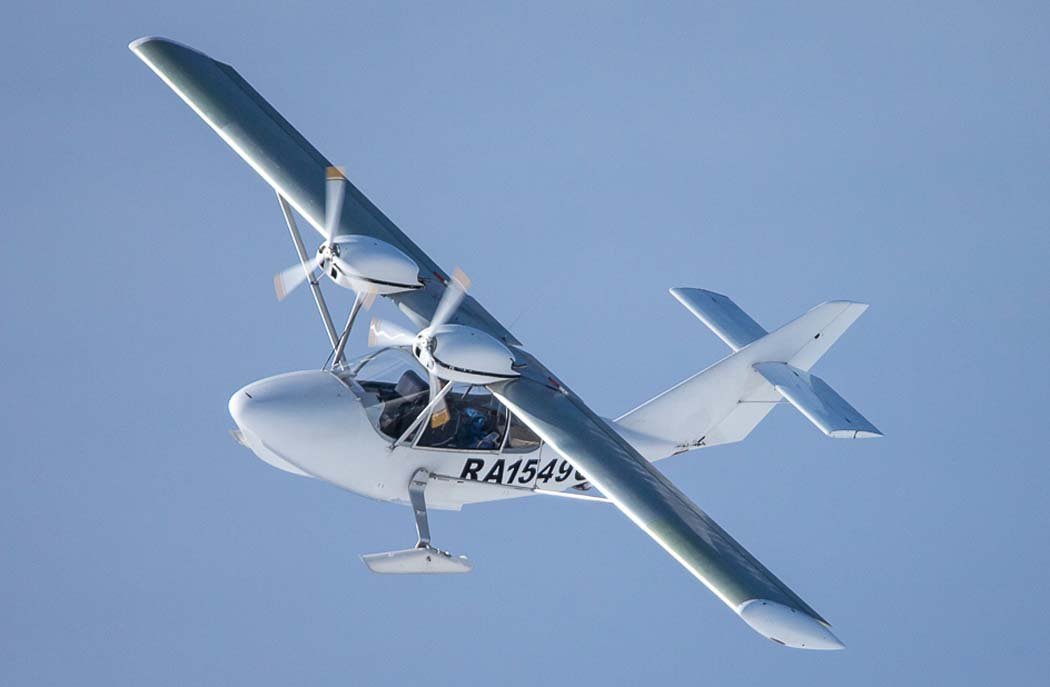
The “Gidrosamolet” company (Executive Director – Anton Kravchenko, Chief Designer – Boris Chernov) was established in 2009. At its base, with the efforts and resources of its founders, it carried out the full range of work for the development, preliminary design, modeling, prototype creation, experimental sample production, testing, and refinement of the Che-29 amphibious seaplane.
During the first three years, the company focused on the design and then the modeling of the seaplane. After the model was created, the period of manufacturing special tooling began, parallel to the production of the experimental seaplane unit.
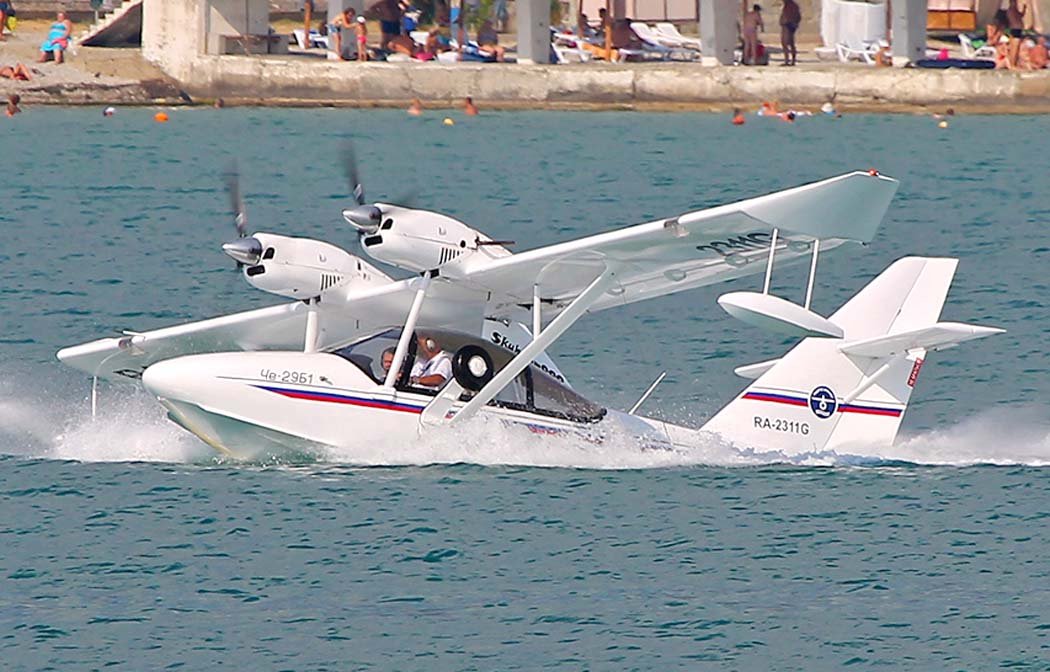
In 2012, tests of the first Che-29 were conducted, followed by its registration in the state register of aircraft of the Russian Federation. In the same year, our company participated in the international exhibition of amphibious aircraft in Gelendzhik and demonstrated the seaplane’s operational capabilities from the sea. Commercial construction of Che-29 seaplanes also began that year.
Key Features
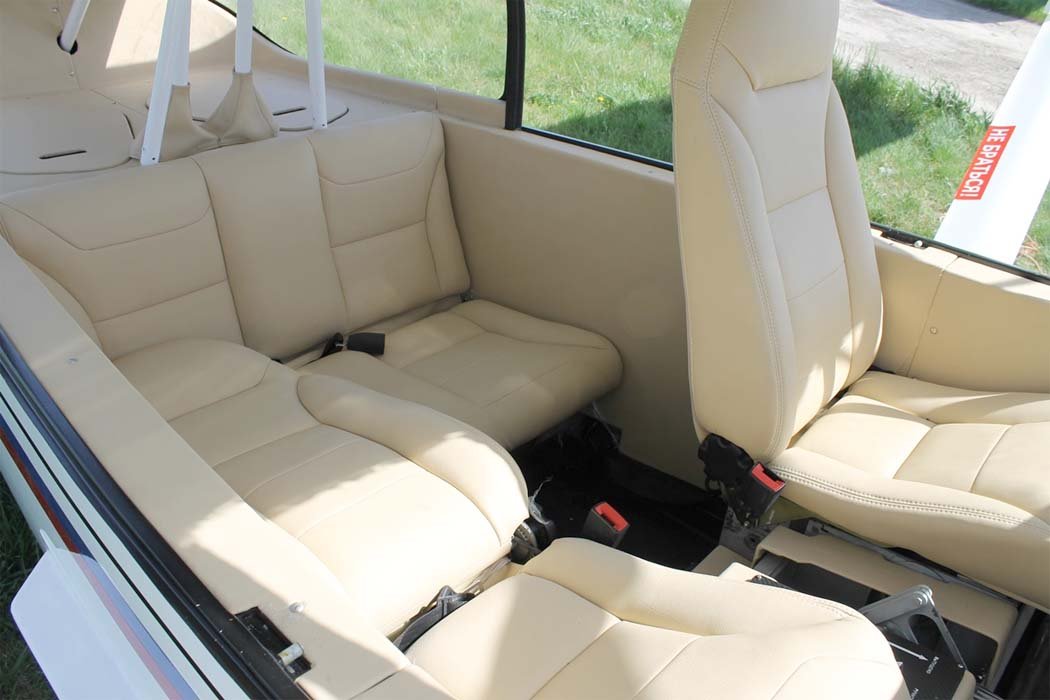
The Che-29 is a four-seat light multi-purpose amphibious aircraft, powered by two Rotax 912ULS engines, each delivering 100 hp. It uses either VK-5u fixed-pitch propellers or Airmaster AP332 variable-pitch propellers. This aircraft is a further development of the Che-27, featuring a new GA(W)-1 wing profile, classic titanium strut floats, an elongated and widened hull-boat, and several other improvements. The aircraft’s structure is entirely made of fiberglass.
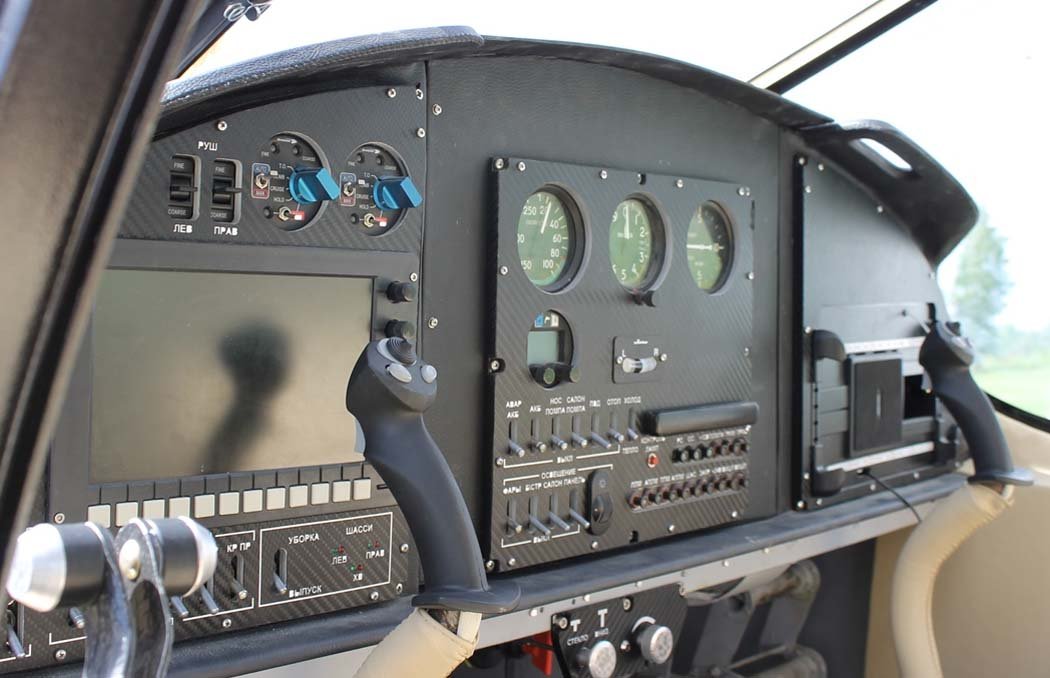
According to customer choice, the aircraft’s configuration can vary. Options include an injected Rotax-912iS engine, an Ermak-17 in-flight variable-pitch propeller, and flight equipment such as a digital artificial horizon and a 10-inch EFIS MGL Explorer digital flight and navigation complex.
Capabilities and Versatility
The Che-29 seaplane is remarkably mobile and optimally suited for commercial use. Its design allows it to easily transport 4 passengers and 80 kg of cargo over 1500 km without a single landing.
The Che-29 truly impresses with its mobility. In just 3 hours, a couple of people can prepare the seaplane for transport on any road vehicle, from a boat trailer to a semi-trailer. It is low-maintenance, forgiving of many piloting errors, does not require covered storage, and boasts a wide range of climatic applications.
This aircraft is not only convenient for training but also perfectly suitable for commercial operations. The model can be configured for any functional variant, from a firefighter or air ambulance aircraft to a flying yacht.
Purchase Options and Future Development
The Che-29 is offered for sale at a price of 5.73 million rubles. A modification of the Che-29 is also under development, featuring two more powerful Subaru EJ-25 engines (2×165 hp) and VK-7u or Airmaster AP332 propellers, with a maximum takeoff weight increased to 1500 kg.
In the amphibious aircraft variant with standard options, this modification is valued by the manufacturer at 4.8 million rubles.
Technical Specifications
| Modification | Che-29 |
| Wingspan, m | 12.50 |
| Aircraft length, m | 7.90 |
| Aircraft height, m | 2.80 |
| Wing area, m2 | 15.90 |
| Empty weight | 820 |
| Maximum takeoff weight | 1500 |
| Fuel, l | 340 |
| Engine type | 1 Piston engine Rotax 912USL |
| Power, hp + kW | 1 x 100 |
| Maximum speed, km/h | 210 |
| Cruising speed, km/h | 180 |
| Practical range, km | 1500 |
| Rate of climb, m/min | 300 |
| Practical ceiling, m | 2800 |
| Crew | 1 |
| Payload | up to 3 passengers and 80 kg of baggage |
Image gallery of the Che-29 Seaplane