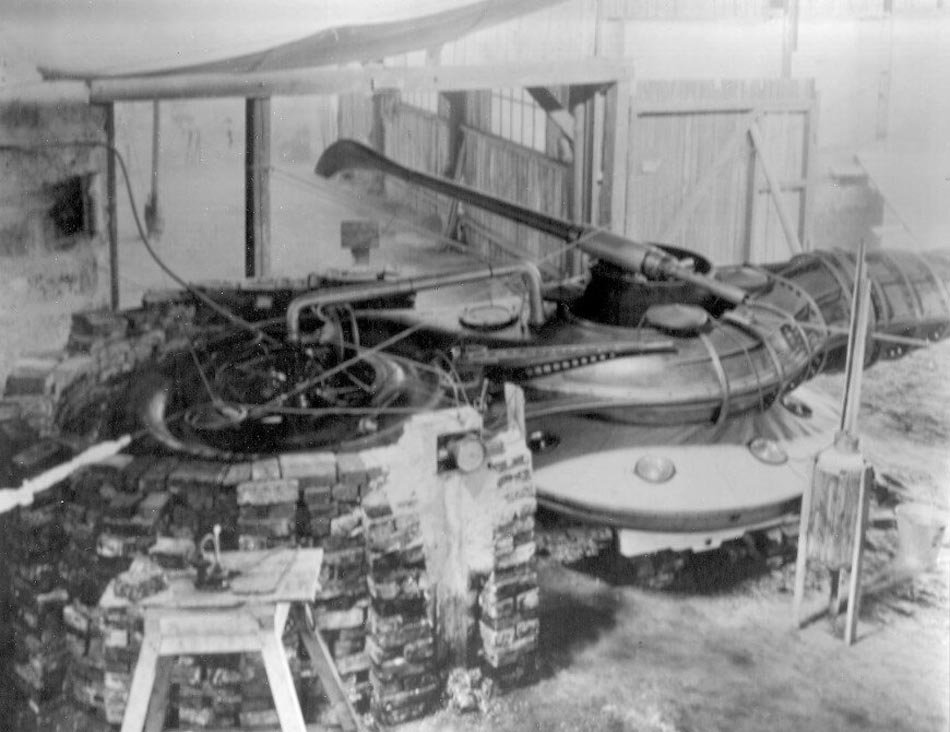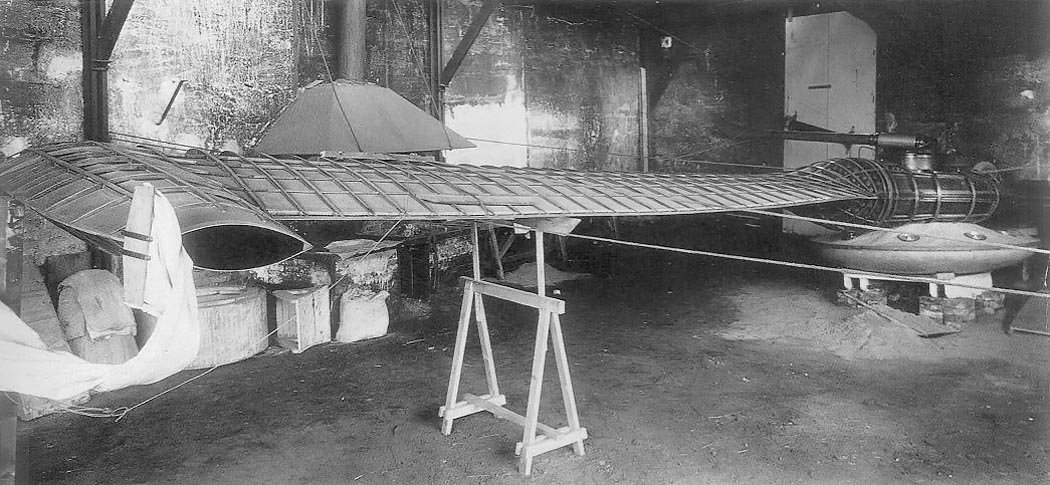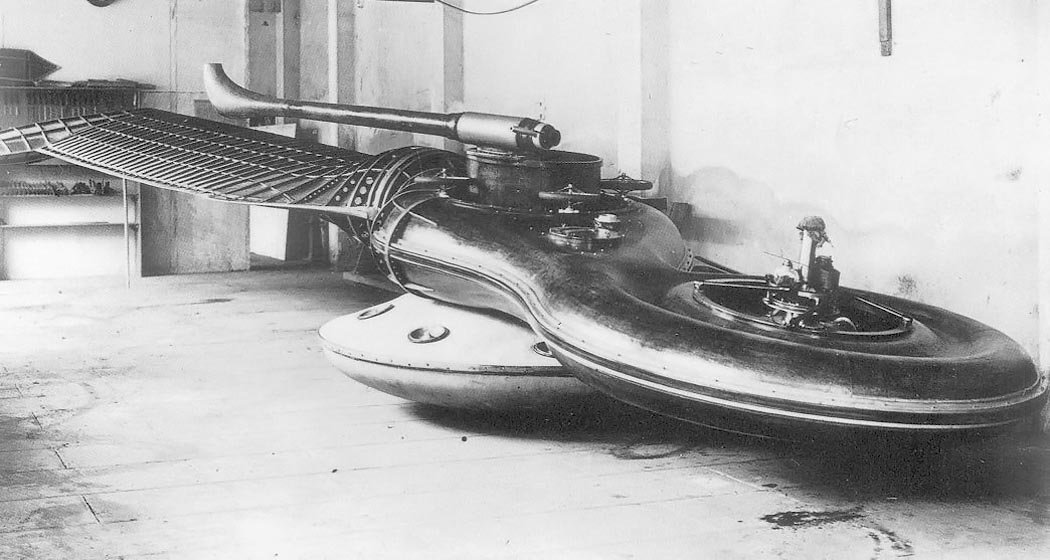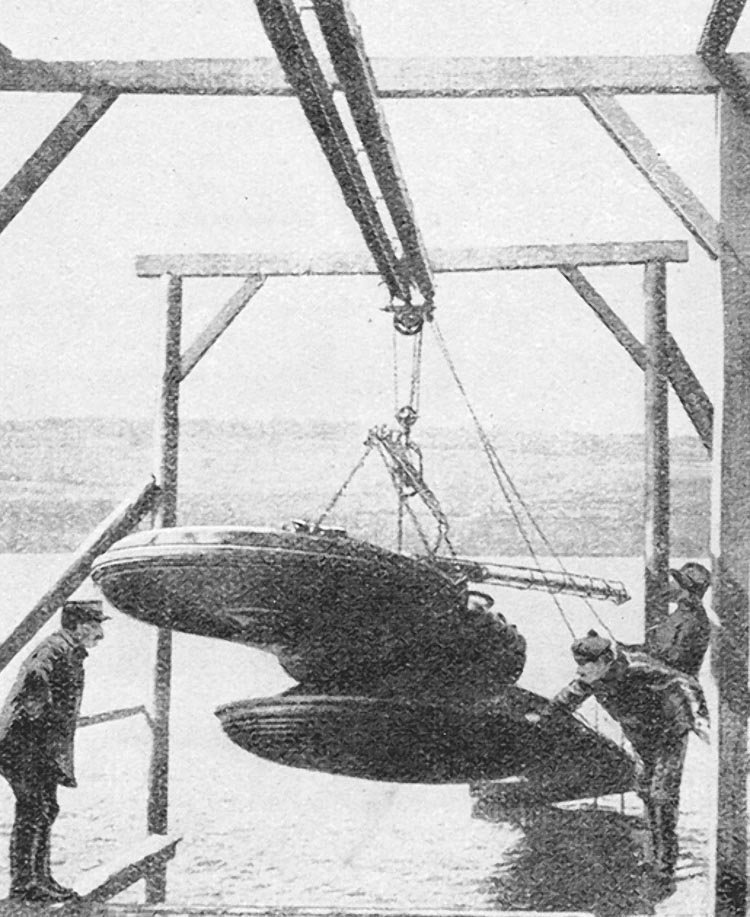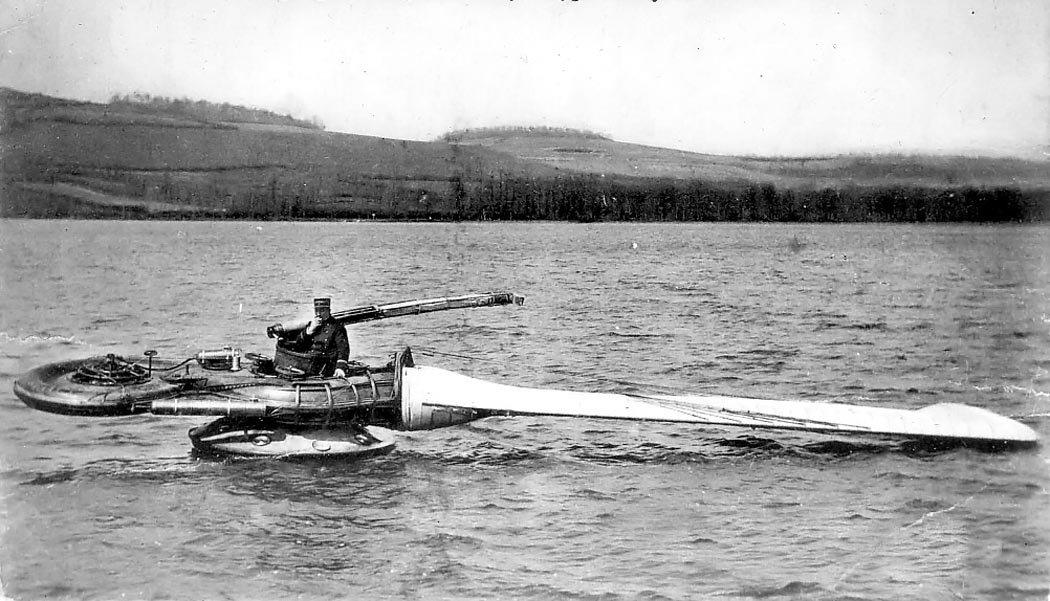
In 1914, French inventors Alphonse Papin and Didier Rouilly constructed an unusual flying machine called the Chrysalide (Gyroptere), taking inspiration from a maple seed. Their unique design aimed to revolutionize early aviation concepts.
Innovative Concept
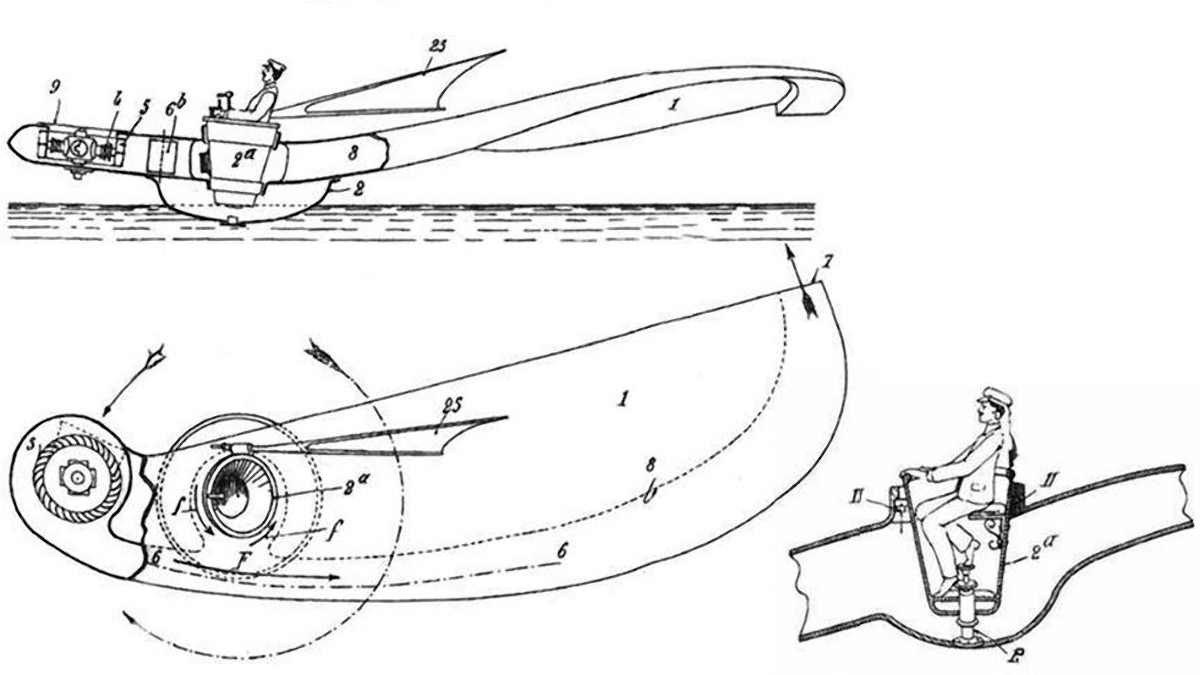
The apparatus featured a single, nine-meter blade balanced by a rotary engine. This engine, rotating at 1200 revolutions per minute, powered a fan that forced air into the blade. Air, mixed with the engine’s exhaust gases, exited a nozzle located at the rear tip of the blade at 100 meters per second, propelling it into motion.
Development and Controls
Both the blade and the engine rotated around a central gondola where the pilot was seated. The pilot controlled the machine using two pedals: one regulated the air supply to the blade, while the other controlled the thrust of an additional L-shaped swivel nozzle. This nozzle was responsible for stabilizing the central gondola and also provided forward motion for the entire gyropter.
Testing and Failure
The outbreak of World War I delayed the start of trials, which eventually began on March 31, 1915, on Lake Cercey. The gyropter proved to be 100 kilograms overweight, and instead of the intended hundred-horsepower engine, an eighty-horsepower Le Rhone engine was installed. Consequently, a blade rotation speed of only 47 revolutions per minute was achieved, far short of the 60 required for takeoff.
The apparatus also turned out to be unbalanced; the blade struck the water surface during rotation and sustained serious damage. The military refused to conduct further tests, and the Chrysalide was sold for scrap in 1919. Despite its ultimate failure, the Chrysalide was, in essence, the first monohcopter and jet helicopter in aviation history.
Technical Specifications
| Modification | Chrysalide |
| Rotor blade length, m | 9.00 |
| Normal takeoff weight | 500 |
| Engine type | 1 Piston engine Rhone |
| Power, hp | 1 x 80 |
| Crew, crew members | 1 |
Image gallery of the Chrysalide