During the first five-year plan, civil aviation became a crucial part of the USSR’s transport system. The vast Soviet territory suffered from an underdeveloped ground communication network, making air travel essential for connecting distant regions. Aviation played a vital role in political, economic, and cultural development, especially in resource-rich but inaccessible areas.
Recognizing this growing importance, the Council of People’s Commissars (SNK USSR) established the Main Directorate of the Civil Air Fleet (GU GVF) in February 1932 to regulate all civil aviation activities. This decree also mandated the creation of self-financing trusts for transport, construction, aircraft repair, and supply. The year 1932 marked a significant milestone, with the approval of the first Air Code, new regulations for personnel, and the introduction of uniforms and insignia.
Just before these organizational changes, a key meeting took place in December 1931, attended by prominent figures like A.N. Tupolev, S.V. Ilyushin, and D.P. Grigorovich. S.V. Ilyushin presented the plan for experimental aircraft construction. Following this, Ilyushin and N.N. Polikarpov submitted a project for a five-seater aircraft, the TsKB-6, intended to replace the outdated K-5 passenger plane.
Design Challenges and Technical Specifications
In May 1933, the Main Directorate of Aviation Industry (GUAP) finally issued technical requirements for a 300 hp local aviation aircraft to the Central Design Bureau (TsKB). Despite the five-month delay since the initial meeting, the requirements were deemed incomplete by the designers. Ilyushin and Polikarpov promptly submitted their detailed remarks, highlighting several areas for improvement.
They clarified that a “local aviation aircraft” was for regional air routes connecting major centers to district hubs. The designers explicitly rejected folding wings due to added weight and complexity, proposing instead drop-down ailerons to reduce landing speeds. Furthermore, they defined “combined ski-wheel landing gear” as a design allowing for the interchangeable installation of wheels for summer and skis for winter airfields.
Ilyushin and Polikarpov also questioned the necessity of “full night equipment with steerable headlights,” arguing it was superfluous and costly for an aircraft primarily operating during the day. Similarly, they deemed a radio installation impractical for a single-pilot aircraft, citing the pilot’s heavy workload and the unsuitability of passengers operating the radio. They suggested specific requirements for aircraft operating in the diverse southern and northern regions of the USSR.
The most critical concern for the TsKB-6 project centered on its engine. The designated air-cooled M-49 engine, under development at Factory No. 29, presented significant flaws, including issues with mounting, intake, ignition, and starting. The designers stressed the profound uncertainty regarding its power and data, noting that the entire aircraft was designed around this problematic engine, making any replacement a major undertaking. This engine’s unreliability ultimately contributed to the project remaining on paper.
The Vision for TsKB-6 and its Legacy
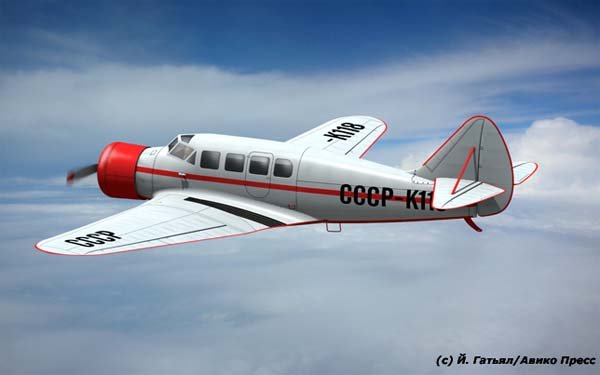
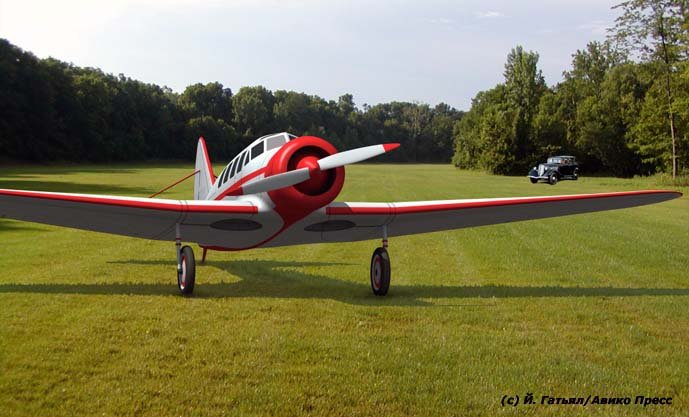
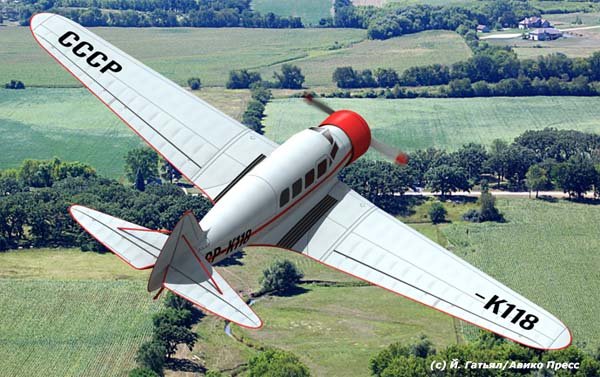
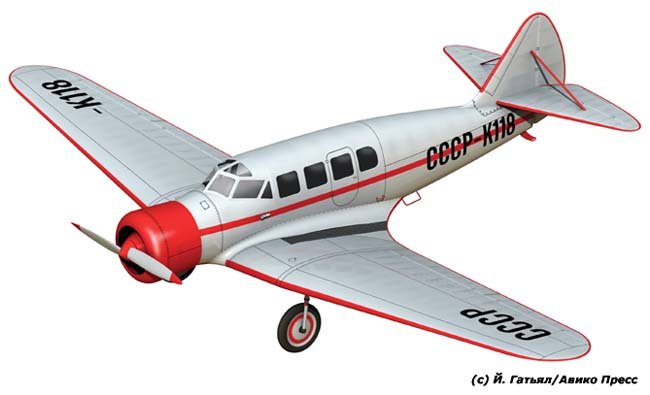
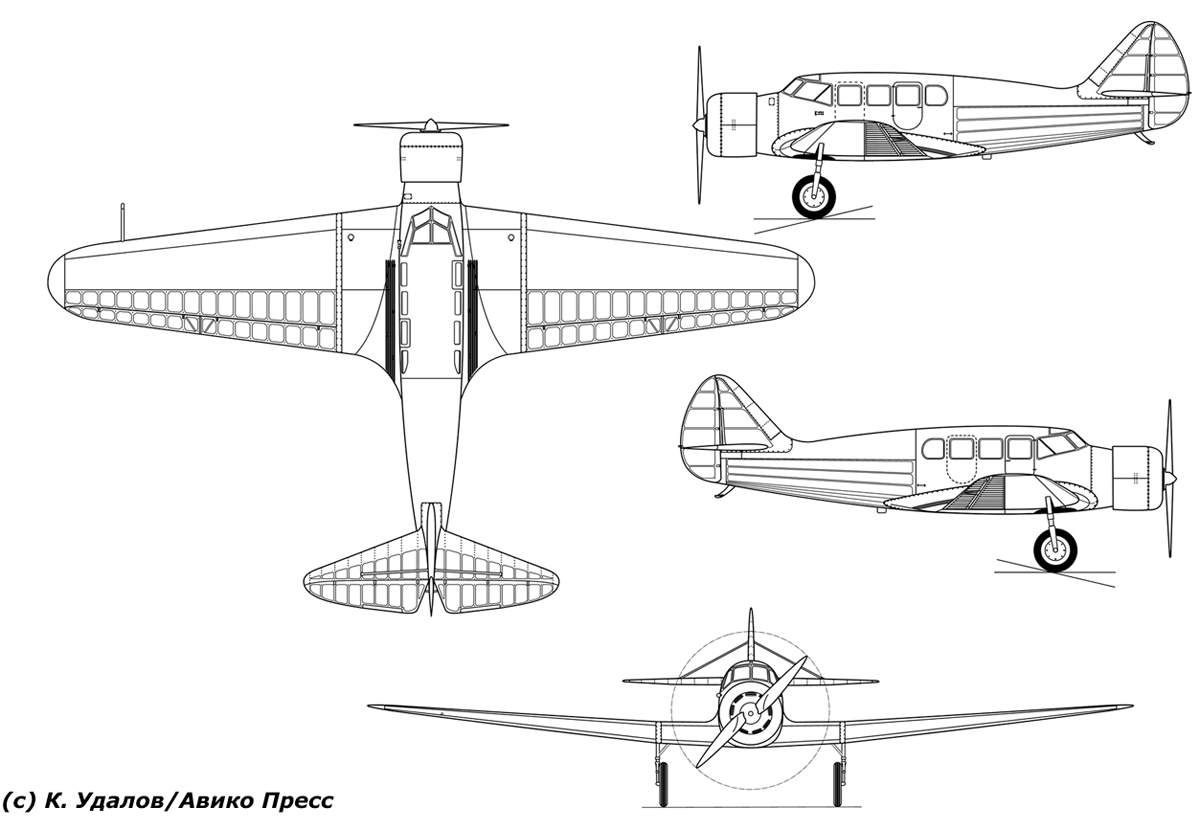
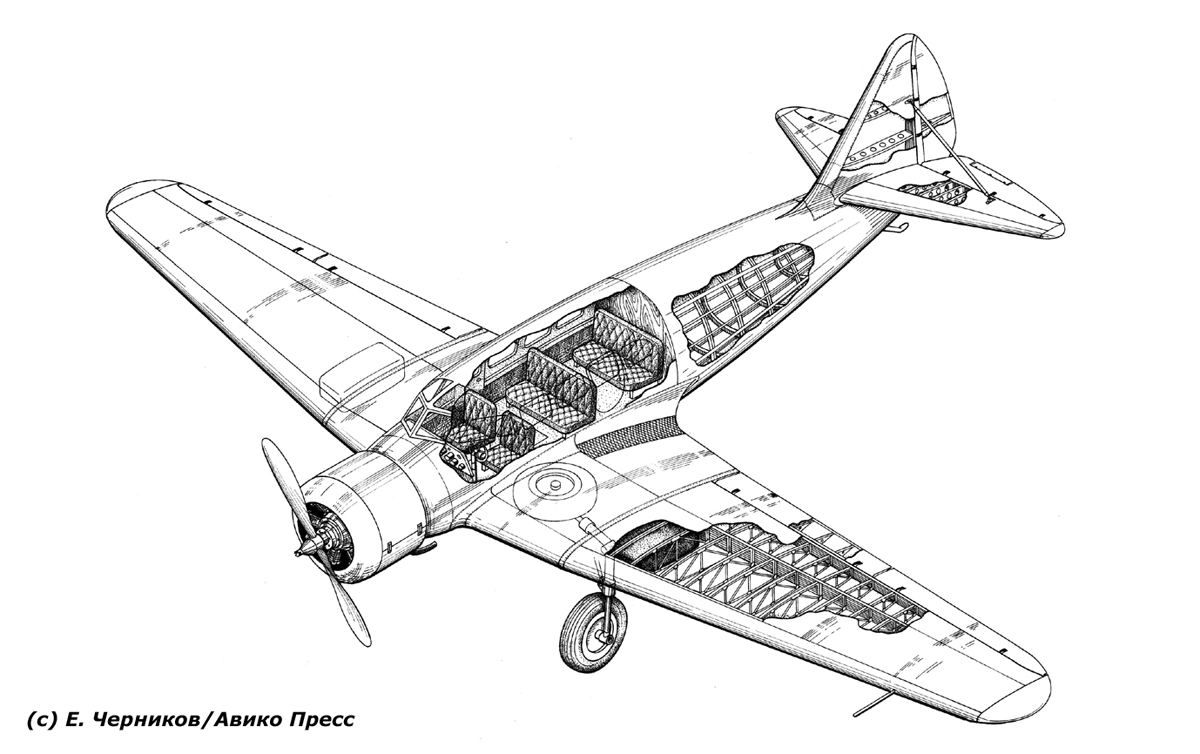
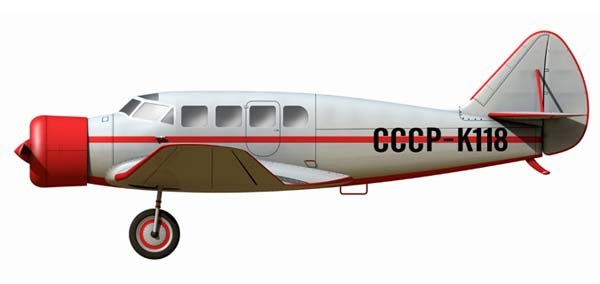
A detailed design report submitted in July 1933 outlined the TsKB-6 as a modern, low-wing monoplane. Designed for local passenger transport between central stations and regional hubs, it also had the potential for longer central routes, with fuel tanks allowing for double its 600-650 km average range. The aircraft was configured for a pilot and four passengers, with an additional jump seat, and included a dedicated baggage compartment.
The designers aimed for maximum aerodynamic efficiency, utilizing a streamlined wooden monocoque fuselage and wooden wings with plywood and fabric covering, along with a mixed fabric tail. This construction choice was intended to ensure a cheap and simple aircraft both to produce and operate. Emphasis was placed on ease of maintenance, with accessible parts for inspection and repair.
From an architectural standpoint, the TsKB-6 was designed for aesthetic coherence and passenger comfort during 4-5 hour flights. Notably, it featured two doors on opposite sides of the fuselage for convenient entry, exit, and emergency parachute evacuation. Although the TsKB-6 never proceeded beyond the design phase, it stands as the foundational passenger aircraft project for S.V. Ilyushin’s Design Bureau.
While other contemporary 5-6 seater aircraft like A.S. Yakovlev’s AIR-11 and AIR-16 also failed to reach mass production, the elegant TsKB-6 holds a special place. It pioneered the illustrious lineage of globally recognized Ilyushin passenger aircraft, including the Il-12, Il-14, Il-18, Il-62, Il-86, and Il-96. This project, though forgotten, represents a crucial step in the development of Soviet civil aviation and the enduring legacy of its designers.
Technical Specifications
| Modification | ЦКБ-6 |
| Wingspan, m | 13. 20 |
| Length, m | 8. 54 |
| Height, m | 3. 40 |
| Empty weight | 1050 |
| Engine type | 1 Piston engine МГ-49 |
| Power, hp | 1 x 300 |
| at altitude | 190 |
| at ground level | 195 |
| Cruising speed, km/h | 185 |
| Practical range, km | 600 |
| Service ceiling, m | 4300 |
| Crew, crew members | 1 |
| Payload: | 5 passengers |
Image gallery of the TsKB-6 Passenger Aircraft Project