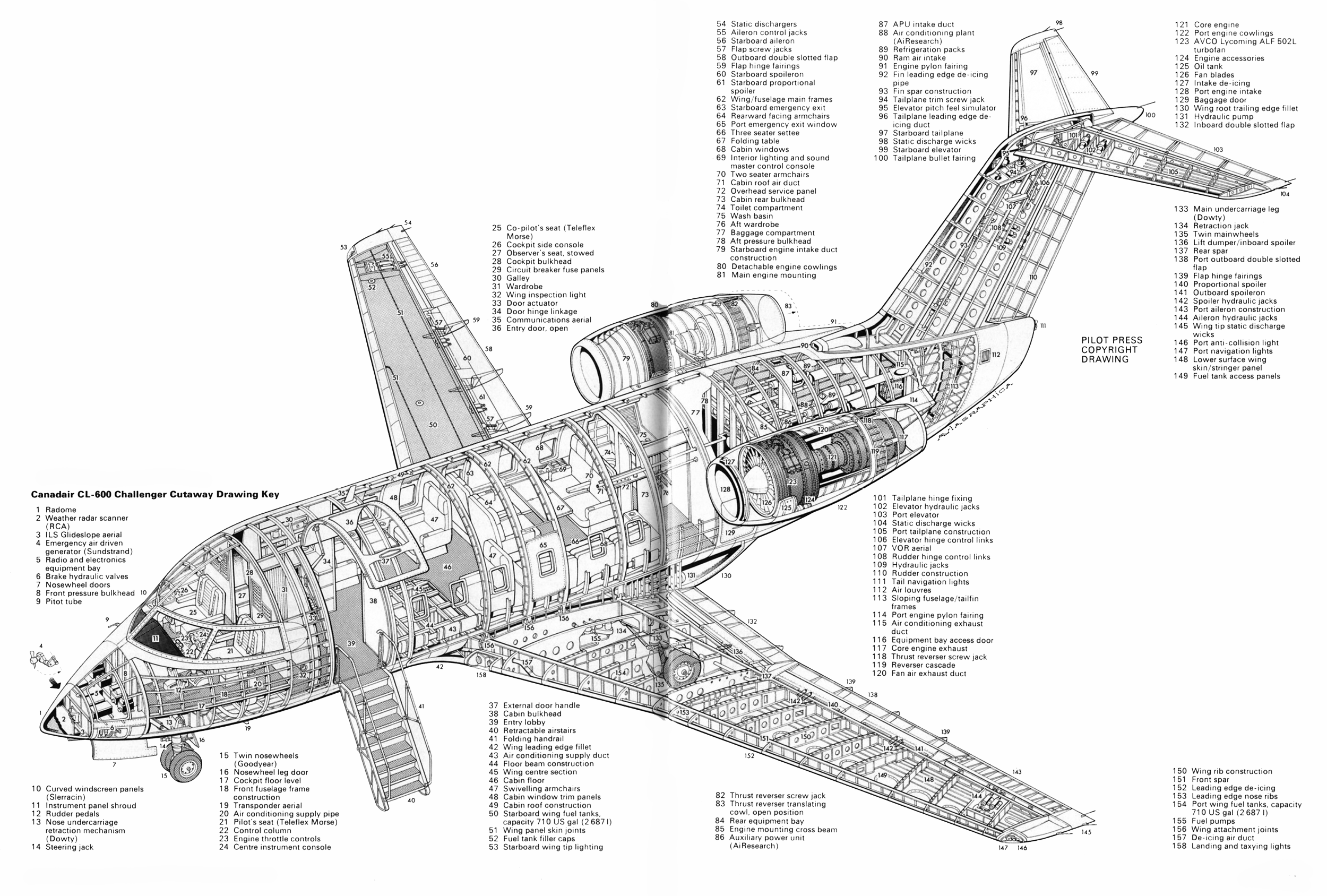
In 1974, William P. Lear, the creator of the Learjet family of business jets, began work on a new aircraft designated the LearStar 600. The “600” signified a projected cruising speed of 600 miles per hour (approximately 966 km/h). This initiative was spurred by research from Dr. Robert Whitcomb of NASA concerning a new wing with a “supercritical profile.” This innovative design promised to significantly reduce aerodynamic drag, enhance fuel efficiency and range, and decrease landing speeds.
Lear initially intended to apply the supercritical wing to Learjet aircraft. However, he concluded that the optimal benefits of this new wing and a new generation turbofan engine could only be realized on an entirely new aircraft. He envisioned this aircraft capturing a substantial share of the business jet market over the next two decades. With the assistance of aerodynamicist Larry Henberger, Lear developed a jet project featuring two new Avco Lycoming ALF 502D engines, offered in three variants: a 14-seat business jet with a 6,437 km range, a 30-seat passenger aircraft with an 805 km range, and a cargo plane.
Having already sold the rights to the Learjet family to Gates Rubber Company, Lear proposed his new aircraft project to them, as well as to Beech and Cessna. Concurrently, he sought bank financing for the LearStar project, aiming to develop it through his own company. All these attempts proved fruitless. Finally, in April 1976, the Canadian company Canadair Limited, actively seeking a “breakthrough product,” took an interest in the LearStar 600 project. Lear was subsequently hired as a consultant.
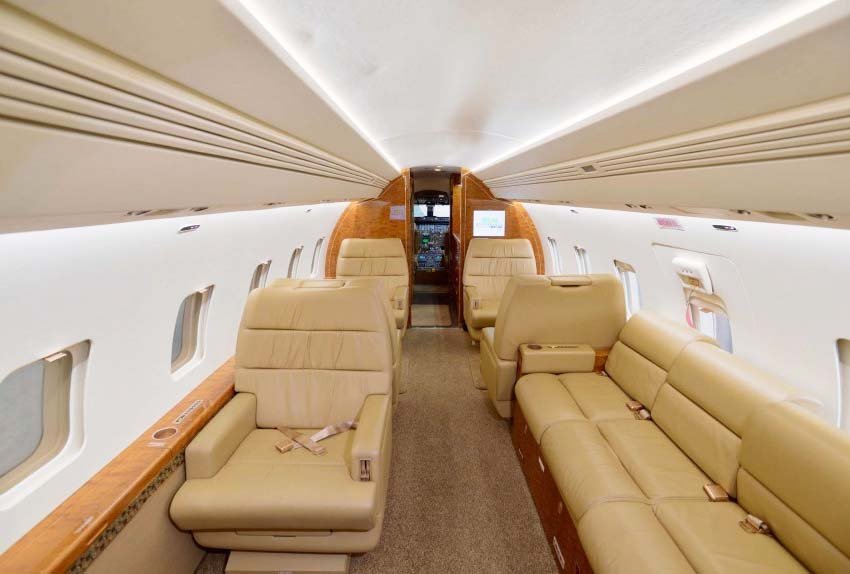
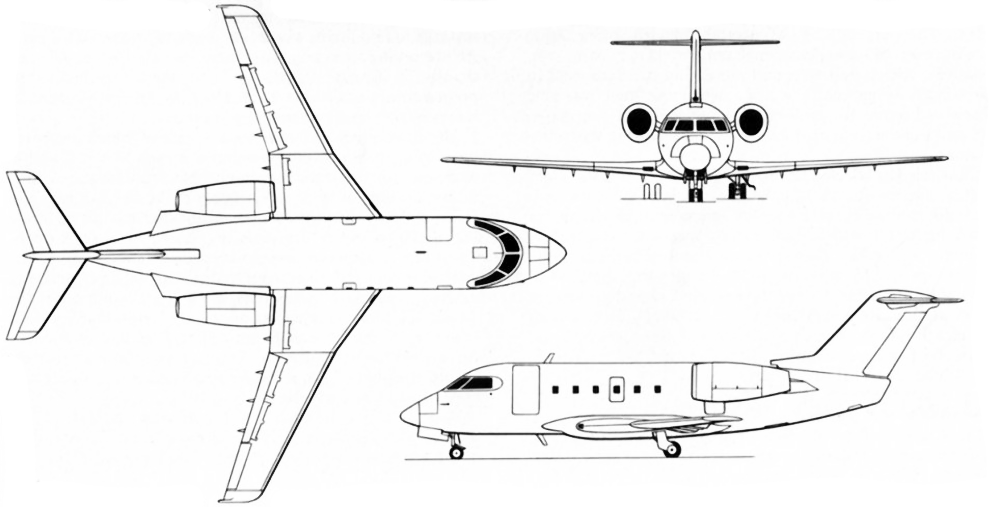
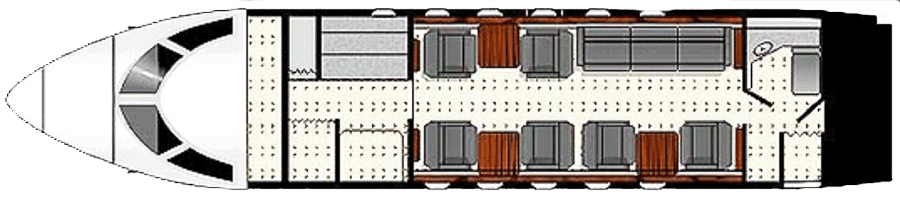
Canadair’s management had a year to make a final decision, contingent on the confirmation of design data, the securing of a sufficient order book, and approval from the Canadian government for program funding. Studies conducted by Canadair specialists revealed several necessary changes. To achieve a cabin height of 180 cm, the fuselage diameter needed to be increased by 51 cm. To ensure the calculated maximum range, fuel capacity had to be expanded, which, given the wing’s primary role in fuel storage, necessitated an increased wingspan and root thickness. Consequently, the takeoff weight grew from an initial 10,886 kg to 14,742 kg, demanding the installation of more powerful Lycoming ALF 502L engines. Furthermore, wind tunnel tests led to the decision to abandon Lear’s proposed low-set horizontal stabilizer in favor of a T-tail configuration.
Lear disagreed with these modifications, believing they would destroy the clean aerodynamic forms of his original design, and he dubbed Canadair’s version “Fat Albert.” However, the parties reached a compromise: Canadair and Lear Avia would develop aircraft designs based on a 274 cm cabin diameter, which Canadian specialists deemed “mandatory.” Canadair’s president, Fred Kearns, would then make the final selection for the prototype. Lear lost this battle; his new project, named Allegro, was rejected by Canadair. On October 29, 1976, the program officially launched, and in March 1977, the company announced the new aircraft would be designated the CL-600 Challenger (CL from “Canadair Lear”). At that point, 50 aircraft orders were in hand, with a catalog price of 4.275 million Canadian dollars per aircraft.
From LearStar to Challenger
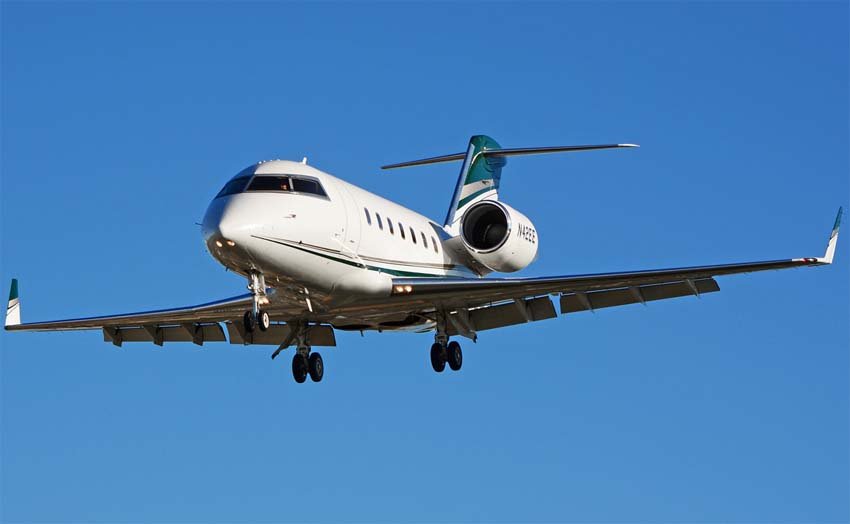
On May 25, 1978, the first of three pre-production Challengers (C-GCCR-X) rolled out of Canadair’s facility in Cartierville, a Montreal district. The aircraft made its maiden flight on November 8, 1978, just two years after the program’s inception, piloted by Canadair’s chief test pilot, Doug Adkins. Initially, the aircraft used Avco Lycoming ALF 502H engines, as deliveries of the ALF 502L engines (with 31.4 kN static thrust) were delayed. On December 27, after 27 flights and 50 flight hours, the Challenger transferred to the test center in Mojave, California.
By early March 1979, several changes were incorporated into the aircraft based on the initial testing phase, including smaller elevators and a modified fuel system. The ALF 502L engines were finally installed. On March 17, the second Challenger was test-flown in Montreal, joining the first in Mojave shortly thereafter, and on July 14, the third aircraft followed. The first production aircraft, the sixth airframe overall, completed its maiden flight on September 21, 1979.
Testing and Certification Challenges
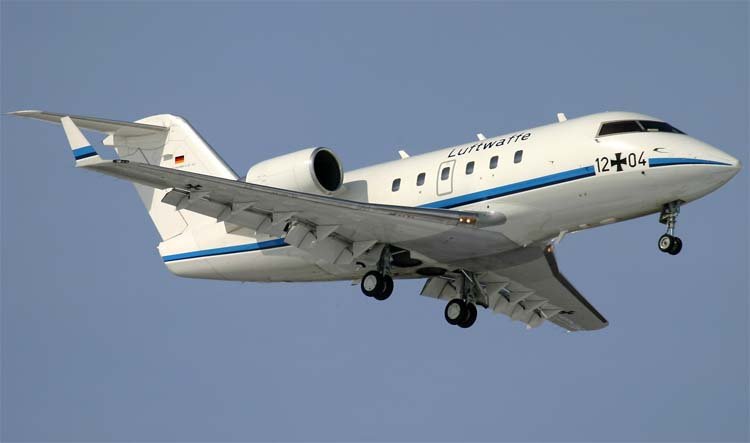
The flight test program was marred by the loss of the first pre-production aircraft on April 3, 1980. During tests investigating the causes and remedies for deep stalls, a catastrophic accident occurred, killing the aircraft commander. Canadian certification, by which time the aircraft had accumulated 1,300 flight hours, was completed on August 1, 1980, with the US FAA certificate following on November 7. As anticipated, most Challenger orders came from the United States, although customers also emerged in Europe and the Middle East.
Evolution and Production
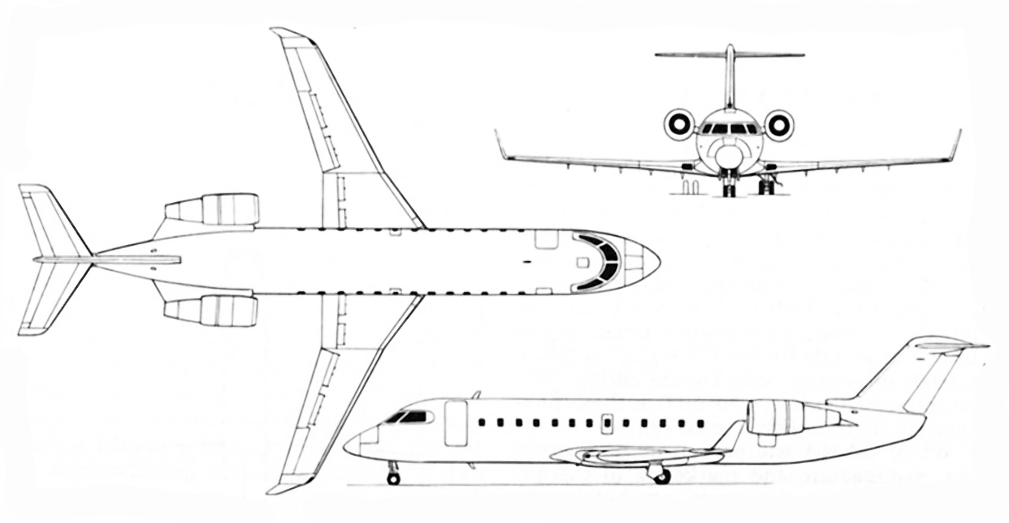
Throughout the 1980s, Canadair announced two new Challenger modifications: the extended CL-610 Challenger E and the CL-601. The Challenger E featured two fuselage plugs totaling 2.7 meters, increasing capacity from 19 to 24 passengers. It also included a new, larger-span wing, more powerful General Electric CF34-1A engines (40.7 kN thrust each), and increased fuel capacity (13,044 liters), extending its maximum range at 879 km/h cruise speed with a 907 kg payload to 7,686 km.
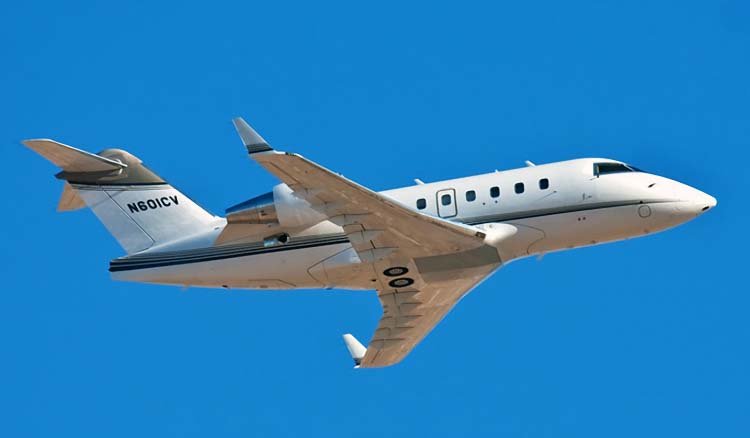
The first variant, the Challenger E, was not realized. However, the insufficient performance of the ALF 502-equipped Challenger accelerated the development and serial production of the CL-601 modification. This version was fitted with General Electric engines and received distinctive winglets on its wingtips. The ninth serial Challenger 600 was experimentally equipped with 1.2-meter winglets, performing its modified maiden flight on November 13, 1981.
By that time, Canadair’s management, based on wind tunnel tests and computer simulations, decided to equip all new Challenger 601s with winglets. These were subsequently offered for installation on previously delivered Challenger 600 aircraft, with the modified variant designated Challenger 600S. By August 2009, 784 Challenger aircraft had been delivered, and serial production and continuous improvement persisted.
Technical Specifications
| Modification | CL-601 |
| Wingspan, m | 19.61 |
| Aircraft length, m | 20.85 |
| Aircraft height, m | 6.30 |
| Wing area, m2 | 48.31 |
| Empty weight | 9049 |
| Maximum takeoff weight | 19550 |
| Internal fuel, l | 8290 + 988 + 700 |
| Engine type | 2 Turbofan General Electric CF34-1A |
| Thrust, kN | 2 x 38.48 (40.66) |
| Cruising speed, km/h | 851 |
| Practical range, km | 6371 |
| Practical ceiling, m | 12495 |
| Crew | 2 |
| Payload | 19 passengers or 2229 kg of cargo |
Image gallery of the CL-600 Challenger