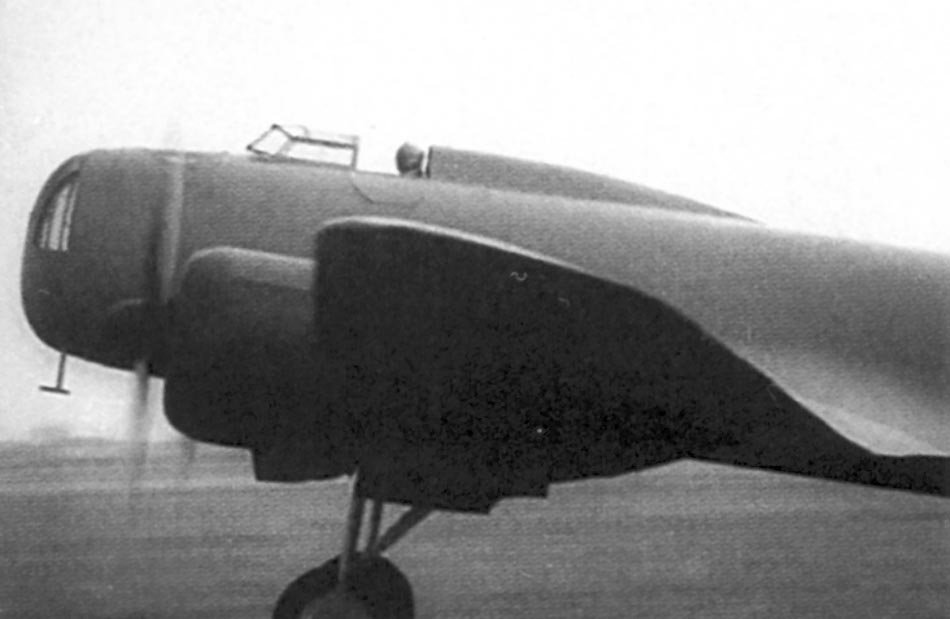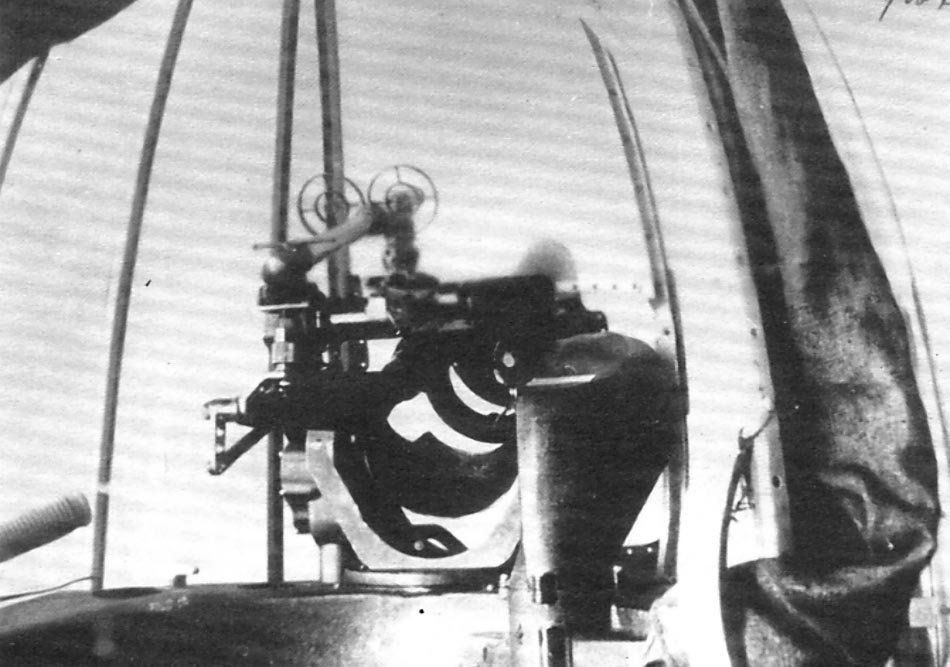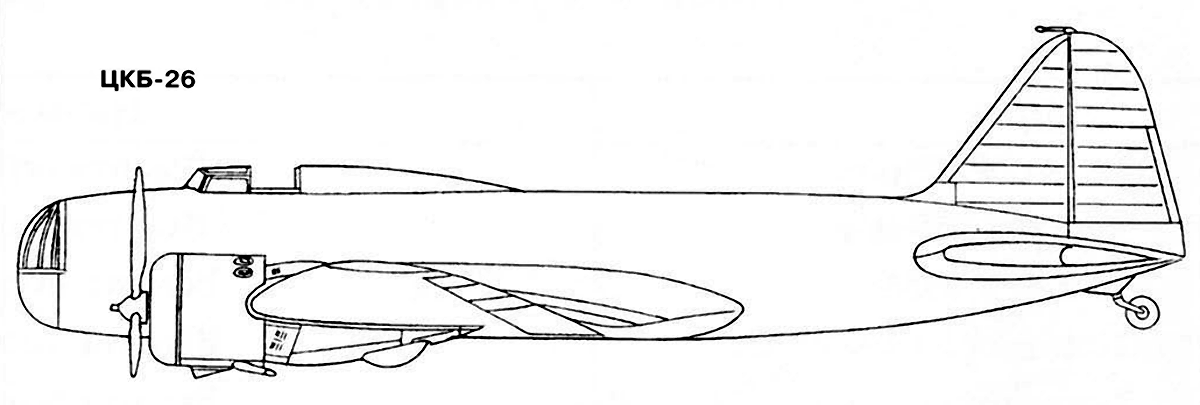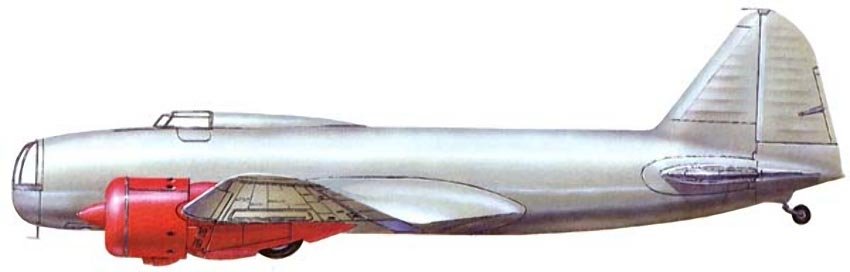
Interestingly, seemingly at S. V. Ilyushin’s initiative, the task for developing and constructing the BB-2 bomber was also given to the TsKB of Plant No. 39. By a resolution of the Council of Labor and Defense (STO) on July 14, 1934, Plant No. 39 was obliged to develop and present its version of the BB-2 aircraft for state tests by November 1, 1935.
According to veterans of the Ilyushin Design Bureau, and to some extent confirmed by archival documents, S. V. Ilyushin initially entrusted the preliminary work on this aircraft variant to N. N. Polikarpov. Further development of the aircraft, codenamed TsKB-26, was carried out in design brigade No. 3 of the TsKB by A. A. Senkov, a close associate of Sergei Vladimirovich and a fellow alumnus of the N. E. Zhukovsky Air Force Academy.
Slightly later, on August 29, 1934, the head of the Air Force Directorate of the Red Army, Ya. I. Alksnis, approved the tactical and technical requirements specifically formulated for Plant No. 39 for the BB-2 aircraft. The aircraft was included in the experimental construction plan approved in April 1935. Ilyushin stated the following flight and tactical data for this aircraft: maximum flight speed at an altitude of 4500-5000 m was 410-425 km/h, flight range 1000-2000 km, ceiling 9700 m, and bomb load 600-1000 kg. In January 1935, state tests of the M-85 air-cooled engines (a licensed variant of the French Gnome-Rhône 14K engine) were completed. Ilyushin chose these very engines for his aircraft.
Design and Structure
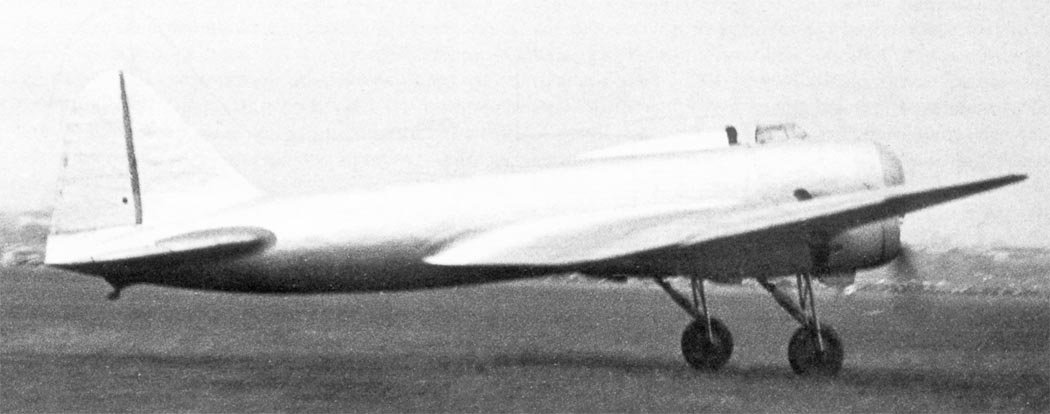
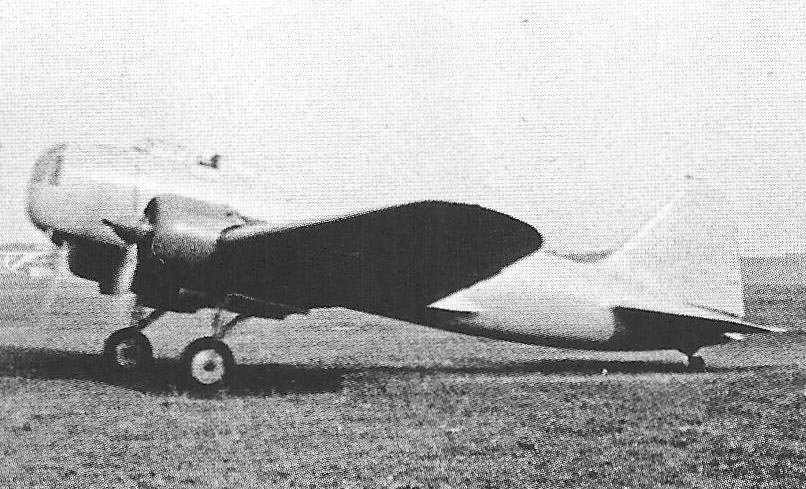
S. V. Ilyushin described the new aircraft’s construction as follows: "The BB-2 K-14 aircraft is a low-wing monoplane of all-metal construction. The fuselage for the first flying prototype (TsKB-26) is made entirely of wood, its framework consisting of stringers, longerons, and transverse glued plywood frames. The skin is plywood veneer. The fuselage consists of five longitudinal longerons, a system of stringers, and a transverse set of glued plywood and wooden frames. The fuselage is covered with 4.5 mm thick veneer and six layers of veneer. The fin is integral with the fuselage."
"The wing consists of five parts. The central section of the center wing is rigidly attached to the fuselage and forms a single unit with it. The size of the center wing is such that it can, together with the fuselage, fit within railway dimensions. Thus, the wing consists of a central section and two adjoining compartments, to which the landing gear and engine installations are attached, and two outer panels."
The wing features two main spars made of hardened chromansil steel of a truss type. The wing frame consists of a set of uniformly stressed ribs and longitudinal stringers. At the junction points of the outer panels and engines to the center wing, a rigid skin is joined to work across the entire span. The skin is smooth with flush riveting. Ribs and skin are made of superduralumin. Flaps for reducing landing speed are located between the longitudinal axis of the aircraft and the inner ends of the ailerons. The wing profile is CLARK-YJ5, with a thickness of 16% at the root and 10% at the tip. Relief from hinge moments is achieved using flettners. The remaining structural elements (engine installation, landing gear, tail skid, etc.) were executed similarly to the DB-3 aircraft, whose design has been repeatedly described.
A unique feature of the TsKB-26 bomb bay (as projected) was the installation of cassette holders for ten 100-kg bombs along the aircraft’s axis, rather than on the fuselage’s side walls. A holder installed on the axial rib could suspend a 1000-kg bomb, while two holders on the side ribs could each carry a 500-kg bomb. It must be noted that the aircraft’s design turned out to be quite rational and light, but not without a number of serious drawbacks.
Engineering Challenges and Flaws
Specifically, the reduction in wing mass was achieved through an all-metal construction with a smoothly functioning thin-walled skin during wing bending, as well as by offloading its end parts with fuel tanks designed as sealed wing compartments (a prototype of caisson tanks). However, as it later turned out, such a wing design also led to a reduction in the aircraft’s flight, combat, and operational qualities.
For instance, the use of thin duralumin wing skin (0.5-1.2 mm thick), reinforced by sparse stringers, even at calculated stresses in the main structural elements—spar caps and stringers—led to skin buckling even in horizontal flight. The deterioration of the wing surface quality naturally had a negative impact on the aircraft’s flight performance. The buckling of the thin duralumin skin was somewhat reduced by using steel spar caps, which, with equal deformation of them and duralumin skin panels, lowered the stresses acting in the skin. However, this did not eliminate skin buckling.
Furthermore, the attachment of the skin to stringers and ribs using flush rivets by countersinking the hole for the head in the material proved completely unsatisfactory from the standpoint of combat survivability. In the event of an anti-aircraft shell explosion, under the impact of the blast wave, rivet heads easily tore through the holes, and the skin detached from the stringers, ribs, and longerons over a large area.
In turn, replacing a single fuel tank damaged in combat or leaking took 3-4 days for three technical specialists.
Performance and Production Timeline
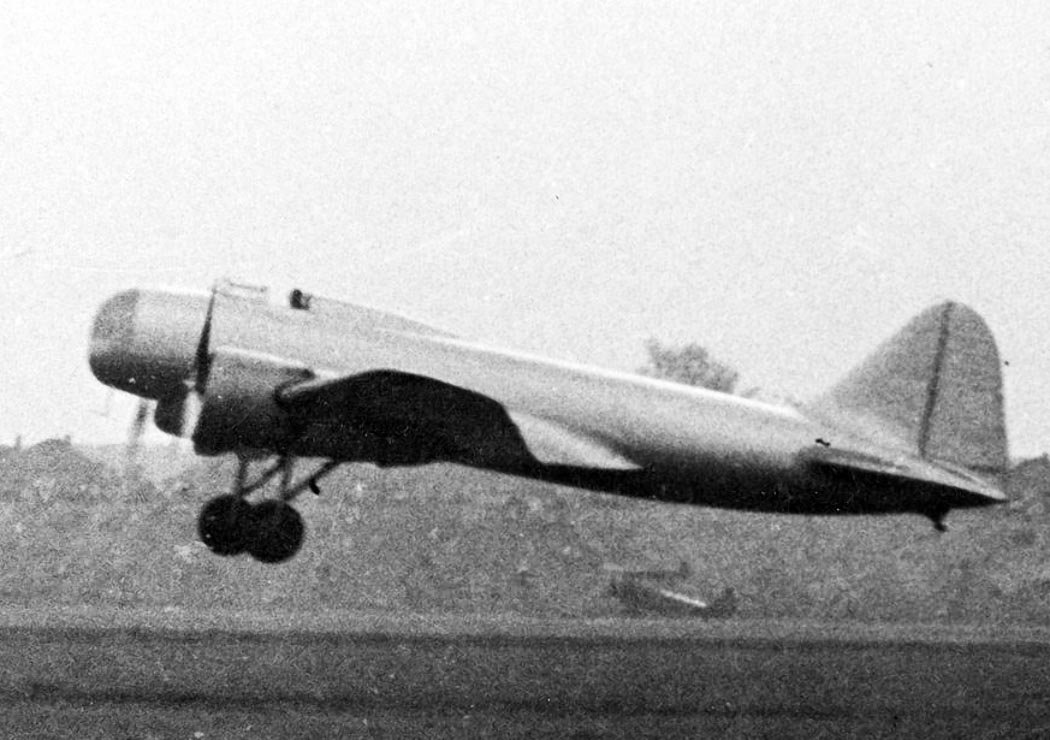
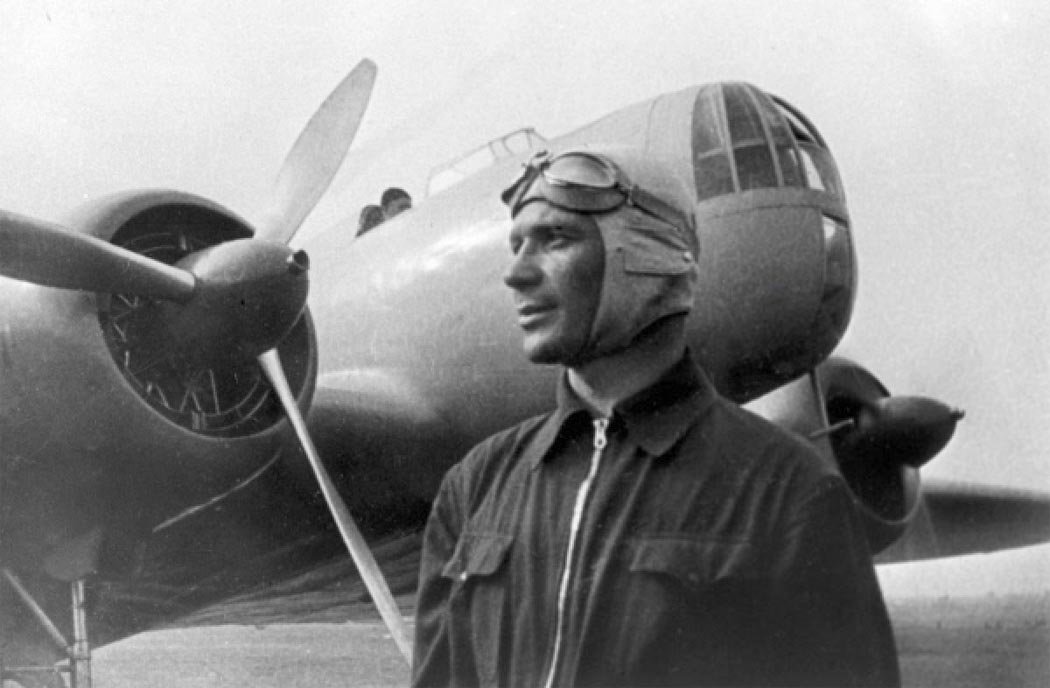
The TsKB-26 was built as an experimental aircraft (unarmed) and demonstrated high flight-tactical data, surpassing the characteristics of the SB 2IS in many respects. The aircraft possessed good flying qualities. In the summer of 1936, V. K. Kokkinaki set five world records on the TsKB-26, demonstrating for the first time the execution of a loop on an aircraft of this class. However, its fate as a high-speed bomber did not materialize due to a number of reasons.
Based on the experimental construction plan approved by the government in April 1935, the long-range bomber TsKB-30 was projected based on the TsKB-26 aircraft, with the following main indicators: maximum speed of 400-415 km/h at a flight altitude of 4000-4500 m, flight range of 4500 km, ceiling of 9000 m, and bomb load of 600-1000 kg. Both types of Ilyushin bombers were supposed to be built.
Here, we should address several inaccuracies in the description of the TsKB-26’s development history. Specifically, some publications claim that the aircraft "took off" for its first flight in early summer 1935, while others specify the exact date as July 1, 1935. In reality, things were far from that.
Let’s turn to the documents. On November 1, 1935, Ilyushin sent a memorandum (incoming No. 2871 dated 02.11.35) to Basilevich, the secretary of the USSR Council of Labor and Defense, in which he wrote about the disgraceful attitude of the heads of the GAU and Plant No. 39—Korolev, Margolin, and Leontiev—towards fulfilling the Government’s task of building the TsKB-26 and TsKB-30 aircraft. Despite the fact that the drawings for the TsKB-26 were submitted to Plant No. 39 by May 1, 1935, and for the TsKB-30 by August 1, the plant had practically not genuinely begun construction of the aircraft by November 1, 1935.
S. V. Ilyushin’s letter is quite long, so we will only provide some excerpts from it below: "According to the Experimental Construction Plan, approved by the Government on July 14, 1934, Plant No. 39 named after Comrade Menzhinsky was given the task for a twin-engine short-range bomber BB (or SB) with a deadline for state tests of November 1, 1935… This same short-range bomber, based on the Experimental Construction Plan approved by the Government in April 1935, was to be developed into a long-range bomber (thus, both types were combined into one), with a deadline for state tests by February 1, 1936."
"Working drawings for both aircraft were submitted for production: 1 copy each from March 1 to May 1, 1935. Thus, there was a period of six months (from 1.3 to 1.9) for production. A more than sufficient period. The 2nd prototype of the aircraft is 70% built according to the drawings of the first aircraft. New drawings for the remaining 30% were submitted by August 1. Similarly, the period was quite sufficient."
"I repeat: Plant 39 had all the necessary and sufficient conditions to fulfill the Government’s task for these aircraft on time. All our demands and pressure on the Plant management (Comrades Margolin and Leontiev) regarding accelerating the construction of the aircraft on time remained fruitless. We could not break through the walls of indifference and lack of interest in releasing these machines on time, about which I deem it necessary to inform you with full responsibility and ask you to report this matter to the Chairman of the USSR Council of Labor and Defense, Comrade Molotov V. M. Head of 3rd design brigade, Plant No. 39, Ser. Ilyushin. 1.11.35. No. 21."
From a review of this document, as well as the dates of flyovers over Red Square and record achievements, it can be assumed that the first flight of the TsKB-26 took place no earlier than April 1936. This conclusion is further supported by two official documents: the first being the "Plan for Experimental Aircraft Construction for 1936-37," prepared as an appendix to STO Resolution No. OK-lcc, and the second, a "Report on the Progress of Work on Major Experimental Aircraft," prepared by the GAU apparatus by the end of 1936.
The fourteenth line of the "Plan for Experimental Aircraft Construction for 1936-37" reads as follows: "Long-range bomber with 2 M-85 engines TsKB-26… (followed by main flight data – author’s note) …Plant No. 39. The first prototype with reduced range to be released by April 1, 1936." That is, the "Plan…" stipulated the aircraft’s release by April 1, 1936. At the same time, in the "Report…" in the section on the progress of experimental work in the GAU for 1935, the TsKB-26 aircraft is not mentioned at all.
It can be assumed that the "Plan…’s" requirements were practically fulfilled, and the first flight of the TsKB-26 indeed took place in April 1936.
Technical Specifications
| Modification | ЦКБ-26 |
| Wingspan, m | 21.40 |
| Length, m | 13.70 |
| Height, m | 3.80 |
| Wing area, m2 | 65.50 |
| Empty weight | 4000 |
| Normal takeoff weight | 6000 |
| Engine type | 2 Piston engine M-85 |
| Power, hp | 2 x 760 |
| Speed at sea level | 330 |
| Speed at altitude | 390 |
| Practical range, km | 4000 |
| Rate of climb, m/min | 331 |
| Practical ceiling, m | 10000 |
| Crew, crew members | 2(3) |
| Armament | Possible to carry up to 1000 kg of bombs |
Image gallery of the TsKB-26