The Genesis of the Commercial Jet
In the midst of World War II, a committee, soon named the Brabazon Committee after its leader Lord Brabazon of Tara, was established in Great Britain. This committee was engaged in what seemed like an entirely premature undertaking: defining the main types of prospective civil aircraft and their technical requirements. However, when the war ended and conversion began, British aviation firms were given new specific tasks, the solution to which was supported by the government.
This allowed the British aviation industry to accumulate the necessary scientific and technical groundwork in the field of jet aircraft design and to successfully withstand the powerful onslaught of overseas competitors during the first postwar decade. The fate of the aircraft developed under the Brabazon Committee’s mandate varied; some remained unrealized projects, others ended their development at the prototype stage, while a third group forever entered the history of British and world aviation.
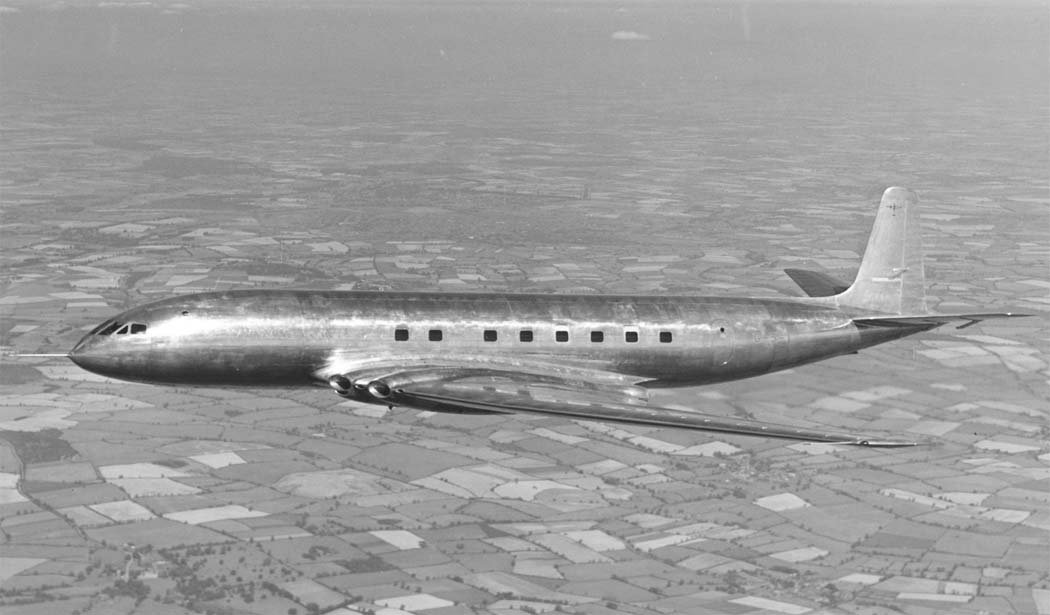
Among these machines, undoubtedly, is the De Havilland Aircraft company’s D.H.106 “Comet” passenger airliner, which underwent a multi-stage development process during which its purpose and specific technical characteristics were refined. The initial variant envisioned the development of an aircraft – “Type 4” – intended for high-speed transatlantic mail delivery. For De Havilland, such a task was familiar: the D.H.88 “Comet” racing aircraft and the D.H.98 “Mosquito” bomber had brought it worldwide fame.
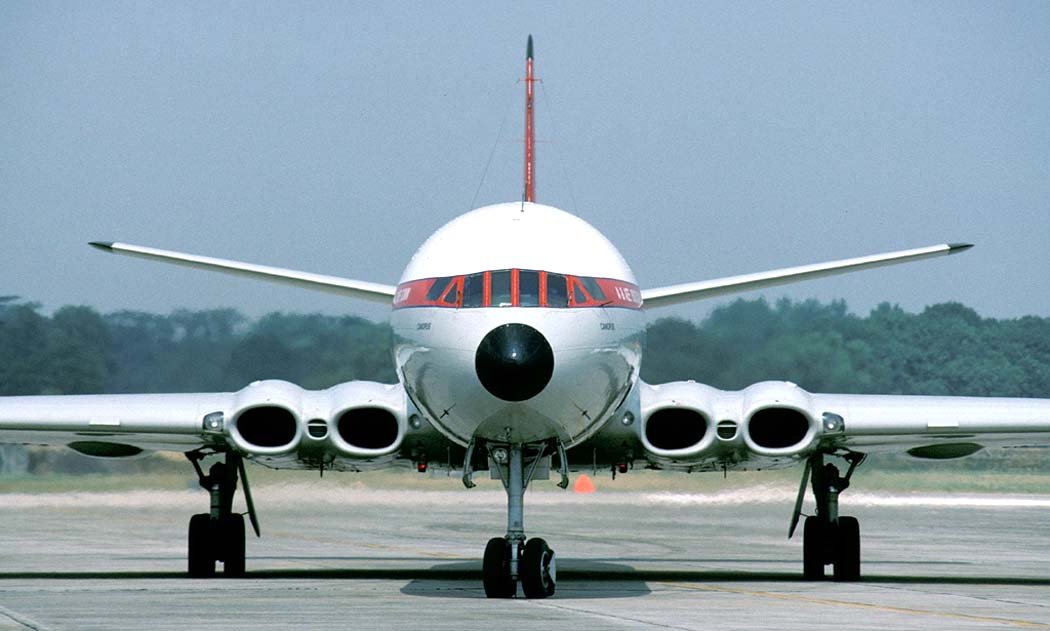
The company also held leading positions in the development of jet technology. Significantly, as early as January 1941, specialists from this firm began designing the D.H.100 “Vampire” fighter, which made its first flight on September 26, 1943. The aircraft was built with a twin-boom system and a central nacelle, in the aft part of which a turbojet engine was located, with air intakes positioned in the wing roots. Such a layout solution allowed them to achieve minimal length intake ducts and exhaust pipe, which reduced thrust losses and, at the same time, maximized the use of the fuselage volume.
It was natural that the project for a high-speed mail aircraft with a pressurized cabin, designed to carry 6 passengers and 454 kg of mail, presented by the firm in the second half of 1943, took into account the experience gained in developing this original fighter. The machine had an aerodynamic layout similar to the D.H.100, and its power plant consisted of three “Goblin” turbojet engines, with a flight range of 1120 km. The search for the optimal aerodynamic layout continued constantly.
In early 1944, a “canard” layout variant was considered, with the power plant located in the tail section of the fuselage behind the wing. As the project developed, it gained supporters among aviation transport companies. Foremost among them was the British Overseas Airways Corporation (BOAC), which was interested primarily in a passenger, rather than a mail-courier, variant. In October 1945, as a result of a fundamental change in layout, the number of passengers increased from 6 to 24-36. The aircraft transformed from a “canard” into a “flying wing” with a 40° sweep.
Passengers were accommodated in the central part of the wing, and the power plant consisted of four “Ghost” engines. This layout remained a bold technical project, for the realization of which the firm lacked the necessary experience at the time. The appearance of the first jet passenger aircraft was preceded by the creation of the experimental D.H.108 “Swallow,” the first example of which flew on May 15, 1946.
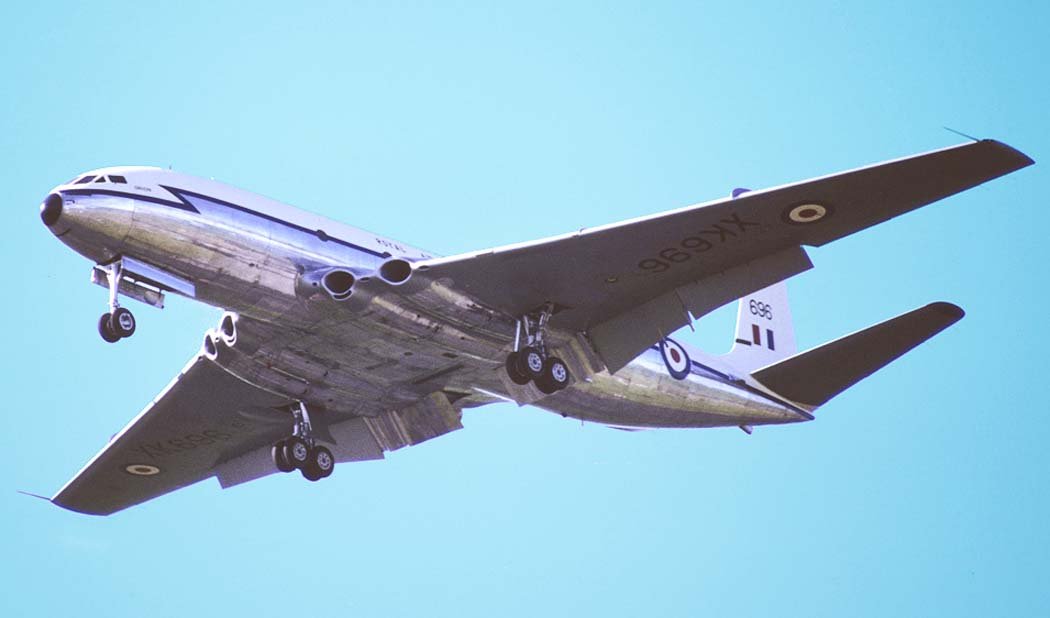
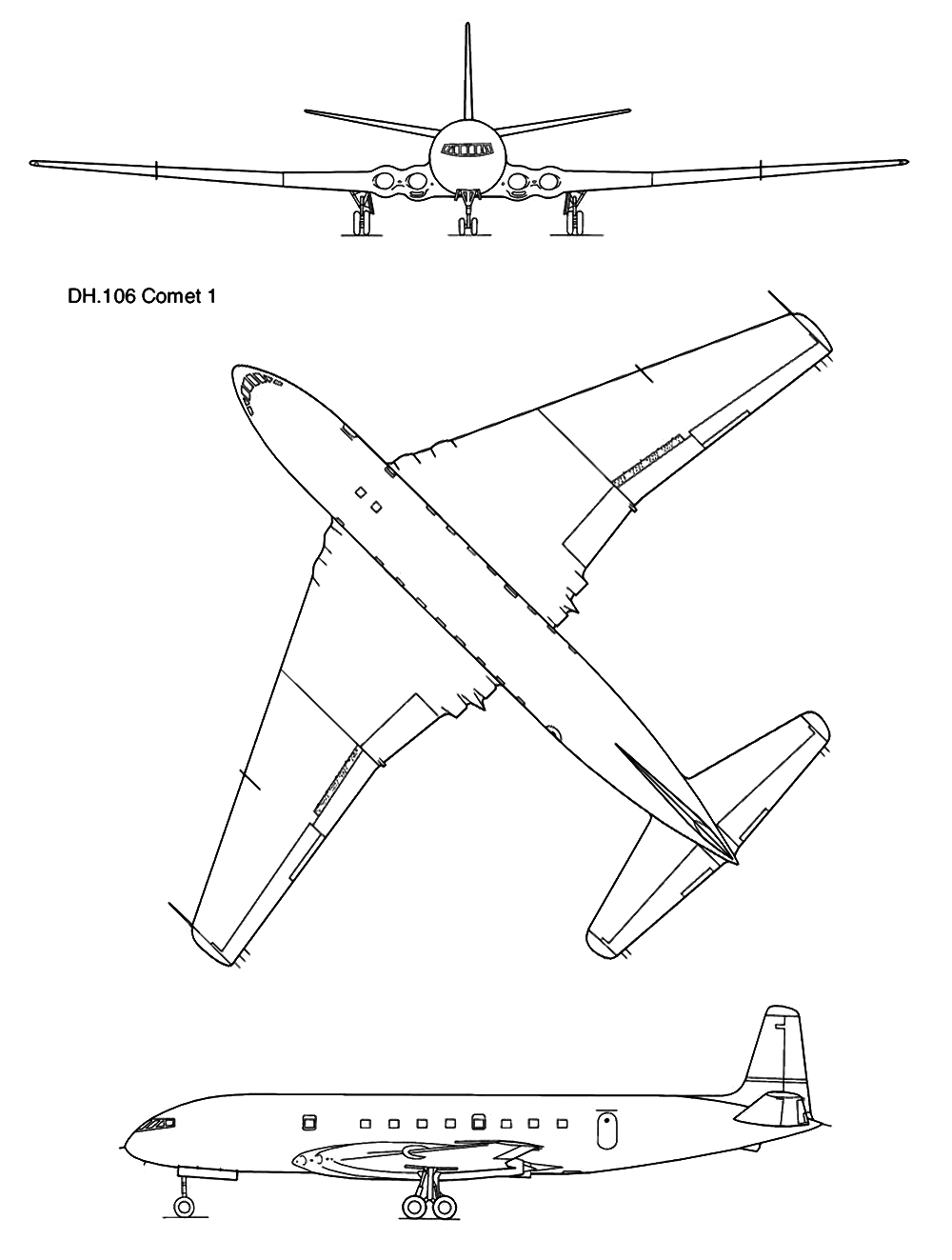
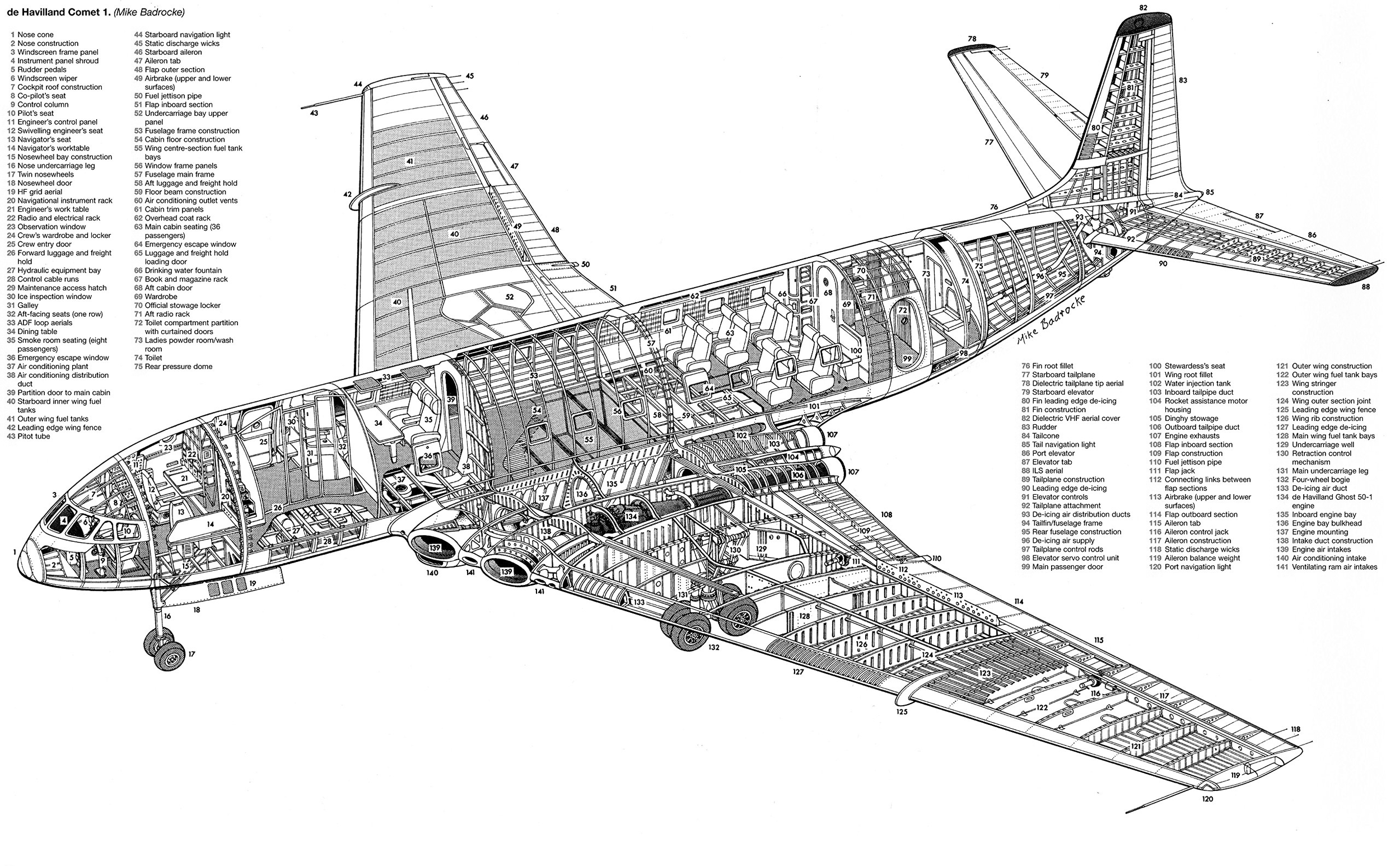
During tests lasting several years, the advantages and disadvantages of the swept wing were thoroughly studied. By 1945, the developers’ prudence and sound conservatism prevailed. As a result, in August-September 1946, the D.H.106 project appeared in a form suitable for practical implementation. The aircraft was built using a classic scheme with a low-mounted wing of moderate sweep (20° along the quarter-chord line). Four De Havilland “Ghost” engines were located in the wing roots, two on each side of the fuselage.
Among the advantages of this layout were an aerodynamically clean wing surface with high aerodynamic efficiency. The yawing moment in case of a single engine failure could be easily counteracted by the aircraft controls. However, these advantages came at the cost of complex engine maintenance and replacement, and increased wing weight because the mass of the engines, located near the fuselage, was not used to relieve the wing of aerodynamic forces, and the spars had a more complex and heavier structure in the root section.
Furthermore, to fully hide the engines within the wing at a given relative profile thickness, it had to have a large chord center section. All this was exacerbated by the use of turbojet engines with centrifugal compressors, which are characterized by a larger diameter compared to axial compressor turbojet engines of the same thrust.
The passenger “Comet” had another unique feature in its power plant design, never again used on similar aircraft. To ensure guaranteed takeoff from high-altitude or limited-size airfields in hot weather, a 420 kg “Sprite” liquid rocket booster, with a maximum thrust of 15.59 kN for 16.5 seconds, was designed to be attached under each pair of engines. The booster, created by De Havilland specialists, ran on a monopropellant—80% hydrogen peroxide. Takeoffs with boosters were later tested on the first prototype in August 1951 in Khartoum. They were not used on production aircraft, as modified turbojet engines by then provided the required thrust-to-weight ratio.
Advanced Technology and Initial Triumphs
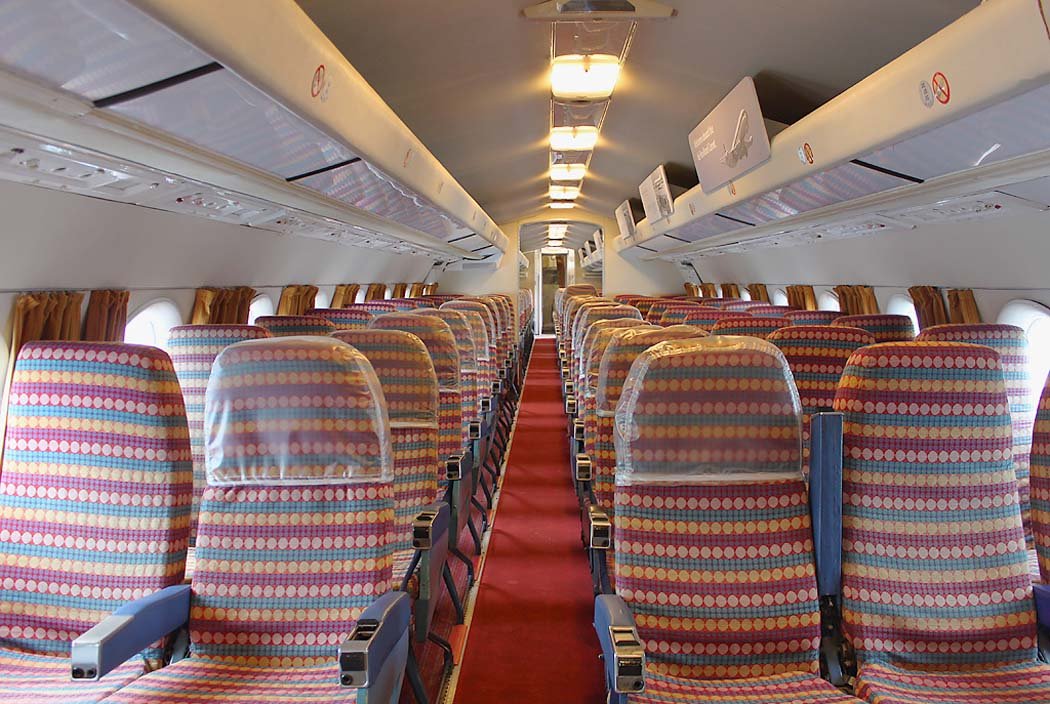
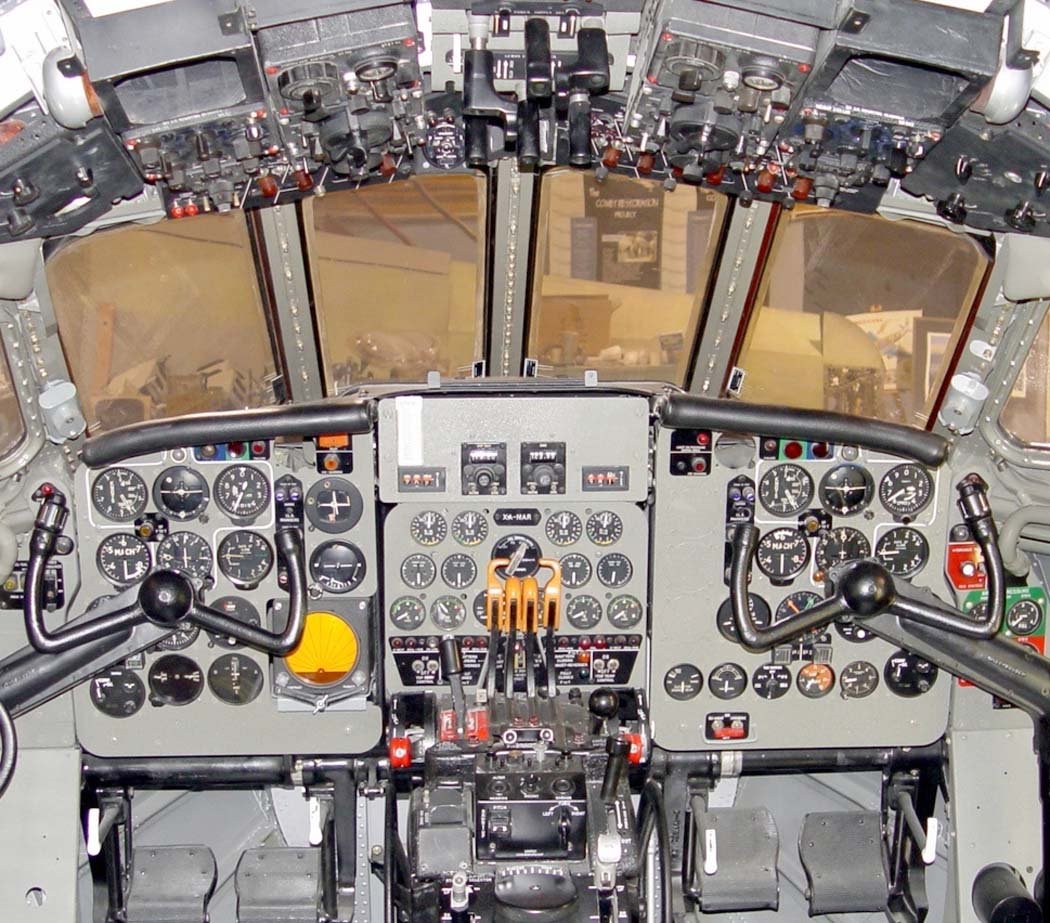
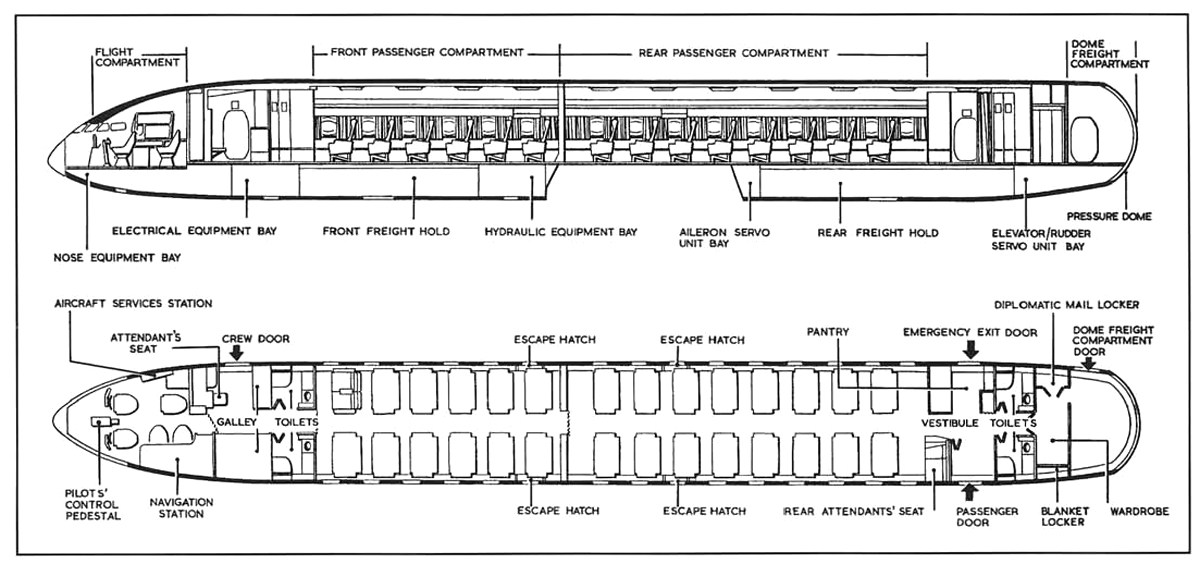
De Havilland management understood that to conquer the civil aircraft market, a machine was needed that was not only fast but also comfortable, meeting the highest demands. The passenger cabin consisted of two compartments: a forward luxury section for 8 passengers and a main section for 28. The core flight crew included 4 people, while two flight attendants cared for the passengers. The pressurized compartment maintained an overpressure of 0.61 kg/cm² at high altitude, approximately double that of other aircraft in service, and the air conditioning system ensured the required air parameters. Complete air replacement in the pressurized compartment took three minutes. To ease the crew’s workload during long flights, an autopilot was included in the aircraft’s control system, and the forces applied to the primary flight controls were reduced by boosters.
The airframe design was highly progressive. In particular, to reduce its mass and improve the quality of the external surface, the skin of non-critical components was attached not by traditional riveting but with Redux adhesive. De Havilland, working on the new aircraft project in secret from competitors, decided in December 1947 to reuse the name “Comet” for it. After reviewing the project, the Ministry of Supply developed a specification based on it and began funding the construction of two prototypes.
In addition to BOAC, the British South American Airways Corporation (BSAAC) also became interested in the new aircraft. As a result, in January 1947, De Havilland Aircraft had orders for 8 machines from BOAC and 6 from BSAAC. Later, when these corporations merged, the total number of ordered aircraft decreased to 9.
De Havilland was the first to embark on mastering altitudes and speeds previously inaccessible to civil aviation aircraft. Therefore, the developers paid great attention to structural and functional testing of all parts and assemblies to meet existing British standards for passenger aircraft. Individual, most critical components underwent testing under conditions more stringent than required by current standards. Two pressurized fuselage sections of the D.H.106 underwent tests in conditions corresponding to flight at an altitude of over 21,000 m at an ambient temperature of -70°C.
Tests then continued in a water tank, where the loading of the forward fuselage section was simulated over 2000 “flights.” During this, the pressure differential inside the fuselage reached 0.612 kg/cm², while its maximum value in real flight was 0.591 kg/cm², and during tests of a fuselage section with a window, the pressure differential was 1.428 kg/cm. Other structural elements were subjected to equally rigorous tests: doors and cockpit canopy panels. No less attention was paid to aircraft control issues across all operating regimes, from takeoff and landing to maximum speed.
The Comet’s wing was equipped with automatic leading-edge slats, and the ailerons were comparatively large. Along the trailing edge of the wing, between the ailerons and engine nacelles, were four-section flaps with a maximum deflection angle of 60°. Additionally, perforated airbrakes were located on the wing ahead of the outer flap sections, operating in conjunction with spoilers to kill lift and increase the vertical descent rate. Aerodynamic fences also appeared on the upper surface of the wing.
Construction of the first D.H.106 prototype was completed in April 1949, and on July 27, the D.H.106 “Comet” prototype, with registration number G-5-1, took its first half-hour flight from Hatfield airfield. The flight testing of the world’s first jetliner was initiated by the renowned English pilot and WWII ace, John Cunningham, then a test pilot for De Havilland. Testing of the new aircraft was very intensive, and by August 10, it had completed 14 flights totaling 15 hours. Cunningham, having reached an altitude of 11,000 m by this time, noted the aircraft’s good handling across a speed range from minimum to 690 km/h. Landing speed was about 160 km/h.
In September 1949, the first prototype was assigned the number G-ALVG and presented at the Farnborough air show, where it generated immense interest among specialists and the public. In October, aircraft testing continued with the same intensity. Loaded with ballast and test equipment, the D.H.106 prototype flew from London to Tripoli and back in 6 hours 36 minutes (excluding a 2-hour 8-minute stopover in Tripoli). In doing so, it halved the comparable performance of piston-engine aircraft like the Douglas DC-4 and Avro “York,” which served that route. The aircraft covered a distance of 2396 km in 3 hours 23 minutes (outbound) and 3 hours 13 minutes (return). The average speed at an altitude of 10,700 m was approximately 725 km/h. During another flight from Brighton to Edinburgh (range 715 km), the aircraft developed an average speed of 850 km/h at an altitude of 13,100 m.
Longer flights were also performed. During one such flight, the aircraft was airborne for 5 hours 35 minutes. The flight took place at altitudes from 10,700 m to 12,200 m at a speed of 950 km/h (with a tailwind speed of up to 100 km/h). Test flights on potential international routes served as good advertising for the aircraft. For instance, in March 1950, the aircraft flew from London to Rome in 2 hours, and in April, from London to Cairo in 5 hours 7 minutes. The flight then continued to Khartoum for thorough testing in tropical climate conditions.
Work on the aircraft progressed successfully. In January 1950, testing began on the first production airliner, the D.H.106 “Comet 1,” registration G-ALYS. In April 1951, the flight and technical personnel of the main customer, BOAC, received the second D.H.106 prototype, registration G-ALKZ, for familiarization. This machine differed primarily in its four-wheel bogies on the main landing gear struts (the first prototype had single-wheel main struts with a tire diameter of 1675 mm). The new bogies fit more easily into the wing contours, retracted more smoothly on takeoff, and provided a more rational distribution of the aircraft’s weight on the runway. Over time, the same struts were installed on the first prototype.
In September 1951, BOAC accepted the first production “Comet 1,” which underwent tests to obtain its Certificate of Airworthiness, dated January 22, 1952. The second production aircraft departed on May 2, 1952, on its first commercial flight on the London-Johannesburg route, with intermediate stops in Rome, Beirut, Khartoum, Entebbe, and Maramba. The BOAC crew covered the 10,821 km journey in 23 hours 34 minutes.
It became clear that the “Comet” was capable of transatlantic routes. However, its creators and BOAC continued testing on safer transcontinental routes. In August 1952, “Comet 1” mastered flights on the London-Ceylon line with intermediate stops in Beirut, Bahrain, Karachi, and Bombay. In February 1953, this route branched off with a final destination in Singapore and intermediate stops in Delhi, Calcutta, and Rangoon.
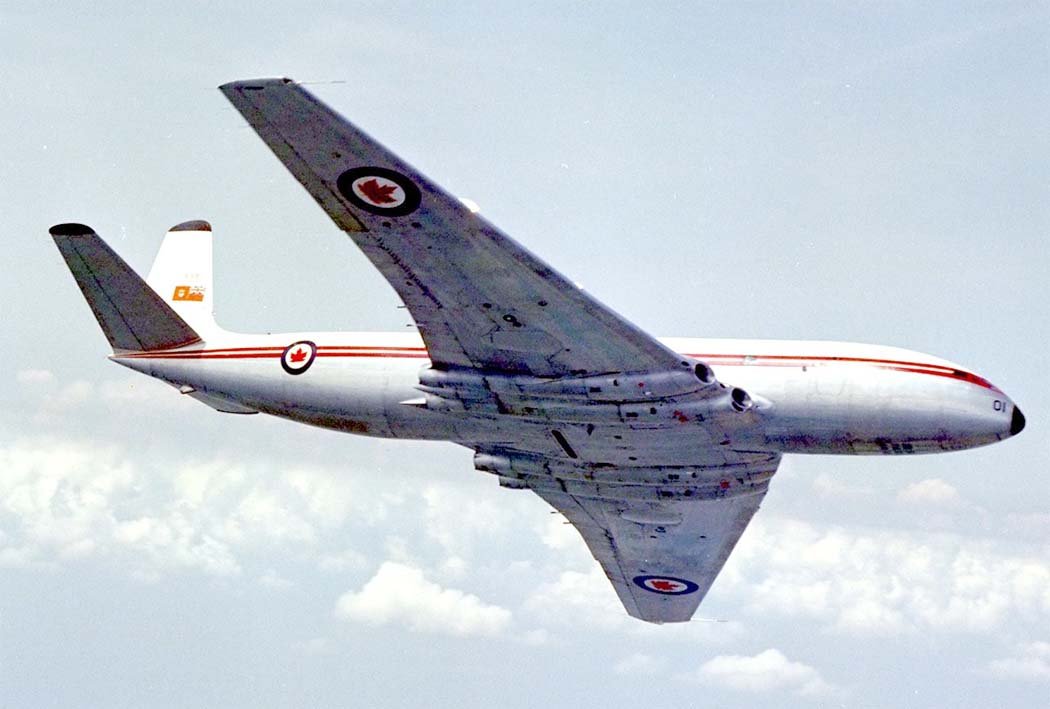
In April, the “Comet 1” was seen at Tokyo airport, having flown there via Bangkok, Manila, and Okinawa. In its first year of operation, the length of routes mastered by the “Comet 1” totaled 43,427 km. Each week, BOAC’s “Comet 1s” were airborne for 370 hours and flew 196,400 km with an average load factor of 88%. The “Comet 1” brought profits to BOAC, but the operating costs of the jetliner were three times higher than those of the piston-engine DC-6. Therefore, De Havilland sought to attract potential buyers of the “Comet 1” by offering its airliner much cheaper than American competitors’ piston-engine aircraft. The firm was confident that it had far outpaced its rivals and that the costs of aircraft development and production would be offset by a larger number of sold machines. This confidence was bolstered in December 1949 by a large order book for jetliners: Canadian Pacific Airlines purchased two “Comet 1As,” the Royal Canadian Air Force two machines, Air France three, and Union AéroMaritime de Transport (UAT) three.
In May 1953, a Canadian Air Force “Comet 1A” completed the first transatlantic flight from the UK to Canada with two intermediate stops. The “Comet 1A” differed from its predecessors with an enlarged passenger cabin of 44 seats, “Ghost 50-2” engines with increased thrust to 22.25 kN, and a 280 km increase in range. Canadian Pacific Airlines intended to use this modification for regular flights from Canada to Australia across the Pacific Ocean.
De Havilland constantly improved the D.H.106. The next aircraft modification, the “Comet 2X,” was linked to Rolls-Royce’s completion of a more advanced axial compressor turbojet, the “Avon 502.” Its prototype was converted from a “Comet 1” and first flew on February 16, 1952, with engines providing 29.4 kN of thrust. The production “Comet 2” differed from the prototype with a fuselage lengthened by 1 m (allowing for 44 passengers), new “Avon 117” engines with a nominal thrust of 32.58 kN, and a modified wing profile with improved characteristics at low speeds. As a result, the maximum commercial payload reached 6200 kg, and the flight range increased to 4060 km. In addition to traditional BOAC partners, the “Comet 2” was ordered by British Commonwealth Pacific Airlines (6 units) and Japan Airlines (2 units). Four aircraft each were reserved by Latin American companies Línea Aeropostal Venezolana and Panair do Brasil.
By modifying the D.H.106 once again, De Havilland sought to attract the attention of potential buyers not only with high speed and acceptable flight range but also with increased economic efficiency. A major achievement in this direction was the “Comet 3.” Compared to its predecessor, the range increased by only 290 km, but by extending the cabin by 4.7 m, the number of seats rose to 78, almost double.
The prototype of the “Comet 3,” which first flew on July 19, 1954, was equipped with RA-26 Avon 502 engines with 39.64 kN of thrust. The new airliner promised good profits. By the end of 1953, De Havilland had orders for 35 aircraft, and its main factory in Chester was overloaded. Therefore, for the final assembly of the D.H.106, Short’s factory in Belfast was engaged. Among the customers for the “Comet 3” were companies that had previously focused on acquiring American passenger liners. Pan American ordered three aircraft in 1954 and planned to acquire seven more, and Air India two. The main operator of the “Comets,” BOAC, intended to replenish its fleet with five machines of the new version. However, the “Comet 3” was not destined to become a production aircraft.
Challenges, Redesigns, and Legacy
It seemed that everything was going well for the “Comet”: manufacturers and operating airlines were satisfied with the aircraft. Accidents that occurred during the aircraft’s introduction were calmly perceived, and measures were promptly taken to eliminate their causes in the future. The first serious accident with a “Comet 1” occurred on October 26, 1952, during takeoff from Rome’s Ciampino Airport. During the takeoff roll, the pilot prematurely lifted the nose landing gear off the runway by sharply pulling back on the control column, which significantly increased aerodynamic drag. The aircraft ran the remaining portion of the runway on its main landing gear, failing to gain the necessary speed for takeoff. As a result, it sustained such severe damage that it was not repaired, though passengers and crew survived.
On March 3, 1953, a similar incident occurred with a Canadian “Comet 1A” at Karachi airport, killing 14 people. Two months later, the tragedy repeated: on May 2, 1953, a British aircraft broke up after takeoff in Calcutta, burying 43 people under its wreckage. Among the causes of the disaster, the Indian commission did not rule out fatigue failure of the airframe. However, this version was not given due attention. De Havilland modified the wings to improve takeoff and landing characteristics, and the aircraft returned to service.
On January 10, 1954, “Comet 1” named “Old Peter,” shortly after taking off from Rome airport, plunged into the Mediterranean Sea near the island of Elba, in front of two Italian fishermen. 29 passengers and 6 crew members died. Following the accident commission’s work, 60 structural modifications were carried out on the aircraft, and from March 23, the “Comets” resumed flights. On April 8, 1954, a “Comet 1A,” leased by a South African airline from BOAC, crashed under similar circumstances. The aircraft, having taken off from Rome, fell into the sea near Naples. The list of Comet victims increased by 28 people.
The next day, the UK Prime Minister convened an emergency cabinet meeting. It was decided to organize a search for “Old Peter” and ascertain the true causes of the disaster. Trust in the airliner was exhausted; De Havilland Aircraft had the Comet’s Certificate of Airworthiness revoked, and further deliveries were banned pending investigation results. The firm’s losses amounted to 40 million pounds sterling. Not only the honor of De Havilland but of the entire British aviation industry was at stake.
To ascertain the true causes of the disasters, the British Ministry of Transport and Civil Aviation established an authoritative commission, led by the renowned English specialist Arnold Hall. The search for the aircraft that crashed near Elba was carried out using all available technical means. The exact crash site of the airliner was determined from a photograph that coincidentally showed the boat of the Italian fishermen—witnesses to the disaster—and part of the Elba coastline. In April and May, everything that could belong to the crashed “Comet” was retrieved from the seabed and brought to Farnborough, where the wreckage was classified and studied. It ultimately became clear that the cause of the disaster was fatigue failure of the fuselage at the radio antenna cutout, and the death of those on board occurred immediately after the airliner’s depressurization. In October-November 1954, the commission carefully studied all stages of the “Comet’s” design, manufacture, and operation, concluding that all work had been performed by De Havilland in strict accordance with the civil aviation standards (BCA) in force at the time.
The British Royal Aircraft Establishment (RAE) in Farnborough was tasked with developing methods for fatigue testing of aircraft structures and conducting new tests of the “Comet” airframe accordingly. The scope of tests proposed by the RAE was unprecedented in aviation history. Specifically, a fuselage section of the aircraft was brought to the center for these tests. It was submerged in a water tank, and pressure differentials were created between the external and internal surfaces of the fuselage skin using water, simulating takeoff, flight at cruise altitude, descent, and approach to landing.
The incompressible working fluid – water – was chosen for these tests because the process of structural failure, compared to loading a compartment with compressed air, is not explosive and can be easily observed and recorded with a camera. At the time of being handed over for testing, this aircraft had 1230 flights. In the tank, it underwent another 1830 “typical flights” until a fatigue crack appeared in the corner of the frame of one of the rectangular cabin windows. The aircraft that crashed off the coast of Italy had only 1290 and 900 flights, respectively.
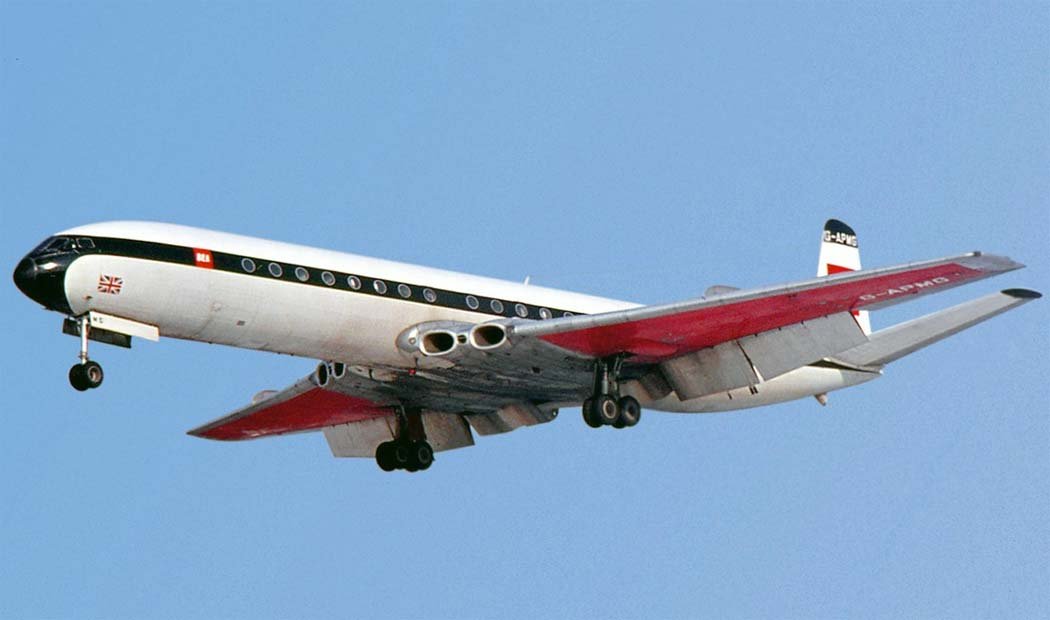
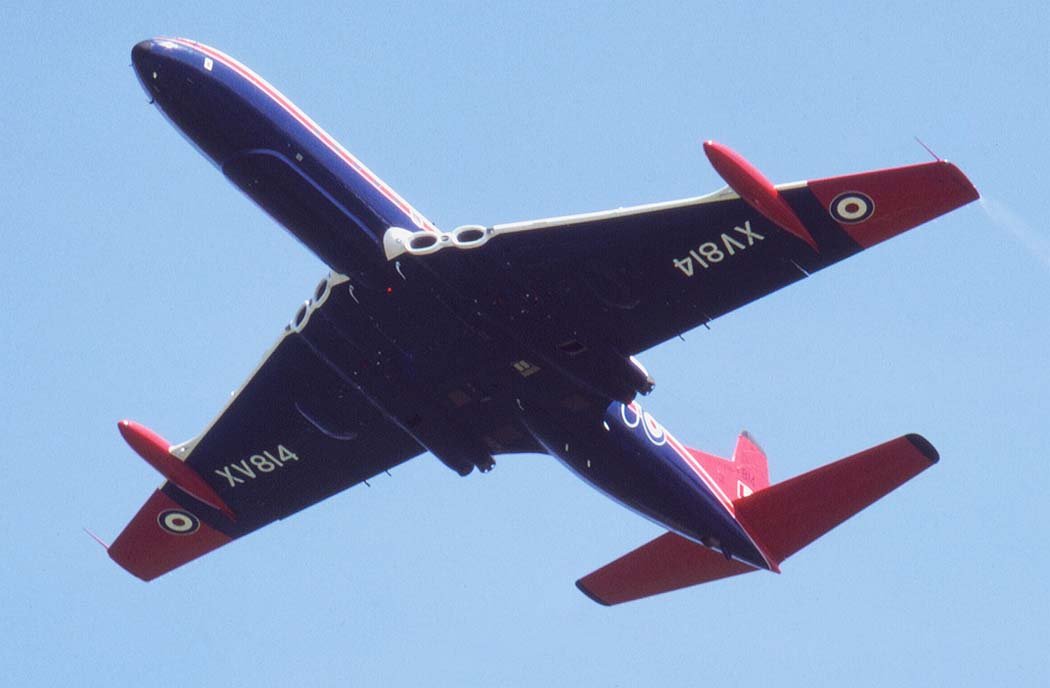
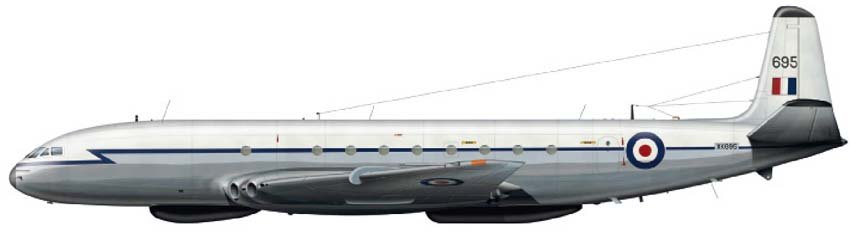
1954 was one of the toughest in the history of BOAC and De Havilland Aircraft: orders for new aircraft were cancelled, “Comet 1s” were withdrawn from service, and “Comet 1A” and “Comet 2” underwent costly modifications as a result of testing. The skin panels were replaced with stronger ones, the joint design was altered, all holes in the skin were carefully processed to increase their fatigue strength, and the rectangular window frames became rounded. The longitudinal axes of the engine nozzles were arranged in a fan-like manner so that the hot exhaust gases would not affect the tail section of the fuselage and cause vibration. The “Comet” modifications were financed by the UK government, which also purchased a dozen and a half completed but unsold “Comet 2s” for the Royal Air Force, operated under the designations C.Mk.2 (transport) and T.Mk.2 (training).
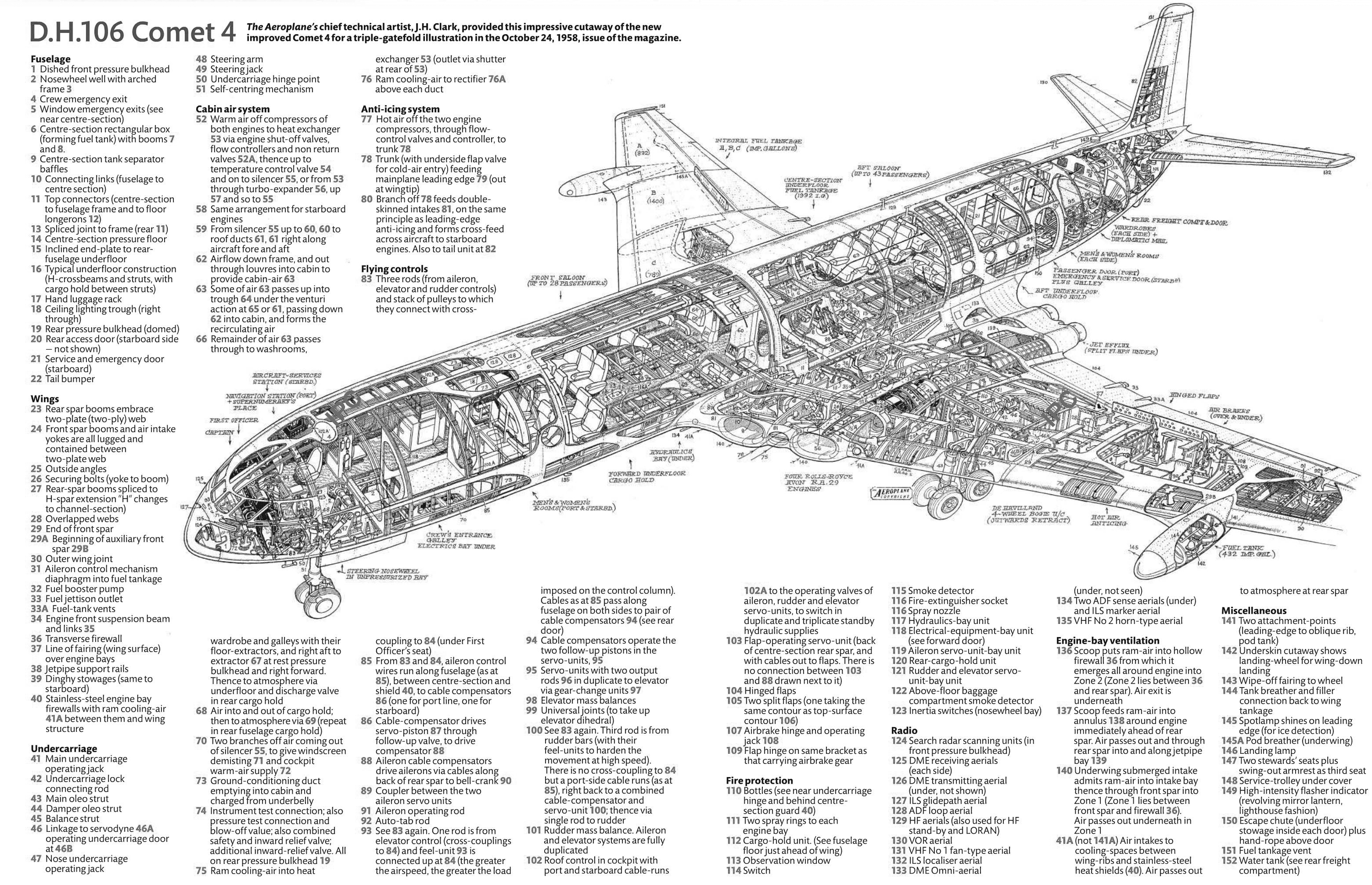
In saving the “Comet,” the British government sacrificed another domestic mainline aircraft, the V-1000 (VC-7), developed by Vickers based on the “Valiant” bomber, for which several million pounds were not found in the British budget to complete its construction. This was all the government could do for De Havilland. Therefore, the refinement of the promising “Comet 3” model took several years due to insufficient funding. During this time, the firm upgraded the promising “Comet 3” into the “Comet 4,” increasing the number of passengers carried first to 81 and then to 101. Concurrently, the wing area increased to 195.5 m², retaining its planform but with larger flaps and additional external fuel tanks of 2495 liters on the leading edge of the wing, blending with fixed-slot fairings into aerodynamic fences on the upper surface of the outer wing panel.
Life did not stand still: over these years, the “Comet 4” faced worthy competitors in the long-haul passenger aircraft market on both sides of the Atlantic. In the USA, Boeing was completing tests of its four-engine passenger aircraft “Model 707.” In France, Sud Aviation created the very successful “Caravelle” passenger aircraft. And on March 22, 1956, the Soviet jetliner Tu-104 landed at London’s Heathrow Airport, making no less impression on the British than an alien spaceship. The main threat to De Havilland was the “Boeing 707,” which could negate the results of a decade of hard work by the “Comet” developers. The order for 19 “Comet 4s” for BOAC was signed only in 1957.
Given the seriousness of the situation, the “Comet 4” was thoroughly developed and tested: the competitiveness of the new modification heavily depended on its reliability and economy. The latter was primarily linked to the quality of the power plant and correctly chosen parameters for range and passenger capacity.
In the field of aircraft engine building, Great Britain had always held a leading position in the world, and this part of the program did not cause particular concern. The real operational experience accumulated over years of flying earlier “Comet” modifications allowed the aircraft to be optimized for range and passenger capacity. Therefore, the most vulnerable point in the “Comet 4’s” reputation was its reliability, undermined by the crashes of earlier machines. The effectiveness of the modifications, which enhanced the airliner’s reliability, was verified on two experimental “Comet 2Es.” In 1957, these machines began flying without passengers on the London-Beirut-Calcutta route, and in May 1958, they completed transatlantic flights to the North American continent. This was a challenge from De Havilland and BOAC to their American competitors, who were preparing to open this route with the “Boeing.”
The “Comet 2E” began passenger operations simultaneously with the first production “Comet 4,” which first flew on April 27, 1958. The “Comet 4’s” first claim to fame was a 12,751 km flight on September 14, 1958, on the Hong Kong-London route: taking off at dawn, it arrived at its destination airport at sunset on the same day. Three days later, the “Comet 4” set a route speed record on the transatlantic route, covering the distance between London and Gander in 5 hours 47 minutes. These promotional flights of the “Comet 4” in America did not end there, and it performed non-stop flights between Montreal, Vancouver, Mexico City, Lima, and Buenos Aires.
On October 4, 1958, two BOAC “Comet 4s” completed a transatlantic flight on opposing routes with an intermediate stop in Gander for refueling: one aircraft departed from New York, the other from London. Pan American was only able to respond to this new challenge on October 26, 1958, by completing a flight on the New York-Paris route with a large number of intermediate stops. The “Comet 4” won the race for transatlantic supremacy, but the last word in this duel remained with Boeing. It later managed to modify its aircraft so that it carried almost twice as many passengers as the “Comet 4” over the same range, and at a higher cruising speed. The operating costs of the “Comet 4” were twice those of the “Boeing 707,” although they had decreased by 50% compared to the original “Comet.”
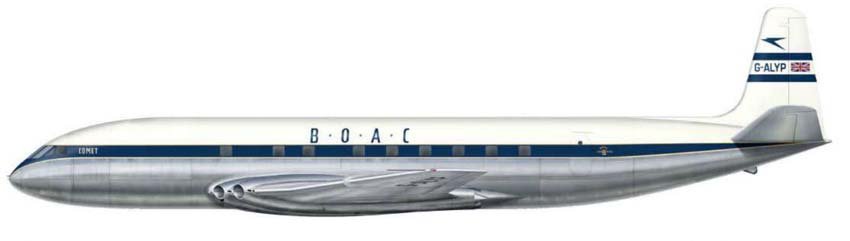
In early 1959, BOAC returned to the routes abandoned by the “Comet” in 1954. Regular flights from London to Ceylon, Australia, Tokyo, and Johannesburg were reopened. A year later, BOAC established flights to the Caribbean, Canada, Chile, and Iran. In the first two years of operations, 19 BOAC “Comet 4s” flew 43.44 million km, 68,500 hours, and carried 327,000 passengers. During this time, there were no serious flight incidents, which served as confirmation of the thoroughness of the work carried out by De Havilland.
Foreign air transport companies appreciated this, and new orders for the “Comet 4” came in from Argentina and Africa. Negotiations were underway with the American company Capital Airlines for the acquisition of 4 “Comet 4s” and, later, another 10 modified “Comet 4As” for short and medium routes.
The main differences of this modification from the base aircraft were: a reduction in range to 4390 km and a decrease in cruising altitude from 11,000 m to 7100 m, corresponding to the new flight profile, a wing of smaller area, and a higher flight speed of up to 850 km/h. Furthermore, the fuselage, extended to 35 m, was intended to carry up to 92 passengers. However, De Havilland’s overseas partner experienced serious financial difficulties and was forced to cancel the “Comet 4As.” But the ideas of this modification interested the British company BEA, and it ordered 15 machines in April 1958.
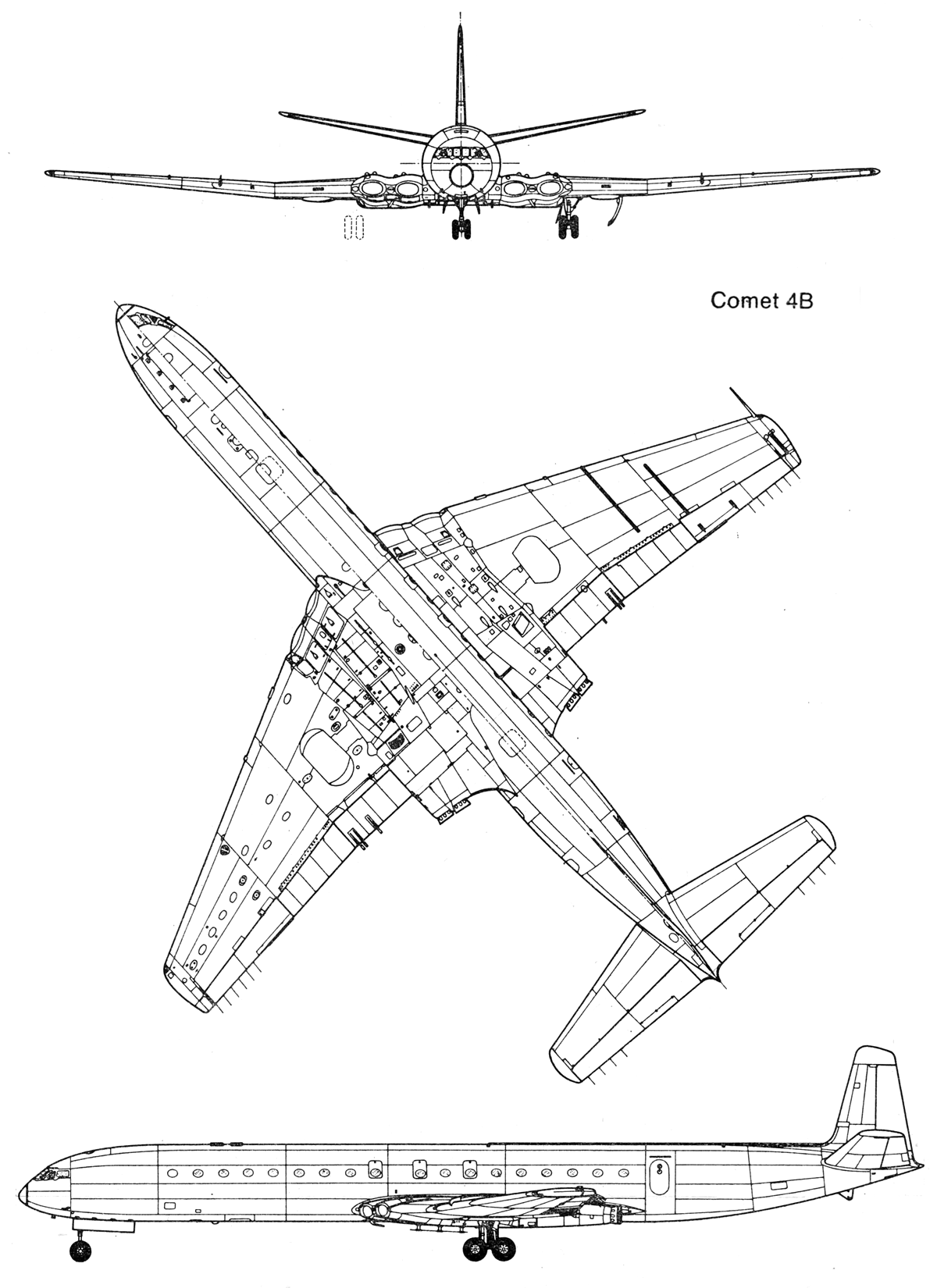
The British version of the short-haul “Comet 4B” featured an even longer fuselage (35.99 m), which allowed for up to 101 passengers in the cabin. For practical verification of the concept’s correctness, a “Comet 3” was used as a “guinea pig,” which was once again modified: this time to the “Comet 4B” standard. In November 1959, BEA received its first production “Comet 4B,” and in April 1960, it began operations. “Comet 4Bs” were used by BEA on routes connecting London with Moscow, Tel Aviv, and Nice. Four “Comet 4Bs” were operated by the Greek airline Olympic Airways.
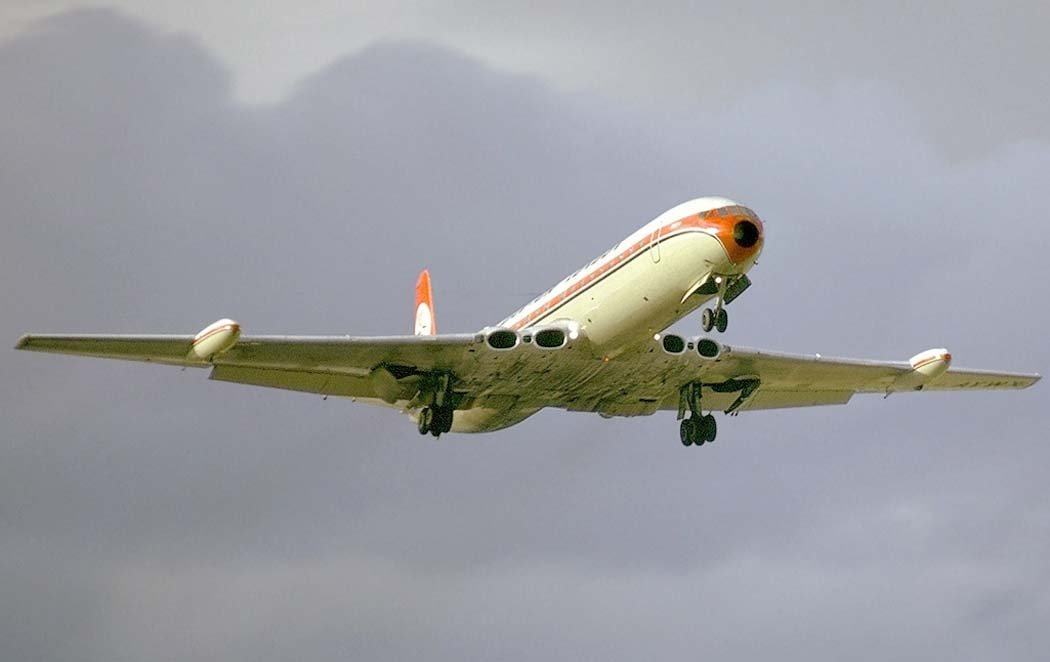
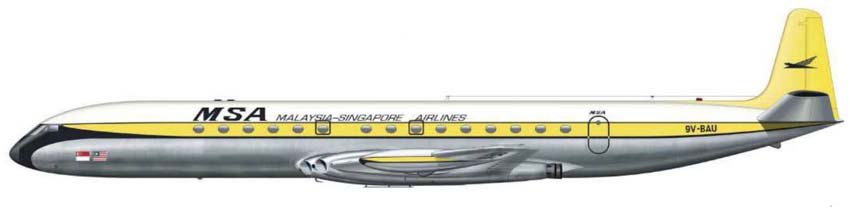
The impressive takeoff of the first “Comet 4” in September 1959 from the high-altitude Mexico City airport had favorable consequences for De Havilland: Mexicana de Aviación acquired 3 modified “Comet 4C” airliners. This modification was a combination of the basic aircraft’s wing and the “Comet 4B’s” fuselage. To improve takeoff and landing characteristics in high-altitude airports located in hot climate countries, the aircraft was equipped with Avon 525B engines. The first aircraft flew on October 31, 1959. Subsequently, this modification of the airliner was acquired by airlines in Sudan, Kuwait, and others. The British Royal Air Force used the “Comet 4” under the designation C.Mk.4. The aircraft transported 94 soldiers or 8.8 tons of cargo.
The manufacture of all “Comet 4” modifications ceased in early 1962, though several more machines were later built from existing stock. Over these years, 112 “Comets” rolled off the company’s production lines, most of them—75—being “Comet 4s,” including one airframe for hydraulic testing in Hatfield. The markings of the British RAF adorned 20 “Comets”: 5 C.Mk.4s and 15 C.Mk.2 transports and T.Mk.2 trainers.
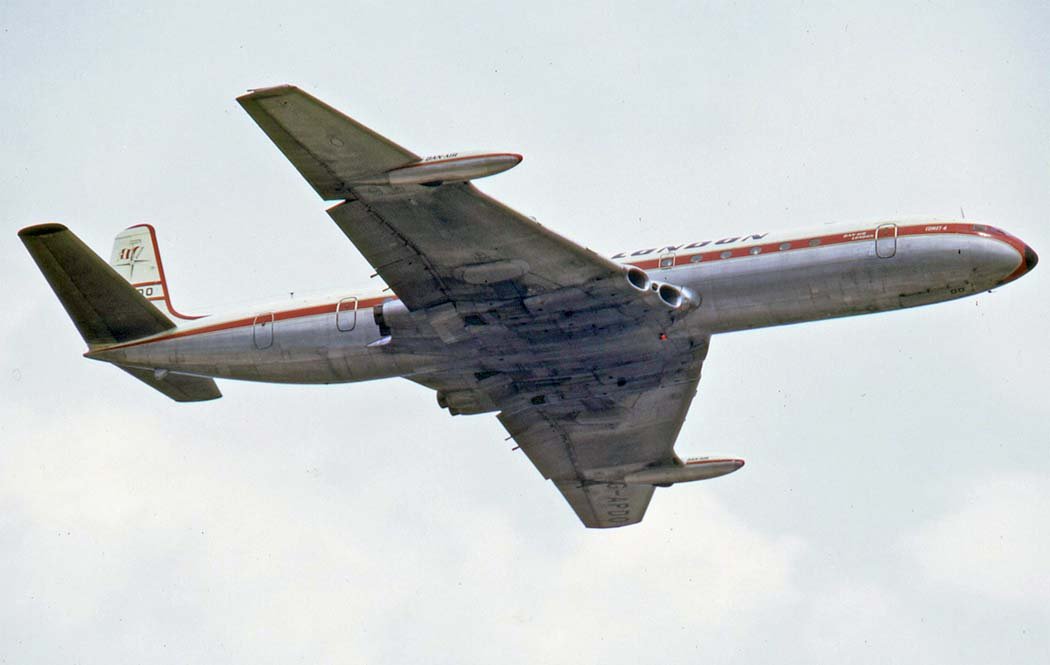
BOAC ceased operating its “Comet 4s” in 1965, and they changed owners several times. The same fate befell airliners of other airlines. One of the last operators of the “Comet 4” in B and C variants (with a 119-seat cabin) was Dan-Air, which used them until 1981. In 1960, De Havilland became part of Hawker Siddeley. Therefore, the traditional DH disappeared from the aircraft’s designation, and in 1977, Hawker Siddeley became part of British Aerospace (BAe).
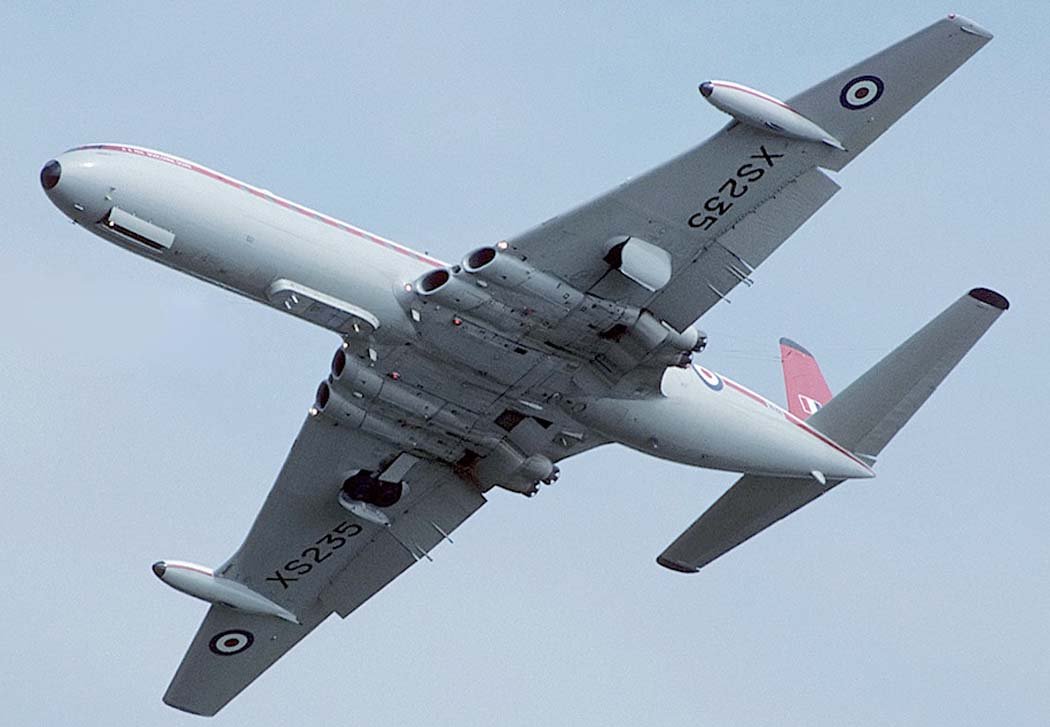
Here, the history of the DH.106 “Comet” passenger airliner, which opened the door to the jet era of civil aviation, could end, had the acquisition of “Comet 2s” and later “Comet C.Mk.4s” by the British RAF in the mid-1950s not had a continuation.
Technical Specifications
| Modification | Comet 2 |
| Wingspan, m | 35.08 |
| Length, m | 29.28 |
| Height, m | 8.65 |
| Wing area, m2 | 187.39 |
| Normal takeoff weight | 52210 |
| Maximum takeoff weight | 57879 |
| Internal fuel, l | 31395 |
| Engine type | 4 Turbojet engines Rolls-Royce Avon RA.7 Mk 117 |
| Thrust, kN | 4 x 32.58 |
| Maximum speed, km/h | 788 |
| Cruising speed, km/h | 680 |
| Practical range, km | 4060 |
| Service ceiling, m | 12200 |
| Crew | 5 |
| Payload | 44 passengers or 5080 kg of cargo |
Image gallery of the De Havilland Comet (D.H.106)