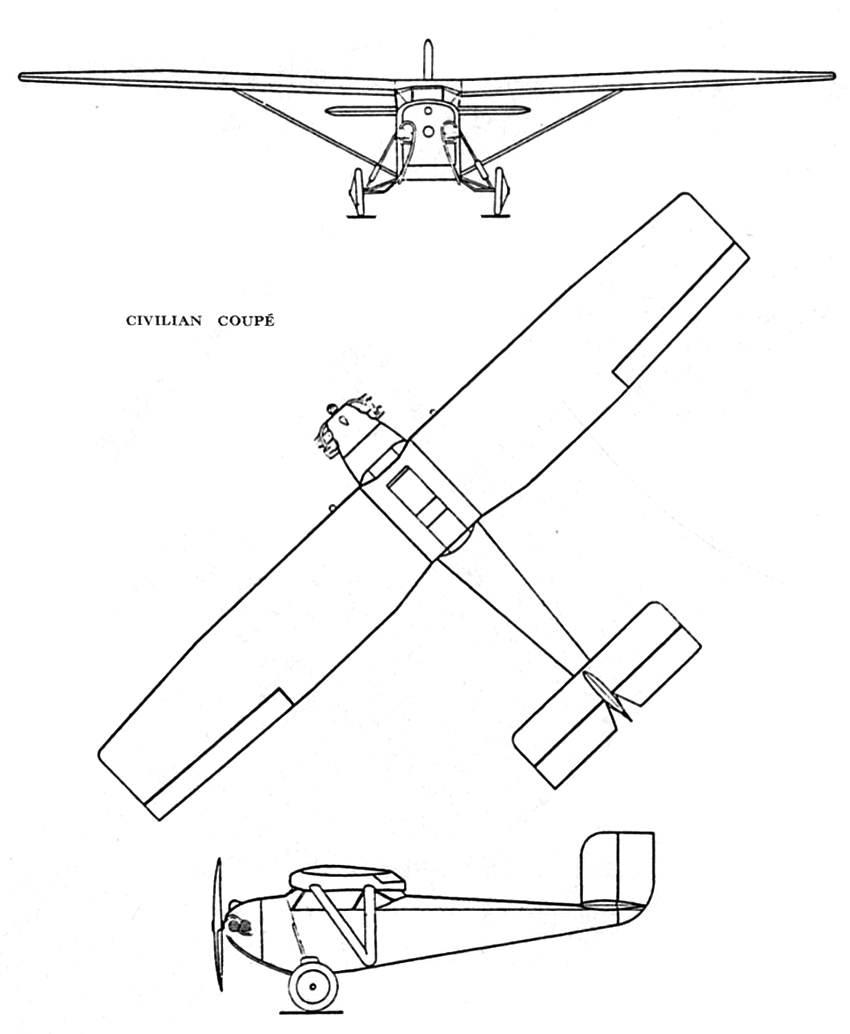
In 1928, Harold Boultbee left Handley Page to establish his own firm, Civilian Aircraft Company (CAC). The following year saw the emergence of the company’s first —and as it turned out, only— project: the light multi-purpose aircraft, the Coupe.
Conception and First Flight
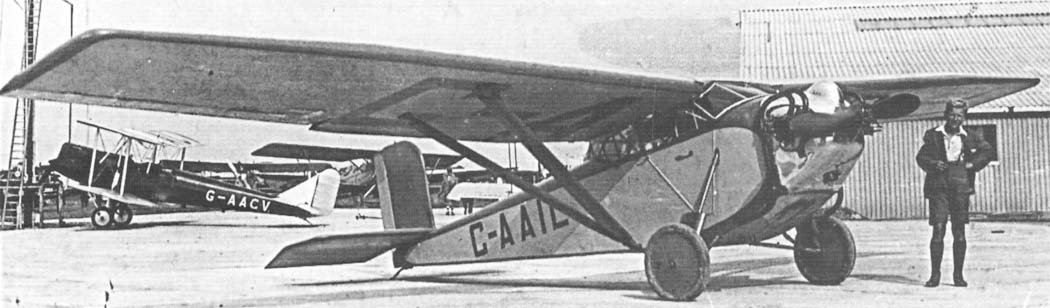
The first prototype of the aircraft took to the air in June 1929. This two-seater, braced high-wing monoplane of mixed construction was equipped with a 75 hp (56 kW) ABC Hornet engine. It was later designated Coupe Mk.I and registered as G-AAIL.
Variants and Powerplants
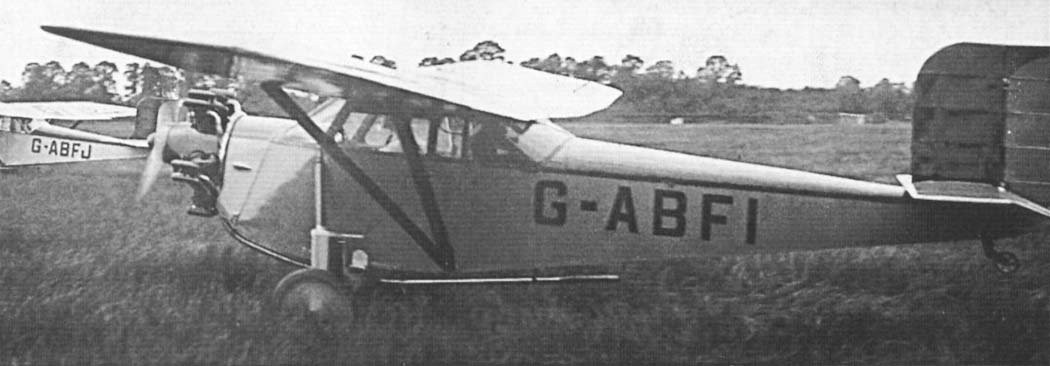
Following the prototype, four more aircraft were produced, but these featured a new powerplant: a 100 hp (75 kW) Armstrong Siddeley Genet Major I five-cylinder radial engine. These machines were designated as Coupe Mk.II.
Fate and Surviving Legacy
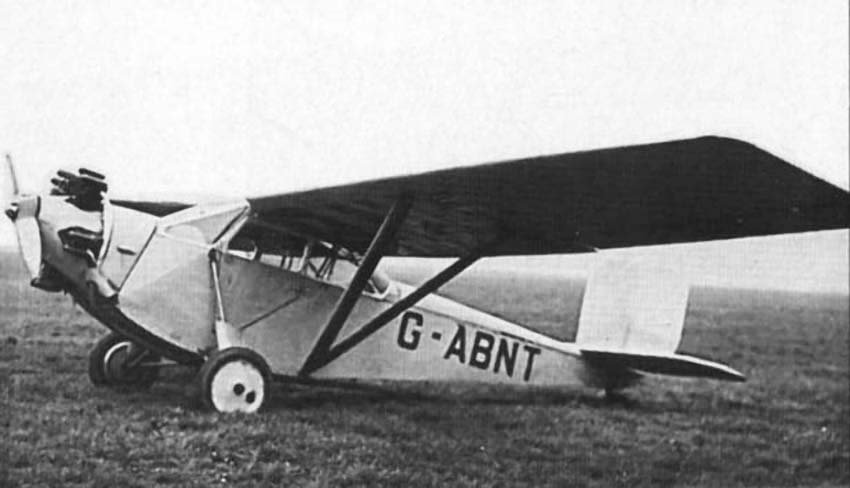
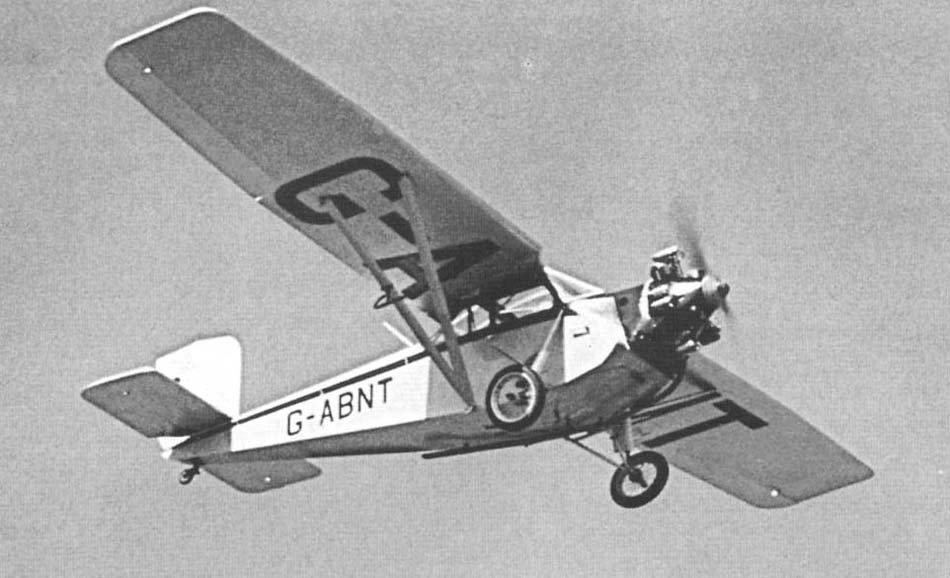
All Coupe aircraft were sold, with the last one destined for Germany, where it was destroyed after the war began. To our time, only one aircraft, G-ABNT, has survived, and it was still flying as of 2010.
Technical Specifications
| Modification | Coupe Mk.II |
| Wingspan, m | 10.82 |
| Aircraft length, m | 5.59 |
| Aircraft height, m | 1.91 |
| Wing area, m2 | 15.59 |
| Empty weight | 447 |
| Maximum takeoff weight | 680 |
| Engine type | 1 Piston engine Armstrong Siddeley Genet Major I |
| Power, hp | 1 x 100 |
| Maximum speed, km/h | 177 |
| Cruising speed, km/h | 154 |
| Practical range, km | 480 |
| Rate of climb, m/min | 246 |
| Service ceiling, m | 4572 |
| Crew | 2 |
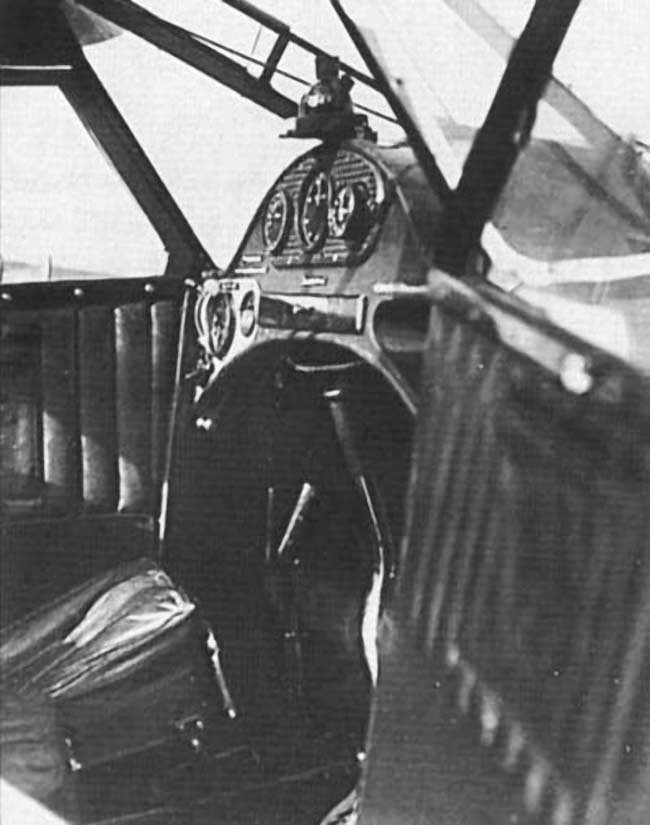
Image gallery of the Civilian Aircraft Company Coupe