Be.52 Beta-Major
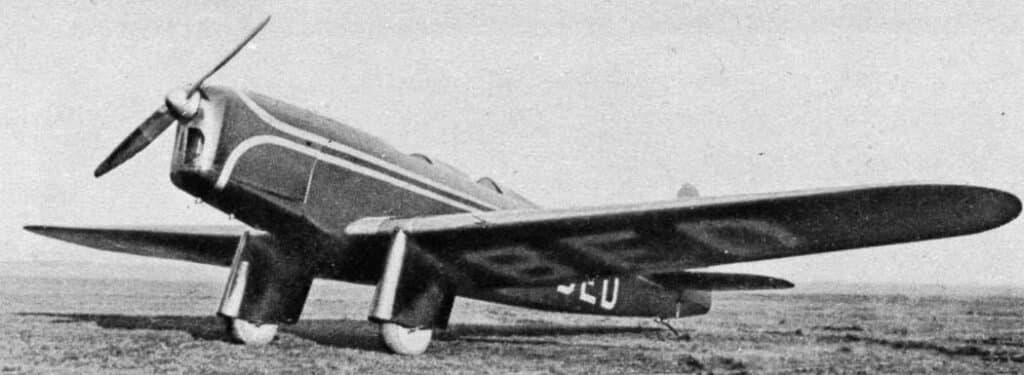
In 1936, the Czechoslovak firm Beneš-Mráz developed a new variant of its successful Be.50 aircraft, resulting in the Be.52 Beta-Major. This model represented a significant evolution, incorporating several improvements over its predecessor.
Enhanced Design and Aerodynamics
The Be.52 Beta-Major was distinguished by its open two-seater cockpit, a notable change that offered a different flying experience. Additionally, engineers implemented improvements in the fuselage’s aerodynamics, optimizing its performance in the air.
Increased Power Output
One of the most important upgrades was the integration of a more powerful engine: the Walter Major 4, delivering 130 horsepower. This propulsion enhancement promised greater speed and operational capability for the aircraft.
Legacy and Post-Annexation Service
Despite its advancements, the Be.52 Beta-Major was produced as a single prototype, registered with the civil designation OK-BED. Its history took an unexpected turn following the annexation of Czechoslovakia.
Like the Be.51, this aircraft was subsequently utilized by the German Luftwaffe, serving as a training aircraft. This use by the German air forces highlights the inherent value and versatility of its original Czechoslovak design.
Technical Specifications
| Modification | Be.52 |
| Wingspan, m | 10.66 |
| Length, m | 7.00 |
| Wing area, m2 | 14.00 |
| Empty weight | 550 |
| Maximum takeoff weight | 820 |
| Engine type | 1 Piston engine Walter Major 4 |
| Power, hp | 1 x 130 |
| Maximum speed, km/h | 235 |
| Cruising speed, km/h | 200 |
| Practical range, km | 600 |
| Service ceiling, m | 5200 |
| Crew | 2 |
Image and diagram gallery of the Be.52 Beta-Major
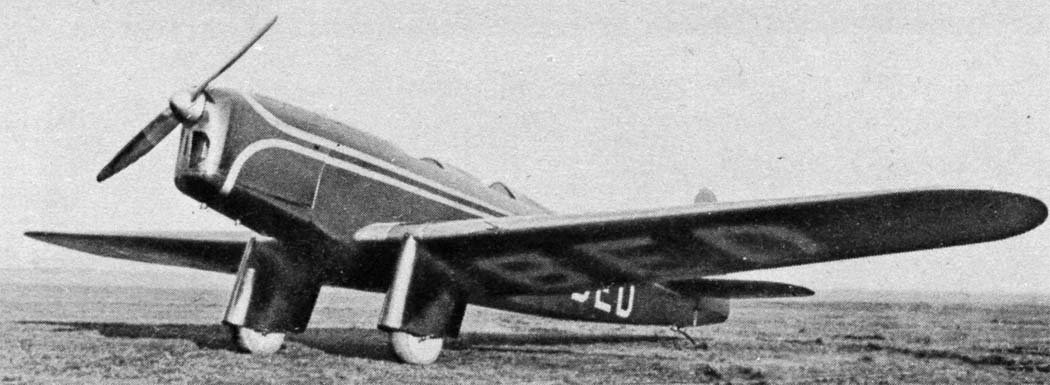 Be.52 Beta-Major |
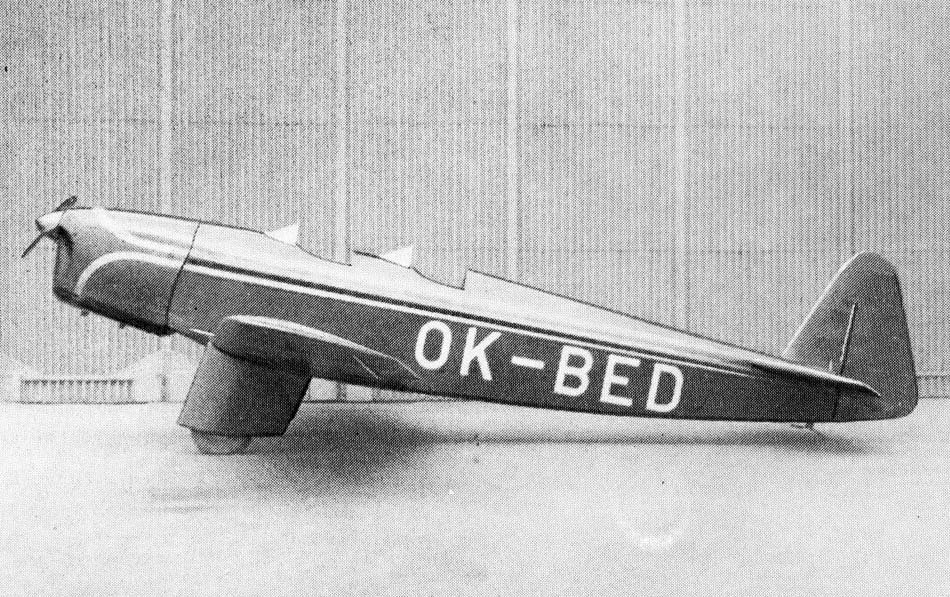 Be.52 Beta-Major |
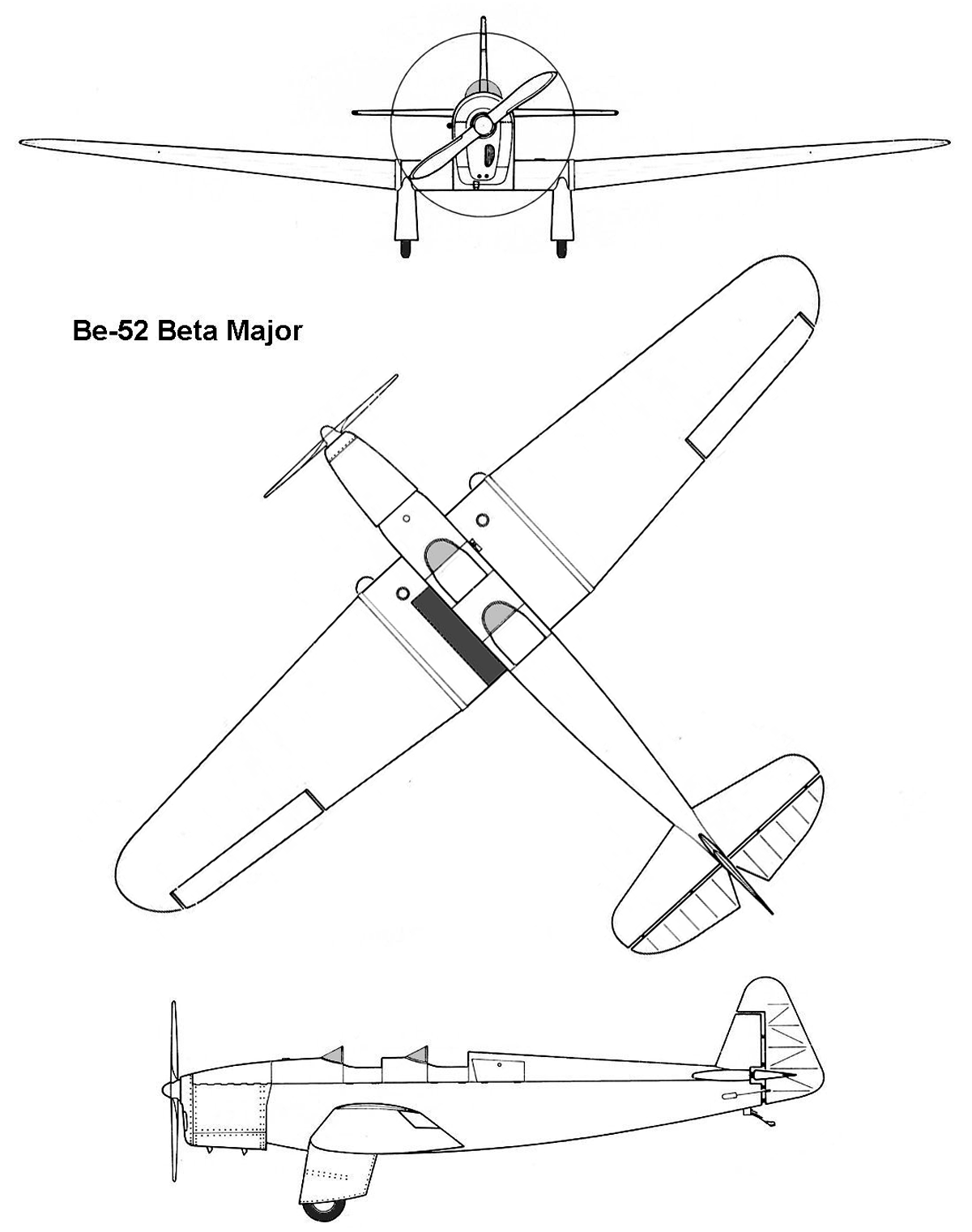 Be.52 Beta-Major |
ArchivoAéreo Editorial Team
A group of aviation researchers and enthusiasts dedicated to documenting and preserving global aeronautical history. All articles are reviewed to ensure historical accuracy.
Sources & Accuracy
The information presented in this technical sheet has been compiled from declassified flight manuals, historical archives, and specialized literature. While we strive for maximum accuracy, some performance data may vary depending on the specific variant or operational conditions.