Bell 207 Sioux Scout
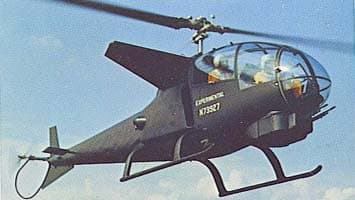
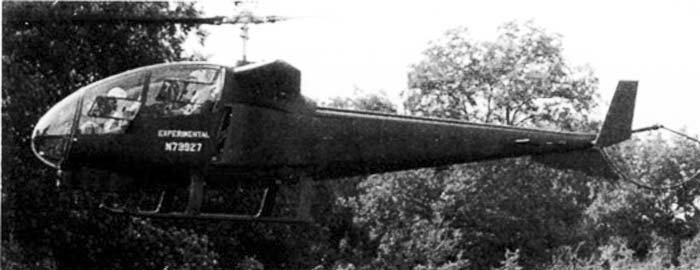
Even before the escalation of the armed conflict in Vietnam, the Bell company took the initiative to begin designing a light fire support helicopter. This aircraft was created based on the OH-13S Sioux helicopter. The new helicopter, the Model 207 Sioux Scout, took to the air on June 27, 1963.
Innovative Design and Propulsion
The Sioux Scout retained the rotor system and the Avco Lycoming TVO-435 engine (260 hp) from the OH-13 helicopter. The new machine’s dimensions remained close to those of the OH-13, and it kept the skid landing gear. In all other respects, however, the new helicopter radically differed from its predecessor. The fuselage was completely redesigned, with a reduced mid-section and a more streamlined shape. The crew, consisting of a pilot and a gunner, was arranged in a tandem configuration within a closed cockpit, with the pilot’s seat raised relative to the gunner’s seat.
Armament and Legacy
Small vertical and horizontal tail surfaces were introduced. Small wing stubs were mounted on the sides of the fuselage, which served not only to offload the main rotor in flight and improve maneuverability but also to carry additional fuel tanks or external armament. A turret with two 7.62mm M60 machine guns was installed at the bottom of the fuselage’s nose section, controlled by the gunner in the front seat.
The Model 207 helicopter was built as a single experimental prototype. Nevertheless, many of the ideas proven on this machine found their embodiment in the specialized combat helicopter Model 209 HueyCobra.
Technical Specifications
| Modification | Bell 207 |
| Main rotor diameter, m | 11.28 |
| Engine type | 1 Piston engine Avco Lycoming TVO-435 |
| Power, kW | 1 x 195 |
| Crew | 2 |
| Armament | two 7.62-mm M60 machine guns |
Image and diagram gallery of the Bell 207 Sioux Scout
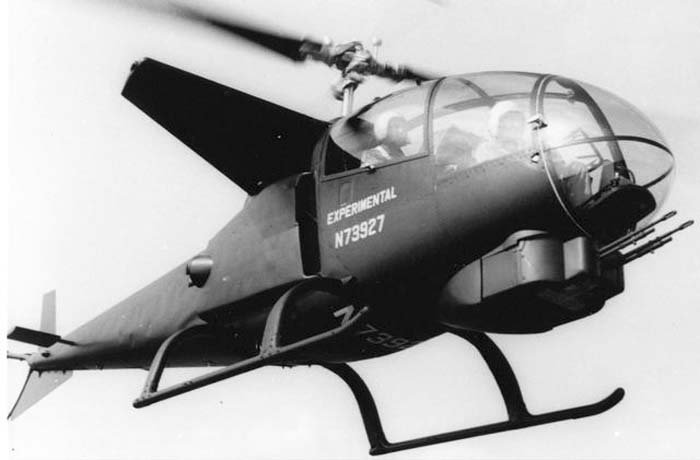 Bell 207 Sioux Scout |
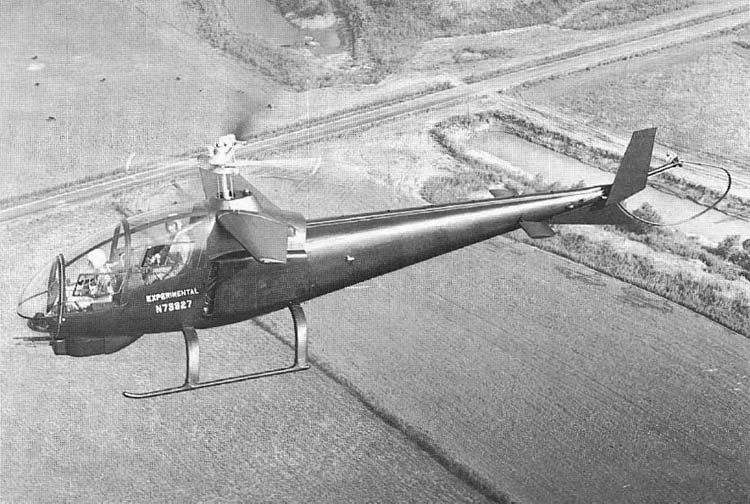 Bell 207 Sioux Scout |
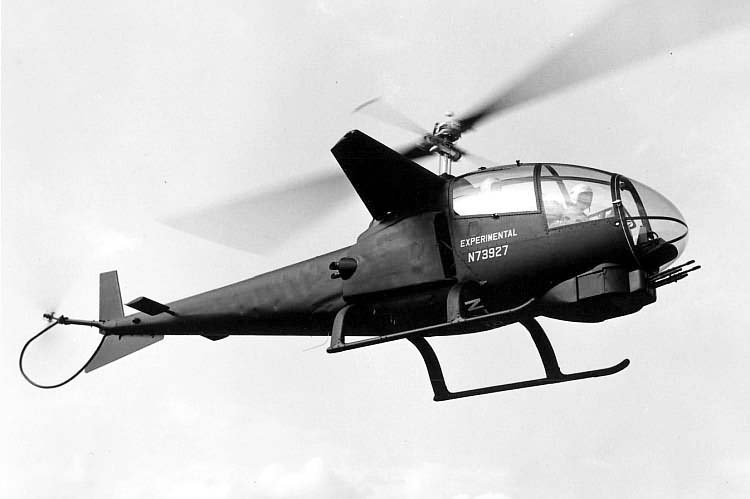 Bell 207 Sioux Scout |
 Bell 207 Sioux Scout |
ArchivoAéreo Editorial Team
A group of aviation researchers and enthusiasts dedicated to documenting and preserving global aeronautical history. All articles are reviewed to ensure historical accuracy.
Sources & Accuracy
The information presented in this technical sheet has been compiled from declassified flight manuals, historical archives, and specialized literature. While we strive for maximum accuracy, some performance data may vary depending on the specific variant or operational conditions.