Bendix J
Origins and Innovative Design
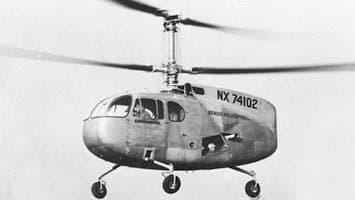
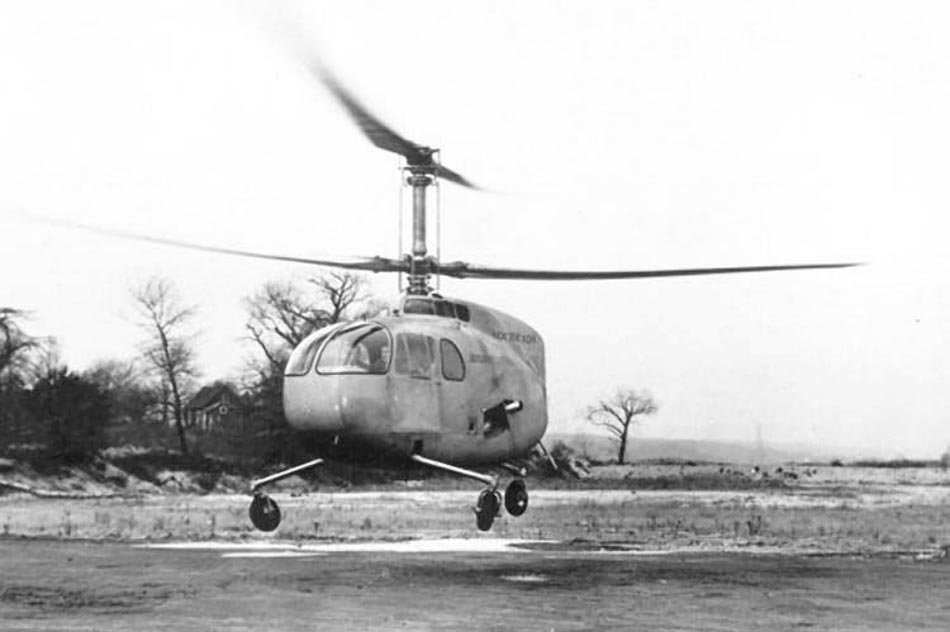
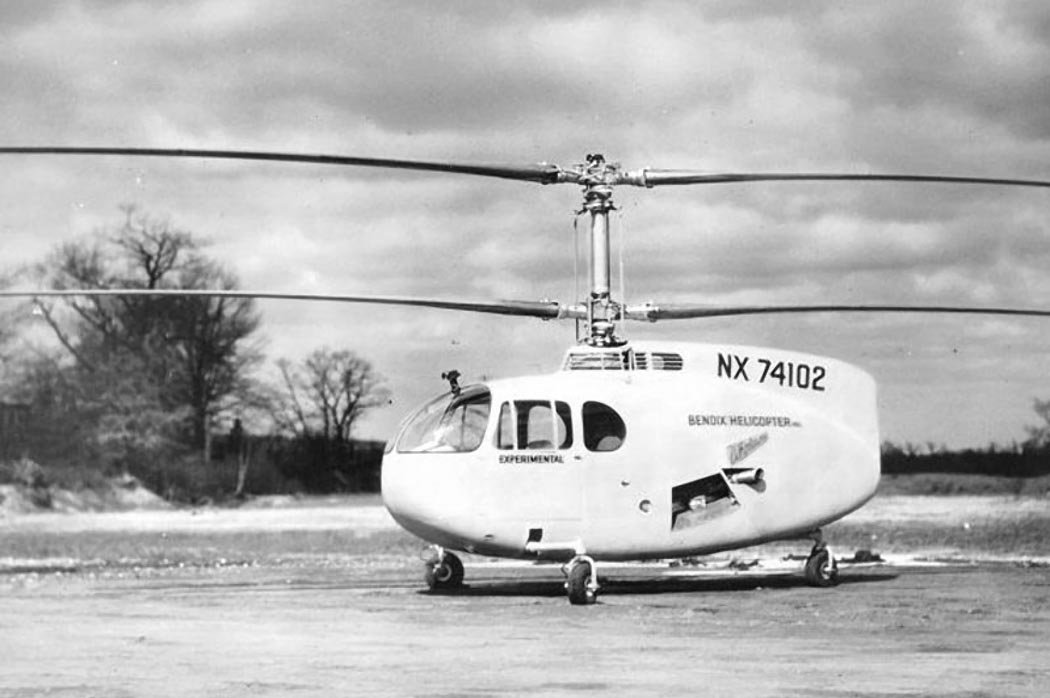
In 1944, Vincent Bendix established Bendix Helicopters, a small rotorcraft company later rebranded as Helicopters Inc. Designer Martin Jensen developed two similar projects for the company: the single-seat Bendix K and the four-seat Bendix J.
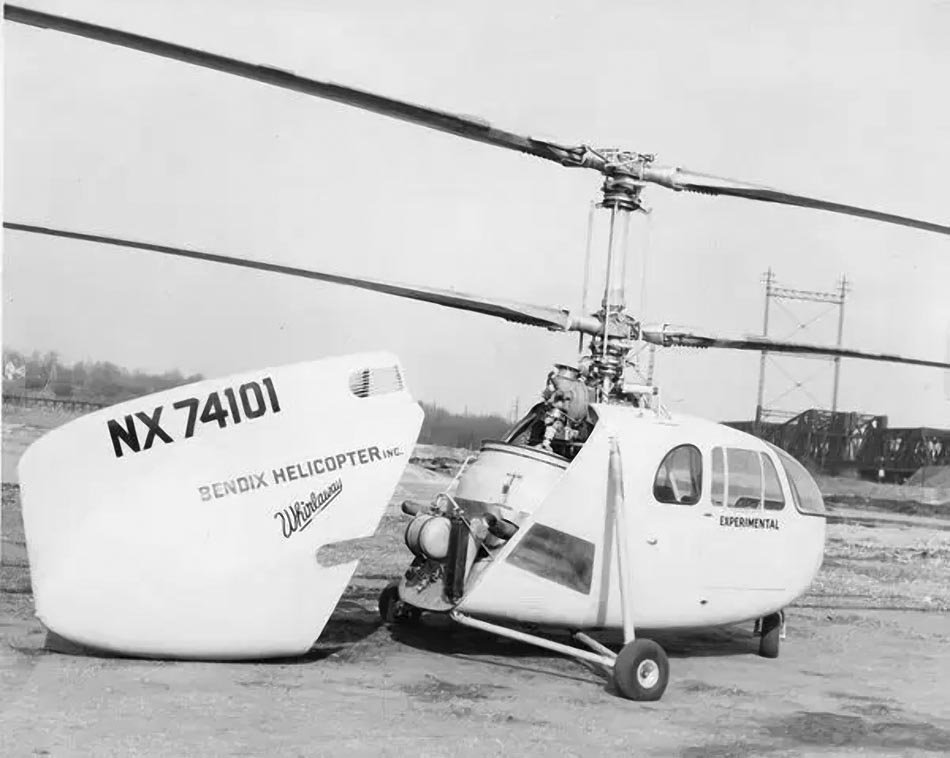
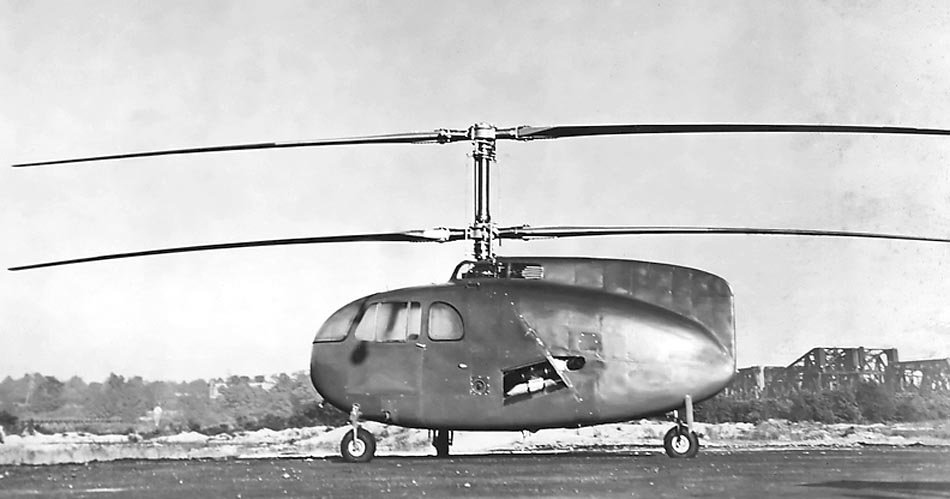
Both helicopters utilized a coaxial design, featuring two two-bladed counter-rotating main rotors on the same axis, a sophisticated configuration for its era.
Testing and Evaluation
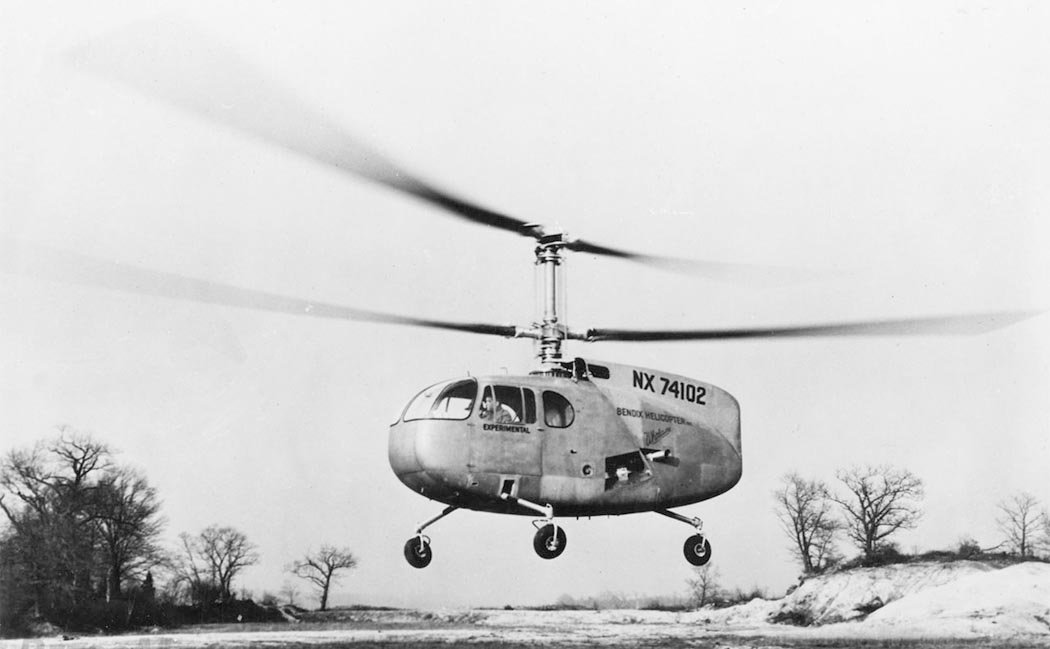
In 1946, two prototypes of the Bendix J helicopter were manufactured, bearing the registration numbers NX74101 and NX74102. The maiden flight of the first prototype occurred on September 15, 1946.
The aircraft underwent a comprehensive testing cycle and was subsequently proposed to the US Navy aviation. Despite its innovative design, the Bendix J was ultimately not accepted for production.
Legacy and Influence
Though not mass-produced, the Bendix J’s design proved influential. In 1947, the Gyrodyne Company of America developed its own model, the GCA-2A, directly based on the innovative helicopter structure.
Technical Specifications
| Modification | Bendix J |
| Main rotor diameter, m | 14. 60 |
| Length, m | 6.48 |
| Maximum takeoff weight | 2041 |
| Engine type | 1 Piston engine Pratt & Whitney R-985-B4 Wasp Junior |
| Power, kW | 1 x 336 |
| Maximum speed, km/h | 180 |
| Cruising speed, km/h | 137 |
| Practical range, km | 434 |
| Crew | 4 |
Image and diagram gallery of the Bendix J
 Bendix J |
 Bendix J |
 Bendix J |
 Bendix J |
 Bendix J |
ArchivoAéreo Editorial Team
A group of aviation researchers and enthusiasts dedicated to documenting and preserving global aeronautical history. All articles are reviewed to ensure historical accuracy.
Sources & Accuracy
The information presented in this technical sheet has been compiled from declassified flight manuals, historical archives, and specialized literature. While we strive for maximum accuracy, some performance data may vary depending on the specific variant or operational conditions.