Bendix J
Origins and Innovative Design
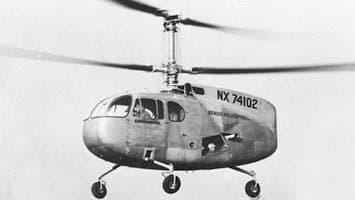
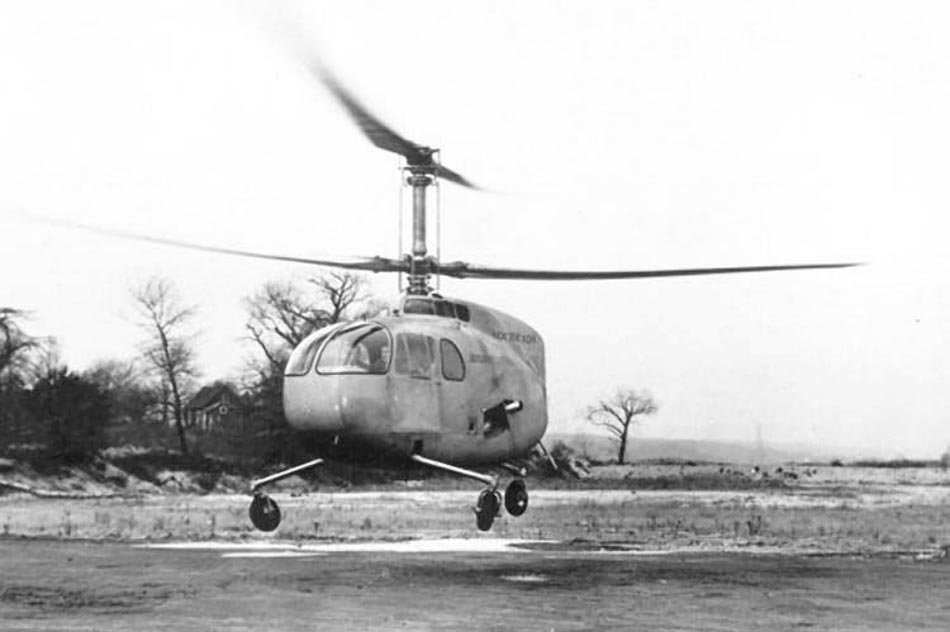
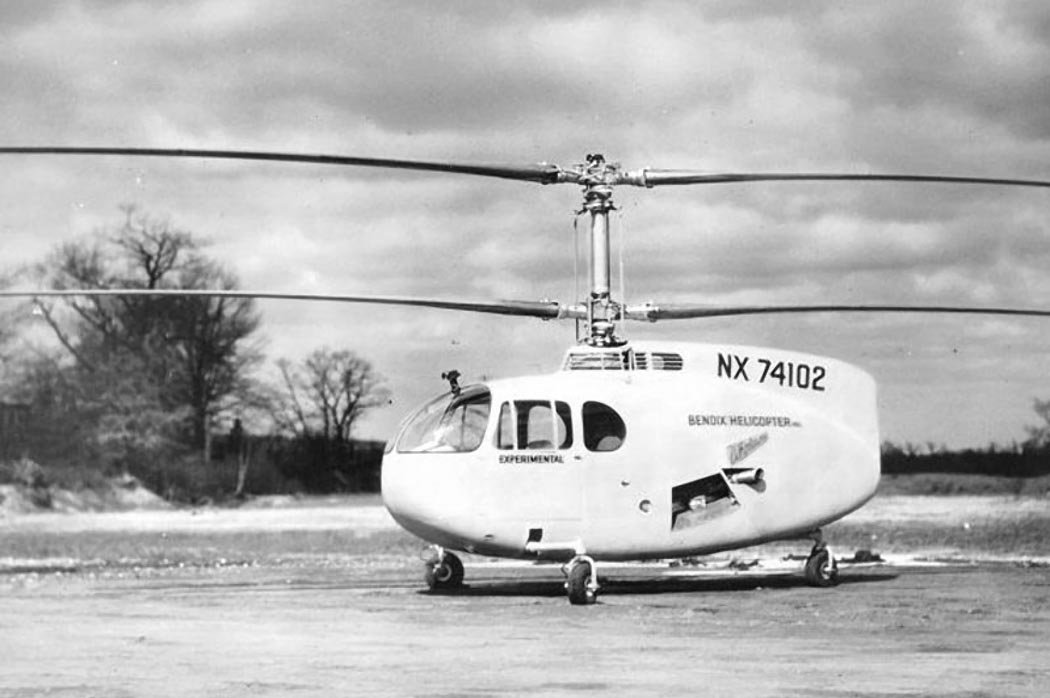
In 1944, Vincent Bendix established Bendix Helicopters, a small rotorcraft company later rebranded as Helicopters Inc. Designer Martin Jensen developed two similar projects for the company: the single-seat Bendix K and the four-seat Bendix J.
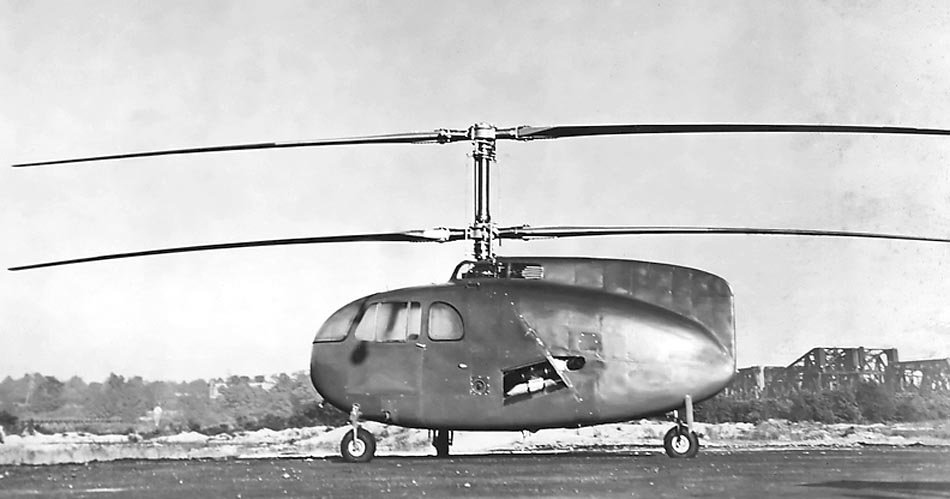
Both helicopters utilized a coaxial design, featuring two two-bladed counter-rotating main rotors on the same axis, a sophisticated configuration for its era.
Testing and Evaluation
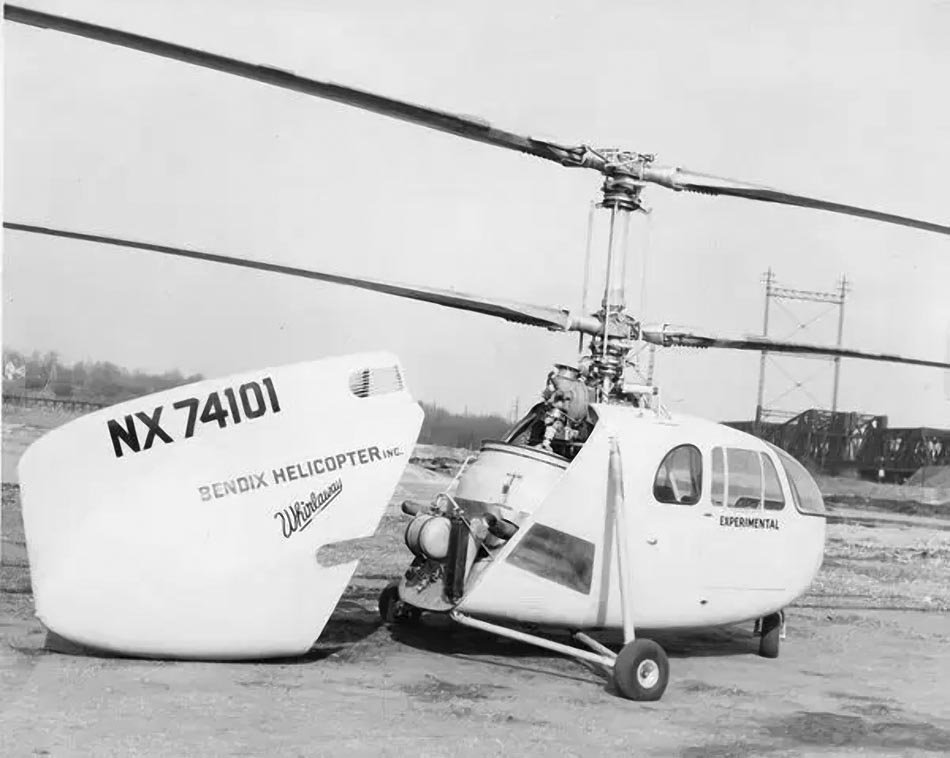
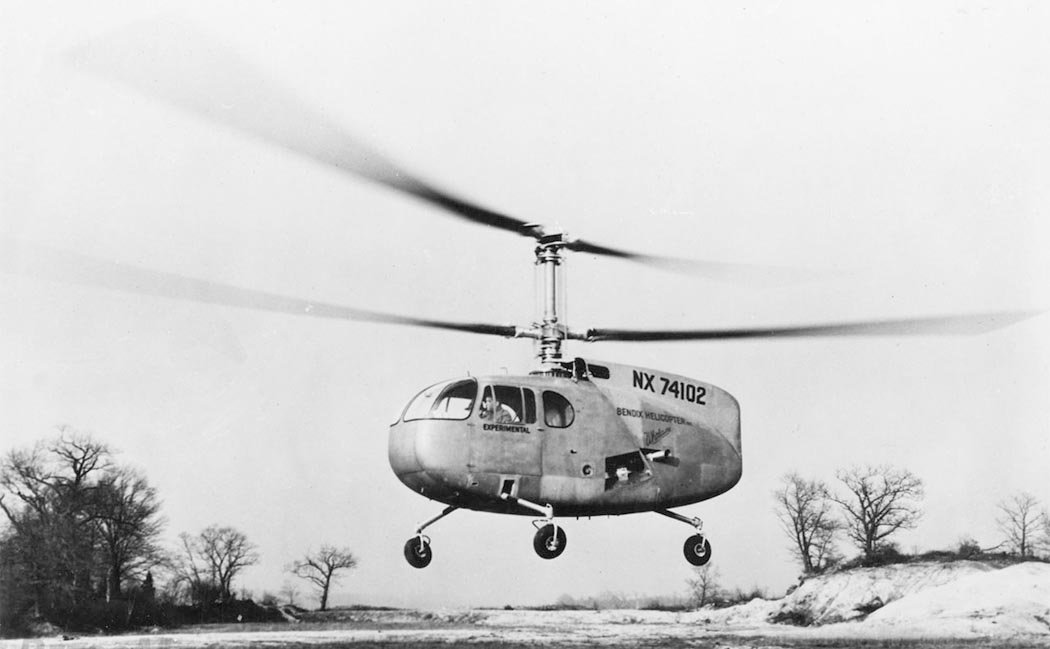
In 1946, two prototypes of the Bendix J helicopter were manufactured, bearing the registration numbers NX74101 and NX74102. The maiden flight of the first prototype occurred on September 15, 1946.
The aircraft underwent a comprehensive testing cycle and was subsequently proposed to the US Navy aviation. Despite its innovative design, the Bendix J was ultimately not accepted for production.
Legacy and Influence
Though not mass-produced, the Bendix J’s design proved influential. In 1947, the Gyrodyne Company of America developed its own model, the GCA-2A, directly based on the innovative helicopter structure.
Technical Specifications
| Modification | Bendix J |
| Main rotor diameter, m | 14. 60 |
| Length, m | 6.48 |
| Maximum takeoff weight | 2041 |
| Engine type | 1 Piston engine Pratt & Whitney R-985-B4 Wasp Junior |
| Power, kW | 1 x 336 |
| Maximum speed, km/h | 180 |
| Cruising speed, km/h | 137 |
| Practical range, km | 434 |
| Crew | 4 |
Image and diagram gallery of the Bendix J
 Bendix J |
 Bendix J |
 Bendix J |
 Bendix J |
 Bendix J |
Equipo Editorial de ArchivoAéreo
Grupo de investigadores y entusiastas de la aviación dedicados a documentar y preservar la historia aeronáutica mundial. Todos los artículos son revisados para garantizar precisión histórica.
Fuentes y Rigurosidad
La información presentada en esta ficha técnica ha sido compilada a partir de manuales de vuelo desclasificados, archivos históricos y bibliografía especializada. Aunque nos esforzamos por mantener la máxima precisión, algunos datos de rendimiento pueden variar según la variante específica o las condiciones operativas.