Bi-Cock
Alexander Alexandrovich Porokhovshchikov (1892 – 1943) is known in the history of Russian aviation as an aircraft designer, pilot, and entrepreneur. While still a high school student in 1909, he developed an aircraft project approved by Professor N.E. Zhukovsky.
In 1911, Porokhovshchikov built a strut-braced monoplane of very simple design in Riga, whose distinctive feature was a fuselage made from a solid bamboo trunk. The aircraft, designated No. 1, was equipped with a 22 hp “Volt” engine and performed a series of quite successful flights. Porokhovshchikov gained fame as a designer with the twin-boom “Bi-Cock” aircraft and the P-IV trainer, which was serially produced.
Pioneering Design of the Bi-Cock
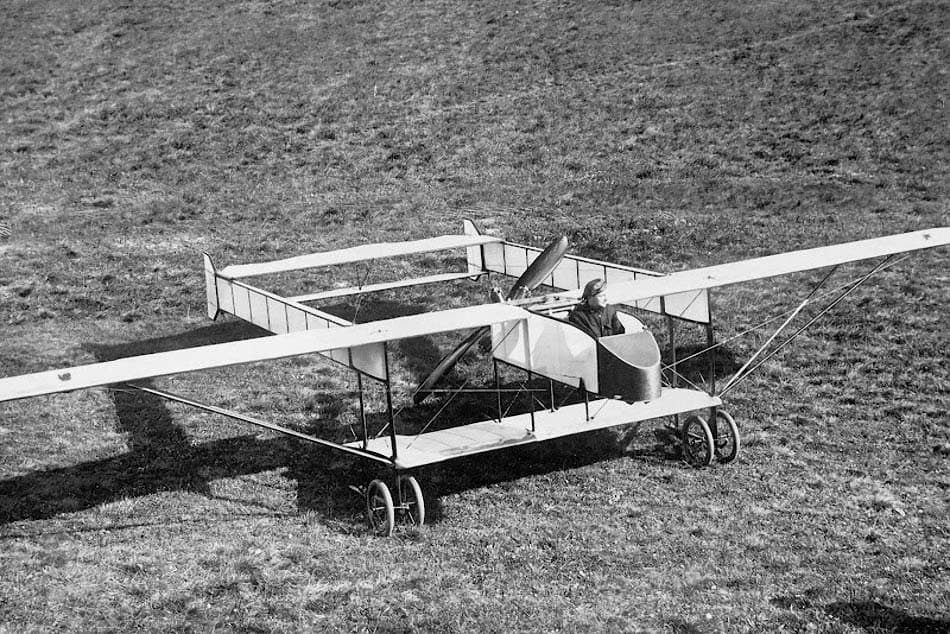
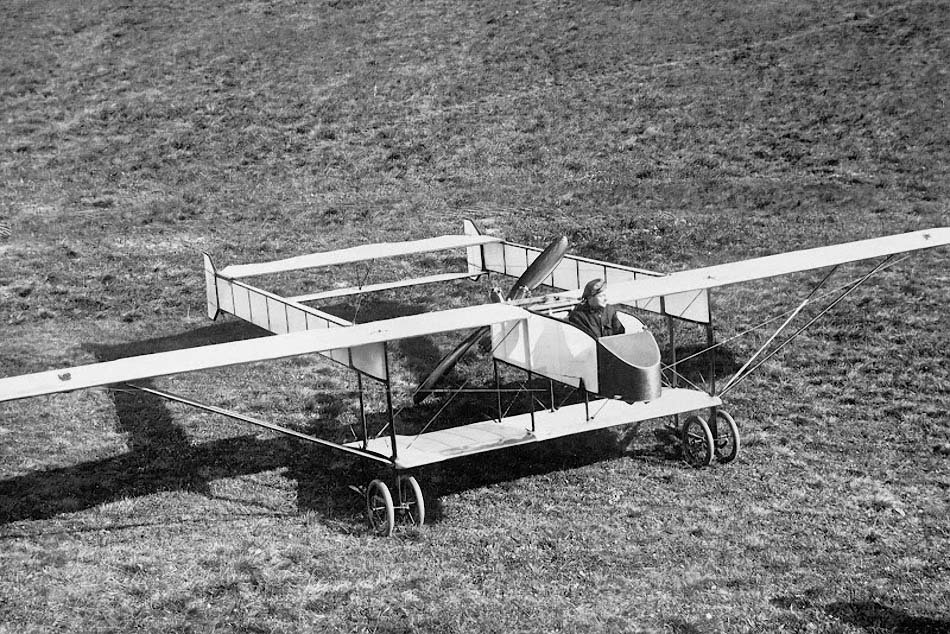
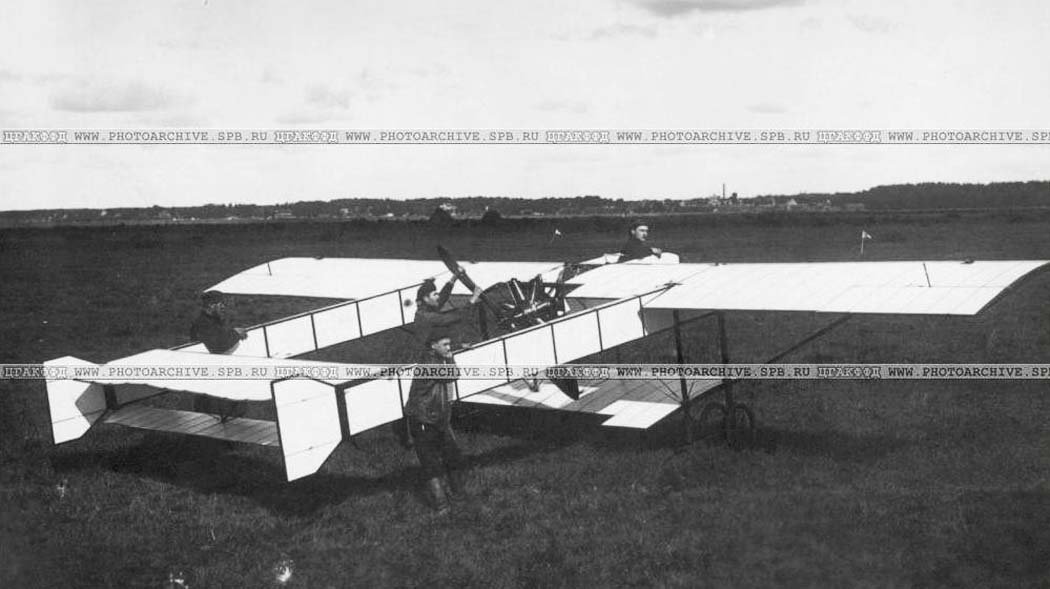
The “Bi-Cock” (Porokhovshchikov No. 2, “Dvukhvostka,” meaning “two-tailed”) can be considered one of the first in global practice to utilize a twin-boom layout. Employing a common pusher propeller configuration, the designer replaced numerous tube and wire-bracing structures with light box beams covered with fabric.
The “Bi-Cock” was a distinct sesquiplane with a two-seat cockpit and dual controls, equipped with a 50 hp “Gnome” engine. The tail booms terminated in all-moving rudders, connected at the top by a fixed stabilizer and at the bottom by an all-moving elevator. The aircraft was intended for military use, thus anticipating the installation of armor and armament.
Furthermore, the structure could be easily disassembled within 5 minutes, and in its disassembled state, the “Bi-Cock” fit into a transport container measuring 3.7 x 1.8 x 1.7 m. The primary reason for this “disassemblable” aircraft was its construction in the designer’s personal apartment, located on the 6th floor of a residential building.
Testing and Remarkable Performance
The “Bi-Cock” successfully underwent trials between August 15 and September 5, 1914. With a full load of 256 kg, equal to the aircraft’s empty weight, pilot M.L. Grigorashvili managed to achieve a maximum speed of about 100 km/h. For an aircraft with a 50 hp engine, such figures were considered very high.
Until the end of that year, negotiations were conducted with the Military Department regarding the manufacture of a small series of “Bi-Cock” at the F.F. Tereshchenko factory. However, Porokhovshchikov wished to build his aircraft personally, in a quantity sufficient to equip one aviation detachment, as he notified in his letter of January 8, 1915.
A Pioneer’s Unfulfilled Potential
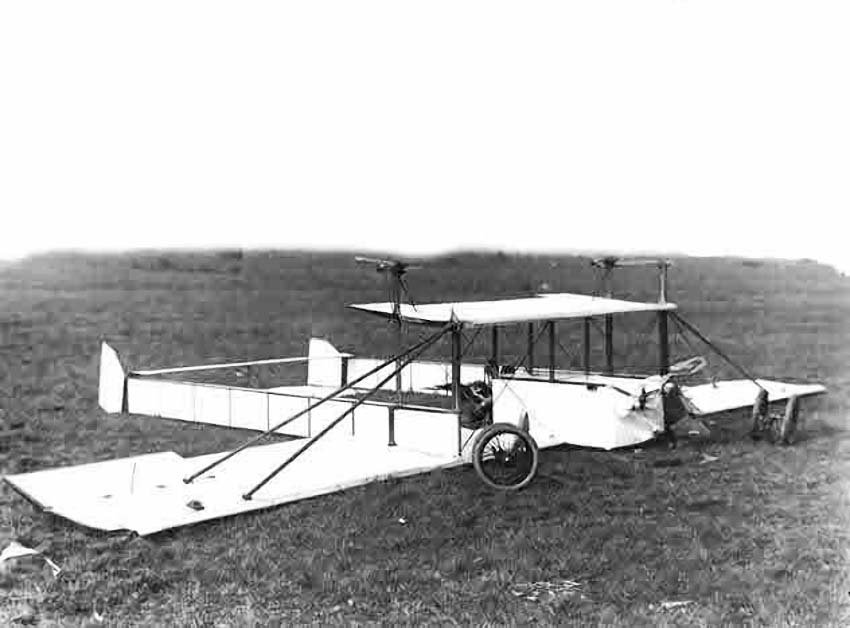
Further negotiations reached a deadlock, and the construction of Porokhovshchikov’s military “Dvukhvostka” did not materialize. In 1915, a second “Bi-Cock” prototype was built with an original tracked landing gear, which could be installed instead of wheels. This tracked chassis consisted of a canvas belt moving on wooden drums. The conducted tests confirmed the operability of the original device, but no further development ensued.
Technical Specifications
| Modification | Bi-Kok |
| Wingspan (upper), m | 10. 50 |
| Length, m | 7.50 |
| Wing area, m2 | 20.50 |
| Empty weight | 260 |
| Normal takeoff weight | 516 |
| Engine type | 1 Piston engine Gnome |
| Power, hp | 1 х 50 |
| Maximum speed, km/h | 99 |
| Cruising speed, km/h | 76 |
| Rate of climb, m/min | 200 |
| Crew, crew | 2 |
Image and diagram gallery of the Bi-Cock
 Bi-Kok |
 Bi-Kok |
 Bi-Kok |
ArchivoAéreo Editorial Team
A group of aviation researchers and enthusiasts dedicated to documenting and preserving global aeronautical history. All articles are reviewed to ensure historical accuracy.
Sources & Accuracy
The information presented in this technical sheet has been compiled from declassified flight manuals, historical archives, and specialized literature. While we strive for maximum accuracy, some performance data may vary depending on the specific variant or operational conditions.