Bi-Cock
Alexander Alexandrovich Porokhovshchikov (1892 – 1943) is known in the history of Russian aviation as an aircraft designer, pilot, and entrepreneur. While still a high school student in 1909, he developed an aircraft project approved by Professor N.E. Zhukovsky.
In 1911, Porokhovshchikov built a strut-braced monoplane of very simple design in Riga, whose distinctive feature was a fuselage made from a solid bamboo trunk. The aircraft, designated No. 1, was equipped with a 22 hp “Volt” engine and performed a series of quite successful flights. Porokhovshchikov gained fame as a designer with the twin-boom “Bi-Cock” aircraft and the P-IV trainer, which was serially produced.
Pioneering Design of the Bi-Cock
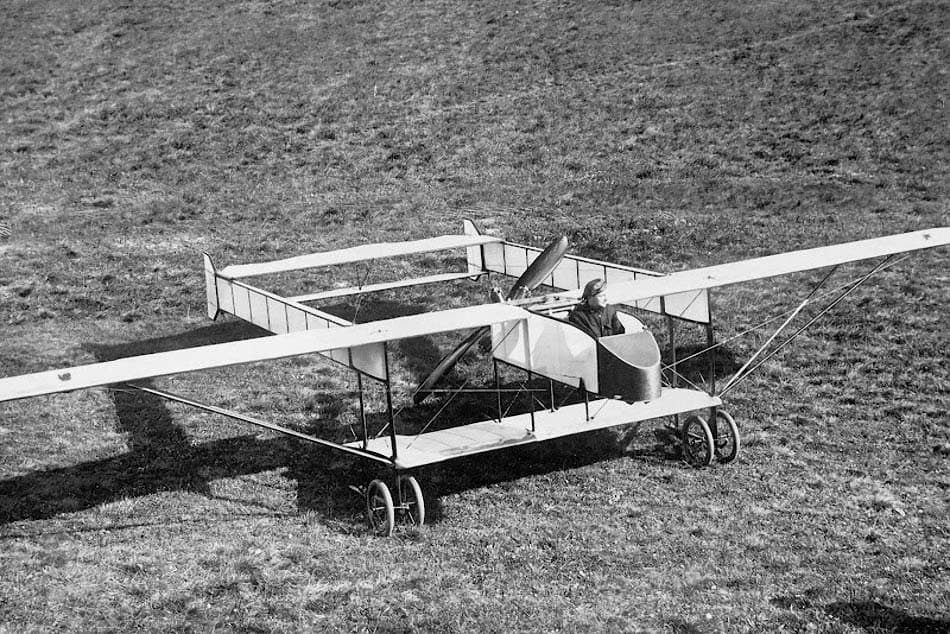
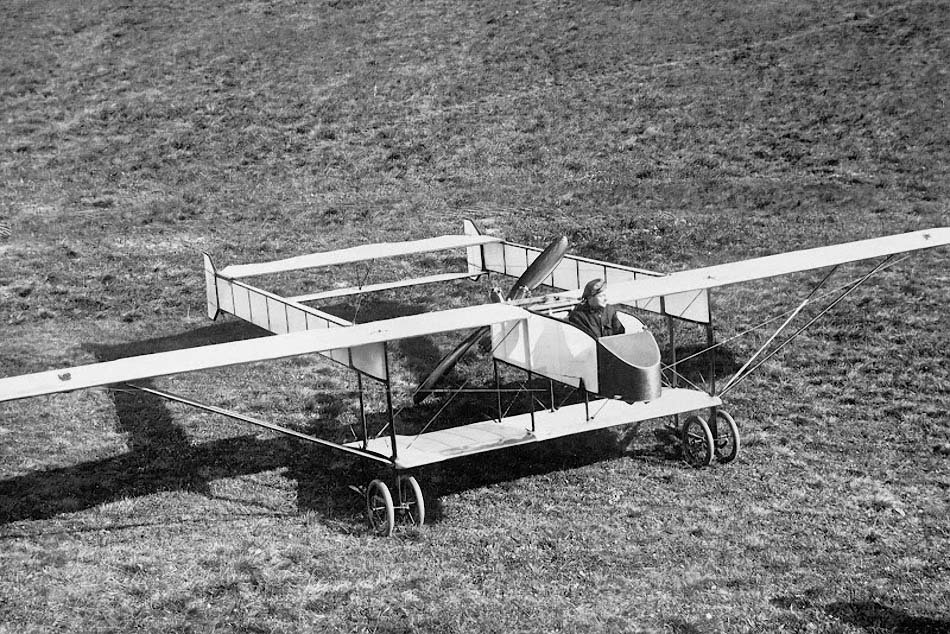
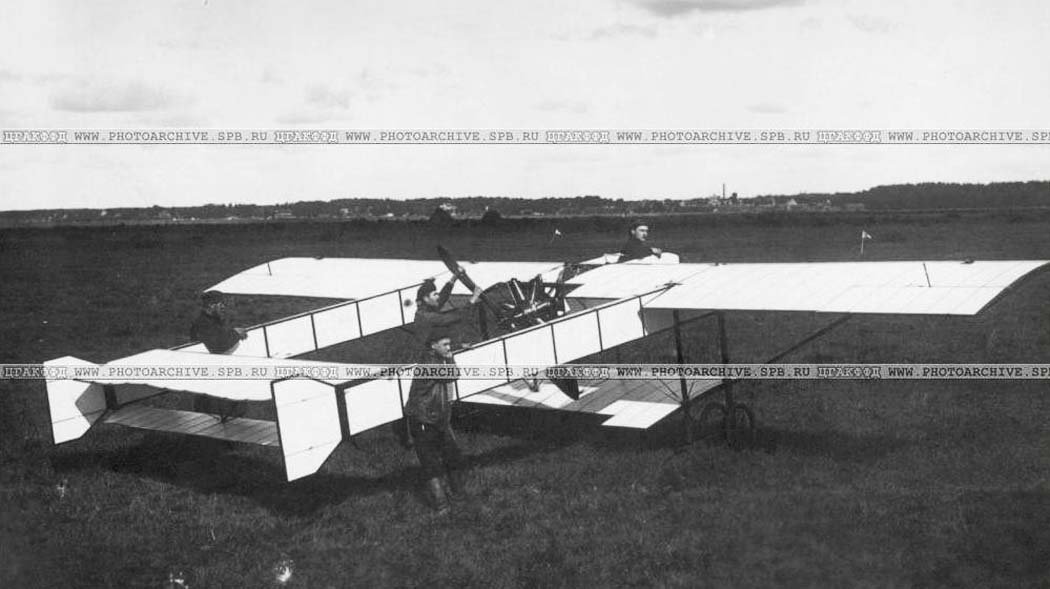
The “Bi-Cock” (Porokhovshchikov No. 2, “Dvukhvostka,” meaning “two-tailed”) can be considered one of the first in global practice to utilize a twin-boom layout. Employing a common pusher propeller configuration, the designer replaced numerous tube and wire-bracing structures with light box beams covered with fabric.
The “Bi-Cock” was a distinct sesquiplane with a two-seat cockpit and dual controls, equipped with a 50 hp “Gnome” engine. The tail booms terminated in all-moving rudders, connected at the top by a fixed stabilizer and at the bottom by an all-moving elevator. The aircraft was intended for military use, thus anticipating the installation of armor and armament.
Furthermore, the structure could be easily disassembled within 5 minutes, and in its disassembled state, the “Bi-Cock” fit into a transport container measuring 3.7 x 1.8 x 1.7 m. The primary reason for this “disassemblable” aircraft was its construction in the designer’s personal apartment, located on the 6th floor of a residential building.
Testing and Remarkable Performance
The “Bi-Cock” successfully underwent trials between August 15 and September 5, 1914. With a full load of 256 kg, equal to the aircraft’s empty weight, pilot M.L. Grigorashvili managed to achieve a maximum speed of about 100 km/h. For an aircraft with a 50 hp engine, such figures were considered very high.
Until the end of that year, negotiations were conducted with the Military Department regarding the manufacture of a small series of “Bi-Cock” at the F.F. Tereshchenko factory. However, Porokhovshchikov wished to build his aircraft personally, in a quantity sufficient to equip one aviation detachment, as he notified in his letter of January 8, 1915.
A Pioneer’s Unfulfilled Potential
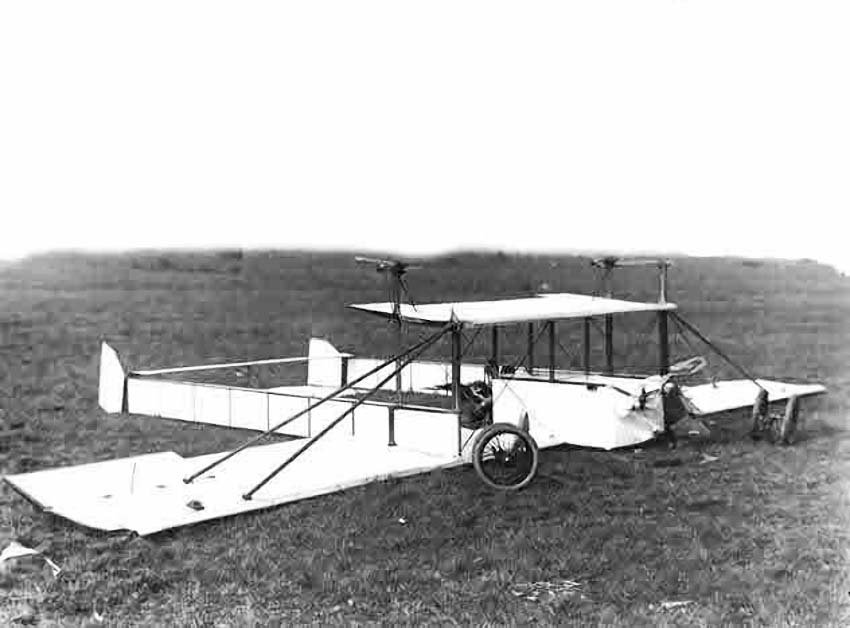
Further negotiations reached a deadlock, and the construction of Porokhovshchikov’s military “Dvukhvostka” did not materialize. In 1915, a second “Bi-Cock” prototype was built with an original tracked landing gear, which could be installed instead of wheels. This tracked chassis consisted of a canvas belt moving on wooden drums. The conducted tests confirmed the operability of the original device, but no further development ensued.
Technical Specifications
| Modification | Bi-Kok |
| Wingspan (upper), m | 10. 50 |
| Length, m | 7.50 |
| Wing area, m2 | 20.50 |
| Empty weight | 260 |
| Normal takeoff weight | 516 |
| Engine type | 1 Piston engine Gnome |
| Power, hp | 1 х 50 |
| Maximum speed, km/h | 99 |
| Cruising speed, km/h | 76 |
| Rate of climb, m/min | 200 |
| Crew, crew | 2 |
Image and diagram gallery of the Bi-Cock
 Bi-Kok |
 Bi-Kok |
 Bi-Kok |
Equipo Editorial de ArchivoAéreo
Grupo de investigadores y entusiastas de la aviación dedicados a documentar y preservar la historia aeronáutica mundial. Todos los artículos son revisados para garantizar precisión histórica.
Fuentes y Rigurosidad
La información presentada en esta ficha técnica ha sido compilada a partir de manuales de vuelo desclasificados, archivos históricos y bibliografía especializada. Aunque nos esforzamos por mantener la máxima precisión, algunos datos de rendimiento pueden variar según la variante específica o las condiciones operativas.