Bréguet 900 Louisette
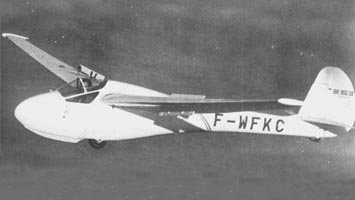
The Bréguet 900 was a single-seat sports glider, developed by the French company Bréguet. Georges Ricard served as the project’s chief designer. The prototype (F-CCBA) made its maiden flight on June 17, 1948, marking the Br.900 as the company’s first glider.
Also known by its unofficial name, Louisette, the Br.900 was a wooden mid-wing glider featuring an oval-section fuselage. Its wings had a span of 14.35 meters, contributing to its distinctive aerodynamic design.
Record-Breaking Flights
Soon after its initial test flights, the glider shattered French distance records. Paul Lepanse flew the Br.900 for an impressive 470 kilometers, a feat later surpassed by Roger Biagi, who flew 525 kilometers.
Furthermore, the glider set a new national speed record over a triangular course, achieving 100 km/h. Despite these high achievements, the glider was unsuccessful in international competitions.
Production and Variants
During its series production, a total of two Br.900 gliders were completed. Additionally, six Br.900S gliders were produced, featuring Schempp-Hirth airbrakes, a new cockpit canopy, and an enlarged rudder.
Technical Specifications
| Modification | Br.900S |
| Wingspan, m | 14.35 |
| Length, m | 6.47 |
| Aspect ratio | 15.85 |
| Wing area, m2 | 12.90 |
| Wing loading, kg/m2 | 23.80 |
| Empty weight | 211 |
| Maximum takeoff weight | 306 |
| Maximum speed, km/h | 180 |
| Maximum glide ratio | 27 |
| Speed for maximum glide ratio, km/h | 78 |
| Minimum sink rate, m/s | 0.75 |
| Speed for minimum sink rate, km/h | 73 |
| Crew | 1 |
Image and diagram gallery of the Bréguet 900 Louisette
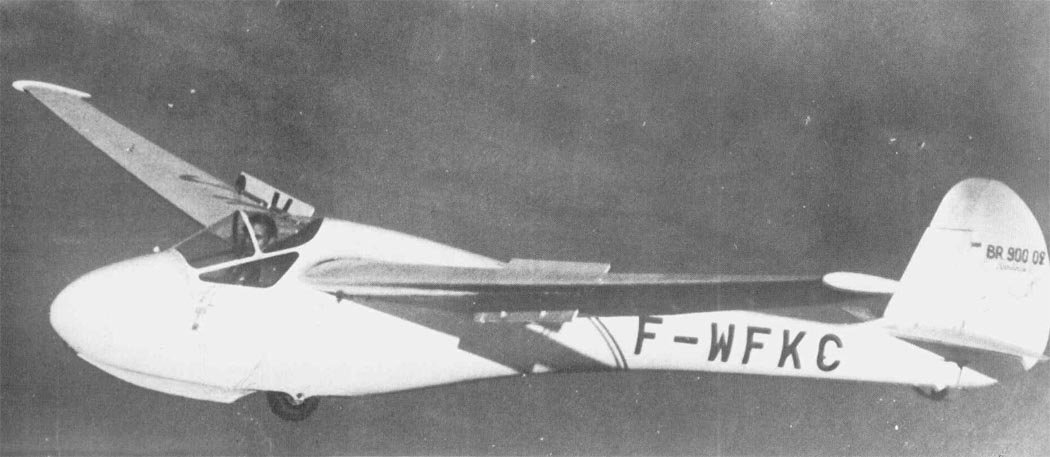 Br.900 Louisette |
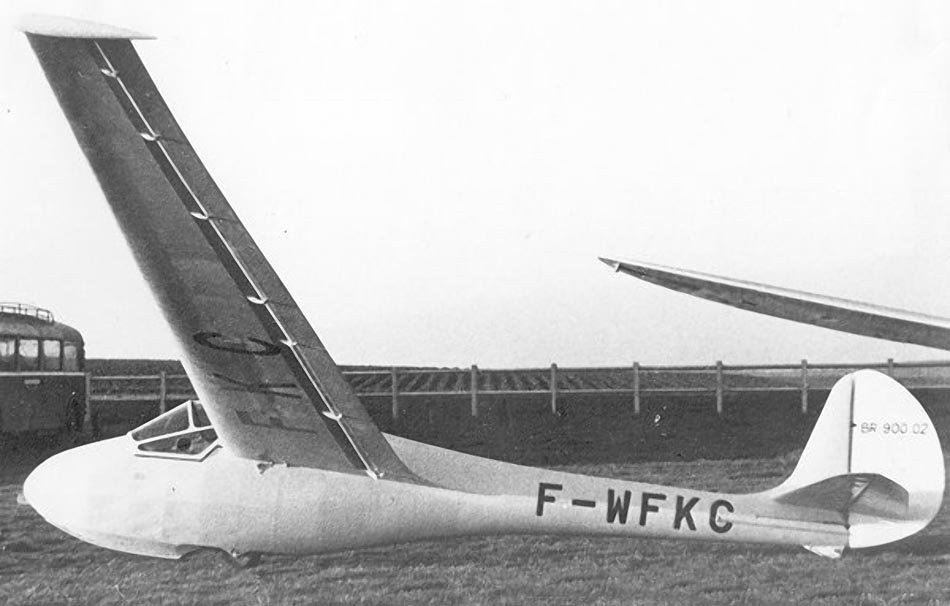 Br.900 Louisette |
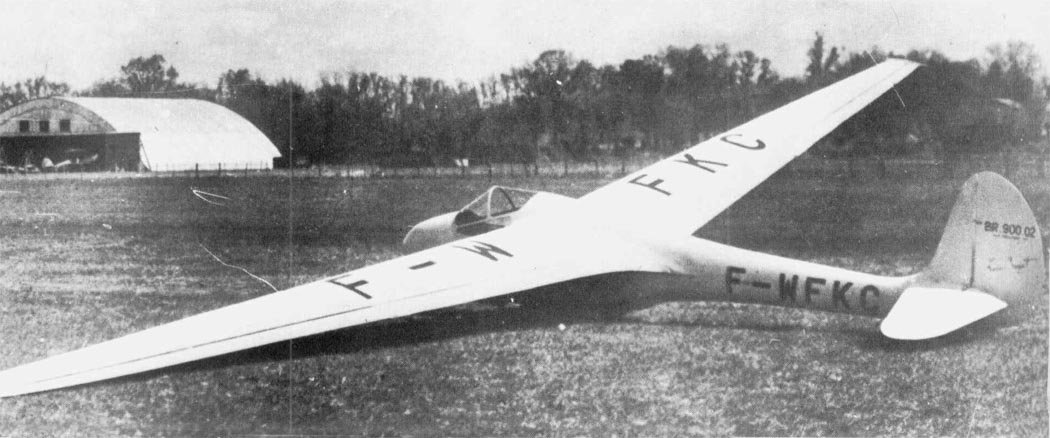 Br.900 Louisette |
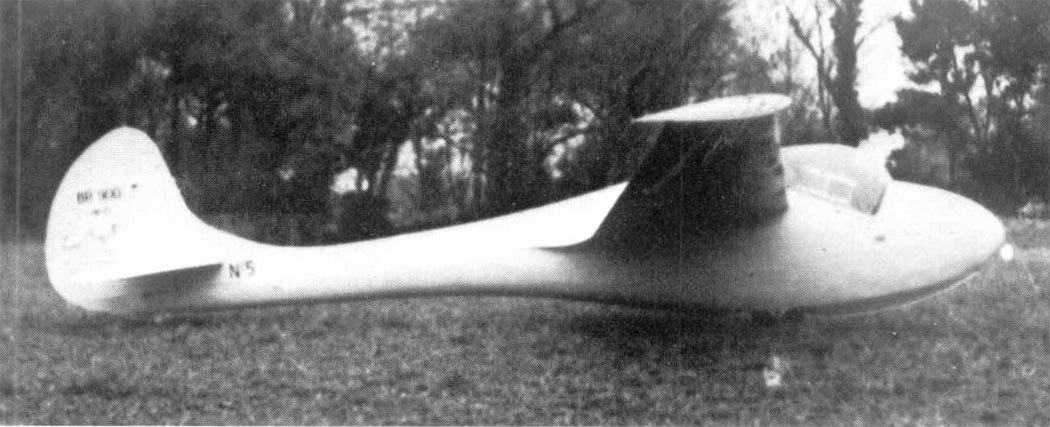 Br.900 Louisette |
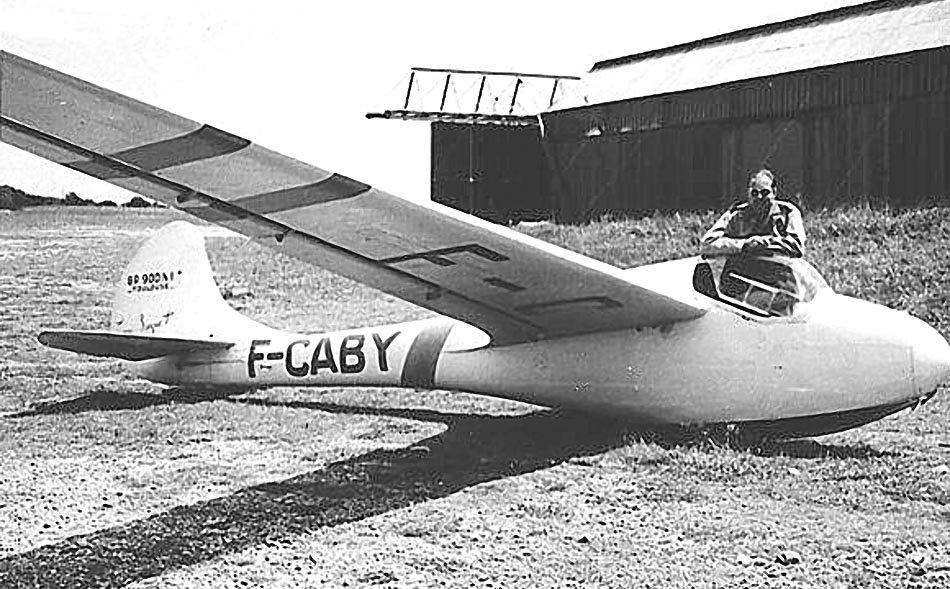 Br.900 Louisette |
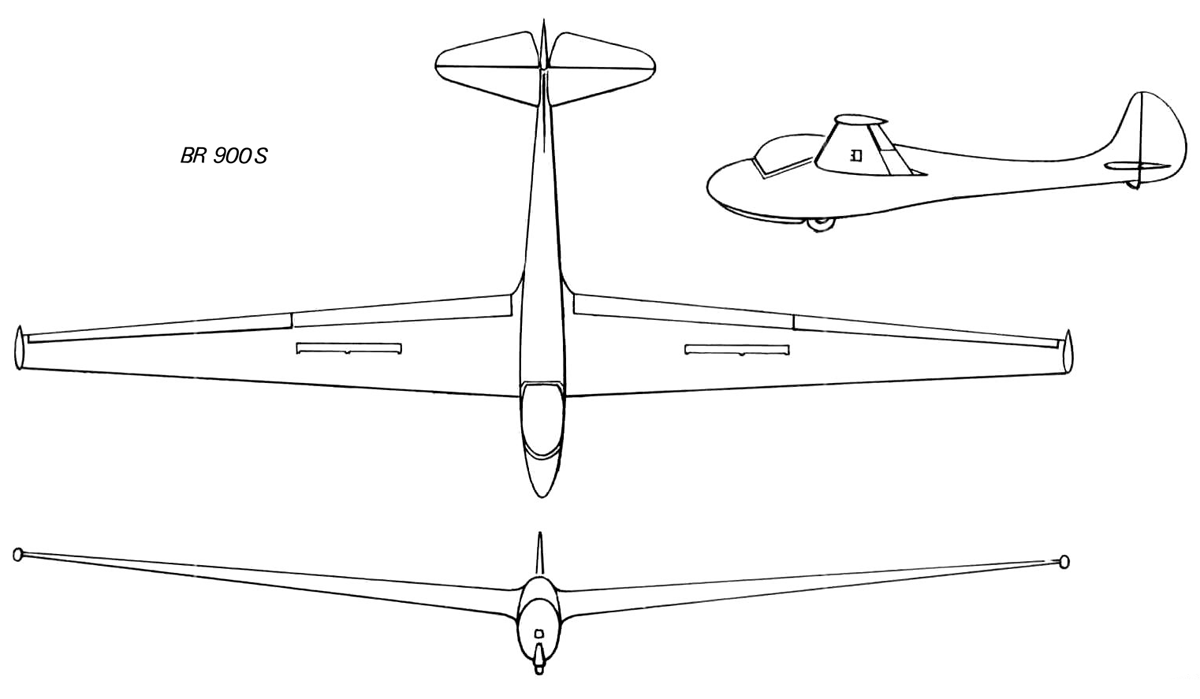 Br.900 Louisette |
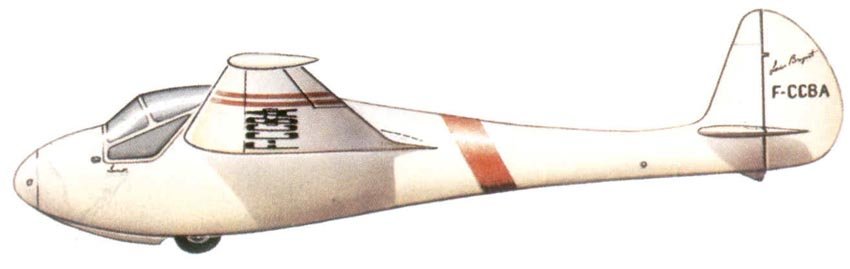 Br.900 Louisette |
ArchivoAéreo Editorial Team
A group of aviation researchers and enthusiasts dedicated to documenting and preserving global aeronautical history. All articles are reviewed to ensure historical accuracy.
Sources & Accuracy
The information presented in this technical sheet has been compiled from declassified flight manuals, historical archives, and specialized literature. While we strive for maximum accuracy, some performance data may vary depending on the specific variant or operational conditions.