Bréguet 900 Louisette
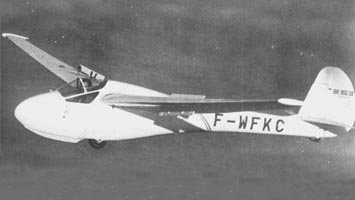
The Bréguet 900 was a single-seat sports glider, developed by the French company Bréguet. Georges Ricard served as the project’s chief designer. The prototype (F-CCBA) made its maiden flight on June 17, 1948, marking the Br.900 as the company’s first glider.
Also known by its unofficial name, Louisette, the Br.900 was a wooden mid-wing glider featuring an oval-section fuselage. Its wings had a span of 14.35 meters, contributing to its distinctive aerodynamic design.
Record-Breaking Flights
Soon after its initial test flights, the glider shattered French distance records. Paul Lepanse flew the Br.900 for an impressive 470 kilometers, a feat later surpassed by Roger Biagi, who flew 525 kilometers.
Furthermore, the glider set a new national speed record over a triangular course, achieving 100 km/h. Despite these high achievements, the glider was unsuccessful in international competitions.
Production and Variants
During its series production, a total of two Br.900 gliders were completed. Additionally, six Br.900S gliders were produced, featuring Schempp-Hirth airbrakes, a new cockpit canopy, and an enlarged rudder.
Technical Specifications
| Modification | Br.900S |
| Wingspan, m | 14.35 |
| Length, m | 6.47 |
| Aspect ratio | 15.85 |
| Wing area, m2 | 12.90 |
| Wing loading, kg/m2 | 23.80 |
| Empty weight | 211 |
| Maximum takeoff weight | 306 |
| Maximum speed, km/h | 180 |
| Maximum glide ratio | 27 |
| Speed for maximum glide ratio, km/h | 78 |
| Minimum sink rate, m/s | 0.75 |
| Speed for minimum sink rate, km/h | 73 |
| Crew | 1 |
Image and diagram gallery of the Bréguet 900 Louisette
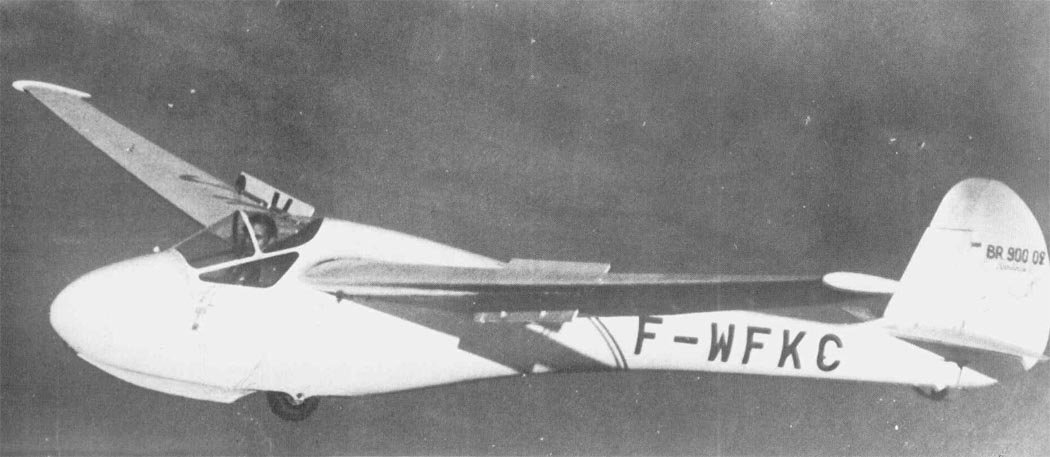 Br.900 Louisette |
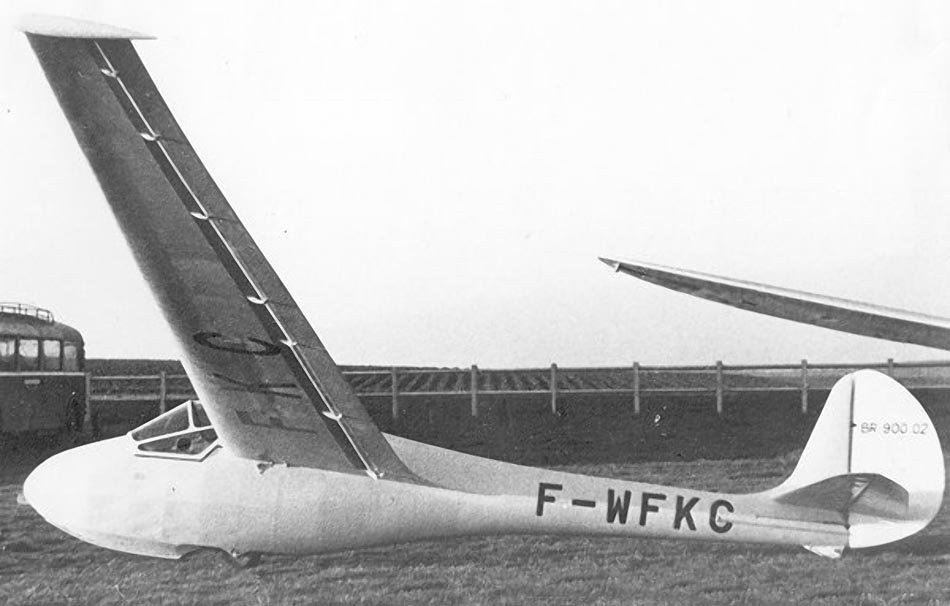 Br.900 Louisette |
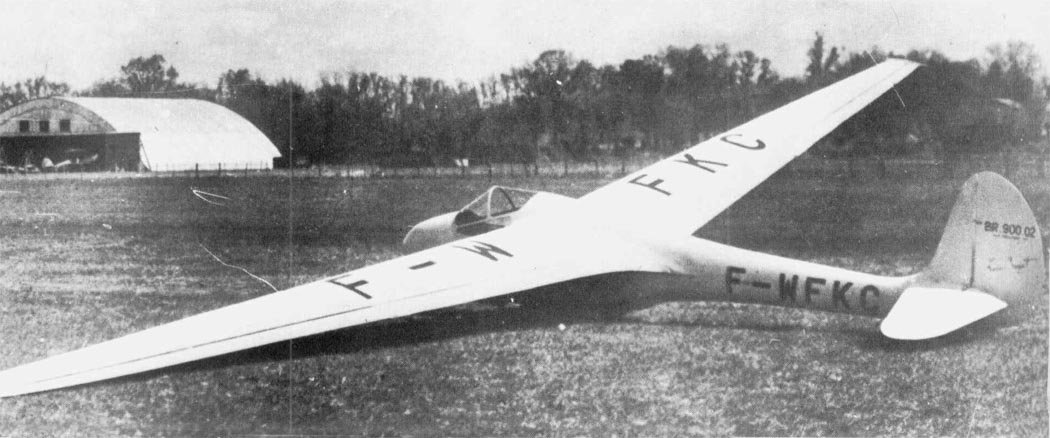 Br.900 Louisette |
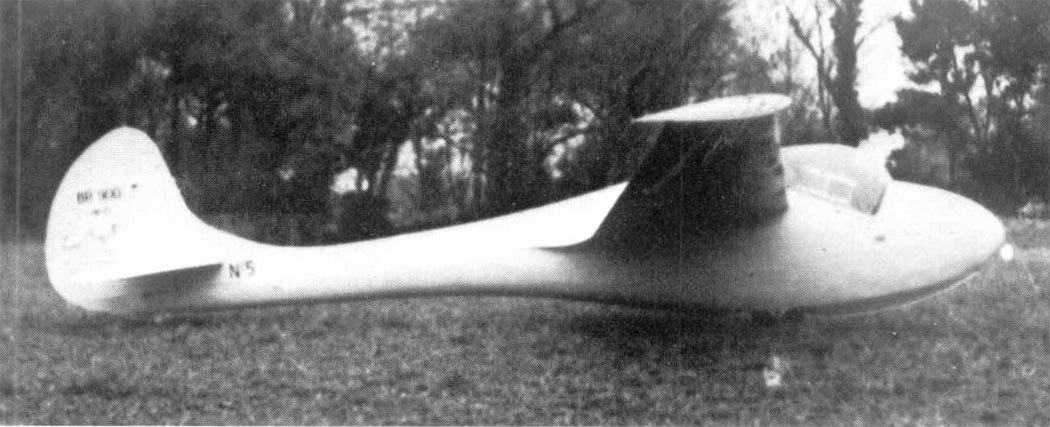 Br.900 Louisette |
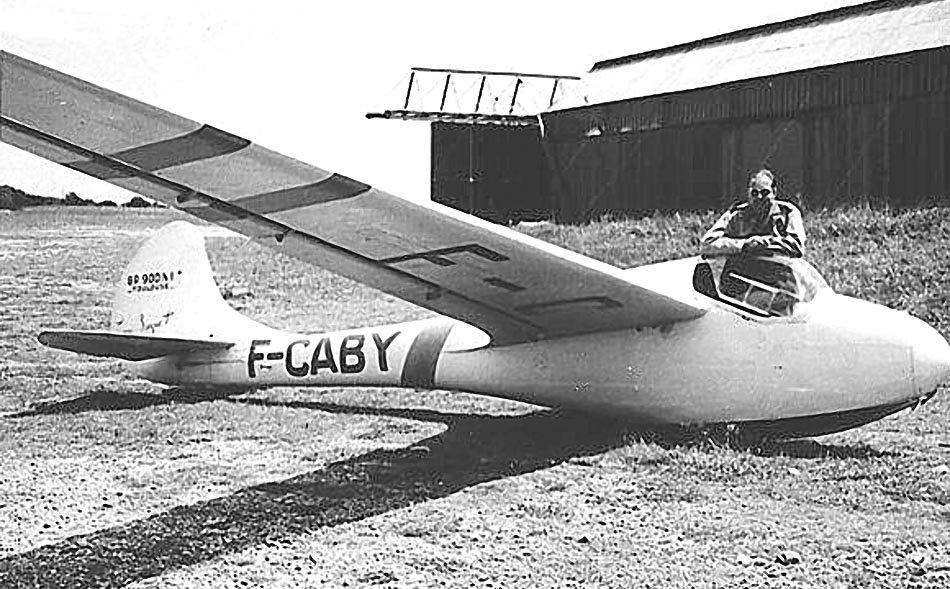 Br.900 Louisette |
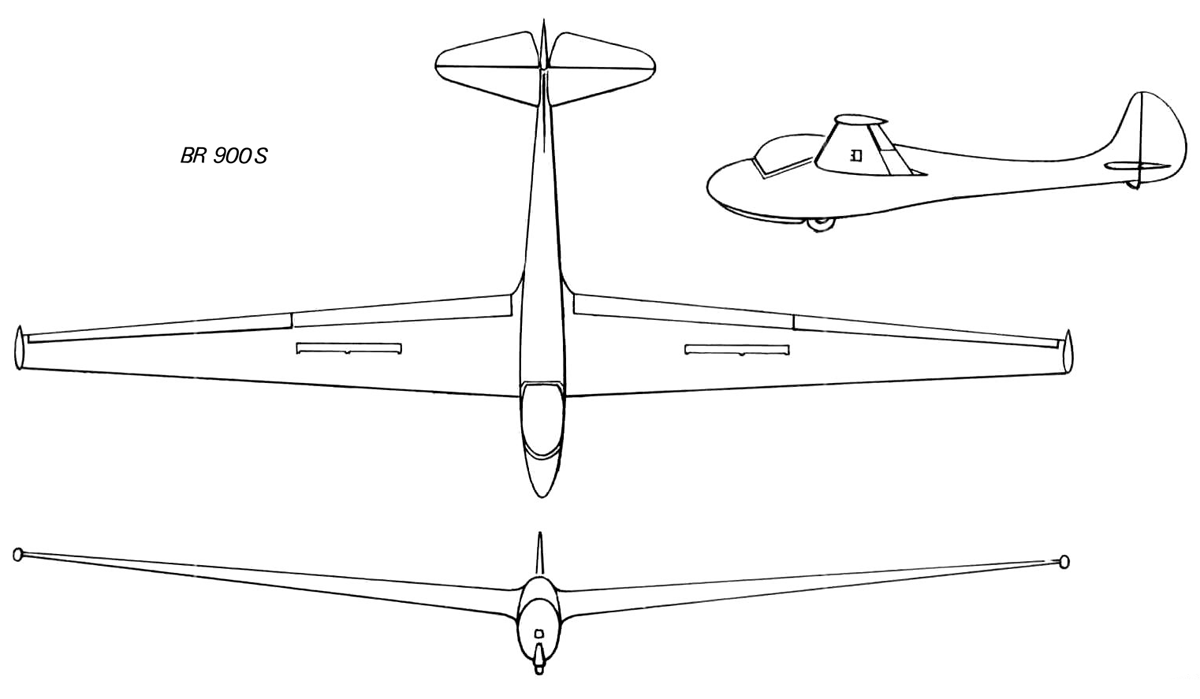 Br.900 Louisette |
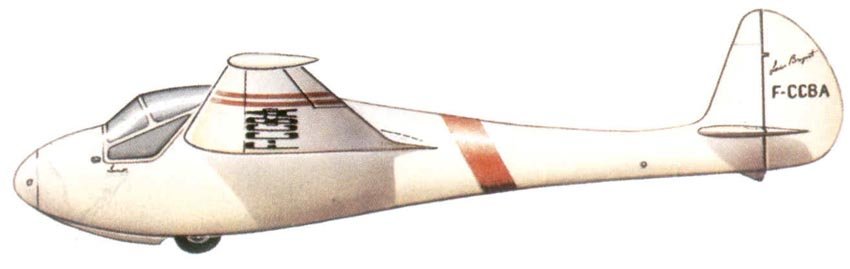 Br.900 Louisette |
Equipo Editorial de ArchivoAéreo
Grupo de investigadores y entusiastas de la aviación dedicados a documentar y preservar la historia aeronáutica mundial. Todos los artículos son revisados para garantizar precisión histórica.
Fuentes y Rigurosidad
La información presentada en esta ficha técnica ha sido compilada a partir de manuales de vuelo desclasificados, archivos históricos y bibliografía especializada. Aunque nos esforzamos por mantener la máxima precisión, algunos datos de rendimiento pueden variar según la variante específica o las condiciones operativas.