The mako shark, though perhaps not the largest, is the fastest and most ruthless of all shark species. Reaching speeds of up to 96 km/h over long distances, the mako is known for attacking humans, though it does not consider them food. Makos prefer to feed on tuna and, once they sense prey, quickly accelerate and strike.
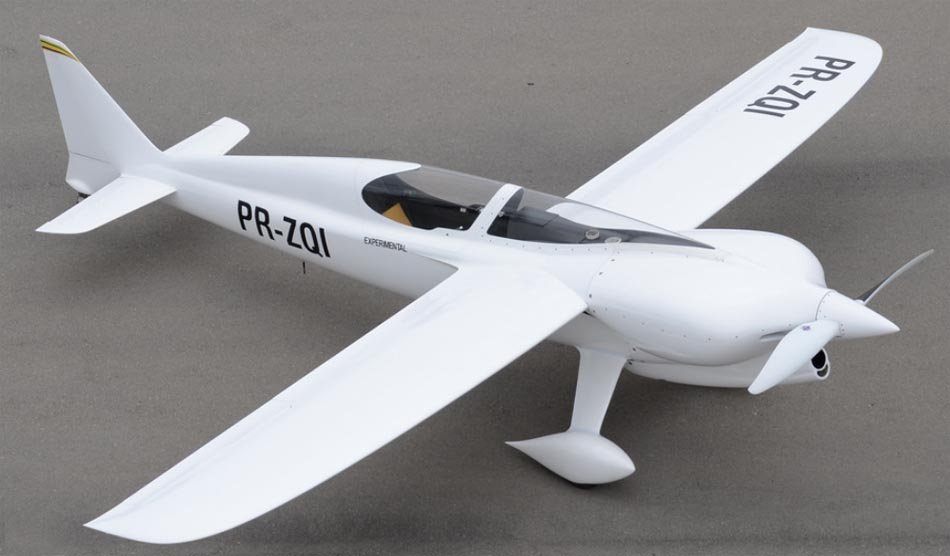
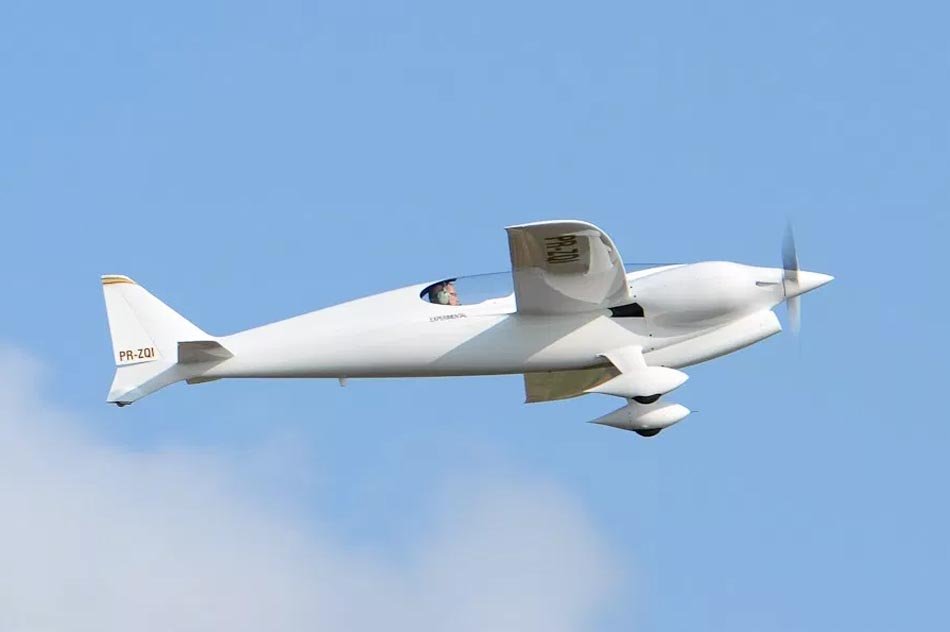
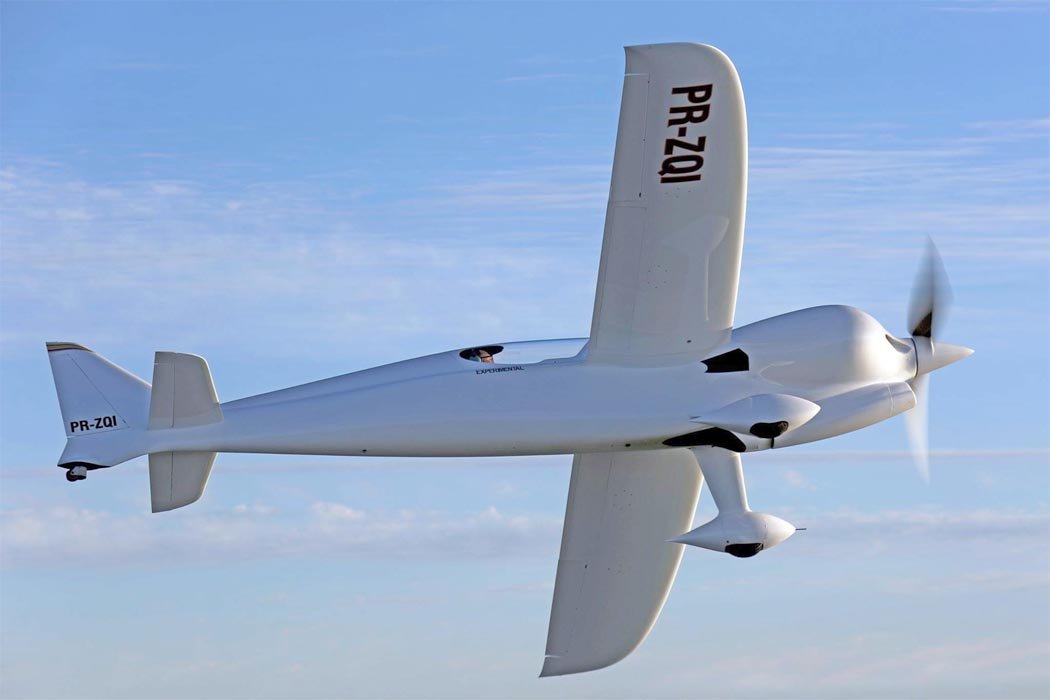
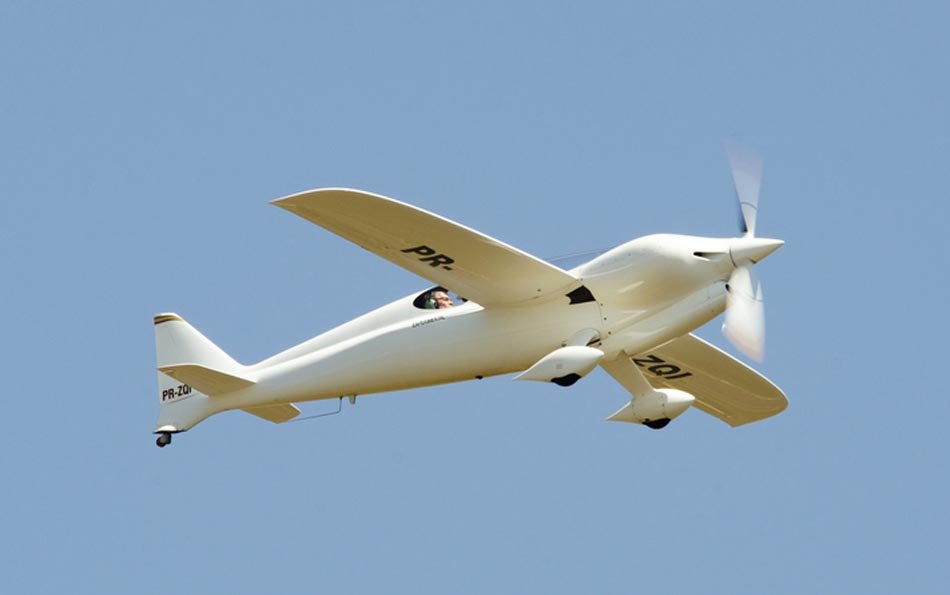
The mako shark’s tail is similar to a tuna’s, with its primary musculature located on its back, unlike other shark species whose muscles run along the body. This seemingly minor adaptation enables it to achieve remarkable speeds. The Portuguese word for this type of shark is “anequim,” a name also given to a high-speed single-engine aircraft designed in Brazil.
The CEA-311 Anequim was developed by a team of professors and students from the Centre of Aeronautical Studies (CEA) at the Federal University of Minas Gerais in Belo Horizonte. This light aircraft is fitted with a Lycoming IO-360 engine, and its fuselage contours strikingly resemble the mako shark’s body. While aircraft like the Cessna 172 and Piper Cherokee, equipped with the same engine, struggle to reach 230 km/h, the Anequim achieves a staggering 522 km/h, repeatedly breaking records.
The Quest for Speed and Records
Speed records have been a common feature of human life since people started moving on their feet. The famous stock car racer Richard Petty once stated that there was no doubt when nations began to outrun each other in cars—it happened the day the second car was built. This same analogy can be applied to aviation, where the drive to surpass limits is a powerful motivator.
The Fédération Aéronautique Internationale (FAI) is the organization that sets standards and registers records in aviation and astronautics. Formed in October 1905 by a small group of European aero club leaders, just a year and a half after the Wright brothers’ first flight, the federation thrives 110 years later.
Its goal is the systematic registration and subsequent popularization of the best flights, the identification of technical differences for comparison, and the confirmation of records to ensure that the record holder rightfully earns their title. These principles are observed by the federation to this day, with its headquarters located in Lausanne, Switzerland. The organization records speed records in “km/h”.
While most countries credit the Wright brothers with the first heavier-than-air flight, it’s debatable. The renowned Brazilian Alberto Santos-Dumont was the first to set a speed record in 1906, barely reaching 42 km/h. This serves as undeniable proof of the significant advancements in aircraft since the Wright brothers’ flight. A new milestone was set in 1947 when Chuck Yeager broke the sound barrier in controlled horizontal flight, reaching Mach 1.06 in a shallow dive, overcoming what seemed an impossible obstacle.
Of course, this record has been repeatedly broken since. The FAI registered an absolute record in 1976 when the strategic supersonic reconnaissance aircraft Lockheed SR-71 Blackbird flew at 3,529 km/h. However, an earlier record, though not officially registered by the FAI, saw the experimental rocket-plane X-15 achieve 6,206 km/h in flight in 1967.
Since then, this ultimate record has not been surpassed, but aircraft improvements to make them faster have continued for decades. The FAI constantly registers various types of records, most of them related to speed, but also including altitude and payload capacity. In just three months of 2015 (August, September, and October), no fewer than 23 different records were logged by the FAI. Five of these belonged to the Anequim aircraft, and one to an aircraft for its rate-of-climb record.
If you wish to immortalize your name in aeronautical speed records, you have every chance to do so. Some records, like speed flights between corresponding cities, are relatively easy to break, requiring only proper documentation and a fee without direct competition. However, the Anequim’s achievements are well-known in its weight category, and breaking its records is a significant challenge, requiring competition against long-established pilots.
While most people aim to set records for personal glory, Paulo Iscold, a professor from the design team at the Centre of Aeronautical Studies (CEA) at the Federal University of Minas Gerais, has a different goal. He uses speed record data to motivate students and unlock their potential. The Anequim aircraft was not the university’s first project; the program began in the 1960s with the CB-1 Gaviota, designed by engineer Claudio Pinto de Barros, the founder of CEA, and his students.
Four additional aircraft models—two gliders, a motor glider, and an ultralight glider—were designed before Iscold took the helm. Airplanes created within the university framework had their unique names but sometimes received simple numerical designations, such as the CEA-311 Anequim. “CEA” stands for Centre of Aeronautical Studies, and the number “3” denotes the serial number of the airplane (No. 1 for a simple airplane, No. 2 for an ultralight airplane).
Cutting-Edge Engineering and Anequim’s Achievements
The CEA workshops operate 50-60 hours a week, with each student dedicating 10-20 hours of their time. Students of all ages participate in the project development, from graduates focusing on complex tasks like dynamic design and flutter research to younger students concentrating on structural design and parts casting. Thirty students worked on the Anequim model from start to finish over five years.
The aircraft creation process was divided into three stages: design, production and assembly of parts, and flight testing. The maiden flight was performed by Gunnar Armin Halboth, a professional pilot with thousands of hours of flight time in various aircraft, from sports planes to helicopters. Responsibilities were divided: Iscold outlined the parameters for the aircraft’s shape and engine, while students brought his blueprints to life.
“For us, it was a real challenge,” admits Paulo, “as the Anequim combines exceptional speed capabilities with a small size.” This balance between performance and dimensions makes it an engineering marvel.
The development of the first high-speed aircraft at CEA began in 2000 with the CEA-308, a project unfortunately halted after a Rotax engine failure caused a crash. Production resumed in 2007, and after several modifications, the CEA-308 was fitted with a new Jabiru 2000 engine. Although the serial engine was not new and later showed signs of a leaking cylinder, Gunnar Armin Halboth still broke three speed records and one rate-of-climb record in December 2010.
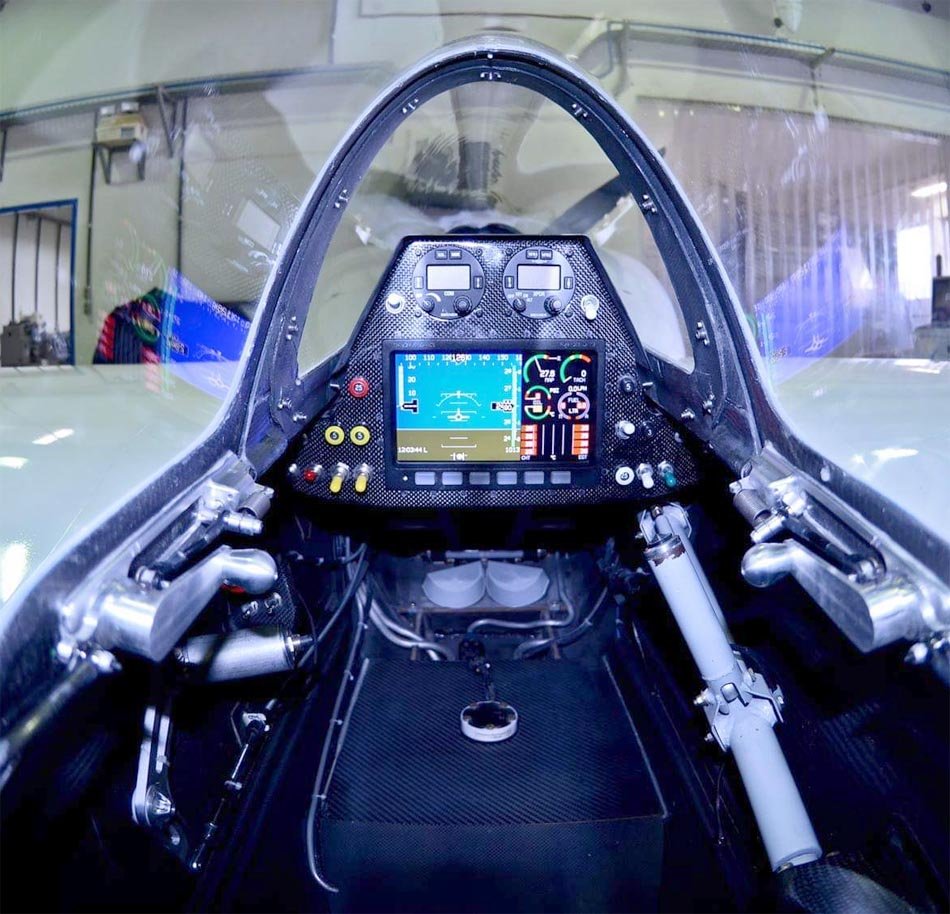
Inspired by the success of the CEA-308, engineers almost immediately launched the Anequim project. Much like the mako shark’s skin, covered in tiny scales that aid its speed in water, the Anequim’s fuselage material plays a crucial role in its acceleration. The fuselage is made from carbon fiber, known for its high strength, stiffness, and low mass, which also reduces vibration frequency. The vertical stabilizer, however, is crafted from fiberglass to accommodate a high-frequency antenna at the top of the aircraft without hindering radio waves.
A major problem at high speeds was flutter, a phenomenon the team spent 1.5 years analyzing. Wind tunnels were used, but only for various parts of the aircraft, not the entire body. The design incorporated composite materials from Barracuda Composites, with the fuselage and wings made from AR300 epoxy resins and Divinycell PVC in an efficient molding system that achieved ideal aerodynamic mass distribution. SolidWorks tools were used throughout the design and construction phases.
Technology and Future Outlook
An auxiliary power unit is an indispensable attribute for a speed aircraft. Iscold and his students utilized a 180 hp Lycoming IO-360 engine, which Sky Dynamics modified to 220 hp for increased speed. These changes included high-compression pistons, ported cylinders, and piston rings, transforming it into an AEIO-360. The engine was balanced to allow the pilot to reach 3,000 RPM, with future possibilities of increasing to 3,400 RPM for even greater power.
“Optimal engine installation is key to achieving maximum speed,” says Iscold, emphasizing the critical role of internal aerodynamics for engine cooling. The engine is literally encased in a bulletproof carbon fiber and titanium protection system, driving a composite Catto propeller. A two-bladed propeller was used for speed records, while a three-bladed version was employed for rate-of-climb flights.
Another way to boost speed was to optimize aerodynamics and reduce drag. Iscold jokingly suggests the aircraft should be designed as if the pilot “hides behind the engine,” though this would give Halboth visibility akin to Charles Lindbergh in the Spirit of St. Louis. Halboth adds that “the smaller each component, the greater the speed that can be achieved.” He describes the Anequim’s sidestick control as “very ergonomic,” with Iscold asserting that it provides confidence in turbulence and air pockets.
Once the development of all aircraft parts was complete, the student engineers began assembling the airplane, using molds produced from their computer designs. When the long assembly process finished, it was time for the trial flight. For Halboth, this flight was thrilling. He had been present at every stage of the aircraft’s development and knew what to expect. Halboth compared this model to the CEA-308, with one of his requirements being reduced aerodynamic drag, which was not a feature of the CEA-308. To achieve this, it was decided to split the flaps, which became effective for drag.
However, during the Anequim’s first flight, the flaps malfunctioned, and after several circuits, Halboth attempted to land. Despite the flap issues, the Anequim’s maiden flight was successful, with no injuries. The landing occurred at 130 km/h, a speed at which most propeller plane pilots fly before approaching for landing. “From the very beginning, we knew we were designing a new record-setting aircraft,” Halboth admitted.
After 11 hours of test flights in the Anequim, Iscold arranged a schedule for record-breaking flights with the Fédération Aéronautique Internationale. These flights were not predetermined, and neither Iscold nor Halboth knew exactly what to expect. However, they were confident they could set new records; the only question was how. The record-setting flight took place at Santa Cruz Air Force Base in Rio de Janeiro between August 21 and 23, 2015.
The flight was scheduled for early morning to take advantage of the absence of wind. Halboth took off and made four circuits to assess weather conditions and technical data. The aircraft surpassed speeds previously set in 1998 by Jon Sharp in the Nemesis DR-90, breaking records for the 3-km circuit (521 km/h, previous record 466.83 km/h) and the 15-km distance (511 km/h). Additionally, records were broken for 100 km (490 km/h) and 500 km (493 km/h) distances, and the rate-of-climb record to an altitude of 3000 m (achieved in 2 minutes 26 seconds).
As of this article’s writing (2016), the records set by the Anequim were still under FAI review. However, beyond being a supersonic aircraft, it is truly an impressive flying machine. What comes next? “We plan to refine the details and put Gunnar back at the controls,” says Paulo Iscold.
“I have big plans for my students. My desire is to become even faster. Therefore, the next stage will be the creation of an airplane with a maximum speed of 724 km/h. And then – 885 km/h. But the latter is still just a dream,” Iscold admits. The quest for speed and aeronautical innovation at the CEA continues.
Technical Specifications
| Modification | CEA-311 Anequim |
| Wingspan, m | 6.00 |
| Length, m | 5.28 |
| Empty weight | 297 |
| Takeoff weight | 500 |
| Engine type | 1 Piston engine Lycoming AEIO-360 |
| Power, hp | 1 x 220 |
| Maximum speed, km/h | 521 |
| Crew | 1 |
Image gallery of the CEA-311 Anequim