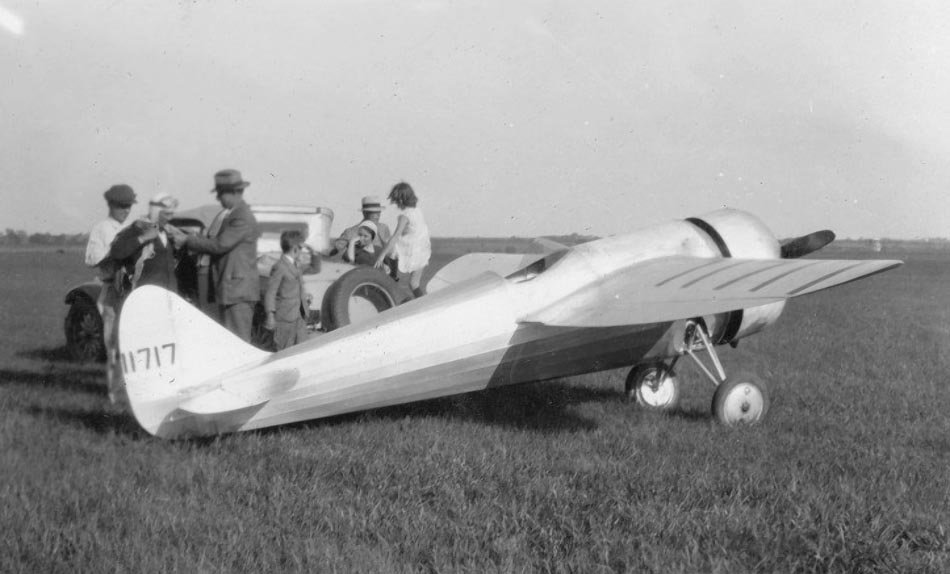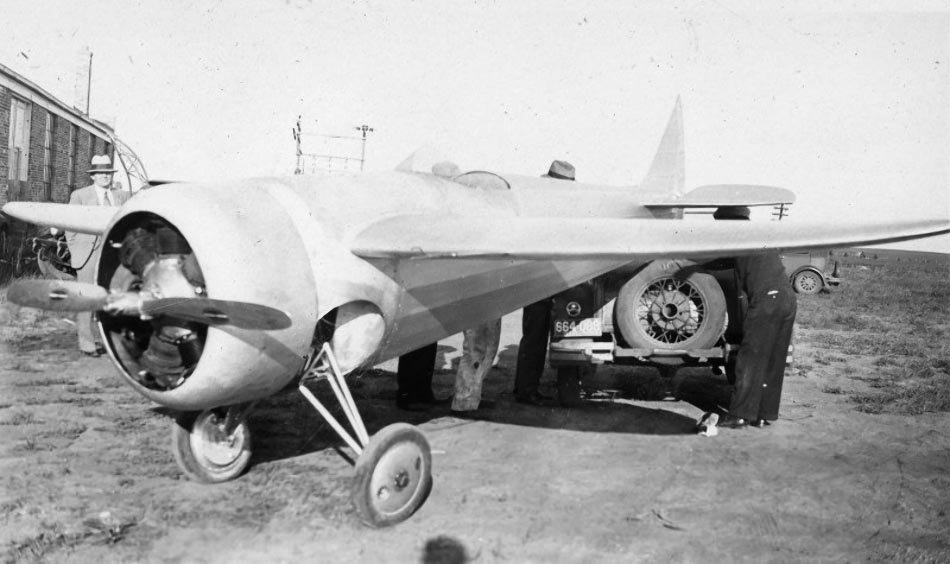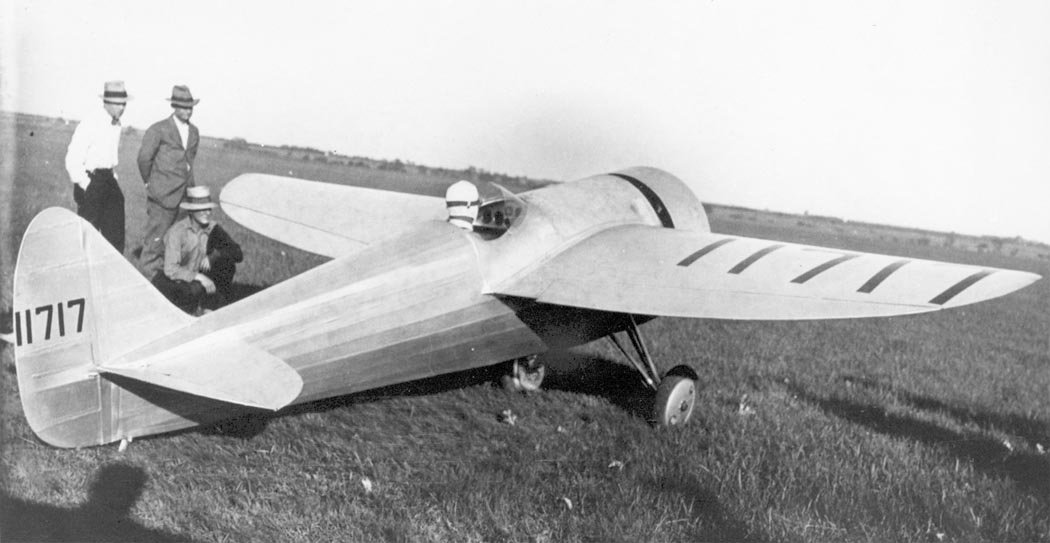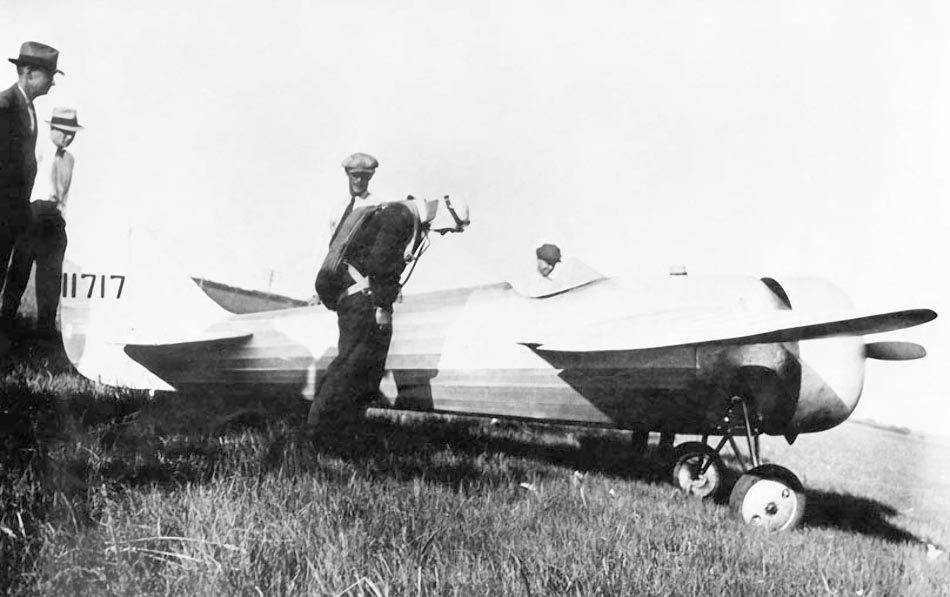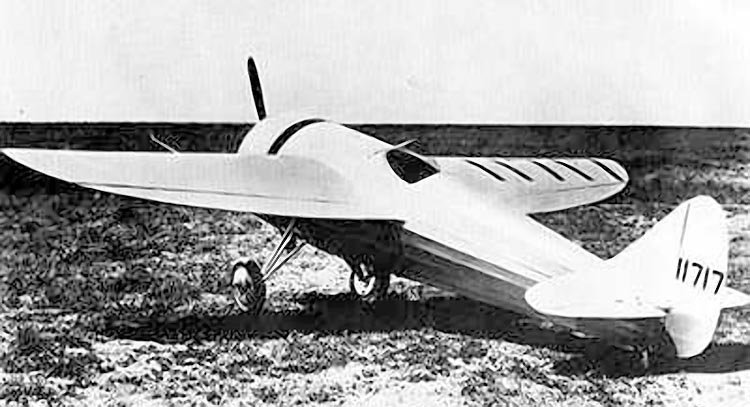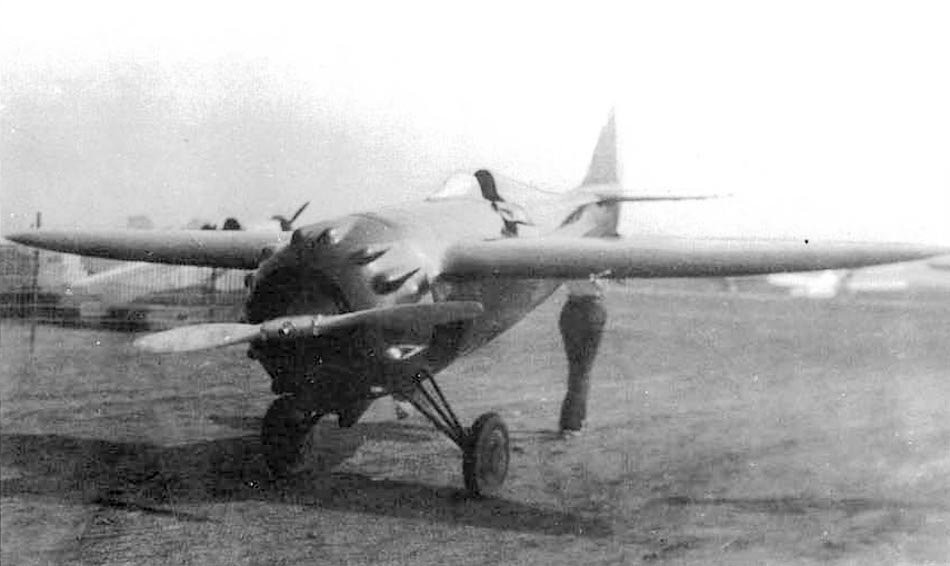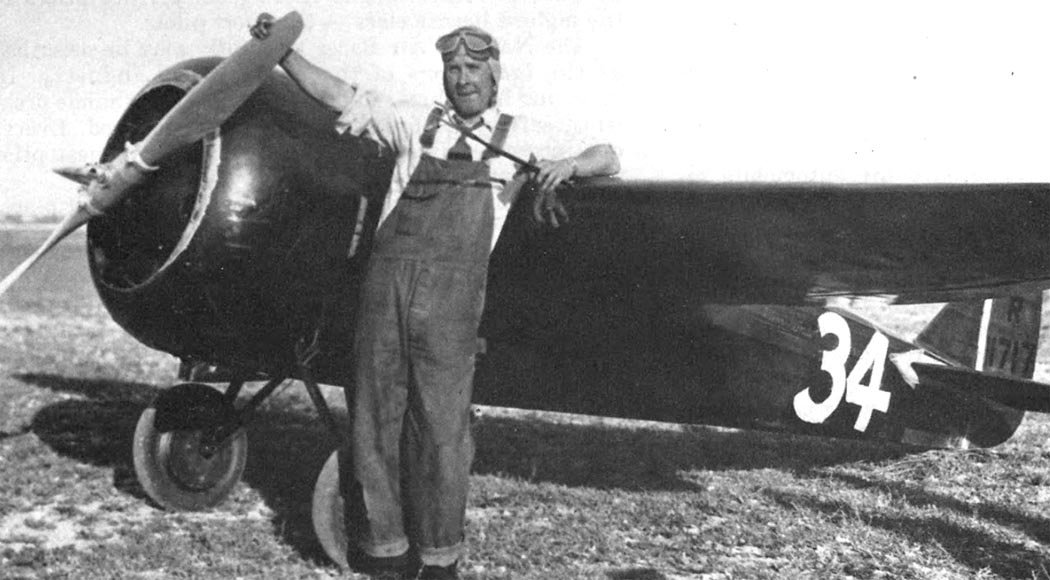
After the failure of the Cessna CR-1, the aircraft underwent a radical redesign. The new CR-2 (NR11717) replicated the “number one” in construction but was slightly enlarged: the wingspan reached 5.48 m, and the aircraft’s length increased to 4.52 m. The tail area also grew. The payload included the pilot (up to 90 kg) and 80 liters of fuel.
On May 18, the “two” was ready. In honor of his beloved daughter, Cessna named the aircraft “Miss Wanda”. He asked his long-time friend Roy Liggett, who had raced a “Cessna AW” in the late 1920s, to test the machine. To the delight of numerous guests, the silver aircraft (registration NR11717) flew impeccably. The machine proved more stable than its predecessor, though visibility from the cockpit still left much to be desired. Without using the engine’s emergency mode, Liggett accelerated it to 200-240 km/h. In subsequent flights using emergency mode, speeds of 305 km/h were achieved, then surpassing the “two-hundred-mile” mark. After modifications, the aircraft was ready for races.
Competition and Initial Improvements
The Omaha Air Races were chosen for its debut. Concluding the ferry flight to the starting point in Omaha, Liggett made a spectacular low-level flight at maximum speed in front of the crowd gathered at the airfield. After landing, the CR-2 caused a sensation, attracting eager colleagues. However, its performance in the races on May 25, 1932, was unsuccessful: Liggett flew wing-to-wing with famous aces but only managed 4th place in the “engine displacement up to 500 cubic inches” class and 5th in the “unlimited” class. Both times he was outpaced by John H. Livingston in his Monocoupe by tenths of a second. The prize money, though modest, offered some consolation.
Subsequently, the CR-2 was entered into the Niagara Falls Air Races, where it secured 3rd place, again behind Livingston. Finally, the Cessna team participated in the year’s main event: the National Air Races in Cleveland, Ohio, which took place from August 27 to September 5. These grand annual competitions brought together dozens of the best pilots, allowing winners to earn thousands of dollars a day.
Liggett, in the CR-2, started in the Cincinatti Trophy race and, at one stage, overtook Livingston for the first time. However, at the next intermediate landing, Roy was unable to insert the locking pins of the extended landing gear, which led to damage to the retraction-extension mechanism during touchdown. There was no alternative; the landing gear had to be fixed in the extended position, and he continued flying that way. The result: his eternal rival was first again. Nevertheless, Liggett performed quite successfully, finishing third, though he was aided by breakdowns among many competitors. He participated in two more races, placing 2nd and 3rd, and earning a total of 900 USD. Eldon Cessna secured an additional 770 USD in prize money with the “AW” aircraft.
Technological Advancement and New Victories
The results of the 1932 season showed that Cessna’s new aircraft was capable of high performance, but competing for top places required even greater speed, achievable only with a 145 hp “Super Scarab” engine. The money earned by the CR-2 in Cleveland finally allowed for the acquisition of this engine.
The new “heart” required several modifications to the aircraft. The “Super Scarab” weighed 137 kg – 13 kg more than its predecessor – so to maintain balance, the fuselage had to be lengthened. Additionally, a new, larger-diameter cowling was manufactured. The engine was adjusted to briefly develop 175 hp. In a test flight on December 28, the machine demonstrated 225 mph (362 km/h). The aircraft was hastily prepared for the January competitions in Miami, which opened the 1933 season, and victory was swift. In the Colonel E.H.R. Green Trophy race, the “two” confidently outpaced everyone. This time, Livingston lost and immediately offered his services to Cessna.
In July 1933, pilot John Livingston in the yellow-red “three” (registration NR57Y) and Art Davis in the “two” were unmatched at the Chicago American Air Races. John was the winner, outperforming his teammate by fractions of a second (his skill in turns proved decisive). Prize money totaled 3500 USD for both. After the Chicago races, the “two” was further modified, installing a more advanced cowling modeled after the CR-3 and a streamlined headrest. The aircraft, renamed CR-2A, was repainted a bright red. On August 30, it achieved a speed of 250 mph, though Cessna boasted to reporters, claiming 270.
The Tragic End
The very next day, the team returned to Chicago for the International Air Races. On September 2, during the Shell Speed Dash race, bad weather erupted. Battling squally winds, Liggett took off and flew his aircraft diagonally across the airfield. Watching him, the elder Cessna suddenly saw with horror how a detached section of the “two’s” cowling struck the wing, causing it to begin to disintegrate. Before the eyes of numerous spectators, the aircraft crashed to the ground. Shock and horror! Clyde was devastated by what happened: a close friend had died in his plane…
Alas, this senseless death was not the only one on that ill-fated day. The September 11 issue of “Time” magazine reported: “The fabric ripped from the wing of the yellow-red ‘Gee-Bee’ flown by 26-year-old Florence Klingensmith of Minneapolis… The plane plunged, dooming Miss Klingensmith to death before the stands.”
Technical Specifications
| Modification | CR-2 |
| Wingspan, m | 5.59 |
| Aircraft length, m | 4.52 |
| Empty weight | 307 |
| Engine type | 1 Piston engine Warner Scarab 499 |
| Power, hp | 1 x 125 |
| Crew | 1 |
Image gallery of the Cessna CR-2 “Miss Wanda”