A significant event occurred in American helicopter construction in 1951. F. Piasecki completed the heavy-lift helicopter PV-22 (H-21A), continuing the “flying banana” lineage of the PV-3 and PV-17, and nicknamed the “flying workhorse.” The aircraft seemed to have every chance of becoming a true workhorse, and the company could barely keep up with orders.
With a takeoff weight of 6800 kg, the helicopter could transport up to 2000 kg of cargo or twenty fully equipped soldiers in its spacious cargo cabin. In 1953, the PV-22 impressed not only the public but also specialists, setting absolute world records for speed (236.2 km/h) and altitude (6769 m) during a national aviation festival, surpassing the previous S-52 records. Piasecki was once again riding high, receiving numerous titles and honors, and was elected president of the American Helicopter Society.
However, despite his fame, Piasecki consistently emphasized his special respect for Igor Sikorsky, the “patriarch” of helicopter design and his long-time competitor. He insisted that the first honorary Alexander Klemin Prize approved by the Society be ceremoniously awarded in 1951 to the “founder of world helicopter construction.” Sikorsky, while acknowledging his younger colleague’s undeniable design success, had no intention of ceding to Piasecki in the heavy helicopter competition. In public appearances, he repeatedly noted the reality of a passenger helicopter with a capacity for up to 100 people.
Since the mid-1940s, Sikorsky had been developing projects for multi-engine helicopters with a takeoff weight of 20 tons. Dreaming of the widespread integration of rotorcraft into everyday life, Igor Ivanovich had already envisioned their most suitable application: express buses for transporting passengers from the periphery to the center of large cities. However, the powers that be assigned these giant helicopters a completely different role: troop deployment and combat equipment transport.
The mastery of all-metal blade manufacturing allowed for an increase in the main rotor (MR) diameter. Advances in MR design, particularly ensuring uninterrupted airflow over the blades and autorotative landings with power burst, enabled an increase in the load on the swept disk. Sikorsky made the bold decision to move to loads twice the usual, which allowed for a significant increase in lift with a comparatively small increase in main rotor diameter (up to 22m).
Development and Innovative Design
In the same year 1951, a triumphant one for Piasecki, Sikorsky began designing the heavy transport helicopter S-56. Its takeoff weight and payload capacity were almost five times greater than its predecessor, and it was also intended to be 40% faster. The development was carried out in accordance with the requirements of the U.S. Marine Corps (USMC). The future S-56 was designed to transport two combat squads of soldiers or three tons of cargo, taking into account combat experience from Korea.
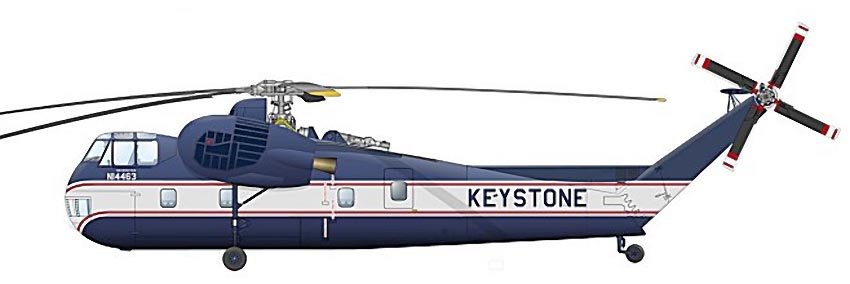
In March 1951, from numerous projects, the military selected proposals from Sikorsky and McDonnell. The USMC order was supported by the U.S. Army and Navy. Sikorsky received funds to build five XHR2S-1 prototypes for the Marines, with the condition that the first flight would occur no later than May 1953. This was followed by an order for YH-37 prototypes from the U.S. Army. Simultaneously with the military version, a commercial variant of the S-56 was also under development.
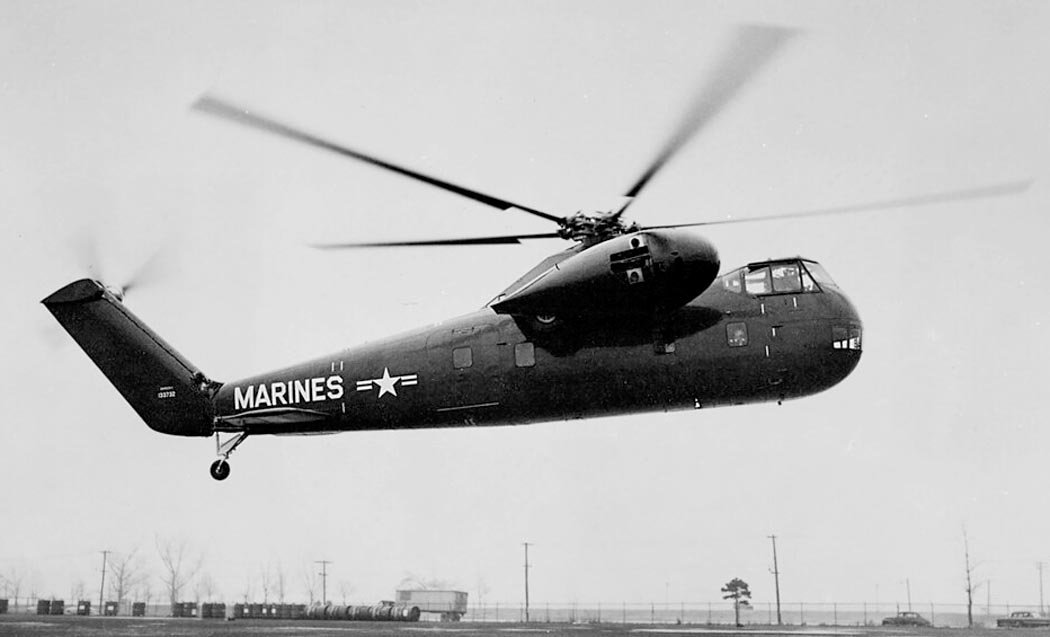
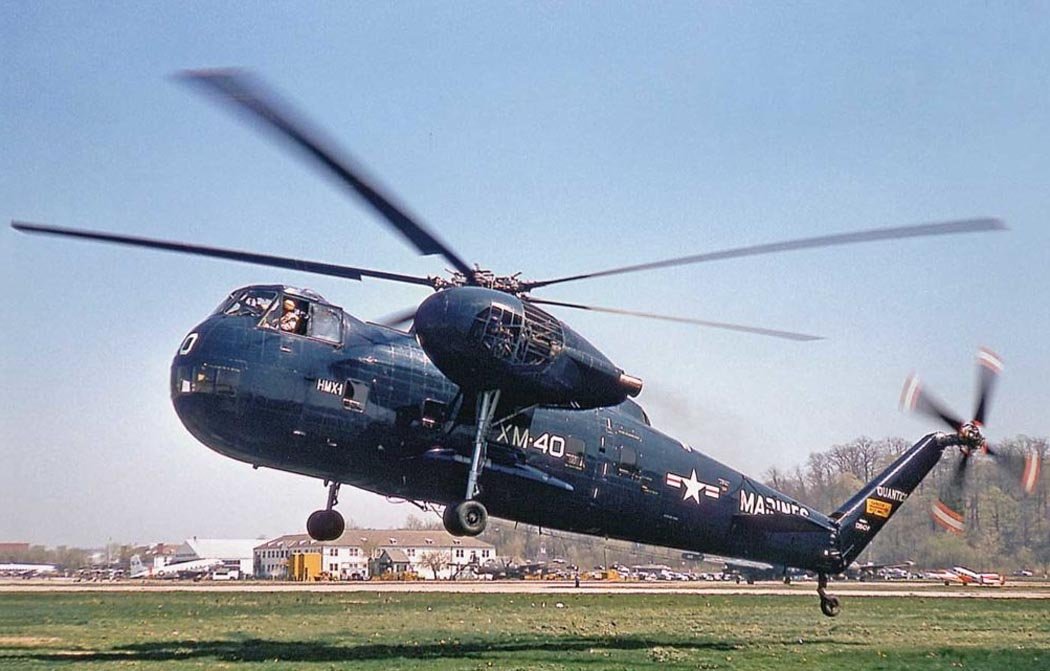
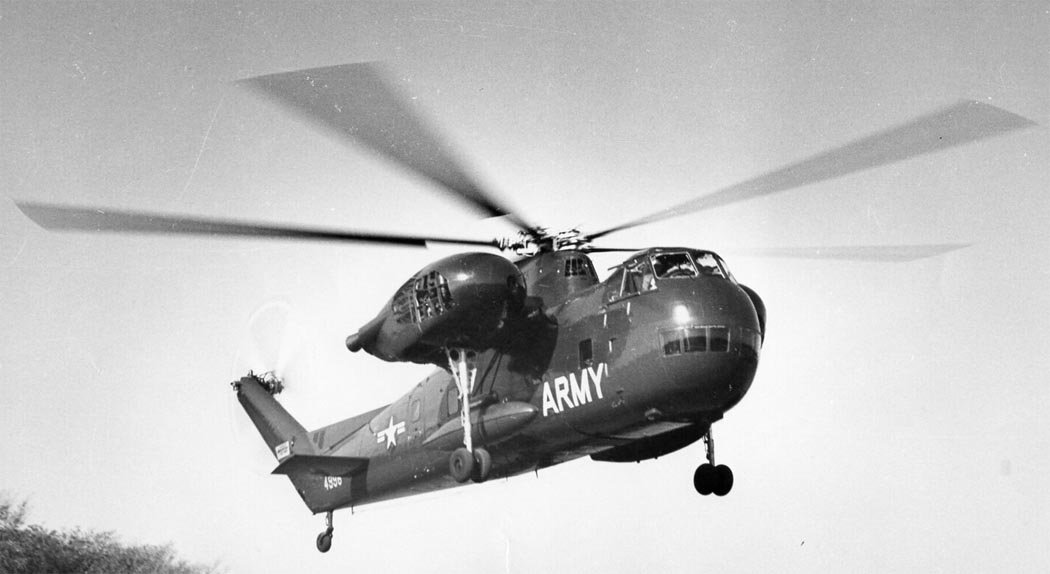
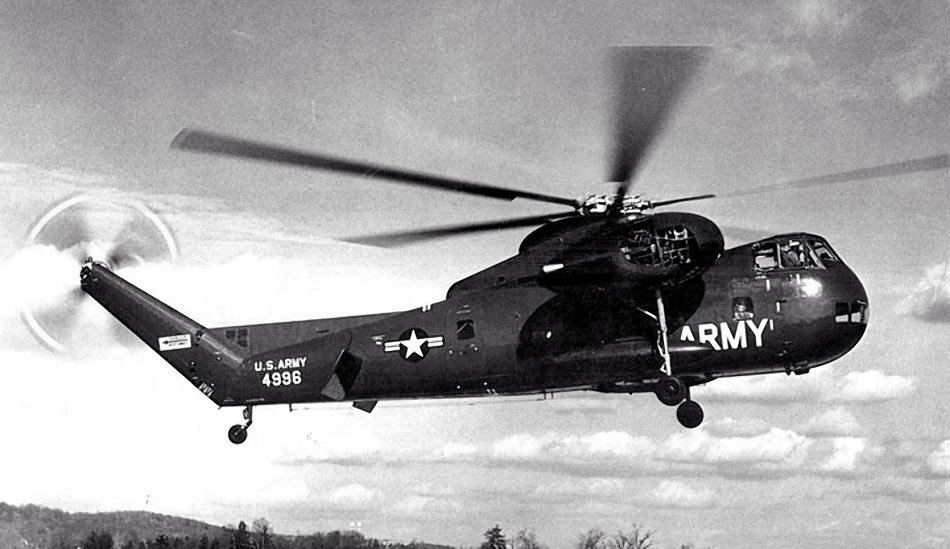
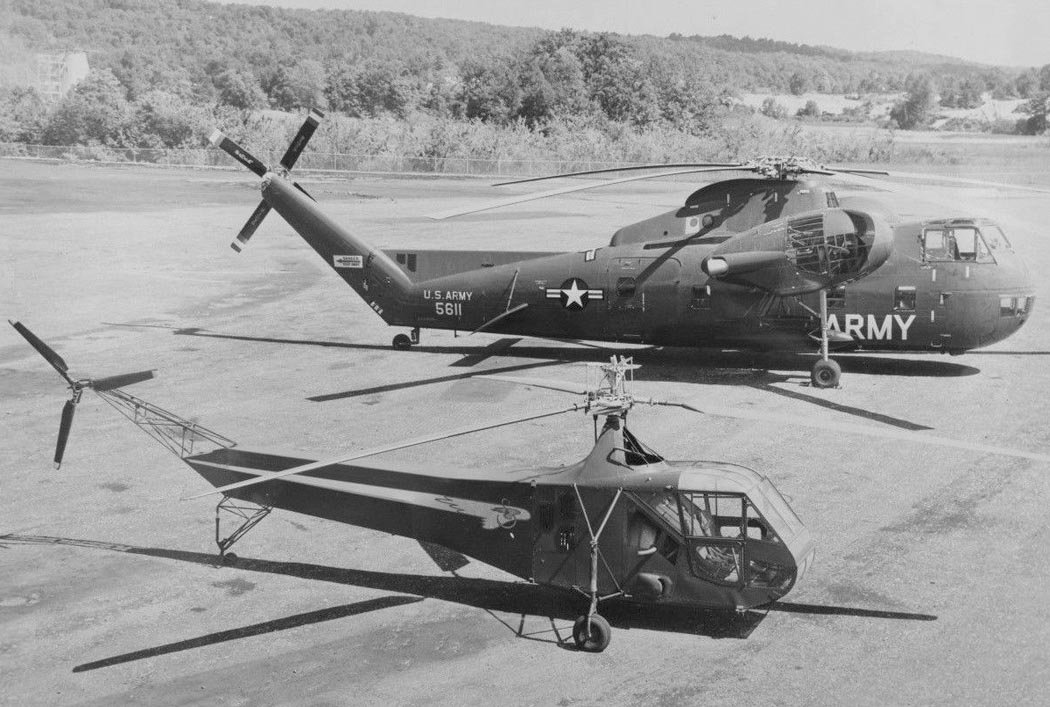
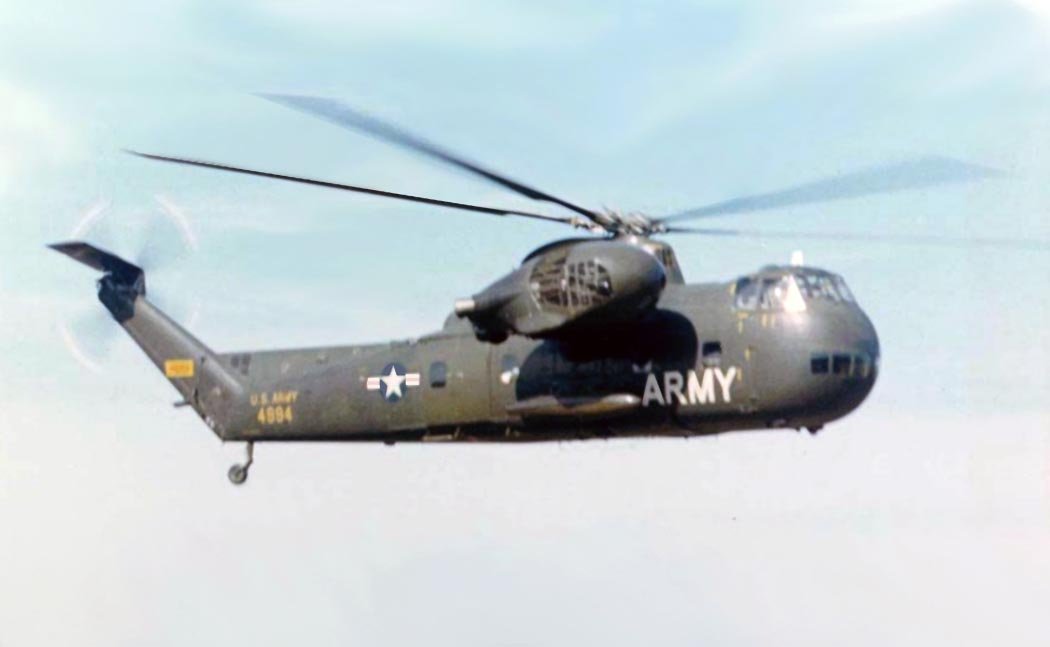
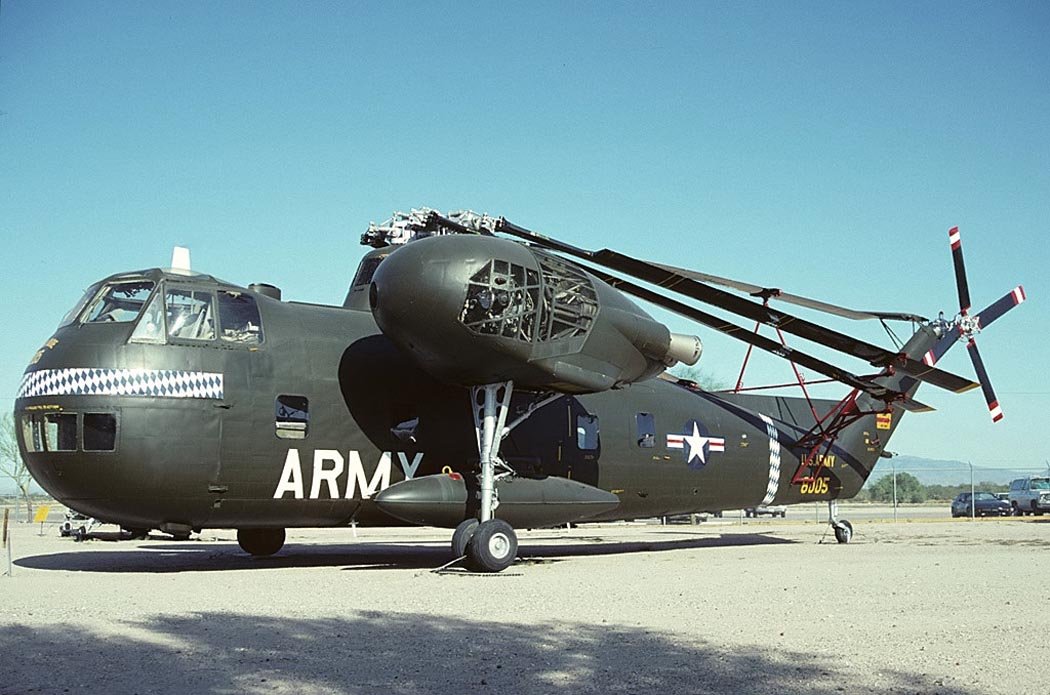
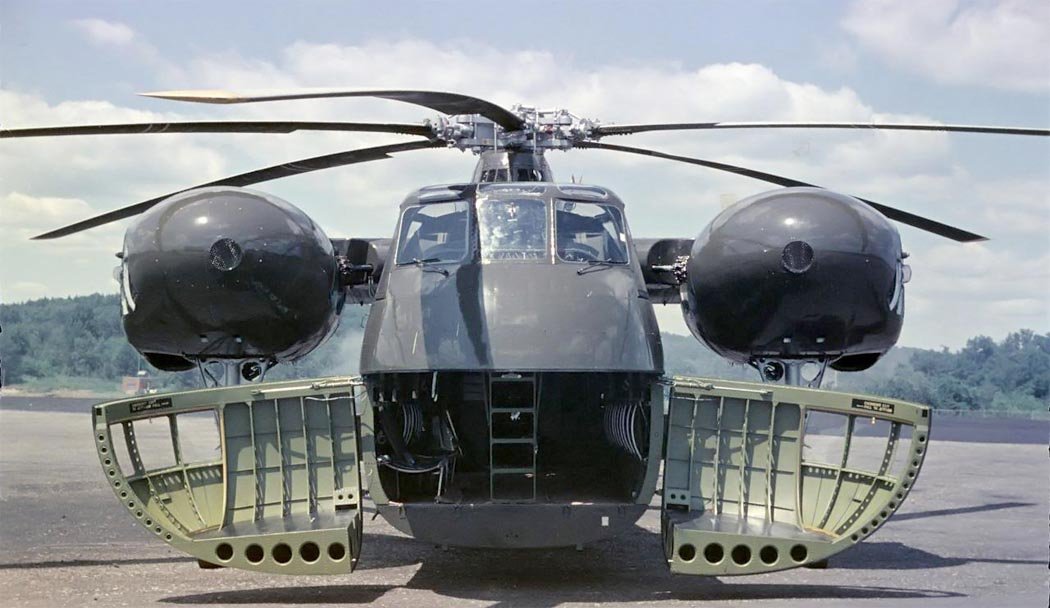
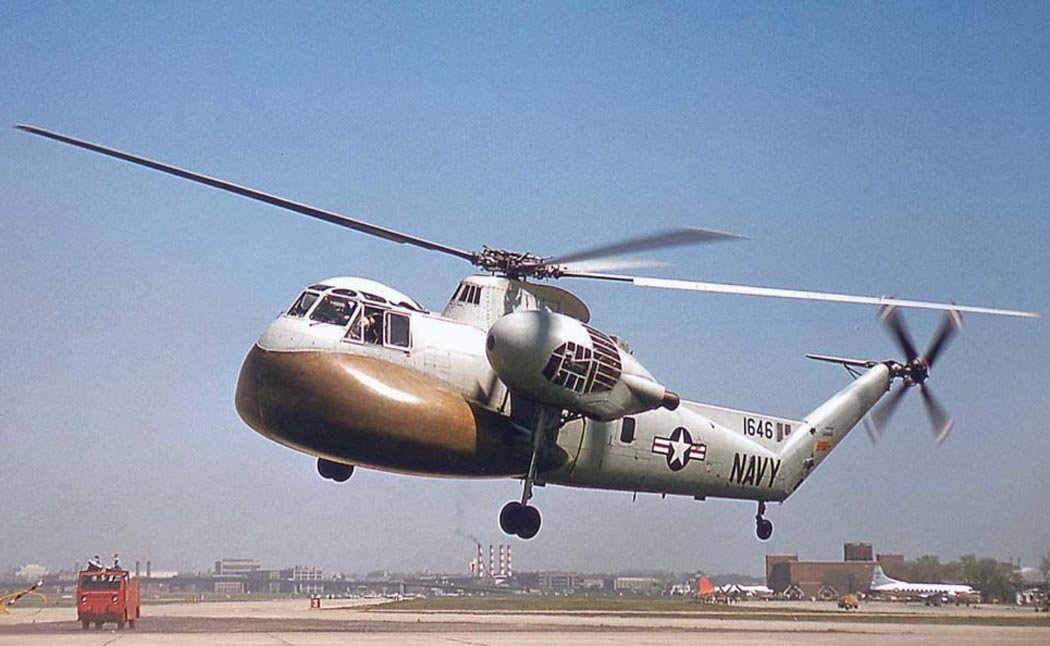
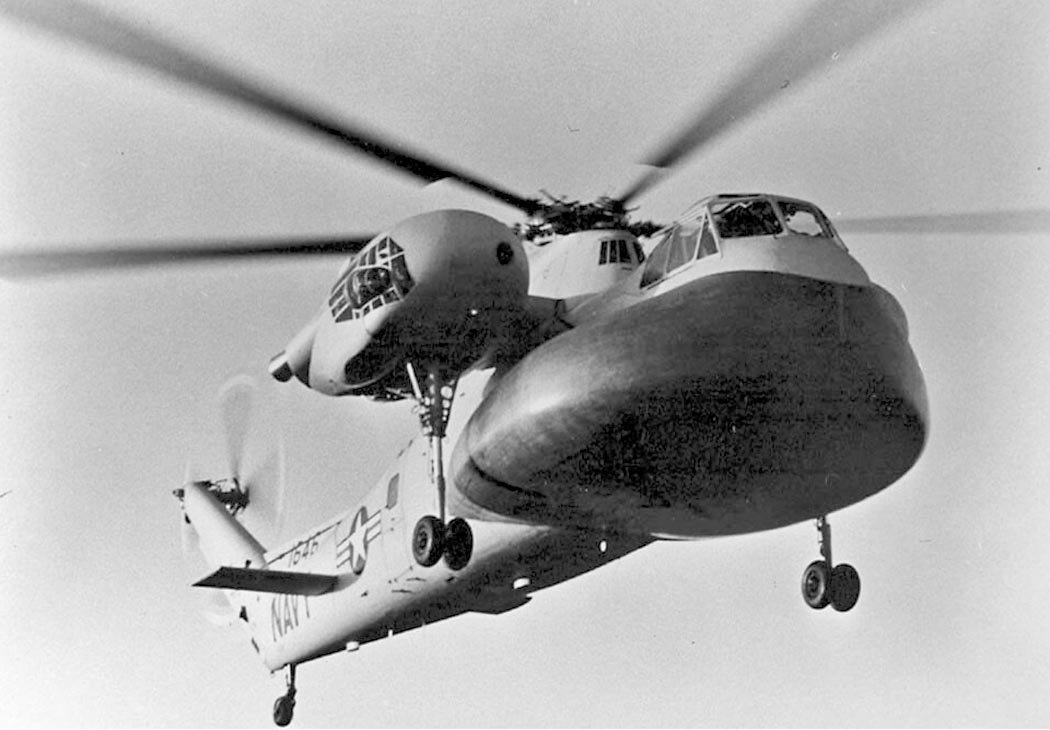
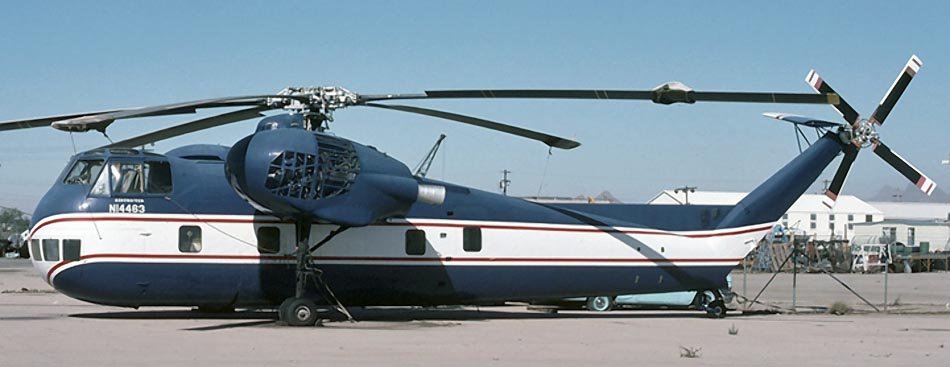
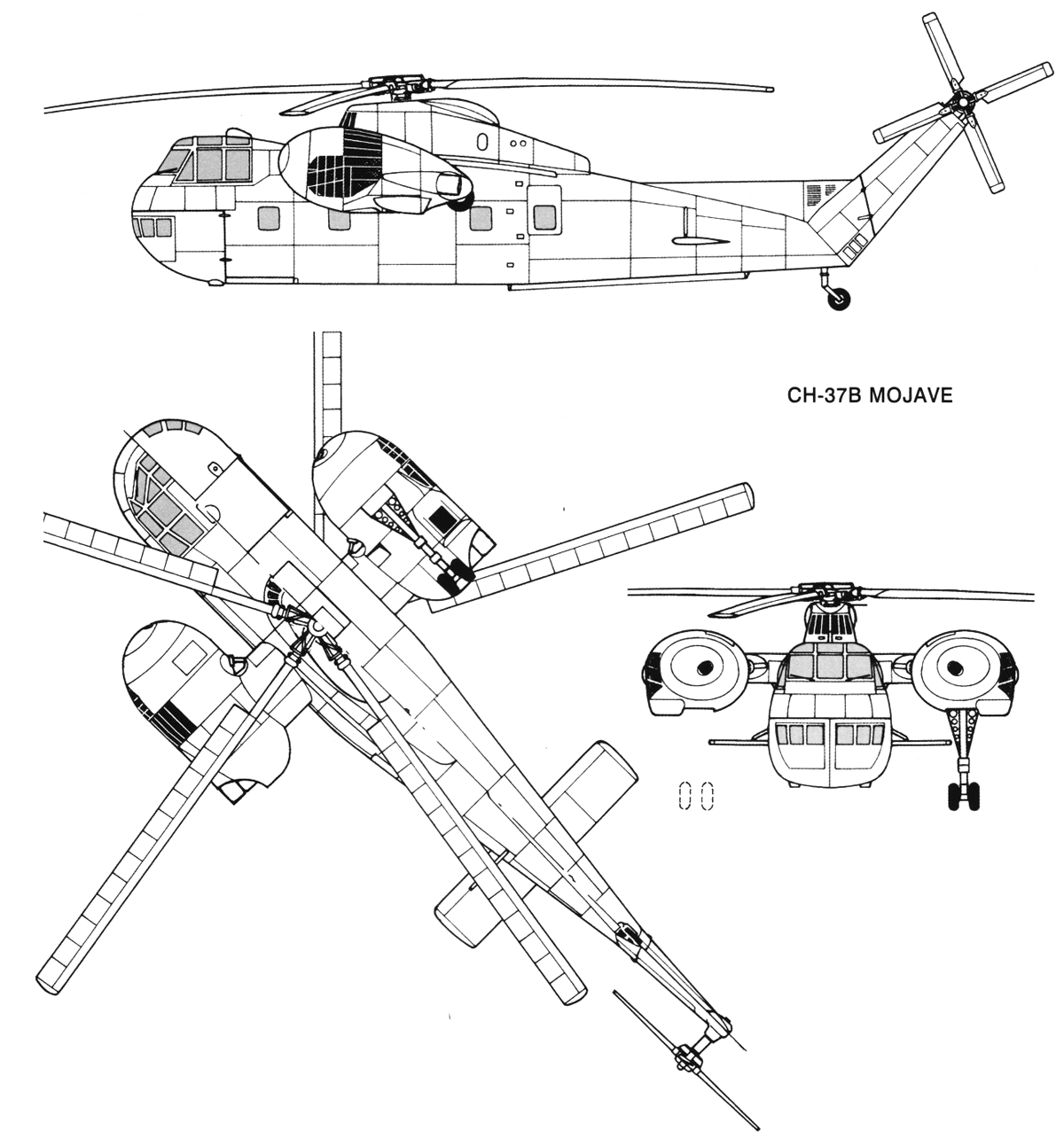
I.I. Sikorsky scaled the new machine to the size of the popular DC-3 “Dakota” aircraft. In developing the layout and overall appearance, the designer once again demonstrated his astonishing ability for unconventional solutions, taking into account experience not only from helicopters but also from amphibious assault transport ships. To free up the entire fuselage for a more voluminous cargo cabin, the designer placed two powerful Pratt & Whitney R-2800 engines in nacelles on horizontal pylons along the sides of the fuselage.
These pylons were shaped like wings and generated lift in flight, offloading the main rotor. Fuel tanks and oil coolers were located inside the pylons. This layout created favorable conditions for engine operation in flight and simplified access for ground maintenance. In line with the fashionable rotorcraft concept of the time, Igor Ivanovich Sikorsky envisioned the possibility of such an upgrade for the S-56.
This would only require installing tractor propellers in front of the engine nacelles and additional wings on them. Two external fuel tanks could also be suspended on the sides of the fuselage. The main rotor’s rotation was driven by transmission shafts connected to the main gearbox, located in the pylon above the cargo cabin, while the tail rotor was driven by transmission shafts through intermediate and tail gearboxes. The shafts turned out to be very long, and during the machine’s refinement, its creators encountered resonance issues. In 1956, the S-56 was the first to be equipped with so-called “supercritical transmission shafts.”
The main rotor, for the first time in history, featured five blades. Its design did not differ from the S-55 rotor, but its dimensions significantly increased. At the time of its creation, the main rotor diameter was the largest in the world. This successful design, refined on the S-55, allowed Sikorsky to achieve undeniable success.
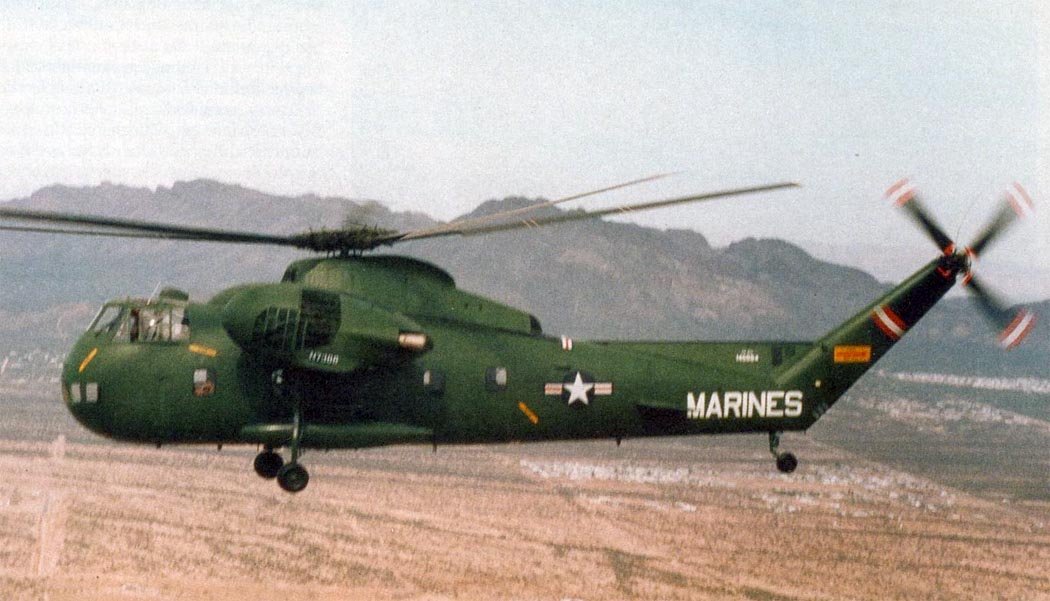
The four-bladed tail rotor was located on a tail boom, which for the first time had the shape of a fin with a trim tab. This fin-boom allowed the tail rotor to be fully offloaded at high speeds, increasing its lifespan and that of the transmission, as well as reducing fuel consumption. A controllable stabilizer was mounted on the rear of the fuselage.
Initially, flaps were envisioned on the engine nacelle pylons to reduce losses from downwash during hovering, but this idea was later abandoned. The S-56 was the first to install an automatic folding system for the main rotor blades and tail boom, achieving compactness for deck-based operations.
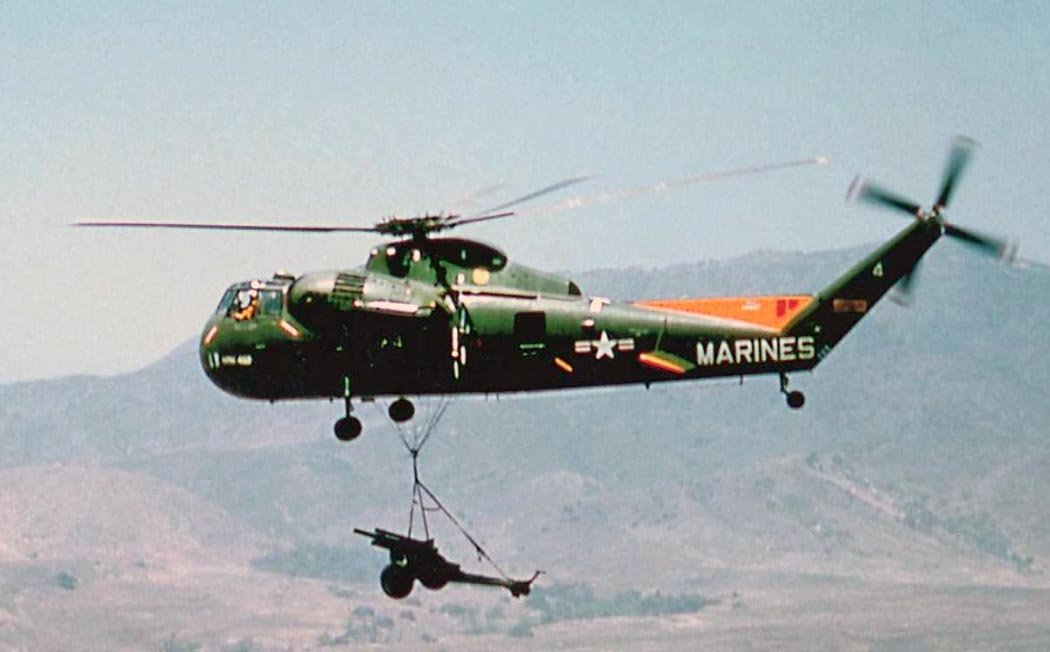
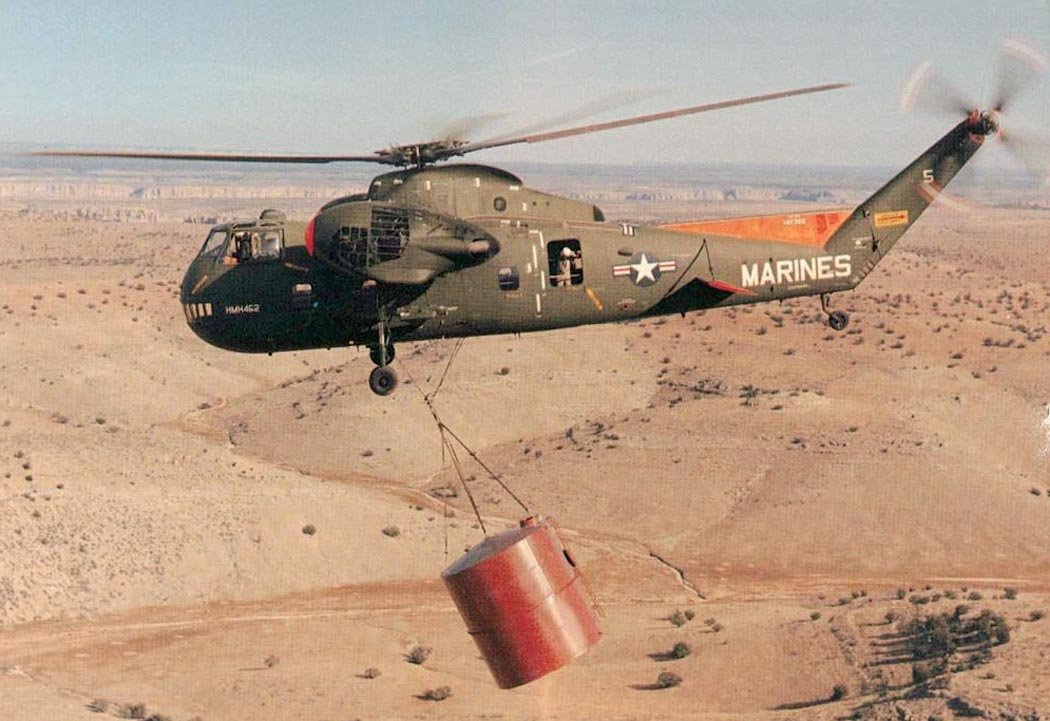
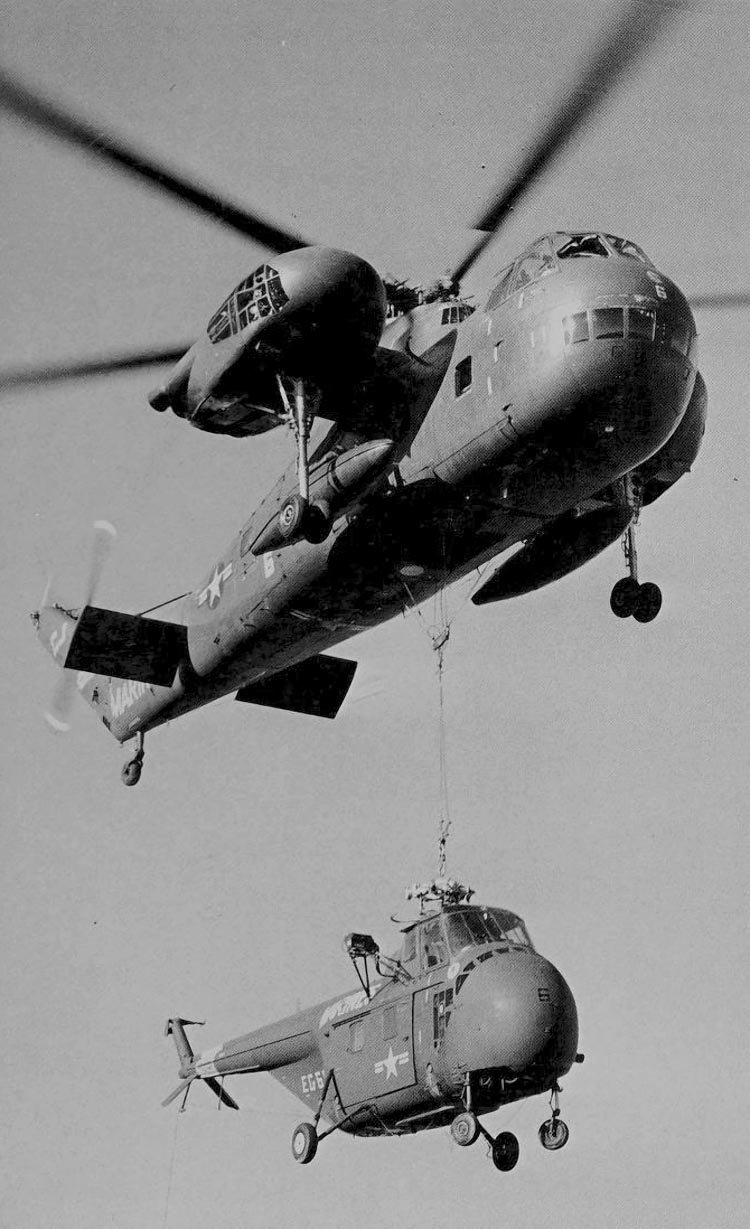
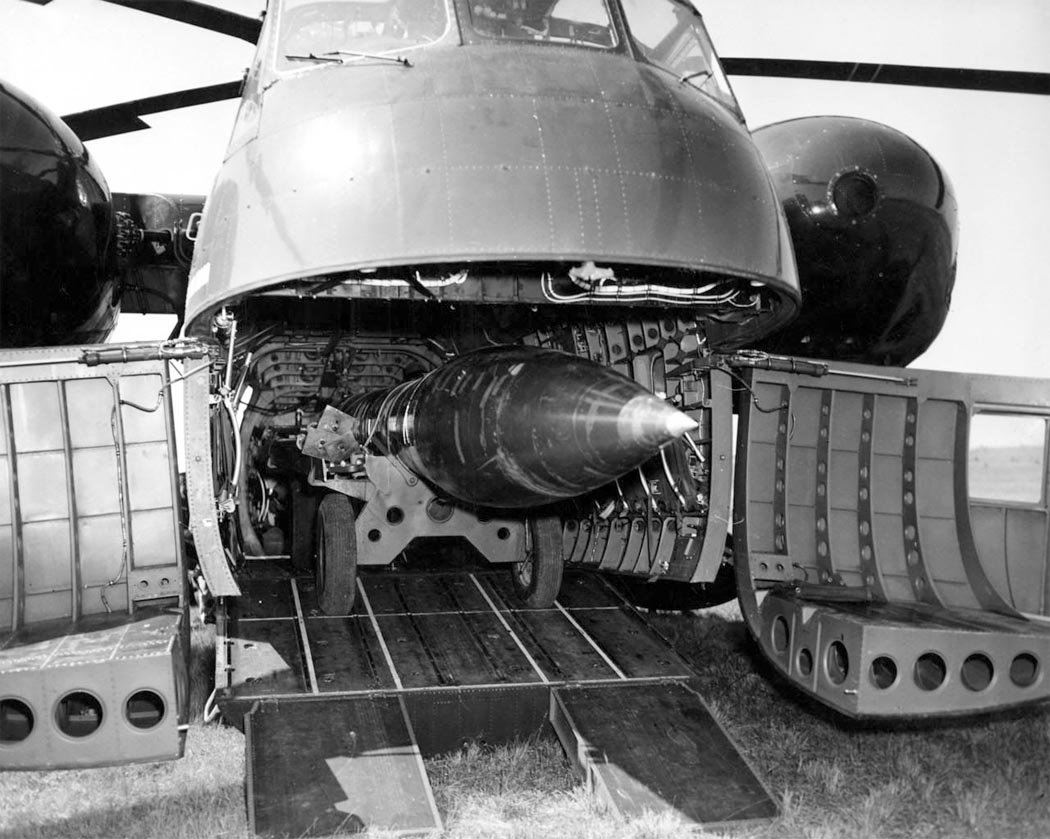
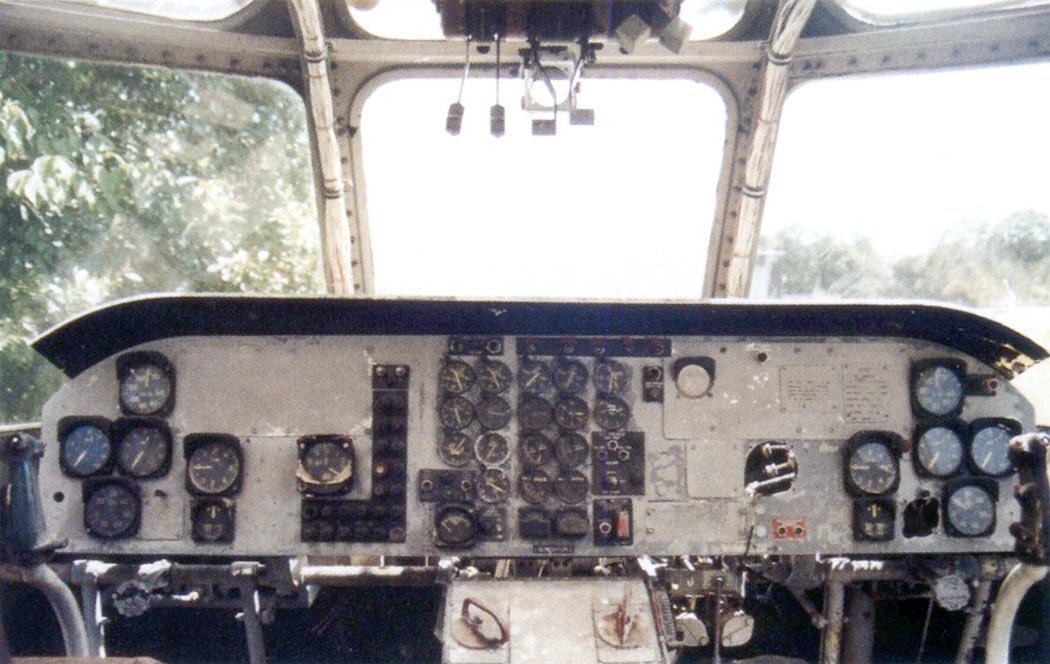
The streamlined fuselage, made entirely of magnesium alloys, housed a cargo cabin 9.24 m long, 2.03 m high, and 2.36 m wide, with a volume of 42.5 m³ (for comparison, the S-55 had 8.9 m³ and the PV-22 had 17 m³). It could accommodate up to 36 Marines or three jeeps. For loading and unloading, a hatch with two side-opening doors and a ramp was provided in the nose of the fuselage, allowing vehicles to drive directly into the helicopter. Additionally, there were two doors on the sides of the fuselage. The cargo and two-person cockpit were connected by a hatch. The S-56 could transport bulky cargo (such as the M-56 tankette) on an external sling.
The “aircraft-like” fuselage not only improved the machine’s aerodynamic and dynamic characteristics but also facilitated the use of a tail-wheel landing gear, which eased ground movement. The helicopter was stable during rollout after autorotative landings, and furthermore, the risk of a blade striking the tail boom—a common drawback of single-rotor designs—was eliminated. To achieve higher speeds, the S-56 was the first to feature retractable landing gear. The main struts retracted into the engine nacelles, while the rear one retracted into the fuselage.
The folding of the blades, tail boom, retraction and extension of the landing gear, opening of the cargo hatch doors, and ramp deployment were all accomplished using hydraulic actuators. The designers also had to work on a system for joint and separate engine control. Overall, all components and assemblies of this unprecedentedly sized machine turned out to be unique, without parallels in global practice.
Production and Testing Challenges
The first flight of the S-56 (XHR2S-1) took place on December 18, 1953, but its refinement proved to be protracted. The helicopter’s creators encountered immense difficulties during testing. The main problems included high overloads in the control system, the elastic response of the main rotor, and the structural overweight after modifications. The designers were even unaware of many of these issues.
For instance, initially, to ensure the necessary hovering characteristics with a limited main rotor diameter (due to deck operation requirements), a blade twist angle of 16 degrees was chosen. However, the impact of twist on increasing stresses in the blades during forward helicopter motion was not yet known. During testing, it became clear that a compromise needed to be found between hovering characteristics and speed limitations related to blade strength. The twist had to be reduced to 8°, and the diameter increased by more than a meter.
Designers still lacked the ability to determine loads from high harmonic vibrations of the main rotor. For example, the sixth harmonic on the five-bladed rotor generated large variable loads in the non-rotating part of the control system, necessitating its complete redesign. The structural overweight required the engines to be boosted from 2050 to 2500 hp, which reduced their lifespan, increased fuel consumption, and consequently, decreased range.
Insufficient directional stability forced Sikorsky to supplement the tail boom with a keel surface, requiring a fundamental redesign of the tail folding mechanism. In short, every modification led to inevitable and endless new changes in the design. Such a unique machine demanded corresponding efforts in refinement.
The creation of such a heavy helicopter was pushed to the limits of what was possible, much like the giant “Grand” once built in Russia. Flight tests brought forth new and new problems. Yet, the seventy-year-old Sikorsky managed to solve a task that had “broken” many talented designers: creating a fourteen-ton helicopter with piston engines. By 1956, the S-56 was brought to a state suitable for practical application.
It is worth remembering that the refinement of the equally epochal Mil Mi-6 giant took almost seven years. The difficulties in refining the “piston” S-56 proved that it was built at the very limit, or even beyond the realm of possibility. Only Sikorsky could accomplish such a feat, which confirms the outstanding talent of our great compatriot (referring to the Russian author). He squeezed everything possible out of first-generation helicopters.
The development efforts did not go unnoticed by Sikorsky Aircraft. The need for a powerful scientific base within the company became evident. Thus, in 1953, Sikorsky established a research and development department within the design bureau, one of whose leaders for many years was the aircraft designer’s nephew, I.A. Sikorsky. From the early 1950s, Igor Ivanovich actively began implementing computer technology at the firm for laborious parametric studies and solving complex aeromechanical problems. This allowed, for instance, a more complete evaluation of the processes occurring on the main rotor in flight for the first time.
Legacy and Combat Service
Concurrently, model-based research was widely implemented. In the mid-1950s, a series of tests on a two-meter main rotor model were conducted in the wind tunnel of United Aircraft’s research laboratory. These studies not only allowed for a deeper assessment of the helicopter rotor’s operational characteristics but also provided a necessary experimental data baseline, broader than that obtained from flight tests, for comparison with calculations. Largely under the influence of I.I. Sikorsky, NASA created a special subcommittee for rotorcraft technology back in 1952.
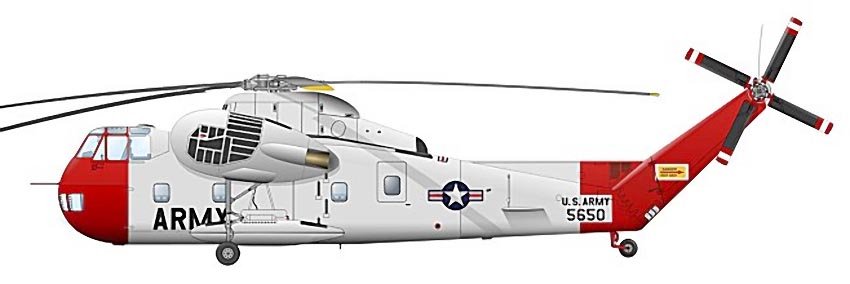
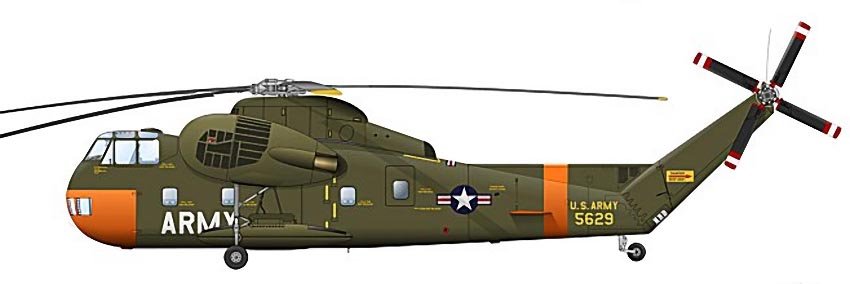
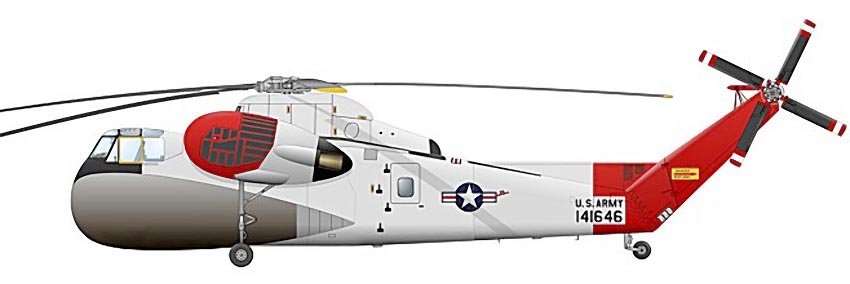
Due to the protracted refinement, deliveries of the S-56 to the customer only began in 1956. In army aviation, it was designated H-37A “Mohave,” but this Native American tribe name did not stick. Because of its unusual appearance and rather uncooperative nature, the machine earned the nickname “Devil” among the troops. Nevertheless, the helicopter played an important role in the establishment of U.S. heavy helicopter aviation, elevating the level of assault transport operations to a new stage.
Army aviation companies re-equipped with the S-56 were reclassified from light to medium. The helicopters in their inventory participated effectively in various maneuvers, exercises, and demonstration flights. Specifically, in September 1958, during maneuvers at Fort Bliss, American Army H-37As were first presented to specialists as carriers of various armaments. Three machines demonstrated the expanded mobility for basing “Honest John” tactical missiles by transporting them with their launchers on external slings.
In total, the U.S. Army acquired 91 “Mojaves.” In the early 1960s, most of these helicopters were converted to the H-37B variant, which featured an autopilot, reinforced nose cargo hatch doors, crash-resistant fuel tanks, and more advanced avionics. In 1962, the H-37A and H-37B were redesignated as CH-37A and CH-37B. The Army’s “Mojaves” also had to tread the “path of war.”
In May 1963, the first four CH-37Bs replaced Piasecki CH-21 “Shawnee” helicopters in Detachment “A” of the 19th U.S. Army Aviation Company in Vietnam. Subsequently, these rotorcraft giants were introduced into other active army aviation companies. They proved exceptionally effective in operations to evacuate enemy-shot-down aircraft. The machine’s lifting capacity allowed damaged equipment to be retrieved from enemy-held territory without prior disassembly. From the autumn of 1963 to 1965, just two “Mojaves” assigned to the 611th Company evacuated 139 damaged aircraft, including 97 Bell UH-1 “Iroquois” helicopters and 54 CH-21 “Shawnees.”
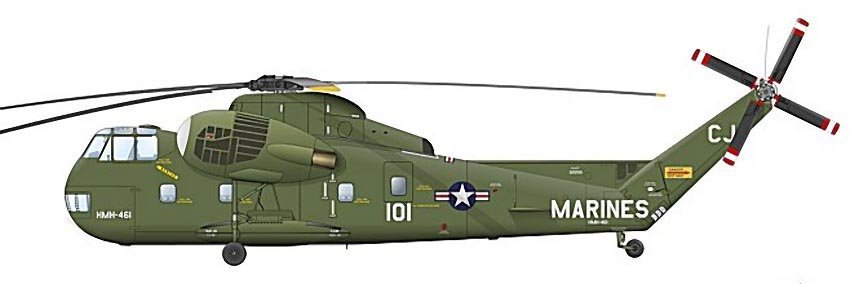
The Marine Corps received 55 S-56s under the designation HR2S-1 (CH-37C from 1962). The U.S. Navy received two HR2S-1W radar surveillance and early warning aircraft in a deck-based variant. These were fitted with the largest General Electric AN/APS-20E radars available in the fleet, with their antennas mounted under the cockpit in a protruding mushroom-shaped plastic radome. The S-56 was long considered the largest and highest-capacity first-generation production helicopter.
In a record flight in November 1956, an Army H-37A lifted a load of 6000 kg to an altitude of 2000 m and 5000 kg to 3688 m. Its powerful engines and good aerodynamics also allowed it to set an absolute speed record of 262 km/h at that time—an astonishing combination that made it both the heaviest-lift and fastest helicopter.
Sikorsky Aircraft produced 156 S-56s of all modifications, including prototypes, over seven years. However, delivery delays negatively impacted orders. The helicopter industry was on the cusp of a transition to fundamentally new machines with gas turbine engines, and the U.S. armed forces preferred to save funds for more advanced aircraft. A number of very interesting modifications, particularly passenger and heavy anti-submarine variants, remained unrealized. Sikorsky and his successors later built these machines using turboshaft engines.
The construction of the S-56 was an outstanding event in the history of helicopter engineering. It taught American designers a great deal and elevated helicopter science to new heights. The S-60 flying crane was built directly on the S-56’s basis. The British firm Westland acquired rights from Sikorsky Aircraft to produce the S-56’s main and tail rotors, as well as its transmission. These were used in the creation of the 16-ton “Westminster” helicopter in 1958, featuring two 3150 hp gas turbine engines each.
The achievements of the S-56, along with records previously set by the smaller S-59, fully re-established Sikorsky’s dominance in this field. They also confirmed the correctness of choosing the classic single-rotor design. These records were only broken by second-generation helicopters, equipped with gas turbine engines, which allowed for significantly better flight and technical characteristics. A new era in helicopter construction had dawned, and this largely determined the limited number of S-56s built.
Sikorsky’s competitor in the Marine Corps tender, the giant single-rotor helicopter from McDonnell with a jet compressor drive for the main rotor, remained on paper. A similar attempt by the Hughes firm in the late 1940s and early 1950s to create such a machine also proved unsuccessful. The jet drive, intended to eliminate complex mechanical transmissions and counteract the reactive torque of the main rotor, turned out to be uneconomical.
I.I. Sikorsky believed its application was only advisable for very heavy-lift helicopters (a conclusion confirmed by domestic researchers, according to the author). For transporting the necessary loads in those years, in his opinion, machines with mechanical transmissions were quite sufficient. History confirmed the designer’s foresight and correctness.
Sikorsky’s main competitor in heavy-lift aircraft, Piasecki, developed the tandem-rotor PV-15 (YH-16) simultaneously with the S-56. Built in 1953, it became, alongside the Soviet Yak-24, the largest first-generation helicopter. However, the PV-15 did not enter series production. An attempt to improve the machine’s characteristics by replacing piston engines with gas turbines ended in a disaster in 1956.
The heavy tandem-rotor Bell-61, built by A. Young in 1953, went into production a year later but proved very unsuccessful and was soon withdrawn. The Yak-24 was no exception; their total production was less than that of the S-56. The main reason for the failure in developing tandem-rotor helicopters was the detrimental main rotor interference, shrewdly predicted by Sikorsky.
Tests showed the impossibility of using a tandem-rotor configuration to double payload capacity by simply combining identical rotor-engine groups. As acknowledged by renowned helicopter authority R. Hafner, “the myth of the tandem-rotor design’s symmetry and the identity of the main rotors on a high ‘pylon’ died.” Although the tandem design provided a significant static ceiling, its dynamic ceiling, climb rate, and autorotational qualities proved inferior. Due to interference, the lifespan of the rear rotor and gearbox significantly decreased compared to the front.
To offload the rear rotor, the aircraft had to be designed with a forward center of gravity, which complicated the layout and disproved the notion of a wide center of gravity range for tandem configurations. Interference also complicated the issue of combating airflow separation from the main rotor blades, worsened longitudinal and directional stability, and reduced controllability. Constant loading of the transmission led to its heavy weight and short lifespan. All these factors reduced the attractiveness of the tandem-rotor configuration.
Aside from the Piasecki firm, no one else succeeded in establishing stable serial production of similar helicopters. By the early 1960s, work in this direction ceased for all enterprises, with the exception of Boeing-Vertol (as Piasecki’s firm became known after his departure in 1955). In the 1950s, Piasecki had established production of medium transport helicopters PV-22 (H-21) in various modifications. In the 1960s, a further modification was produced under the designation V-44, but even it had a corresponding single-rotor Sikorsky analog – the S-58.
Technical Specifications
| Modification | CH-37A |
| Main rotor diameter, m | 21.95 |
| Tail rotor diameter, m | 4.57 |
| Length, m | 19.58 |
| Height, m | 6.71 |
| Empty weight | 9449 |
| Normal takeoff weight | 14062 |
| Internal fuel, l | 1514 + optionally 2271 |
| Engine type | 2 Piston engines Pratt Whitney R-2800-54 |
| Power, kW | 2 x 1566 |
| Maximum speed, km/h | 209 |
| Cruising speed, km/h | 185 |
| Range, km | 233 |
| Rate of climb, m/min | 277 |
| Service ceiling, m | 2650 |
| Static ceiling, m | 335 |
| Crew, crew | 3 |
| Payload: | 36 soldiers or 24 stretchers or 4536 kg of cargo in cabin or on sling |
Image gallery of the CH-37 Mojave (S-56)