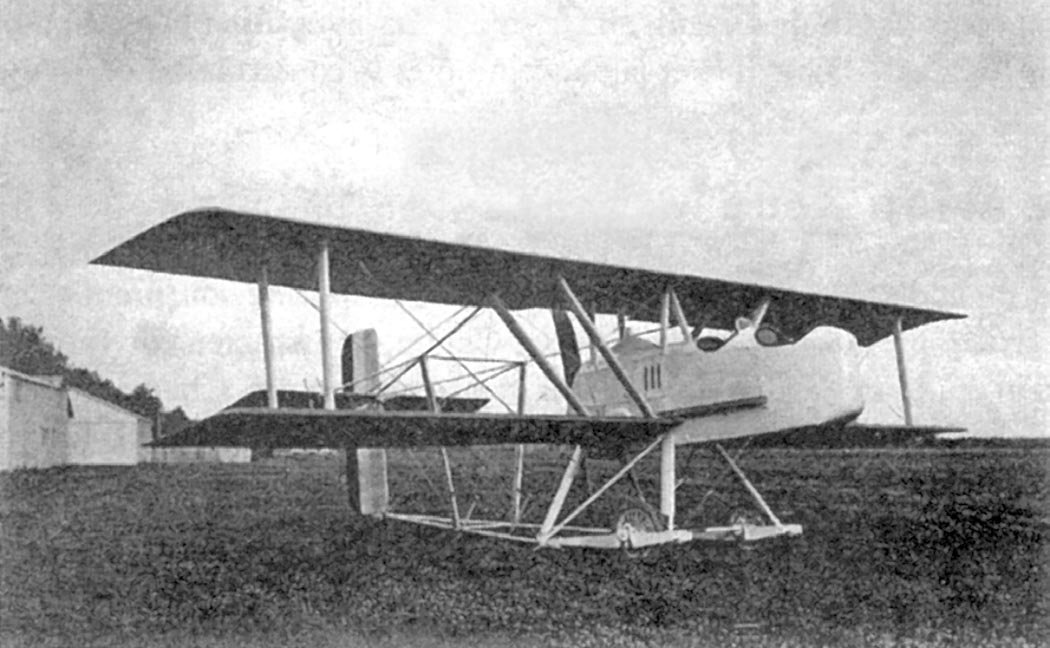
French engineer Paul Chenu, renowned before World War I for designing airship engines, partnered with pilot and aircraft designer René Moineau in early 1915. Together, they embarked on designing a light aircraft, intended to be powered by Chenu’s 260-horsepower, six-cylinder engine.
Design and Manufacture
By the spring of the same year, the aircraft was manufactured at Chenu’s design bureau in Vélizy-Villacoublay. This prototype was a two-seater, single-strut biplane, notably featuring a pusher propeller.
Maiden Flight and Technical Challenges
The machine, simply named Chenu-Moineau Biplane or Le biplace d’observation Chenu-Moineau, successfully made its first flight on May 18. However, tests quickly revealed that the engine was too heavy for a light aircraft, a miscalculation likely stemming from Chenu’s experience with larger airship designs.
Project Abandonment
Furthermore, the aircraft’s landing distance proved to be excessively long. Consequently, the project was abandoned, and Moineau fully shifted his focus to the development of the SM.1 aircraft.
Technical Specifications
| Modification | Chenu-Moineau biplan |
| Engine type | 1 Piston engine Chenu |
| Power, hp | 1 x 260 |
| Crew, crew | 2 |
Image gallery of the Chenu-Moineau Biplane