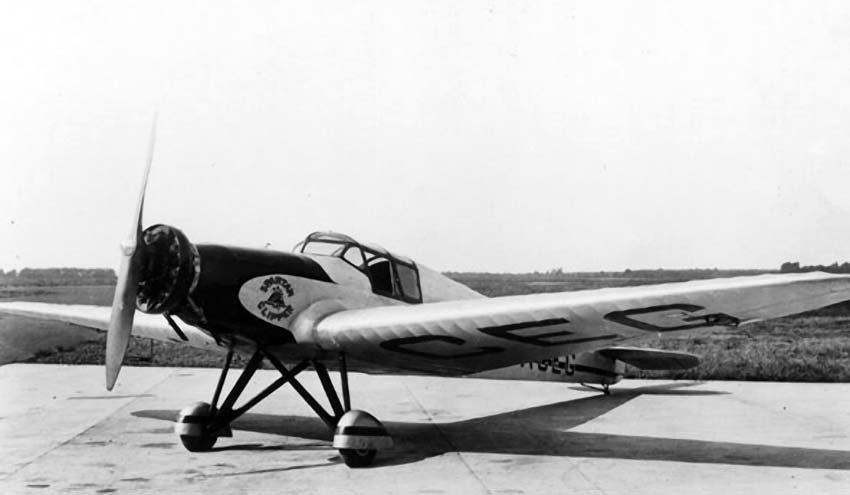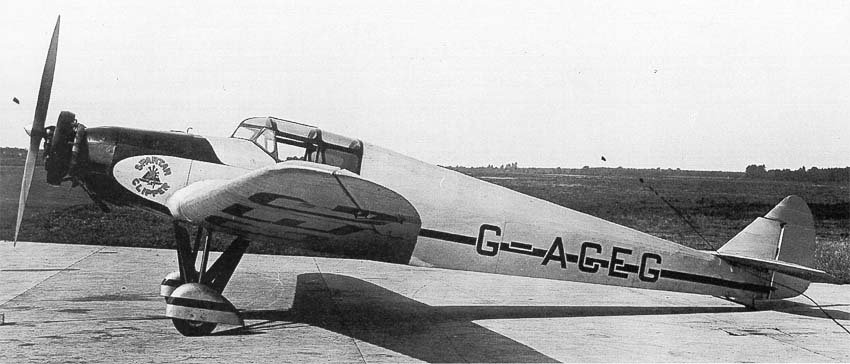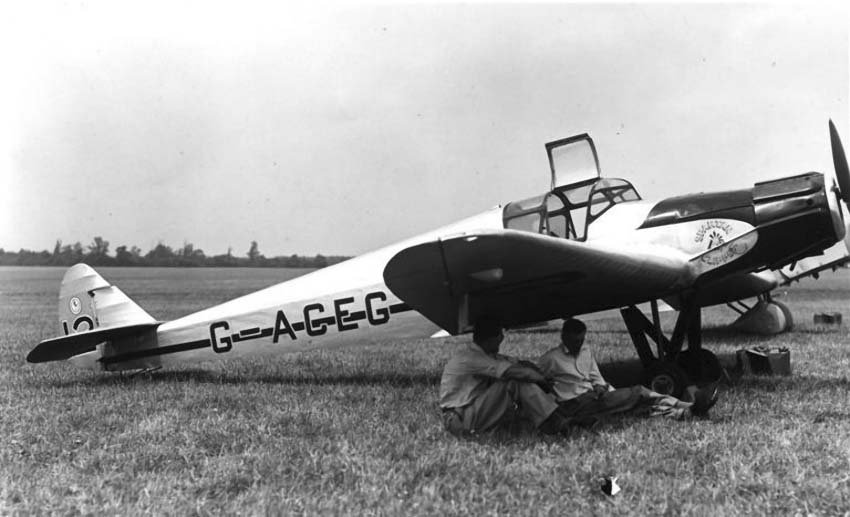
The Clipper was one of the first aircraft produced by “Spartan Aircraft Ltd” specifically designed for private use. It featured a relatively simple construction, designed by H.E. Broadsmith, and utilized wing elements from another aircraft of its class, the General Aircraft ST-4.
Design and Maiden Flight
This was a two-seater, low-wing monoplane of mixed construction, powered by an in-line Pobjoy R engine delivering 75 hp (56 kW). The Clipper made its maiden flight on December 14, 1932, in East Cowes, bearing the registration code S-3.
Upgrades and Certification
Following modifications, which included a new landing gear, cockpit glazing, and engine cowling, it received its airworthiness certificate on June 29, 1933, along with a new registration number, G-ACEG. In the same year, the aircraft participated in the King’s Cup Race.
Evolution and Final Fate
In 1938, it was fitted with a 90 hp Pobjoy Niagara III engine, enabling it to reach a speed of 177 km/h. Despite these enhancements, the Clipper remained a single prototype.
It was used to facilitate communication between Spartan’s enterprises until it was destroyed during a German bombing on May 4, 1942.
Technical Specifications
| Modification | Clipper |
| Wingspan, m | 10.36 |
| Length, m | 8.58 |
| Wing area, m2 | 13.94 |
| Empty weight | 350 |
| Maximum takeoff weight | 592 |
| Engine type | 1 Piston engine Pobjoy R |
| Power, hp | 1 x 75 |
| Maximum speed, km/h | 177 |
| Cruising speed, km/h | 150 |
| Crew, crew members | 2 |
Image gallery of the Clipper